Hidden Nepal Villages: Untold Stories from the Quiet Trails
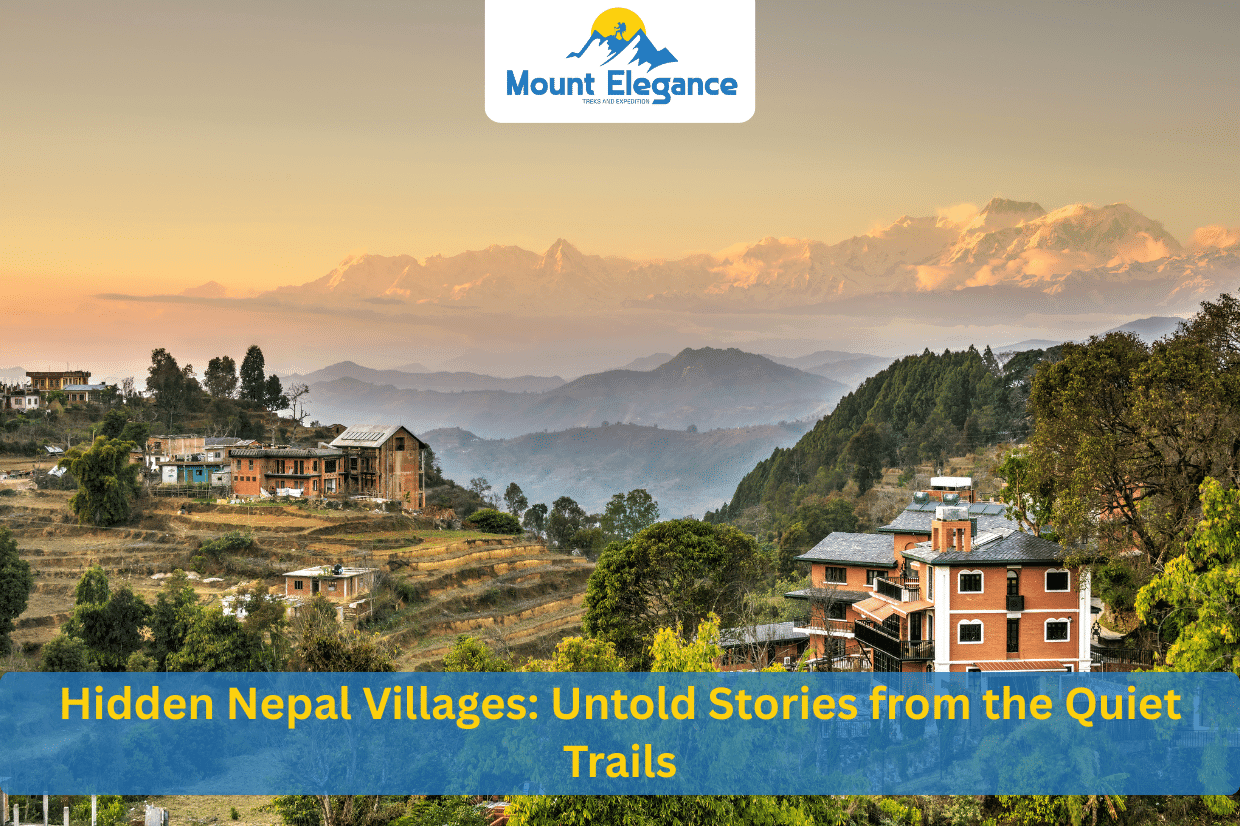
Nepal welcomed 1.2 million tourists in 2024, yet over 92% of them never left the four mainstream regions: Everest, Annapurna, Langtang, and Pokhara. That leaves an entire universe of Hidden Nepal Villages where life still moves at the pace of yaks and prayer wheels. These are the places we know and love best at Mount Elegance Treks.
Table of Contents
Toggle1. The Last Village Where Ancient Bon Fire Rituals Still Burn
Bramchok, 3,750 m – Hidden high above the busy Annapurna Circuit While thousands hurry below toward Thorong La Pass, a steep two-hour climb leads to Bramchok, one of the last living centers of the ancient Bon religion. Every dawn, monks in black robes perform smoke offerings to mountain deities, and long 4-meter dung-chen horns echo across the valley. The 800-year-old gompa still keeps sacred Bon texts that predate Buddhism in Tibet. Villagers believe the nearby peak, Khatung Kang (6,614 m), is the abode of a protective spirit who punishes anyone who harms animals. You can stay overnight in a traditional stone house and wake up to rituals most Nepalis have never seen.
→ Combine it with: Nar Phu Valley & Hidden Manang Trek
2. The Northernmost Settlement Before the Tibetan Border
Lhomang, 4,070 m – Upper Mustang’s final frontier Lhomang is the last permanent village before the official Nepal-Tibet border. Only 38 families tough it out through winters at -30 °C. The landscape looks more like Ladakh or the Tibetan plateau than the green Nepal most people imagine. Locals still practice polyandry (brothers sharing one wife) to keep land from being divided. Ancient sky-burial sites sit on nearby hills, and every autumn yak caravans cross the border for salt and wool trade exactly as they did 500 years ago. When the wind dies down, the silence is absolute.
→ Full 16-day journey: Upper Mustang Trek
3. The Sacred Valley Where Even Garlic Is Forbidden
Chumchet & Chhekampar – The holy heart of Tsum Valley Tsum was declared a “Beyul” (hidden sanctuary) by Guru Rinpoche in the 8th century and remained closed until 2008. Strict Buddhist rules still apply: no meat, no alcohol, no onions or garlic (believed to excite negative emotions). The result? One of the most peaceful cultures you’ll ever meet. Ancient monasteries like Mu Gompa and Rachen Gompa guard priceless statues and manuscripts. Pilgrims from Tibet once risked their lives crossing the high passes to reach this sacred land. Today, you can walk the same trails with far less danger and twice the wonder.
→ Gentle 14–18 day route: Tsum Valley Trek
4. Twin Medieval Villages Closed to Outsiders Until 2002
Nar and Phu – Annapurna’s forbidden gems For centuries, Nar and Phu were completely off-limits, even to most Nepalis. When they finally opened in 2002, only a few hundred trekkers visited per year. Narrow stone alleys, flat-roofed houses stacked like ancient fortresses, and 800-year-old Kangyur texts wrapped in silk still fill the monasteries. Villagers wear handmade chubas and bake bread in outdoor clay ovens. The 5,416 m Kang La pass between the two villages offers one of the most dramatic viewpoints in the entire Himalaya.
→ Classic restricted route: Nar Phu Valley Trek
5. The Ethnic Mosaic Trail with Hot Springs on the Path
Tipling & Sertung – Ruby Valley (Ganesh Himal) The Ruby Valley sees fewer than 300 foreign trekkers annually. Tamang, Gurung, and Ghale communities live harmoniously, each with their own festivals, shamans, and dialects. Natural hot springs bubble right beside the trail near Sertung — perfect for soaking tired legs after a day’s walk. Waterfalls crash down 200-meter cliffs, and on clear days you get front-row views of Ganesh Himal’s five peaks glowing at sunrise.
→ Off-the-grid favorite: Ruby Valley Trek
6. The Village That Rebuilt Itself Brighter After the 2015 Earthquake
Barpak – Gorkha district, 1,945 m Barpak sat directly above the epicenter of the devastating 2015 earthquake. Almost every house collapsed. Instead of despair, the community rebuilt with bright colors, earthquake-resistant designs, and renewed pride. Today, cheerful blue, pink, and yellow homes line the ridges. Locals invite you for home-roasted chicken, millet raksi, and stories that will leave you speechless. Barpak is living proof of Nepal’s unbreakable spirit.
7. Nepal’s Only Trans-Himalayan Valley Still Trading with Tibet
Waltse, Jang & Halji – Limi Valley, Humla It takes a flight to Simikot plus 6–9 days of walking to reach Limi. The three villages feel closer to Lhasa than Kathmandu. Rinchenling Gompa in Halji dates to the 11th century and houses priceless murals. Every summer, yak caravans still cross 5,000 m passes into Tibet for salt and wool. Winters are brutal, but the night sky here is one of the clearest on earth.
8. The Remote Settlement Immortalized in “The Snow Leopard”
Saldang – Upper Dolpo, 3,770 m Peter Matthiessen and George Schaller put Dolpo on the map in 1973, yet Saldang remains remarkably unchanged. With around 400 residents, it’s the biggest settlement in a region larger than many European countries. Terraced barley fields turn gold in autumn, nomadic traders arrive on horseback, and Bonpo lamas perform rituals that blend Buddhism with ancient animism. Shey Phoksundo Lake and crystal-clear mountain light complete the magic.
→ Official permit information: Nepal Tourism Board – Restricted Areas
9. Why 2025–2027 Is the Final Window for Truly Hidden Nepal Villages
New roads are pushing deeper every year. Upper Mustang’s road reached Lo Manthang in 2023. Dolpo and Humla roads are advancing fast. Once the jeeps arrive, homestays turn into lodges, kids discover smartphones, and the spell breaks. If you want to experience Hidden Nepal Villages while they still feel untouched, the time is now.
10. Start Planning Your Private Journey Today
All nine destinations above are 100% reachable with proper permits, experienced guides, and small groups. Mount Elegance Treks has been crafting private and small-group trips to these Hidden Nepal Villages since 2014.
Let us design an itinerary that matches your pace, fitness, and sense of wonder.
Quick inquiry: Contact Us
Your own untold Nepal story begins with one message. Namaste and see you on the quiet trails!