
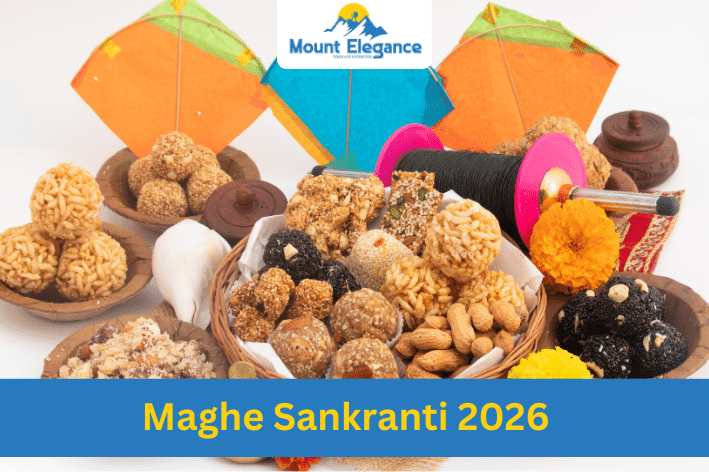
Maghe Sankranti marks a pivotal moment in Nepali culture. Maghe Sankranti celebrates the sun’s transition into Capricorn (Makara). Moreover, Maghe Sankranti signals the end of the winter solstice. Additionally, Maghe Sankranti brings longer, warmer days ahead. In 2082, Maghe Sankranti falls on Thursday, Magh 01. This solar-based festival unites diverse communities. Furthermore, Maghe Sankranti blends spiritual rituals with joyful feasts. For travelers, Maghe Sankranti offers an authentic glimpse into Nepal’s heritage.
At Mount Elegance Treks, we love guiding travelers who want to experience the authentic heart of Nepali culture during this special time.
Deep Cultural & Spiritual Meaning
Astronomically, Maghe Sankranti represents a pivotal cosmic shift: the sun begins its northward path, bringing hope after the darkest period of the year. In Hindu cosmology, Uttarayan is considered highly auspicious — a time when positive energies are amplified, making it ideal for spiritual practices, prayers, meditation, charity, and new beginnings. This period is believed to enhance the fruits of good deeds, foster spiritual awakening, and connect humanity with the divine order of the universe.
eyond religion, Maghe Sankranti fosters cultural harmony across Nepal’s diverse communities — Tharu (as their New Year with dances and feasts), Magar, Newar, and others — uniting generations through shared values of piety, family bonds, gratitude, and simplicity. It reminds us of life’s cyclical nature, encouraging reflection, togetherness, and a renewed connection to nature and community.
In essence, Maghe Sankranti is more than a festival — it’s a celebration of cosmic renewal, spiritual liberation, and enduring human harmony with the universe.
Key Traditions & Morning Rituals
The day traditionally begins very early with a holy dip (snan) in sacred rivers such as:
- Bagmati River (especially at Sankhamul)
- Narayani River
- Triveni Dham
- Devghat
After the ritual bath, families perform simple home puja, offer sesame seeds + jaggery, and exchange blessings. A very sweet custom is that nephews/nieces visit their maternal uncle (mama) to receive tika, yam, sweets, and dakshina.
The Iconic Foods of Maghe Sankranti
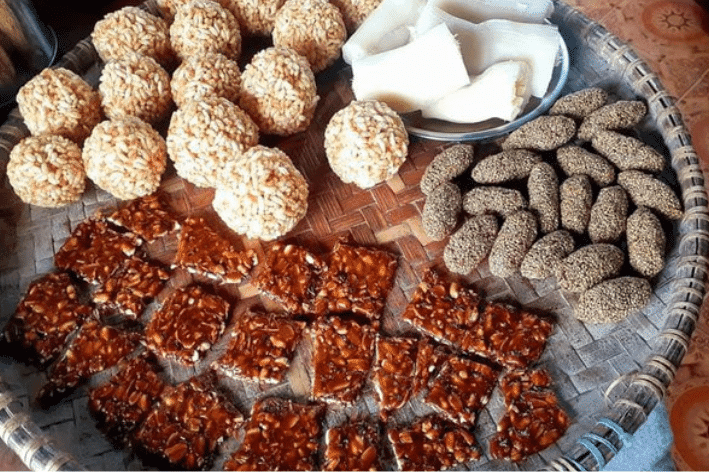
Food is truly the soul of the celebration. The most loved traditional items include:
- Til ko laddu – sweet sesame-jaggery balls
- Chaku – solid molasses eaten with ghee
- Boiled yam (tarul) and sweet potato
- Khichadi made with lentils & rice
- Various seasonal green vegetables
These rich, warming foods are believed to provide strength against the winter cold and carry symbolic meaning of prosperity.
Here are some beautiful examples of the classic Maghe Sankranti feast:
How Communities Celebrate Differently
- Tharu people in the Terai celebrate it as their New Year with traditional dances, music, and grand community feasts
- Magars hold large family reunions and prepare special dishes
- Newars in the Kathmandu Valley enjoy ghya chaku salhu — a platter of ghee, molasses, yam, and beaten rice
This beautiful diversity is one of the reasons Nepal feels so alive during festival time.
Best Places to Join the Festivities
Some of the most atmospheric locations include:
- Devghat – huge spiritual gathering at the confluence of rivers
- Nuwakot – famous for its traditional bullfighting events
- Chitwan – vibrant Tharu celebrations and cultural shows
- Kathmandu Valley – temple fairs, local processions, and neighborhood gatherings
Want to experience the real atmosphere? Check our recommended winter cultural packages: → Chitwan Cultural & Wildlife Experience → Kathmandu Valley Heritage & Festival Tour
Frequently Asked Questions
Is Magh 01, 2082 a public holiday?
Yes — government offices, banks, and most schools remain closed.
Can international visitors join the holy dip and celebrations?
Yes — everyone is welcome! Just dress modestly and follow local guidance (our guides help make it comfortable and respectful).
What should I pack for mid-January in Nepal?
Warm layers, comfortable walking shoes, scarf/gloves — mornings are chilly!
Start Your Winter Nepal Adventure
Maghe Sankranti beautifully combines rich tradition, comforting bold flavors, and a gentle sense of spiritual renewal. It’s the perfect moment to feel the genuine warmth and hospitality of Nepali people. Let Mount Elegance Treks help you create a meaningful, personalized experience around this special day.