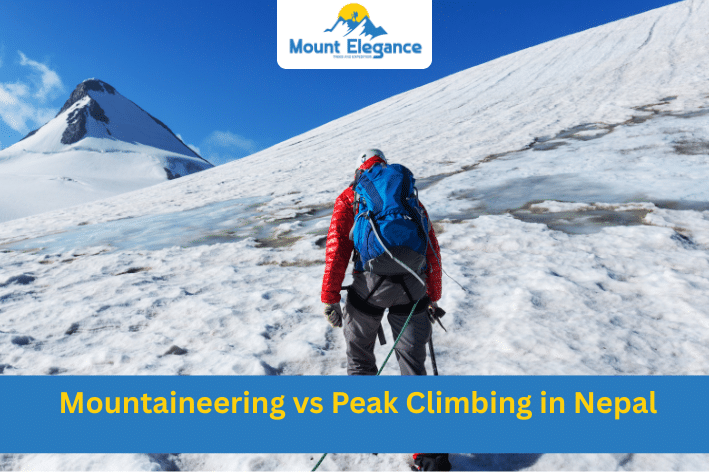
Imagine the crisp Himalayan air filling your lungs. You stand on a peak, gazing at endless snow-capped giants. This dream draws adventurers to Nepal yearly. However, choosing between mountaineering in Nepal and peak climbing in Nepal can puzzle many. At Mount Elegance Treks, we guide you through these thrilling paths. Moreover, we offer tailored experiences for every skill level. Let’s explore the differences. This will help you pick your perfect adventure.
What is Peak Climbing in Nepal?
Peak climbing in Nepal involves ascending trekking peaks. These range from 5,500 to 6,600 meters. Additionally, it blends trekking with basic climbing. You use ropes, crampons, and ice axes. However, it suits fit trekkers with some experience. For example, popular spots include Island Peak and Mera Peak. Moreover, permits come from the Nepal Mountaineering Association. This makes it accessible for beginners in high-altitude adventures. Furthermore, our Mera Peak Climbing package offers stunning views and safe guidance.
What is Mountaineering in Nepal?
Mountaineering in Nepal targets expedition peaks over 6,500 meters. Often, these exceed 8,000 meters, like Everest. It demands advanced skills and endurance. Additionally, expeditions last weeks or months. You face extreme weather and technical challenges. However, the reward is unmatched triumph. Permits are issued by the Department of Tourism. Moreover, preparation includes intense training. For instance, climbers tackle ice walls and crevasses. Therefore, it’s for seasoned adventurers seeking ultimate tests.
Key Differences Between Mountaineering and Peak Climbing in Nepal
Altitude and Difficulty
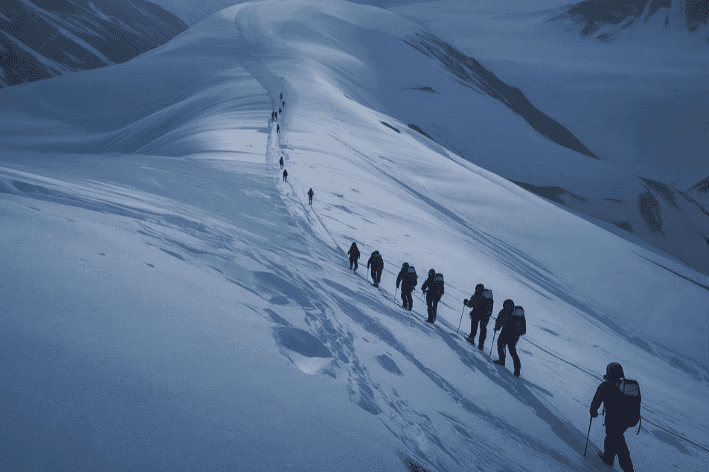
Peak climbing in Nepal stays below 7,000 meters. It offers moderate challenges. However, mountaineering in Nepal pushes beyond 8,000 meters. This increases risks like altitude sickness. Additionally, technical sections demand more expertise. For example, peak climbing might involve simple snow walks. In contrast, mountaineering requires glacier traversal. Therefore, choose based on your fitness level.
Permits and Regulations
For peak climbing in Nepal, NMA handles permits. They are affordable and straightforward. However, mountaineering in Nepal needs government approval. Royalties are higher. Moreover, teams must include liaison officers. Check the Nepal Tourism Board for updates. This ensures compliance and safety.
Required Skills and Experience
Basic trekking experience suffices for peak climbing in Nepal. You learn on the go. However, mountaineering in Nepal requires prior climbs. Skills like rope work are essential. Additionally, physical conditioning is key. For instance, practice in lower Alps helps. Therefore, build experience gradually.
Duration and Cost
Peak climbing trips last 10-20 days. Costs are lower, around $2,000-$4,000. However, mountaineering expeditions span 40-60 days. Expenses exceed $30,000. Moreover, logistics include oxygen and Sherpa support. Therefore, budget accordingly for your choice.
Popular Peak Climbing Options with Mount Elegance Treks
At Mount Elegance Treks, we specialize in peak climbing in Nepal. For example, try our Island Peak Climbing. It combines Everest views with adventure. Additionally, the Lobuche East Peak offers thrilling ascents. Moreover, Pisang Peak Climbing suits Annapurna lovers. However, all include expert guides. This ensures safe, memorable journeys. Furthermore, link it with our Everest Base Camp Trek for more excitement.
Mountaineering Expeditions: Taking It to the Next Level
Mountaineering in Nepal elevates your spirit. It tests limits amid majestic Himalayas. However, we recommend starting with peak climbing. This builds skills for bigger peaks. Additionally, consult authorities like the Nepal Mountaineering Association. Moreover, our team can advise on transitions. For example, after Mera Peak, aim for Ama Dablam. Therefore, progress step by step.
Frequently Asked Questions
Do I need prior experience for peak climbing in Nepal?
Basic trekking helps. However, no advanced climbing is required for many peaks.
What permits are needed for mountaineering in Nepal?
Government issues them for high peaks. Costs depend on height and season.
Can beginners try peak climbing in Nepal?
Yes, with guidance. For example, Mera Peak suits novices.
What is the cost difference?
Peak climbing is cheaper. Mountaineering involves higher fees and gear.
What is the best season for peak climbing in Nepal?
Spring (March-May) and autumn (September-November) are ideal. Weather is stable then. However, check forecasts always.
How hard is mountaineering in Nepal?
It varies by peak. Everest demands extreme fitness. Additionally, technical skills are crucial.
Conclusion
Whether peak climbing in Nepal or mountaineering in Nepal, both inspire awe. However, understand the differences first. This ensures a fulfilling experience. Moreover, at Mount Elegance Treks, we craft personalized adventures. Ready to conquer the Himalayas? Contact us today at Mount Elegance Treks. Book your journey now. Let’s make memories together.