
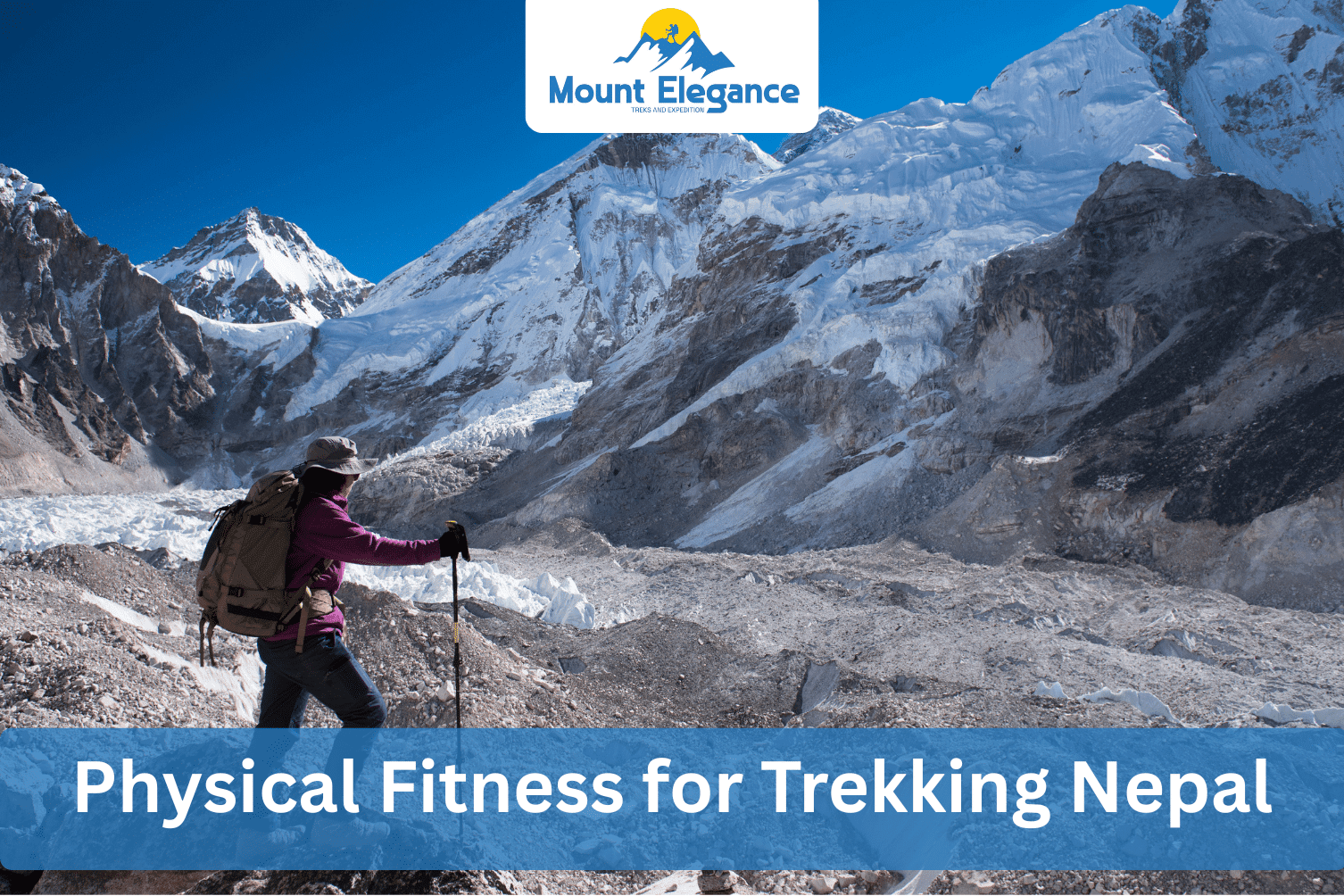
Your Complete Roadmap to Everest Base Camp, Annapurna Circuit & All Nepal Treks
Picture this: You’re standing at Everest Base Camp or watching sunrise over the Annapurna massif, breathing thin mountain air, every muscle alive with hard-earned triumph. Now the truth — the Himalayas don’t care how excited you are. Without proper physical fitness for trekking Nepal, that dream can quickly become a painful struggle.
This is the most complete, SEO-optimized guide you’ll find in 2026 — everything from honest benchmarks to a week-by-week plan that actually works on real Himalayan trails.
1. Why Physical Fitness for Trekking Nepal is Non-Negotiable
Nepal isn’t a normal hiking destination. You’ll face 500–1,200 m of elevation gain almost every day, thin air above 5,000 m (50 % less oxygen), and 5–21 consecutive trekking days on rocky, uneven trails while carrying 8–12 kg. Gym cardio alone won’t save you. Proper physical fitness for trekking Nepal is what turns punishment into pure joy. Himalayan Rescue Association
2. How Fit Do You Really Need to Be? Realistic Benchmarks
To truly enjoy the most popular Nepal treks, you should comfortably be able to:
- Walk 6–8 hours per day on uneven terrain
- Climb 800–1,200 m of vertical gain in one session
- Carry 8–12 kg for hours
- Do back-to-back long days and still smile
3. Assess Your Current Fitness Level (Self-Test)
Ask yourself honestly:
- Can you walk briskly for 2 hours without stopping?
- Can you climb stairs for 15 straight minutes?
- Have you done multi-day hikes with a pack before?
- Any knee, ankle, or lower-back issues?
4. Training Timeline Based on Your Starting Point
| Current Fitness Level | Months Needed | Weekly Sessions |
|---|---|---|
| Sedentary / Beginner | 4–6 months | 5–6 days |
| Moderately Active | 3–4 months | 4–5 days |
| Already Athletic | 2–3 months | 4–5 days |
| Experienced Hiker | 6–10 weeks | 3–4 days |
5. The 3 Pillars of Physical Fitness for Trekking Nepal
- Cardiovascular Endurance – Build altitude-proof lungs with hiking, stair climbing, hill repeats, and long incline treadmill sessions.
- Leg Strength & Knee Protection – Squats, lunges, step-ups, single-leg deadlifts, calf raises.
- Core, Balance & Flexibility – Planks, side planks, yoga, daily stretching, single-leg balance drills.
6. Proven 12-Week Nepal Trekking Training Plan
Weeks 1–4: Foundation Focus on consistency and form. Mon: 40 min cardio + leg strength Tue: Core & mobility Wed: 45 min cardio Thu: Rest/yoga Fri: Strength Sat: 2–3 h hike Sun: Rest
Weeks 5–8: Building Increase volume. Saturday hikes → 4–6 hours with 5–9 kg pack. Add intervals and hills.
Weeks 9–12: Peak Saturday = 6–8 hours with full 10–12 kg pack. Practice at least two back-to-back long days. Full sample plan – Ian Taylor Trekking
7. Trek-Specific Fitness Requirements
Everest Base Camp (12–14 days, 5,364 m) Emphasis: stair climbing + consecutive long days. Annapurna Circuit (15–21 days, Thorong La 5,416 m) Emphasis: superior endurance + balance. Shorter Treks (Poon Hill, Langtang, Mardi Himal) 8–10 weeks of the above plan is sufficient if already active.

8. Nutrition, Hydration & Recovery Strategies
- Pre-workout (1–2 h): carbs + moderate protein
- During (>2 h): 30–60 g carbs/hour + electrolytes
- Post-workout: 20–30 g protein within 30 min
- Hydration: pale yellow urine
- Sleep 7–9 h, 1–2 full rest days per week Mayo Clinic High-Altitude Guidelines
9. Biggest Training Mistakes to Avoid
- Starting only 6–8 weeks before
- Training only on flat ground
- Never using a weighted pack
- New boots without breaking them in (100+ km minimum)
- Skipping strength or rest days
- Poor nutrition and sleep
10. Final 4-Week Taper & Pre-Trek Strategy
- Weeks –4 to –2: Maintain intensity, high volume
- Weeks –2 to –1: Reduce volume 30–50 %
- Final week: Light walks only, sleep, hydrate, pack
11. FAQ – Physical Fitness for Trekking Nepal
Can I get EBC-ready in 3 months? Yes — if you’re already moderately active and train 5 days/week consistently.
Do I need to run? No. Hiking with elevation is better, but running helps cardio fast.
Best single exercise? Stair climbing with a weighted pack.
Are altitude masks useful? Marginal benefit. Focus on real cardio instead.
12. Conclusion: Earn Your Place in the Himalayas
Your physical fitness for trekking Nepal is what turns a tough trek into an unforgettable adventure. Train hard now, and the Himalayas will reward you.
Ready to make it happen? Book with Mount Elegance Treks — expert guides, safe itineraries, and hundreds of happy trekkers. Start training today. See you at