 Featured


Dhaulagiri Base Camp Trek 15 Days
Duration
15 days
Acoomodation
Tea House & Tent
Maximum Guests
40
Highest Altitude
5,360m/ 17,585ft
Best Season
Mar-Apr & Sep-Nov
Start/End Point
Kathmandu
Dhaulagiri Base Camp Trek Overview
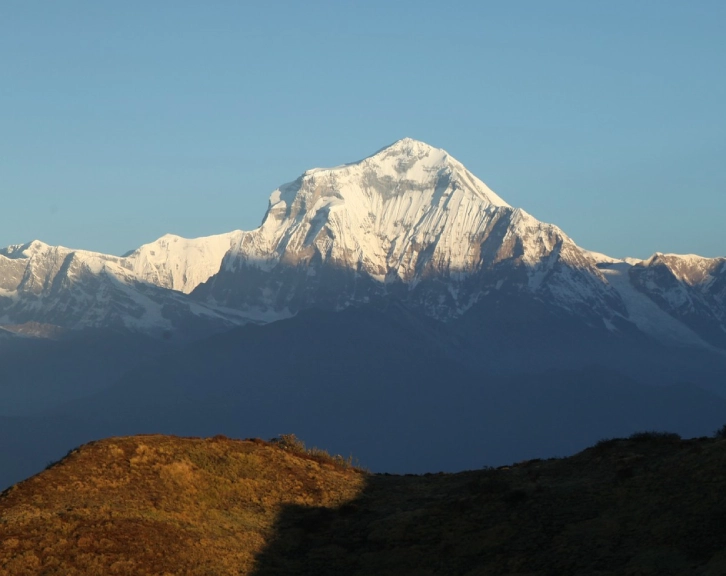
Dhaulagiri Base Camp Trek takes you deep into the wild, quiet side of Nepal's mountains. This is not a busy trail. It leads through the remote Dhaulagiri region, past Mt. Dhaulagiri (8167m), the seventh highest mountain on Earth, into places that honestly haven't changed much in centuries.
The trek starts near Mudi, in the Myagdi district, then follows the Kali Gandaki Valley up through small villages like Dharapani Village. Along the way you'll pass Italian Base Camp, Japanese Camp, and Yak Kharka, where clear weather brings jaw-dropping views of Dhaulagiri I, II, III, IV & V all lined up at once. From there it's on to Glacier Camp (4210m), then finally Dhaulagiri Base Camp itself, sitting right beneath the massive Dhaulagiri Massif.
This is where things get properly tough. The route pushes into real alpine zones, crossing both the punishing French Pass (5360m) and Dhampus Pass, each well above 5,000 meters. Between them sits Hidden Valley - a stark, snow-covered basin ringed by Boudha Himal, Himal Chuli, Ganesh Himal, and Sringi Himal. Solid acclimatization isn't optional before tackling this part.
Since most nights are spent under tents, there's a genuine camping nature to the whole trip - proper Camping Trek Nepal stuff, sleeping close to glaciers under open sky. Once past the passes, the trail winds down toward the Annapurna region, wrapping up in the charming towns of Marpha and Jomsom.
It's not all mountains, either. The route runs through villages home to Magar and Gurung Communities, along with pockets of Thakali Culture near the Kali Gandaki. Time it right, and you might catch local celebrations like the Baglung Festival or Toran Lha (Arrow Festival).
There's a decent shot at wildlife too - Himalayan tahr, Himalayan blue sheep (naur), even the occasional snow leopard in the quieter, higher stretches of the trail.
For anyone who's already trekked Nepal and wants something rawer, this Himalayan Trekking route through Himalayan Glacier country beneath Dhaulagiri delivers exactly that.
TripDhaulagiri Base Camp Highlights
- World's 7th Highest Peak Dhaulagiri (8,167 m): Get up close to the world's 7th highest mountain, a massive peak that stays in view throughout your journey.
- French Pass (5,360m): Hike over a high mountain pass for an incredible view of Tukuche Peak and the Dhaulagiri mountain range.
- Dhampus Pass (5,244m): Cross a second highest pass that leads out of Hidden valley and start your descent toward Marpha.
- Hidden Valley: Explore a quiet, isolated mountain valley surrounded by snow capped mountains on all sides.
- Chhonbardan & Dhaulagiri Glaciers: Walk along giant ice and rock glaciers in a wild, rarely visited landscape.
- Annapurna Conservation Area: Travel through a protected area filled with mountain scenery and local wildlife.
- Thapa Pass & Thapa Peak (6,012m): Reach the foot of Thapa Peak to a wide view overlooking the Annapurna Mountains and the Kali Gandaki valley.
- Magar & Gurung Villages: Pass through local mountain villages and experience the warm hospitality and culture of the region.
- Local Festivals: Experience colorful traditional celebrations if your trek aligns with local festival dates.
Dhaulagiri Trek Route Overview
The trek begins with a drive from Kathmandu to Beni, then heads through Mudi to Darbang (1,100m), the real starting point. The trail continues via Muri to Boghara (2,414m), then climbs through forest to Dobang (2,520m). Past Dobang lies Italian Base Camp (3,660m), offering the first close view of Dhaulagiri, followed by Glacier Camp and Dhaulagiri Base Camp (4,748m) itself. The toughest stretch crosses French Pass (5,360m) into remote Hidden Valley, before descending to Marpha and finishing at Jomsom - a full arc from subtropical hills to high alpine wilderness and back.
Why Book Dhaulagiri Base Camp Trekking with Mount Elegance?
- Unique Trek Experience: Mount Elegance combines local knowledge- careful planning- and personalized service to make your Dhaulagiri Base Camp Trek smooth- safe- and well-organized from start to finish.
- Experienced Guides: Our guides have strong experience in high-altitude trekking and know the Dhaulagiri region, weather, trails, camps, and acclimatization needs to help you trek confidently.
- Guaranteed Departures: Once your Dhaulagiri Base Camp Trek is confirmed, we maintain the planned departure and coordinate transport- guides, permits, and logistics so your trip stays on schedule.
- Sleeping Bag & Down Jacket Rental: You can rent a warm sleeping bag and down jacket from us instead of purchasing expensive gear. This helps reduce packing weight and keeps you prepared for cold nights.
- 24/7 Emergency Support: Our team stays available throughout your trek even in an emergency, we coordinate with guides, local contacts with transport providers, and rescue services to arrange timely assistance and evacuation when required.
- Easy Booking System: Booking is simple. Contact us with your preferred dates and group details, receive the trek plan and cost- confirm your trip, and complete the required booking process with our team.
Dhaulagiri Base Camp Trek 15 Days Itinerary
Download ItineraryWelcome to Kathmandu at Tribhuvan International Airport (TIA). Upon arriving at the airport Mount Elegance representatives will meet you at the exit. From there he will drive you to your hotel at Thamel and help check you in. Afterwards our team will contact you for brief orientation and gear checks. Rest up after the long exhausting journey and later you can shop around for gears and souvenirs. Walk around Thamel market to find the best deals, you can get very good deals on any local shops.
Maximum Altitude: Kathmandu (1,400 m / 4,593 ft)
Drive Duration: 30-45 Minutes
Accommodate on Kathmandu and Pokhara included will be 3 star hotel. Hotel upgrade cost will be added and must be informed during booking.
Pre-trip meeting will be at your hotel lobby. All dues are to be cleared during the meet, documents including copy of your passport and visa, and 2 photos will be required for applying the permits. Gear check will also be done during the meet.
The day starts early as you will meet your guide today, he/she will take you to your bus stop. From there you will catch a bus, lay back and enjoy the visible change of urban city, turning into the smaller settlements and terraces farming as you leave Kathmandu. Winding along the curves of huge mountains continuing the Prithivi national highway you will reach Pokhara.
Upon reaching Pokhara your ride switch will drive north-west toward Darbang. Crossing Baglung you will find off roads so be prepared for the motion sickness carry medications. After the roads winding through the huge mountains you will reach the trail head Darbang.
Maximum Altitude: Darbang (1,100m/3,069ft)
Meal: Breakfast, Lunch & Dinner
Drive Duration: 11-12 Hour
Leaving the roads behind you will begin the Foot journey form today as you ascend you will enter lush green subtropical forests, crossing suspension bridges over the rushing Myagdi Khola, and passing Magar settlements. Today will be 5 to 6 hours of gradual incline through local farmlands and lush jungle will take you to Dharapani. Today will be your first experience of local life and local hill landscapes.
Maximum Altitude: Dharapani (1,400 m / 6,430 ft)
Meal: Breakfast,Lunch & Dinner
Trek Duration: 6 hours
Today you will begin the day after breakfast along the river bank through the forest. You will find waterfalls and navigate through the narrow trails into the quieter, less crowded wilderness as you travel through the trail. Settlements get sparser and trails less crowded as you move further into the trails.
Maximum Altitude: JugePani (1,300m/4,265ft)
Meal: Breakfast, Lunch & Dinner
Trek Duration: 5-6 hours
The day begins with challenging climbs with steep stone staircases (“Ukalo”) and narrow cliffside carved into the mountains. Passing this trail you will reach the Boghara, one of the last permanent, all season villager on this trail offering the traditional mountainous lifestyle.
Maximum Altitude: Boghara (2,414m/7,919ft)
Meal: Breakfast,Lunch & Dinner
Trek Duration: 5-6 hours
Leaving the last of permanent settlement you will head into wilderness. Through the dense bamboo, oak, and rhododendron forests to head toward Dobang. Continuing the trails crossing streams on wooden bridges, listening to the roar of the Myagdi Khola, and setting up camp in a dense forest clearing at Dobang.
Maximum Altitude: Dobang (2,520m/8,267ft)
Meal: Breakfast,Lunch & Dinner
Trek Duration: 6-7 hours
Continuing the trails through the dense bamboo forest slowly turning into tall pine forests. Crossing glacier fed rivers into the high altitude landscape, the temperature drops dramatically and emerges into glades with teasing views of snow-capped peaks above the treeline. Camp for the night at Sallaghari
Maximum Altitude: Sallaghari (2,500m/8,202ft)
Meal: Breakfast, Lunch & Dinner
Accommodation: Tent camping
Trek Duration: 5-6 hours
The vegetation change is noticeable today as the last few trees leave you with open wide views of incredible mountains. The trail changes into rugged alpine terrain surrounded by towering rock walls and glaciers. The trail reaches Italian Base Camp ( at 3,660 m), set right beneath the massive west face of Dhaulagiri I, offering jaw-dropping mountain views and an introduction to high altitude. Since there are no tea houses and settlements beyond this point, we will stay in a tent.
Maximum Altitude: Italian Base Camp (3,660m/12,008ft)
Meal: Breakfast,Lunch & Dinner
Accommodation: Tent camping
Trek Duration: 4-5 hour
Today's route will take you through challenging moraine, ice and boulder-strewn paths, including crossing a narrow canyon (often requiring fixed ropes or careful footwork due to rockfall risk). The alpine highland can be found near the Japanese Base Camp and the surreal alpine atmosphere of camping on glacial ground at 4,300 m. Tented camp at Japanese base camp.
Maximum Altitude: Japanese Base Camp (4,300m/14,206ft)
Meal: Breakfast,Lunch & Dinner
Accommodation: Tent camping
Trek Duration: 4-5 hours
Higher chance of altitude sickness after crossing the 4000 m mark so maintain your pacing according to the elevation. Any symptoms such as Headache, Nausea, dizziness etc are to be reported to your trekking guide immediately.
The trails will pass through the Chhonbardan Glacier. Today you will reach the goal of the trip. Leaving the Japanese campsite you will head toward Dhaulagiri Base Camp through the raw, frozen desert environment with close-up views of Dhaulagiri I (8,167m), the icefall, and surrounding peaks. Capture the thrill of camping at Dhaulagiri Base Camp (4,748 m) alongside expedition tents.
Maximum Altitude: Dhaulagiri Base Camp (4,748m/15,577ft)
Meal: Breakfast,Lunch & Dinner
Accommodation: Tent camping
Trek Duration: 7-8 hours
Today will begin early in the morning, the ultimate challenge and highest point of the trek. Crossing the French pass he demanded an early-morning climb to French Pass 5,360m adorned with colorful prayer flags and offering 360 degree views of the Dhaulagiri massif and Mukut Himal. The descent begins from here after soaking in the view's descent into the vast, stark, windswept "Hidden Valley", a secluded high-altitude plateau. Camping at Hidden Valley.
Maximum Altitude: French Pass (5,360m/17,585ft)
Meal: Breakfast,Lunch & Dinner
Accommodation: Tent camping
Trek Duration: 7-8 hours
Today the descend continues crossing another high threshold, Dhampus Pass also known as Thapa Pass at 5,240 m, offering final breathtaking views of Dhaulagiri and Annapurna ranges. It's a steep descent down to the alpine pastures of Yak Kharka, where the landscape transits to the arid Mustang region. The last camping night at Yak Kharka.
Altitude: Yak Kharka (3,837m/12,589ft)
Meal: Breakfast,Lunch & Dinner
Accommodation: Tent camping
Trek Duration: 6-7 hours
The trail descends to Kali Gandaki Valley. Dropping down into Marpha, the famed apple capital of Nepal with its white-washed stone houses, cobbled alleyways, and Buddhist monasteries. From here you will catch a private vehicle to Pokhara. Enjoying the barren lands of Mustang valley through the sandy desertlike lands return back to lush greenery on 4 to 5 hours of drive. Upon reaching Pokhara (a perfect relaxing vibe city) celebrate the successful completion of the trek.
Altitude: Pokhara (820 m/ 2,690 ft)
Meal: Breakfast & Lunch
Trek Duration: 4-5 hours
Drive Duration: 6-7 hours
Today you will drive through the same highway back to Kathmandu. Early in the morning after breakfast the drive begins. Through the local settlements and farmlands you will reflect on the trip back to Kathmandu. Upon reaching Kathmandu relax after the long journey or shop around and explore the city. In the evening a farewell dinner will be hosted and certificates on trek completion will be distributed.
Altitude: Kathmandu (1,400 m / 4,593 ft)
Meal: Breakfast & Dinner
Drive Duration: 7-8 hour
Last day of the trip you. If time allows a brief sightseeing you can visit some of the closest places such as Basantapur darbar square, swyambunath etc before departing for the airport. Do share your flight details with the team for the drop off at the airport. The final hotel check-out and smooth transfer to Tribhuvan International Airport (TIA) for international flight departures, leaving travelers with lifelong memories of the Dhaulagiri wilderness.
Altitude: Kathmandu (1,400 m / 4,593 ft)
Meal: Breakfast
Drive Duration: 35-40 Minutes
Looking at other options?
Compare this trip with our other itineraries.
Mera Peak Climbing
- Day 1 Flight to Lukla & Trek to Chutanga (3,430m)- 25 to 30 minutes flight & 4-5 hour hike. Overnight stay at tea houses in Chutanga.
- Day 2 Trek from Chutanga to Thuli kharka/chatra (3900m) la via zwatra la pass (4610m)- 6 to 7hrs hike. Overnight stay at tea houses in Thuli Kharka/Chatra la.
- Day 3 Trek from Thuli Kharka to Kothe (3691m) - 5 to 7hrs hike. Overnight stay in a traditional lodge at Kothe.
- Day 4 Trek from Kothe to Thaknak (3600m)- 4 to 5hrs hike. Overnight stay at Thaknak in a teahouse.
- Day 5 Trek from Thaknak to Khare(5,045m)- 4 to 5hrs hike. Overnight stay at khare in a teahouse.
- Day 6 Acclimatization day at Khare (5,045m). Overnight stay at khare in a teahouse.
- Day 7 Trek from Khare To High Camp (5780m)- 4 to 6hrs hike. Overnight stay at a high camp in a tent.
- Day 8 Submit Mera Peak(6476m) and return from high camp to Khare- 10 to 10hrs hike. Overnight stay at khare in the teahouse.
- Day 9 Trek from Khare to Kotha(3691m)-4 to 5hrs hike.over night stay at teahouse in kotha.
- Day 10 Trek from Kotha to Thuli Kharka/Chatra la(4600m)- 6 to 7hrs hike. Overnight stay at Thuli Kharka in the teahouse.
- Day 11 Trek from Thuli Kharka to Lukla(2860m)- 7 to 8hrs hike. Overnight stay at lukla in the teahouse.
- Day 12 Fly back from Lukla to Kathmandu (1,400m)- 25-30 min Flight.
Annapurna Circuit Trek
- Day 1 Kathmandu Arrival (1,400m) - 30 to 45 minutes drive. Overnight stay at a 3 star hotel.
- Day 2 Drive from Kathmandu to Besisahar (760m)- 6 to 7 hour drive. Overnight stay at a tea house in Besisahar.
- Day 3 Drive from Besisahar To Chame (2,630m) - 5 to 6 hour drive Overnight stay at the tea house in Chame.
- Day 4 Trek from Chame to Pisang (3,300m)- 4 to 5 hours. Overnight stay at the tea house in Pisang.
- Day 5 Trek from Pisang to Manang (3,370m) - 5 to 6 hours. Overnight stay at the tea house in Manang.
- Day 6 Acclimatization day at Manang (3,370m). Overnight stay at the tea house in Manang.
- Day 7 Trek from Manang to Yak Kharka (4,050m) - 4 to 5 hours. Overnight stay at the tea house in Yak Kharka.
- Day 8 Trek from Yak Kharka to Thorong Phedi (4,450m) - 3 to 4 hours. Overnight stay at the tea house in Thorong Phedi.
- Day 9 Trek from Thorong Phedi to Muktinath (3,800m) via Thorong La pass (5,416m)- 7 to 8 hours. Overnight stay at the tea house in Muktinath.
- Day 10 Drive from Muktinath to Tatopani (1,190m)- 5 to 6 hours drive. Overnight stay at the tea house in Tatopani.
- Day 11 Trek from Tatopani to Ghorepani (2,860m) - 7 to 8 hours. Overnight stay at the tea house in Ghorepani.
- Day 12 Hike Poonhill (3,210m), Trek to Nayapul & drive to Pokhara- 6 to 7 hour trek & 2 to 3 hour drive. Overnight stay at a 3 star hotel in Pokhara.
- Day 13 Drive from Pokhara to Kathmandu- 7 to 8 hours. Overnight stay at the 3 star hotel in Kathmandu.
- Day 14
Everest Base Camp Trek
- Day 1 Kathmandu Arrival (1,400m) - 30 to 45 minutes drive. Overnight stay at the 3 star hotel in Kathmandu.
- Day 2 Fly to Lukla (2,860m) & Trek To Phakding (2,610m)- 25 to 30 minute flight & 3-4 hour trek . Overnight stay at a Tea house in Phakding.
- Day 3 Trek from Phakding to Namche Bazar (3,440m)- 5 to 6 hour trek. Overnight stay at the tea house in Namche Bazar.
- Day 4 Acclimatization day at Namche Bazar (3,440m). Overnight stay at the tea house in Namche bazar.
- Day 5 Trek from Namche Bazar To Tengboche (3,860m) - 5 to 6 hours. Overnight stay at the tea house in Tengboche.
- Day 6 Trek from Tengboche to Dingboche (4,410m) -6 to 7 hours. Overnight stay at the tea house in Dingboche.
- Day 7 Acclimatization day at Dingboche (4,410m) - 6 to 7 hours (Optional hike to Nangkartshang Peak (5,083m). Overnight stay at the tea house in Dingboche.
- Day 8 Trek from Digboche to Lobuche (4,940m) - 5 to 6 hours. Overnight stay at the tea house in Lobuche.
- Day 9 Trek Lobuche To Gorakshep (5,164m) & Hike to Everest Base Camp (5,364m) - 6 to 7 hours. Overnight stay at the tea house in Gorakshep.
- Day 10 Climb Kala Pathar(5,545m) & Trek back to Pheriche- 6 to 7 hours Overnight stay at the tea house in Pheriche.
- Day 11 Trek Pheriche To Namche Bazar (3,440m)- 5 to 6 hours. Overnight stay at the tea house in Namche Bazar.
- Day 12 Trek Namche Bazar To Lukla (2,860m)- 6 to 7 hours. Overnight stay at the tea house in Lukla.
- Day 13 Flight from Lukla to Kathmandu (1,400m) - 25 to 30 minutes. Overnight stay at the 3 star hotel in Kathmandu.
- Day 14 Departure from Kathmandu- 35 to 45 minutes. Breakfast included.
Dhaulagiri Base Camp Trek Package (Inclusion & Exclusion)
Trip Includes:
Accommodation
- Twin-sharing/double accommodation in a 3-star hotel for 2 nights in Kathmandu and 1 Nights in Pokhara including breakfast (Private room accommodation can be organized at an extra cost).
- Sharing guesthouse accommodation during the trek for 7 nights in the Dhaulagiri Region.
- 4 Night Twin sharing tented accommodation during the trek (after Italian Base camp to Yak Kharka)
Meals & Drinking Water
- All your standard meals during the trek (14 Breakfasts, 12 Lunches and 12 Dinners) including tea or coffee.
- Fresh seasonal fruits each day after dinner during the trek.
- A farewell dinner on the last night in Nepal.
- Purified drinking water during the trek using Water Filter or water purification tablets.
Transportation
- All (international and domestic) airport transfers on a tourist vehicle.
- Private Jeep from Kathmandu-Pokhara- Darbang
- Drive from Marpha-Pokhara - Kathmandu in a Tourist Bus/Jeep.
Guide and Staff
- Experienced, first-aid trained, government licensed, English speaking, and locally recruited Mount Elegance trekking guide (2 guides for group size more than 8 people).
- Porters during the trek for carrying luggage (1 porter for every 2 clients).
- Wages, accommodation, meals, gear, insurance and medications for all staff.
- Cook to prepare meals during tented accommodation.
Dhaulagiri Base Camp Trek Permits
- Annapurna Conservation Area Permit (ACAP) Permit.
- TIMS (Trekkers’ Information Management System) card.
Equipment and Takeaways
- Trekking equipment (two men tent, dining tent, kitchen tent, table with chairs, kitchen utensils, and other necessary equipment during the tent trek)
- 1 Mount Elegance duffel bag and Sleeping Bag (Should be returned after trek Completion)
- Mount Elegance Complimentary Tshirt, Cap and Route Map.
- A comprehensive first aid kit, including an Oximeter to check pulse and oxygen levels daily in the mountains.
- Trip completion certificate.
Administrative & Taxes
- All administrative expenses and government taxes.
Trip Excludes:
- Lunch and dinner in Kathmandu and Pokhara.
- International flight fare and airport departure tax.
- Nepal Entry Visa (Visa can be acquired easily after your arrival at Tribhuvan International Airport in Kathmandu with a fee of USD 30 for 15 days visa, USD 50 for 30 days visa and USD 125 for 90 days visa).
- Travel insurance along with high-altitude emergency evacuation coverage.
- Any beverages including bottled and boiled water.
- Tips to trekking staff and drivers.
- Personal trekking gear and equipment.
- Any expenses other than the Price Include section.
Departure Dates
Packing and Gear List for Dhaulagiri Base Camp Trekking
Check this comprehensive trekking and climbing checklist for your Dhaulagiri Base Camp, Equipments that are provided by the company are also mentioned below and other all necessary things are mentioned for your trek so kindly pack things accordingly:
Clothing (Layering System)
- Base Layer: 2–3 pairs of thermal tops and bottoms (high-grade synthetic).
- Trekking Shirts: 3–4 lightweight, breathable long-sleeve shirts for sun and dust protection on the Dhaulagiri trail.
- Trekking Pants: 2 pairs of stretchable, quick-dry trekking pants.
- Insulation Layer: 1 high-loft fleece jacket or lightweight down sweater.
- Outer Layer (Heavy Insulation): 1 expedition-weight, windproof, waterproof down jacket with a hood (essential for the freezing Dhaulagiri Base Camp and french pass). (You can rent from our company paying $50 total).
- Hard Shell: 1 breathable waterproof jacket and pants to withstand wind, rain, or alpine snow.
- Underwear: 5–6 pairs of moisture-wicking sports underwear.
Footwear
- Trekking Boots: 1 pair of ankle-supportive, water-resistant hiking boots.
Note: These can be rented in Kathmandu if needed.
- Camp Shoes: 1 pair of lightweight sports sandals for relaxing in the teahouses.
- Socks: 3–4 pairs of thick merino wool trekking socks, 2 pairs of heavy expedition climbing socks, and 2 pairs of thin liner socks.
- Gaiters: 1 pair of breathable, waterproof gaiters to seal out snow and scree.
Backpack and Storage
- Main Duffel Bag: 1 heavy-duty, weather-resistant 90L–120L duffel bag (to be carried by porters/yaks and will be provided by the company).
- Daypack: 1 technical 35L–45L daypack with a rain cover, ice axe loops, and a supportive hip belt (for carrying layers, water, camera, medicine, snacks, clothes for a day and climbing hardware on summit day). Day bag packs will be carried by guests.
- Dry Bags: A collection of lightweight waterproof dry sacks to segregate and protect electronics and clothing.
Technical and Trekking Gear
- Sleeping Bag: 1 extreme-weather four-season sleeping bag rated down to at least -20°C / -4°F (crucial for comfort at Dhaulagiri Base Camp and it will be provided by the company).
- Trekking Poles: 1 pair of adjustable trekking poles with snow baskets.
- Headlamp: 1 high-lumen LED headlamp with extra lithium batteries (essential for the midnight summit push).
- Water Storage: 2 wide-mouth, insulated 1-liter Nalgene bottles (must handle boiling water) and thermal bottle jackets to prevent freezing.
- Glacier Glasses: 1 pair of high-protection UV category 4 glacier glasses with side shields.
Health and First Aid
- Altitude & Illness Medication: Diamox (Acetazolamide) for altitude acclimatization, a course of broad-spectrum antibiotics, and anti-diarrheals (Imodium).
- Water Purification: Purification tablets or chlorine dioxide drops (standard filters can freeze and crack at high camps).
- Blister & Trauma Care: Comprehensive blister kits (Compeed/Moleskin), athletic tape, sterile gauze, and elastic bandages.
- Personal Pharmacy: Rehydration salts (ORS), Ibuprofen/Paracetamol, cough lozenges (to combat the dry "Khumbu cough"), and personal prescriptions.
Note: Guide will also carry a first aid kit.
Personal Items and Extras
- Sun Protection: SPF 50+ broad-spectrum sunscreen and dedicated SPF zinc lip balm.
- Sanitation: Multiple packs of pocket tissues, wet wipes (for camp showers), and high-alcohol hand sanitizer.
- Power Bank: 2 high-capacity (20,000mAh) heavy-duty power banks.
- High-Altitude Snacks: Energy gels, protein bars, chocolate, and electrolyte powders to stimulate appetite at extreme elevations.
Documents and Cash
- Identity & Visas: Original passport valid for 6+ months past travel dates, plus physical paper copies. For a Nepal visa you will pay cash after arriving in Nepal.
- Permits: Valid TIMS card and Annapurna Conservation area permit (ACAP).
- Insurance Certificate: Printed proof of comprehensive travel and mountaineering insurance covering search, rescue, heli-evacuation, and technical climbing up to 5,500 meters.
- Photos: 2-3 recent passport-sized photos for local permits and regional SIM cards.
- Cash: Carry nepalese rupee during trek while credit card might not be accepted to get some souvenir or other snacks. You can exchange to nepali Currency after arriving in Kathmandu.
Final Tips
- Strict Weight Limits: Keep your main duffel bag under 15 kg (33 lbs) to strictly comply with the domestic flight and the porter will also carry 15 kg max per person.
- Freeze Prevention: Store your phone, camera batteries, headlamp, and power banks inside your inner jacket pockets during the day, and at the bottom of your sleeping bag at night to prevent freezing temperatures from killing the battery life.
Dhaulagiri Base Camp Trek Map and Elevation

Dhaulagiri Base Camp Altitude Chart

Dhaulagiri Base Camp Trek 15 Days Costs
The Dhaulagiri Base Camp Trek 15 Days generally costs around $3800per person, depending on group size, services, guide and porter.For a trekking package, the cost commonly covers:
- Guide and porter services
- Camping equipment and support staff
- Meals during the trek
- Accommodation in Kathmandu and trekking areas
- Ground transportation
- Required permits and conservation fees
- Sleeping bag and down jacket rental, where offered
- Emergency support and trekking logistics
The final price can vary based on whether you choose a private trek or group departure, the level of service, and optional services such as helicopter evacuation or private transportation.
Transportation Cost
Transportation costs for the Dhaulagiri Base Camp Trek depend on the route- travel style and services you take. A tourist bus is a budget-friendly option, usually costing around USD 50 per person, while a private vehicle offers greater comfort at aroundUSD 300 per vehicle. A domestic flight is not usually required for the standard trek but may be included in customized itineraries and Airport transfer generally costs around USD 60 per vehicle.
Insurance and Visa Cost
Insurance and visa costs are important when planning the Dhaulagiri Base Camp Trek. A Nepal Tourist Visa is required for most international visitors, while trekking insurance should cover high-elevation activities. Emergency evacuation insurance is essential because helicopter rescue can be costly. Choose a policy with sufficient medical coverage for illness- injury- and treatment. Trip cancellation coverage can also protect your prepaid expenses if unexpected situations force you to cancel.
Permit Cost
Permit costs for the Dhaulagiri Base Camp Trek include the Annapurna Conservation AreaPermit and a TIMS Card- both of which are required for most trekkers. These permits help support conservation efforts- trail maintenance- and trekker safety. Along the route, you must present your permits at each permit checkpoint where officials record your entry and exit. Permits can be obtained through the Nepal Tourism Board or a registered trekking agency before starting the trek.
Guide and Porter Cost
Guide and porter costs are important parts of the Dhaulagiri Base Camp Trek budget. A licensed experienced trekking guide normally charges around US$ 25 per day, while a porter may cost about US$ 20 per day. Rates can vary based on season, group size, and services included. For this remote trek, an experienced guide and porter are valuable for route navigation- carrying gear- campsite logistics- and handling changing mountain conditions.
Accommodation Cost
Accommodation costs for the Dhaulagiri Base Camp Trek vary by location. Kathmandu hotels may cost around USD 50 per night, while basic lodges cost about USD 20. Remote sections require camping, with tents, mattress
Food and Water Cost
Food and water costs for the Dhaulagiri Base Camp Trek include breakfast, lunch, and dinner, with tea and coffee available at lodges. Budget of around USD 100 daily for - meals, drinks, snacks and water. Bottled water costs more, while boiled water and purification tablets offer an affordable choice.
Food and Accommodation on Dhaulagiri Base Camp Trekking
Food and accommodation on the Dhaulagiri Base Camp Trek are local and basic but suitable for a remote Himalayan trek adventure. Trekkers stay in simple teahouses and lodges, while in remote areas you require camping where you have to stay in a tent. Meals include - dal bhat, noodles, rice, soups, eggs, bread, tea etc. During camping sections - a kitchen team prepares nutritious meals to support long trekking days. Clean drinking water is available through boiled or treated water, and carrying purification tablets is recommended.
Best Time to do Dhaulagiri Trek in Nepal
Autumn is the best time for the Dhaulagiri Trek - which offers clear skies and stable weather with perfect visibility. Spring brings pleasant temperatures and blooming rhododendron trails making your trek more relaxing because of the view along the trek journey. Monsoon has heavy rain and slippery trails and can sometimes bring landslides, while winter brings extreme cold temperatures with snow and challenging high-pass conditions - making trekking difficult with poor visibility due to heavy fog.
Autumn (September to November)
Autumn is one of the best seasons for the Dhaulagiri Base Camp Trek which offers - stable weather with clear skies, dry and suitable trails and excellent mountain visibility. September to November offers comfortable daytime trekking conditions and stunning views of Dhaulagiri and surrounding Himalayan peaks.
Spring (March to May)
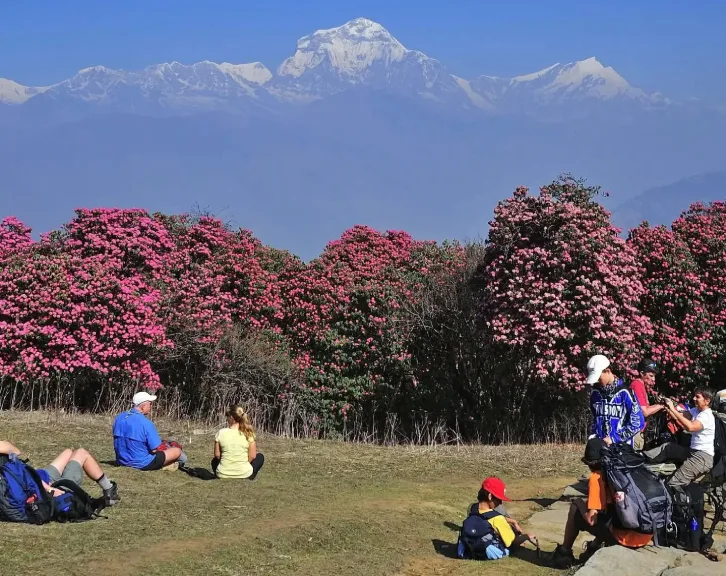
Spring is another excellent season for the Dhaulagiri Base Camp Trek which offers - mild temperatures with clear mountain views and generally stable weather. Trails become colorful with blooming rhododendrons and other alpine flowers, creating beautiful scenery throughout the trek.
Monsoon (June to August)
Monsoon is a challenging time for the Dhaulagiri Base Camp Trek due to heavy rains, which can cause landslides and make trails unsafe. Muddy paths become slippery, while thick leeches are common in wet forest areas, making trekking uncomfortable and difficult.
Winter (December to February)
Winter brings freezing temperatures - heavy snowfall with icy trail and strong winds to higher sections of the Dhaulagiri Base Camp Trek. Snow can make high passes difficult or unsafe to cross due to heavy snowfall. Proper and good-quality winter gear - experience and careful weather planning are essential.
How Difficult is Dhaulagiri Base Camp Trek
The Dhaulagiri Base Camp Trek is a tough hike in Nepal because it has rugged and challenging terrain at higher elevation with long walking days and uncertain weather conditions. As you go higher up the air gets thinner more likely to get sick from the high altitude. You might feel tired - get headaches, have trouble breathing or have loss of appetite which are the symptoms of altitude sickness. This can make this trek more difficult so you need to be in physically fit shape because some days are very long and you have to walk on hard ground for a long period of time. The weather can change quickly and the temperature will certainly drop making it very cold, so trekkers need to be prepared and bring essential gear. Drink plenty of water and listen to your guide's advice as they are someone who are highly experienced and knows what is good for you.
Can a Beginner do Dhaulagiri Base Camp Trek?
A beginner can do the Dhaulagiri Base Camp Trek - but it is not recommended for first-time trekkers without proper preparation. The trail is remote and challenging with a rugged route- long walking days with steep climbs and high altitude with changing weather. Previous high-altitude trekking experience is helpful, but physically fit beginners can prepare through regular hiking with basic endurance training. Proper acclimatization with suitable gear and an experienced guide, a slow-steady pace are important for completing the trek safely.
Dhaulagiri Base Camp Trek vs Dhaulagiri Circuit Trek
Feature | Dhaulagiri Base Camp | Dhaulagiri Circuit Trek |
Main Focus | Reaching Dhaulagiri Base Camp | Completing a circuit around Dhaulagiri |
Duration | Around 15 days | Usually 18–22 days |
Difficulty | Very challenging | Extremely challenging |
High Point | French Pass, around 5,360 m | French Pass, around 5,360 m |
Terrain | Rugged trails, glaciers, steep sections | Rugged trails, glaciers, high passes |
Camping | Required on remote sections | Required for much of the route |
Best For | Trekkers wanting a shorter Dhaulagiri adventure | Experienced trekkers seeking a complete circuit |
Experience | Base camp, mountain scenery, remote wilderness | Full Dhaulagiri massif, remote valleys, high-pass crossings |
Preparation and Safety Measures for Dhaulagiri Base Camp Trek
Proper preparation and safety measures are important for the Dhaulagiri Base Camp Trek. Build fitness through simple exercises with hiking and uphill training, prepare for high altitude - and follow proper acclimatization. Carry warm and comfortable clothes, sturdy boots, water purification tablets, and essential medicines. Stay hydrated, follow your guide - monitor weather and have insurance covering emergency evacuation.
Physical Fitness
Build endurance with regular hiking and walking, simple regular exercise which will help you gain strength before the trek because being physically fit is very important, as you have to walk for a long period on an uneven trail and uncertain weather conditions
Altitude Practice
Train on uphill trails and practice walking with a backpack to prepare for long climbs. Focus on walking at a slow and steady pace. The level of oxygen decreases as you go to higher elevation so trying to climb fast can cause altitude sickness and other problems can arise.
Acclimatization
Follow a gradual schedule with slow walks and proper rest - drinking plenty of water so that you will stay hydrated all along the trail, and allow your body to adjust to high altitude. You must try to understand your body whenever you are at a new elevation.
Essential Equipment
Carry warm layers of clothes to keep yourself protected from cold and high-temperature weather conditions carrying good quality trekking boots, a warm sleeping bag - gloves to protect your hands, and waterproof clothing with all other essential trekking equipment.
Medicine and First Aid Kit
Carry your doctor-prescribed medicines with basic first-aid supplies, pain relief medicine, blister treatment, and personal medication. This can be very helpful during the trekking journey
Things to know before doing Dhaulagiri Base Camp Trek
Before doing the Dhaulagiri Base Camp Trek you should prepare for uneven, rough trails with long walking days at high altitude and changing weather conditions. Build good fitness, pack warm clothes that are comfortable and can be layered, waterproof clothing and carry essential medicines that are recommended by your doctor. Proper acclimatization is important to prevent altitude sickness. Travel insurance with an experienced guide and emergency evacuation coverage are strongly suggested.
Insurance
Travel insurance is important for the Dhaulagiri Base Camp Trek because the route gets higher each day and is remote. Choose a policy that covers high elevation, medical treatment, emergency evacuation, and helicopter rescue service. Check whether trip cancellation, delays, lost baggage, and other travel problems are also included before purchasing your policy.
Visa
Most international travelers need a Nepal tourist visa to enter Nepal. You can obtain a visa on arrival at Tribhuvan International Airport or apply through an online site. Carry a valid passport, passport-size photos, and payment for the visa fee.
Permits
Dhaulagiri Base Camp Trek requires permits and conservation documents depending on the selected route. Your trekking agency normally arranges the necessary permits before the trek so keep your passport details and photographs ready for processing whenever it is needed. Permit documents may be checked at certain checkpoints, so carry copies safely throughout the trek journey.
Guide
An experienced guide is highly recommended for the Dhaulagiri Base Camp Trek because the route is remote, challenging and includes high mountain passes. A guide will help you with navigation of routes with daily planning, acclimatization and weather decisions. They can also coordinate accommodation - camping logistics and emergency assistance when unexpected situations arise.
Porter
A porter helps carry your main trekking equipment, reducing the physical burden during long walking days. Steep and rugged trails can be challenging, so carrying less weight makes your walking journey easier. Discuss baggage limits with your trekking company and pack only essential items to keep the porter’s load manageable.
Accommodation
Accommodation varies according to the section of the Dhaulagiri Base Camp Trek. Lower areas may have basic teahouses or local lodges but in higher and remote sections, camping is required. Facilities become simple as you gain elevation, so expect basic sleeping arrangements and limited services.
Teahouses in Lower Section
In lower sections, trekkers can stay in simple teahouses or local lodges as rooms are usually basic - with beds, blankets, and shared bathrooms. Some lodges provide dining areas where trekkers can eat and rest. Facilities gets vary between villages, so carrying a sleeping bag and personal hygiene items can be useful.
Camping in Upper Section
Upper sections of the Dhaulagiri Base Camp Trek are remote and have no regular teahouses, making camping necessary. Trekking teams usually carry - tents, sleeping equipment, cooking supplies and food. A support crew manages campsite setup and meals. Trekkers should be prepared for cold windy nights with basic facilities and limited access to electricity.
Meal and Drinking Water
Meals generally include dal bhat, noodles, rice, soup, eggs, bread and hot drinks in lower areas. During the camping section, a kitchen team prepares meals - drink boiled water or carry purification tablets to avoid untreated water from streams, even when it looks clean.
Duration
Dhaulagiri Base Camp Trek usually takes around 15 days although the duration can change according to the chosen - itinerary, acclimatization schedule, weather and trail conditions. Remote terrain and high passes require a steady pace to avoid rushing. Extra buffer days are useful for unexpected weather, delays or health concerns.
Personal Expenses
Personal expenses are additional costs outside your trekking package so manage Budgeting for snacks or extra expenses like you have to pay extra if you use services like wifi, or charging your electronic devices, hot water service for showers and so on. It's recommended to carry enough Nepalese rupees because card facilities and ATMs are limited or unavailable in remote areas. Keep some emergency cash for unexpected expenses.


FAQs
General Information
Dhaulagiri Base Camp is located at Dhaulagiri region in the northern central nepal ( Myagdi district, Gandaki ) at the foot of Mount Dhaulagiri which is the world's seventh highest Mountain peak.
The Dhaulagiri Base Camp Trek is a very challenging trek requiring good fitness, endurance and previous trekking experience. It includes long days, steep trails, high passes, glaciers and remote camping.
The Dhaulagiri Base Camp Trek usually takes around 15 days depending on the route, acclimatization schedule, weather, walking pace and whether you complete the full Dhaulagiri Circuit.
The highest point is usually French Pass at about 5,360 meters. Depending on the itinerary you may also cross Dhampus Pass reaching approximately 5,240 meters above sea level.
Preparation and Fitness
Essential gear includes sturdy trekking boots, warm layers, waterproof clothing, a sleeping bag, backpack, trekking poles, headlamp, gloves, sunglasses, water bottles, sunscreen, personal medicines and basic first-aid supplies.
You should have strong cardiovascular fitness, leg strength and endurance with regular hiking, stair climbing, running and strength training for several months can help prepare you for demanding trekking days.
yes you can take altitude medication like Diamox to help prevent altitude sickness but it should be used only after medical advice. Proper acclimatization, gradual ascent, hydration and recognizing symptoms are equally important for altitude safety.
Yes, carrying a small personal first-aid kit is recommended. Include blister treatment, bandages, pain medicine, antiseptic, personal medicines and other basic supplies recommended by your doctor or guide.
Health and Safety
Main challenges include high altitude, altitude sickness, cold weather, steep terrain, glaciers, difficult passes, falling rocks, limited facilities and changing weather. Careful planning and experienced guides improve overall safety.
Ascend slowly, follow acclimatization days, drink enough water, avoid excessive alcohol, eat properly and listen to your body. Report headaches, nausea, dizziness, or breathing problems to your guide.
Medical facilities are very limited because the Dhaulagiri region is remote. Basic treatment may be available in some villages, while serious emergencies may require evacuation to a larger medical facility.
Use biodegradable soap, wet wipes, hand sanitizer and toilet paper. Take regular body washes with warm water when possible, keep clothes dry and dispose of waste responsibly at designated locations.
Permits
You generally need the appropriate Annapurna Conservation Area or relevant conservation-area permits, a TIMS card where applicable and local permits required by authorities for your specific trekking route.
Permit requirements can differ because the Dhaulagiri Circuit passes through remote and restricted areas. Your trekking agency should confirm the exact permits required according to your planned route.
Some Dhaulagiri routes may require additional permits because they enter restricted or controlled areas. Requirements can change, so check current rules with your trekking agency before departure.
Required permits can generally be obtained through authorized tourism offices or registered trekking agencies in Nepal. Agencies usually arrange permits for trekkers as part of the trekking package.
Coverage for pre-existing medical conditions depends on the insurance provider and policy. Some policies exclude them completely, while others offer coverage under specific conditions or require medical disclosure beforehand.
Yes, carry a printed copy of your insurance policy, emergency contacts and assistance details. Keep a digital copy on your phone or email as an additional backup.
Insurance and Visa
Travel insurance is strongly recommended and may be required by trekking agencies. Choose comprehensive coverage that includes high-altitude trekking, emergency medical treatment, evacuation, trip cancellation and other trekking-related risks.
Your insurance should cover the highest altitude on your itinerary at least 6,000 meters for added protection. Always check the policy’s exact altitude and activity restrictions before purchasing.
Guides and Support
A guide and porter are highly recommended because the trek is remote, challenging, and includes difficult high-altitude sections. Experienced local staff provide navigation, safety support, logistics and carrying assistance.
Experienced trekking guides are generally trained to recognize common AMS symptoms and respond appropriately. They can monitor trekkers, recommend rest or descent and arrange evacuation when necessary.
A common arrangement is one porter for every two trekkers, although the ratio depends on luggage weight, group size, itinerary and agency policy. Always confirm porter arrangements before departure.
The guide leads the group, manages the itinerary, monitors health and altitude symptoms, handles route decisions, coordinates camps and staff, communicates with locals and responds to emergencies when necessary.
Accomodation
Accommodation includes basic teahouses or lodges in lower villages and organized tented camps in remote sections. Higher areas generally have camping because permanent accommodation is unavailable.
Lower villages offer meals such as dal bhat, noodles, rice, pasta, soup and other basic snacks. At camps, cooks prepare meals. Drinking water should be treated, filtered or boiled before consumption.
Usually, no. Trekking agencies normally provide tents, sleeping arrangements, kitchen equipment and other camping supplies. Confirm what is included in your package before starting the trek.
The trekking crew usually sets up and removes the camping tents. Porters and camp staff handle equipment and campsite preparation, allowing trekkers to focus on walking, resting and acclimatization.