 Best Seller

Annapurna Circuit with Tilicho Lake Trek 15 Days
Duration
15 days
Accommodation
Hotels, Tea houses
Maximum Guests
40
Highest Altitude
5,416m/17,769t
Best Season
Mar-May & Sep- Nov
Start/End Point
Kathmandu
Annapurna Circuit with Tilicho Lake Trek Overview
Annapurna Circuit with Tilicho Lake Trek is a combination of classic circuits with scenic adventure in Nepal’s Annapurna Region. This features Tilicho Lake which is one of the highest peaks at 4,919m. This trail is a popular Himalayan Trekking route that gives you stunning himalayan views, cultural villages and the challenging Throng La Pass. It’s the perfect trekking route in Annapurna Massif for adventure seekers who love to take challenges.
The journey begins in Kathmandu, before a long drive takes you deep into the Nepal Himalayas, past Besisahar and toward Chame, right at the mouth of the Marsyangdi Valley. That's where the walking trail actually starts.
The first stretch follows the Marsyangdi River upstream through forest, terraced fields, and stone villages that don't seem to have changed in fifty years. Past Chame, the trees give way and the Annapurna Massiffinally shows its full face. By the time you reach Manang Village, you're deep inside the Annapurna Region, with mountains pressing in from every side.
Manang is also where you're forced to slow down, since acclimatization in Manang isn't just a suggestion. Most trekkers use the rest day to wander old Buddhist Monasteries or simply sit and stare at Gangapurna's glacier looming over the rooftops.
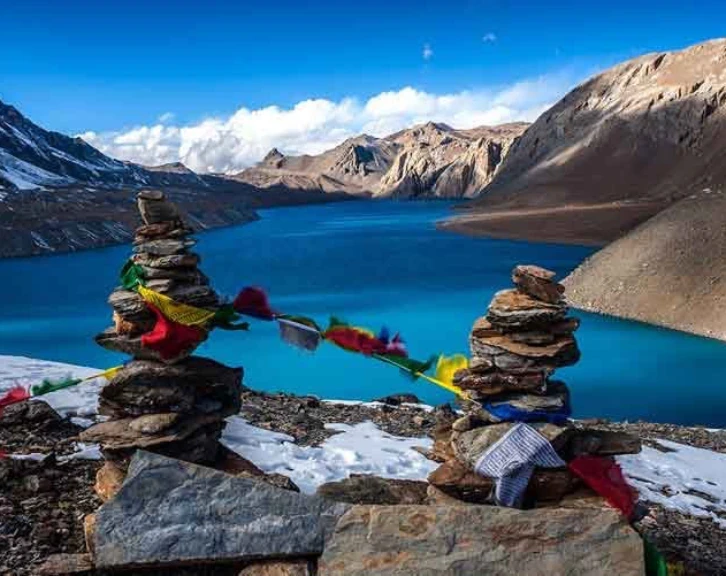
Then the trail splits. Instead of sticking to the standard Annapurna Round Trek, you head toward Tilicho Base Camp, a path that's rougher and quieter but leads somewhere unforgettable. The landslide section before Tilicho Base Camp is a narrow 2-foot path across loose gravel. It looks intimidating, but with trekking poles, a slow steady pace, and an early morning start to avoid rockfall, it’s completely manageable. The trail ends at Tilicho Lake, cradled beneath Tilicho Peak as one of the highest lakes on the planet, so still that no photo really does it justice.
Once you're back on the main Annapurna Circuit Trek, the climb toward Thorong La Pass (5,416 m) begins, taking you over one of the highest mountain passes on earth. Most people cross it half frozen before sunrise, and in return they get Dhaulagiri Mountain and Nilgiri Himal laid out across the horizon. On the far side sits Muktinath Temple, quiet and sacred, shared by Hindu and Buddhist pilgrims for generations.
From there, the trail drops into the Kali Gandaki Gorge and then into the dry hills of the Mustang Region, where Thakali Community villages live inside a world shaped by Tibetan Buddhist Culture, with prayer flags and chortens at nearly every bend. Add the warmth of the Gurung Community and Manangi People met earlier on the trek, and teahouse trekking here starts to feel less like business and more like being welcomed in. By the time the trail eases toward Pokhara, you've covered some of the best high altitude trekking that the Annapurna Conservation Area has to offer.
Annapurna Circuit with Tilicho Lake Trek Highlights
- Tilicho Lake (4,919 m) is one of the highest lakes on Earth. Situated beneath Tilicho Peak, its calm, turquoise waters offer a quiet and breathtaking reward along a high-altitude side trail.
- Conquer the trek's highest point under dawn skies of the Thorong La Pass (5,416 m), the most difficult part of the trek. Reaching the summit brings unforgettable views of Dhaulagiri and Nilgiri Himal as the sun rises.
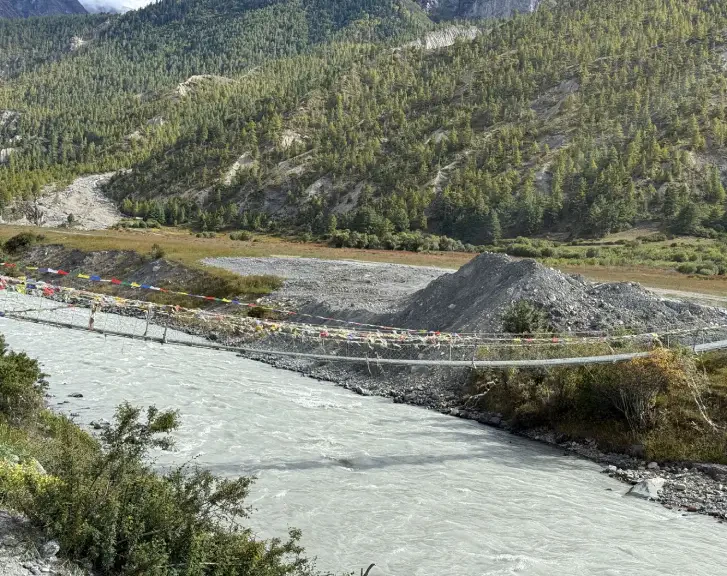
- Walk through Marsyangdi River Valley into the pine forests, stone villages, and terraced fields along the roaring Marsyangdi River as the path guides you up into the mountains.
- Muktinath Temple is a sacred pilgrimage site popular amongst Hindus and Buddhists, featuring historic shrines and holy water spouts in a desert setting.
- Kali Gandaki Gorge is one of the world's deepest river gorges, cutting between mountain giants as the trail drops into the dry landscape of Mustang.
- A classic high-altitude rest stop at Manang Village to adapt your body to the altitude and thin air. Explore old Buddhist monasteries and soak in up-close views of the Gangapurna Glacier looming over the village.
- Walking through Annapurna Conservation Area Experience the drastic scenery changes, shifting from green river valleys to alpine grasslands, glacial basins, and high mountain deserts.
- Enjoy towering views of iconic peaks like Annapurna II, IV, Gangapurna, and Dhaulagiri surrounding you as you hike deeper into the Annapurna Massif.
- You will visit the charming mountain villager giving you the chance to explore Local Village Culture and the vibrant lifestyle of Gurung and Magar communities.
Flora and Wildlife on the Annapurna Circuit with Tilicho Lake
The Annapurna Circuit within the Tilicho region is home to different plants and animals. This is because the trail goes through different climate zones according to the change in elevation, where you will find wildlife like tahr, the blue sheep, musk deer, and Himalayan black bear. Talking about wildflowers, especially in the spring, you will experience rhododendrons that're red, pink, and white, which makes the trail look pretty. You will also see primulas, blue poppies, and many other alpine flowers that grow on the hillsides in the meadows. The forests in this region change as you reach higher elevation. In the lower parts of the valleys, you can see oak, pine, maple, fir, and cedar forests, but as you climb higher, the forests turn into juniper bushes and alpine grasslands with rocky mountain terrain. There are medicinal herbs, mosses, lichens, and hardy alpine shrubs that can survive in colder weather conditions, which helps the ecosystem of the mountains be very rich.
Annapurna Circuit with Tilicho Lake Trek Route
The trekking begins with a scenic drive from Kathmandu to Chame via Besisahar. From Chame, you hike through pine forests and mountain villages like Pisang, Manang to Tilicho Base Camp, visit Tilicho Lake, join the main circuit trail to cross Thorong La Pass, and end the trek in Muktinath.
Why Choose the Annapurna Circuit with Tilicho Lake Trek?
The Annapurna Circuit with Tilicho Lake Trek gives more variety than most other Annapurna treks. It mixes forests and peaceful villages and high mountain deserts and one of the worlds highest lakes in a single trip. You go over the Thorong La Pass and visit Tilicho Lake which gives a special side trip with amazing views. The path goes through Gurung Thakali and Manangi villages where you can see cultures and traditions. Every day has landscapes and mountain views. If you are looking for a Himalayan adventure with nature and culture and high passes and a famous alpine lake this trek is a great option.
Tilicho Lake: The Highlight of the Annapurna Circuit with Tilicho Lake Trek
Tilicho Lake is really something to see on this trek. It lies at a high altitude of 4919 meters. The mountain peaks and rocks around it are amazing. The water of Tilicho Lake is blue in colour, which makes this lake one of the most beautiful lakes in Nepal.
On the way, you go through a village called Khangsar, which is located in the Manang district. It shows you what the local people are like and how hard mountain life really is. Knowing and understanding the culture makes this trip more memorable
Tilicho Lake and the valley around it are really dramatic. The village nearby makes the place feel even bigger. With Tilicho Base Camp, Tilicho Peak and Tilicho Lake, you have an experience. It is one of the most unforgettable journeys in Nepal.
Crossing Thorong La Pass (5,416 m)
Thorong La Pass, at an altitude of 5416 meters is the highest point of the Annapurna Circuit with one of the highest lakes in the world, Tilicho makes this trip very worth it. Reaching the pass is one of the most memorable parts of the journey, the sunrise view from the summit is something that you will remember for years to come. Climbing will be steep and challenging because of the high altitude starting at colder morning temperatures before sunrise to cross the pass safely before strong afternoon winds. Although challenging the wide views of Annapurna, Dhaulagiri, Manaslu and the surrounding Himalayan ranges makes every step worthwhile.
Good preparation is very important walking at a steady pace, staying well hydrated, taking acclimatization days and maintaining good fitness help make the crossing safer and more enjoyable and keeps the trekker safer.
Why Choose Mount Elegance for the Annapurna Circuit with Tilicho Lake Trek?
- Our licensed guides have many years of trekking experience in the Annapurna region. They know every trail, weather pattern and local village. They help with altitude safety, share local stories, solve problems on the trail and make every trek smooth and enjoyable.
- Every confirmed departure runs as planned even with a small group. If your travel dates change you can easily move your booking to another available departure. This gives you more freedom to plan your holiday without extra stress.
- Warm sleeping bags and quality down jackets are available for rent before your trek begins. You do not need to buy expensive gear for one trip. This helps you pack lighter, save money and stay warm during cold mountain nights.
- Our support team stays available throughout your trek. Guides watch for health checks for altitude problems and arrange medical help when needed and coordinate helicopter rescue during serious emergencies. Quick communication helps provide fast support in difficult situations.
- Booking your trek is simple and takes only a few steps. Clear prices, secure payment, quick confirmation, and helpful support make the process easy. Our team answers your questions before your trip and helps you prepare with confidence.
- The itinerary is designed for a safe and comfortable journey. Walking days are balanced with proper acclimatization time. Comfortable lodges, reliable transport, and careful planning help you enjoy the trek at a steady pace while trekking in the mountain views.
Annapurna Circuit with Tilicho Lake Trek Itinerary for 15 Days
Download ItinerarySworting through air to land on the bowl-like valley of Kathmandu, welcome to the land of Himalayas. The Mount Elegance representative will receive you at the airport, loading up your luggage onto a vehicle he/she will drive you to your hotel in Thamel about half an hour drive.
Upon reaching our representative will check you into the hotel. After a long journey to Kathmandu, rest up at a hotel. Our team will contact you for the pre-trip meeting at the hotel lobby along with gear and equipment checks. Afterwards you can explore around the city and shop around Thamel for remaining gears and equipment.
Maximum Altitude: Kathmandu (1,400 m / 4,593 ft)
Drive Duration: 30-45 Minutes
After your arrival we will have a pre trip meeting which will be held at the hotel you will be staying. Our team will explain to you everything about the trip and necessary things like: Documents, Equipment and Travel insurance are checked during this time. Remaining due is also cleared during the meeting and in the evening you can buy or rent remaining equipment or gear.
Today your trip begins. The day begins early, your trip guide will take you to the bus station, from there you will catch a bus. Exiting Kathmandu, a scenic view of local settlements on the sides of highway, you will drive on winding roads around the huge mountains. After a short break reaching Daunne you will again begin on a jeep or a bus to get to Besisahar.
Altitude: Besisahar (760 m / 2,493 ft)
Meal: Breakfast, Lunch & Dinner
Drive Duration: 6-7 hours
Today again the road trip continues to the gateway for Manang District Chame. Getting on an off road capable vehicle, shared or private, you will drive through Bulbule, Syange, Jagat and Dharapani to get to Chame. Narrow roads carved into the mountains winding around the mountain eventually you will reach Chame.
Maximum Altitude: Chame (2,630 m / 8,629 ft)
Meal: Breakfast, Lunch & Dinner
Drive Duration: 5-6 hours
Morning after breakfast equipped with your gear you will start your walk along the roaring Marsyangdi river surrounded by dense forest reaching Bhratanga, an apple tree covers the field and a bakery selling fresh apple pie and cider. After a brief stop you will continue walking on stone steps and a winding path to Dhikur Pokhari at 3240m offering a wide landscape view of Annapurna II and IV. About an hour's walk you will eventually reach the lower Pisang. A comfortable teahouse owner offers you tea and a short rest breaks, you can also stay on the same teahouse or choose to climb a little further to the Upper Pisang for a much quieter and less crowded peaceful stay offering a better view of Annapuna II and other surrounding mountains.
Maximum Altitude: Pisang (3,300 m / 10,827 ft)
Meal: Breakfast, Lunch & Dinner
Trek Duration: 4-5 hours
Leaving Pisang you will have two main path options, the lower path is an easier and faster route passing airstrip at Humde, Mugje, Bhraka and Manang a 4 to 5 hours of walk, much gentle uphills mostly flat valley walk. If you want to explore, take a slight detour from Upper Pisang to visit Green Lake, an emerald alpine lake on the hill above Pisang.
Upper is highly scenic and very recommended. It can be a little challenging to hike a steep and strenuous zigzagging path climbing Ghyaru then passing Ngawal meeting the lower path at Mugje through Bhraka to reach Manang valley. Passing a traditional black stone roofed village of Ghyaru creates a picturesque view. Following the path you will reach another ancient village with a beautiful monastery then descending to meet the main trail at Mugje.
Maximum Altitude: Manang (3,370 m / 11,056 ft)
Meal: Breakfast, Lunch & Dinner
Trek Duration: 5-6 hours
At Manang a very important acclimatization break to keep your body adapted to the high altitude and thinning air. Today will be a slower day as you will get to rest. Following the mountaineering principle of climb high and sleep low, you will have the option to hike up about 15 minutes to the Gangapurna Lake or take an early morning hike for Icelake / Kicho Tal about 5 to 7 hours of walk round trip. Returning back to Manang carried only essential day hiking equipment for the climb.
Maximum Altitude: Manang (3,370 m / 11,056 ft)
Meal: Breakfast, Lunch & Dinner
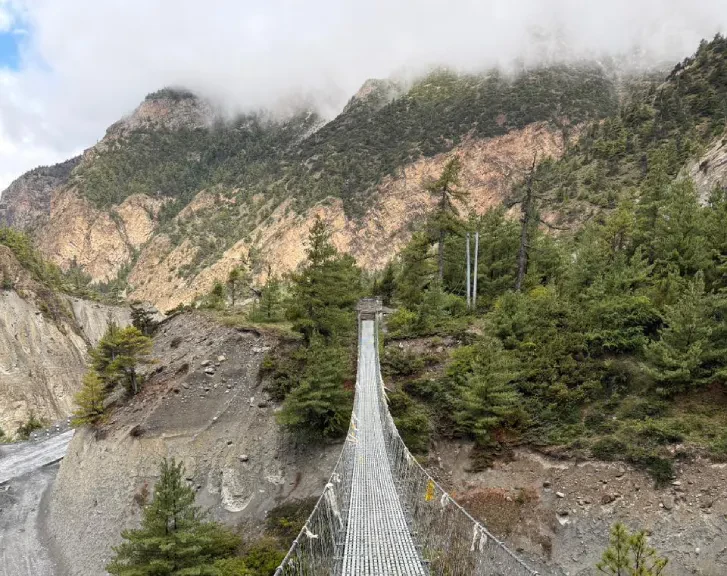
Heading west to exit the Manang valley passing small stupas and gompas the trail descends to the Marsyangdi river and crossing the hanging suspension bridge to get to the steady climb through pine forest eventually taking you to Khangsar at 3734m a tibetan style stone villager. You stop at a tea house for a short tea break. Continuing to climb beyond khangar you will get to pass a historic Tare Gompa sitting on a hillside. The terrain shifts to patchy alpine grassland and opens up a clear view of Gangapurna, Khangsar Kang and tilicho peak. Continuing the climb eventually takes you to the small settlement of Siri Kharka at 4060m.
Maximum Altitude: Siri Kharka (4,060 m / 13,320 ft)
Meal: Breakfast, Lunch & Dinner
Trek Duration: 4-5 hours
A shorter distance climb but challenging part begins today and you will be climbing beyond the 4000 m marker. You can feel the air get thinner, about 5 to 6 hours of climb to cover the 6 kilometers of distance through the steep slopes and loose rocky path eventually leads to the Tilicho base camp. Tea houses beyond this point will have very simple service. Crossing the landslide zone is the most challenging in this part of the trek due to loose gravel and fine scree you will find it harder to cross.
Maximum Altitude: Tilicho Base Camp (4,140m/ 13,583ft)
Meal: Breakfast, Lunch & Dinner
Trek Duration: 5-6 hours
The day begins with a cold morning layer up with warm thermal layers, start trekking up through the mountainous rocky route, a steady climb uphill maintaining pacing and in a rhythming step leads to Tilicho lake, a beautiful crater lake running off to a river. Standing on the shores of one of the highest lakes in the world, surrounded by the massive icy wall of Tilicho Peak at 7,134 m and the Annapurna Massif. A small seasonal teahouse beside the Tilicho lake is a perfect stop to get tea, rest and enjoy the views.
Descending begins after capturing the moments in photographs you will hike down the same route crossing the tilicho picking up your belongings from Tilicho Base camp you will descend back to Siri Kharka.
Maximum Altitude: Tilicho Lake (4,919m/ 16,138ft)
Meal: Breakfast, Lunch & Dinner
Trek Duration: 5-6 hours
Transitioning from the Tilicho trail continuing on to the main trail of circuit trek you will descend gently down hill passing Jharsang Khola crossing suspension bridge to join in the main trail at Gunsang leading on to Yak Kharka/Yak Pasture this small settlement sits in open alpine meadow. You’ll often see yaks and blue sheep (Bharal) grazing along the slopes.
Maximum Altitude: Yak Kharka (4,050 m / 13,287 ft)
Meal: Breakfast, Lunch & Dinner
Trek Duration: 4-5 hours
After breakfast the trail begins with a gentle climb the Jarhsang Khola winding through to reach Ledar. Descending down to cross wooden bridges then ascending again continuing the climb you will meet a landslide zone rocks falling due to wind and wildlife above is a major risk so be cautious. Chimbing through loose gravel and scree makes this section challenging with a final push you will finally reach Thorong Phedi at 4450 meters.
Maximum Altitude: Thorong Phedi (4,450 m / 14,600 ft)
Meal: Breakfast, Lunch & Dinner
Trek Distance:
Trek Duration: 3-4 hours
Today is the most challenging day of the whole trekking journey. The day begins very early in the morning as you will equip your gear and layer up cloth to tackle the cold, under the light of your head lamp you start your hike. Climbing to summit the Thorong La pass through the rugged paths ziggazing through to get to the top. A challenging climb but as the dawn breaks the light rays ease the walk, eventually the summit is close and as you reach the pass the sunrises behind the mountain peaks creating unforgettable moments. The view from top makes every step worth it.
Capturing this moment on photo you will start to descend on the other side of the pass leading toward the rugged, dry and barren route that eventually leads to the distinct flat lands of Mustang District. Continuing the climb will take you to Muktinath, a settlement popular among hindu and buddhist. Heavy influence of the religious believers can be seen in muktinath.
Maximum Altitude: Thorong La Pass (5,416m/17,769ft)
Meal: Breakfast,Lunch & Dinner
Trek Duration: 7-8 hours
After a long trip you finally end your walking journey. Today will be a drive back from the highlands of Muktinath to the beautiful lake side city of Pokhara. The terrain change is significantly noticeable as it turns from the dry barren lands to the lush sub tropical valley as you reach Pokhara city.
Pokhara is a perfect city to celebrate the ending of your journey. With the relaxing vibes of the lake side is a great way to end your walking trip. Today you will finally rest in a comfortable bed in the hotel.
Maximum Altitude: Muktinath (3,800m/ 12,467ft)
Meal: Breakfast & Lunch
Drive Duration: 8-9 hours
A 7 to 8 hours of road trip brings you to Kathmandu scenic route running along the roaring Trishuli river. Passing Damauli, Muglin, Malekhu and Naubise to reach Kathmandu. A long drive through the winding roads heading east will bring you to the capital of Kathmandu. If you have time, explore around the city. Swayambu, Bouddhanath, and Basantapur Darbar are some of the closest recommended sites to visit. Celebratory dinner with trek completion certificate to end the day.
Altitude: Kathmandu (1,400 m / 4,593 ft)
Meal: Breakfast and Dinner
Drive Duration: 7-8 hours
On the final day in Nepal our team will drop you to the airport according to your flight schedule. Do inform the team with your flight schedule. Sitting on the flight seat, you will remember the long journey through the incredible Annapurna. A story you will remember forever.
Altitude: Kathmandu (1,400 m / 4,593 ft)
Meal: Breakfast
Drive Duration: 35-40 Minutes
Looking at other options?
Compare this trip with our other itineraries.
Annapurna Circuit 14 Days
- Day 1 Kathmandu Arrival (1,400m) - 30 to 45 minutes drive. Overnight stay at a 3 star hotel.
- Day 2 Drive from Kathmandu to Besisahar (760m)- 6 to 7 hour drive. Overnight stay at a tea house in Besisahar.
- Day 3 Drive from Besisahar To Chame (2,630m) - 5 to 6 hour drive Overnight stay at the tea house in Chame.
- Day 4 Trek from Chame to Pisang (3,300m)- 4 to 5 hours. Overnight stay at the tea house in Pisang.
- Day 5 Trek from Pisang to Manang (3,370m) - 5 to 6 hours. Overnight stay at the tea house in Manang.
- Day 6 Acclimatization day at Manang (3,370m). Overnight stay at the tea house in Manang.
- Day 7 Trek from Manang to Yak Kharka (4,050m) - 4 to 5 hours. Overnight stay at the tea house in Yak Kharka.
- Day 8 Trek from Yak Kharka to Thorong Phedi (4,450m) - 3 to 4 hours. Overnight stay at the tea house in Thorong Phedi.
- Day 9 Trek from Thorong Phedi to Muktinath (3,800m) via Thorong La pass (5,416m)- 7 to 8 hours. Overnight stay at the tea house in Muktinath.
- Day 10 Drive from Muktinath to Tatopani (1,190m)- 5 to 6 hours drive. Overnight stay at the tea house in Tatopani.
- Day 11 Trek from Tatopani to Ghorepani (2,860m) - 7 to 8 hours. Overnight stay at the tea house in Ghorepani.
- Day 12 Hike Poonhill (3,210m), Trek to Nayapul & drive to Pokhara- 6 to 7 hour trek & 2 to 3 hour drive. Overnight stay at a 3 star hotel in Pokhara.
- Day 13 Drive from Pokhara to Kathmandu- 7 to 8 hours. Overnight stay at the 3 star hotel in Kathmandu.
- Day 14
ABC 11 Days
- Day 1 Kathmandu Arrival (1,400m) - 30 to 45 minutes drive. Overnight stay at a 3 star hotel in Kathmandu.
- Day 2 Drive from Kathmandu to Pokhara (822m)- 7 to 8 hour drive. Overnight stay at a 3 star hotel in Pokhara.
- Day 3 Drive to Birenthati and Trek to Ghandruk (1,940m)- 2 to 3 hour drive and 2-3 hour trek. Overnight stay at the tea house in Ghandruk.
- Day 4 Trek from Ghandruk to Sinuwa (2,340m)- 6 to 7 hours. Overnight stay at the tea house in Sinuwa.
- Day 5 Trek from Sinuwa to Deurali (3,230m) - 6 to 7 hours. Overnight stay at the tea house in Deurali.
- Day 6 Trek from Deurali to Annapurna Base Camp (4,130m) via Machapuchare Base Camp (3,700m)- 5 to 6 hours. Overnight stay at the tea house in ABC.
- Day 7 Trek from Annapurna Base Camp to Bamboo (2,310m) - 6 to 7 hours. Overnight stay at the tea house in Bamboo.
- Day 8 Trek from Bamboo to Jhinu Danda (1,780m) - 5 to 6 hours. Overnight stay at the tea house in Jhinu Danda.
- Day 9 Drive Back to Pokhara (820m) - 2 to 3 hours. Overnight stay at the 3 star hotel in Pokhara.
- Day 10 Drive from Pokhara to Kathmandu- 7 to 8 hours. Overnight stay at the 3 star hotel in Kathmandu.
- Day 11 Departure from Kathmandu- 35 to 45 minutes. Breakfast included.
Manaslu Circuit 15 Days
- Day 1 Kathmandu Arrival (1,400m) - 30 to 45 minutes drive. Overnight stay at a 3 star hotel in Kathmandu.
- Day 2 Guided Kathmandu Sightseeing- 3 to 4 hour drive. Overnight stay at a 3 star hotel in Kathmandu.
- Day 3 Drive from Kathmandu to Machha Khola (900m) - 8 to 9 hour drive. Overnight stay at a tea house in Machha Khola.
- Day 4 Trek from Machha Khola to Jagat l (1,340m)- 7 to 8 hours. Overnight stay at the tea house in Jagat.
- Day 5 Trek from Jagat to Deng (1,860m) - 7 to 8 hours. Overnight stay at the tea house in Deng.
- Day 6 Trek from Deng to Namrung (2,630m)- 6 to 7 hours. Overnight stay at the tea house in Namrung.
- Day 7 Trek from Namrung to Samagaon (3,530m)- 6 to 7 hours. Overnight stay at the tea house in Samagaon.
- Day 8 Acclimatization day at Samagaon (3,530m). Overnight stay at the tea house in Samagaon.
- Day 9 Trek from Samagaon to Samdo (3,875m)- 4 to 5 hours. Overnight stay at the tea house in Samdo.
- Day 10 Trek from Samdo to Dharamasala (4,460m)- 4 to 5 hours. Overnight stay at the tea house in Dharamasala.
- Day 11 Trek from Dharamasala To Bhimthang via Larkya La Pass (5,160m)- 8 to 9 hours. Overnight stay at the tea house in Bhimthang.
- Day 12 Trek from Bhimthang to Tilije (2,300m) - 7 to 8 hours. Overnight stay at the tea house in Tilije.
- Day 13 Trek from Tilije to Dharapani (1,860m)- 5 to 6 hours. Overnight stay at the tea house in Dharapani.
- Day 14 Drive from Dharapani to Besisahar and to Kathmandu - 8 to 9 hour drive. Overnight stay at a 3 star hotel in Kathmandu.
- Day 15 Departure from Kathmandu- 35 to 45 minutes. Breakfast included.
Annapurna Circuit with Tilicho Lake Trek Cost: Inclusions and Exclusions
Trip Includes:
Accommodation
- Twin-sharing/double accommodation in a 3-star hotel for 2 nights in Kathmandu and 1 Night in Pokhara including breakfast (Private room accommodation can be organized at an extra cost).
- Sharing guesthouse accommodation during the trek for 11 nights in the Annapurna Region with attached bathrooms in Muktinath.
Meals & Drinking Water
- All your standard meals during the trek (14 Breakfasts, 12 Lunches and 12 Dinners) including tea or coffee.
- Fresh seasonal fruits each day after dinner during the trek.
- A farewell dinner on the last night in Nepal.
- Purified drinking water during the trek using Water Filter or water purification tablets.
Transportation
- All (international and domestic) airport transfers on a tourist vehicle.
- Transportation from Kathmandu- Besisahar - Chame by local sharing Jeep/Bus, Muktinath - Pokhara by Bus/Jeep after Trek Completion.
- Drive from Pokhara to Kathmandu in a Tourist Bus.
Guide and Staff
- Experienced, first-aid trained, government licensed, English speaking, and locally recruited Mount Elegance trekking guide (2 guides for group size more than 8 people).
- Porters during the trek for carrying luggage (1 porter for every 2 clients).
- Wages, accommodation, meals, gear, insurance and medications for all staff.
Annapurna Circuit with Tilicho Lake Trek Permits
- Annapurna Conservation Area Permit (ACAP) Permit.
- TIMS (Trekkers’ Information Management System) card.
Equipment and Takeaways
- 1 Mount Elegance duffel bag and Sleeping Bag (Should be returned after trek Completion)
- Mount Elegance Complimentary Tshirt, Cap and Route Map.
- A comprehensive first aid kit, including an Oximeter to check pulse and oxygen levels daily in the mountains.
- Trip completion certificate.
Administrative & Taxes
- All administrative expenses and government taxes.
Trip Excludes:
- Lunch and dinner in Kathmandu and Pokhara.
- International flight fare and airport departure tax.
- Nepal Entry Visa (Visa can be acquired easily after your arrival at Tribhuvan International Airport in Kathmandu with a fee of USD 30 for 15 days visa, USD 50 for 30 days visa and USD 125 for 90 days visa).
- Travel insurance along with high-altitude emergency evacuation coverage.
- Any beverages including bottled and boiled water.
- Tips to trekking staff and drivers.
- Personal trekking gear and equipment.
- Any expenses other than the Price Include section.
Departure Dates
Manaslu Circuit Trek Map and Elevation Profile

Altitude Chart

Packing List and Essential Gear for the Annapurna Circuit with Tilicho Lake Trek
Check this comprehensive trekking checklist for your Annapurna Circuit with Tilicho lake Trek, You can check below details and pack all the items for Annapurna Circuit with Tilicho Lake accordingly. You can rent or buy these items in your host country or get them after arriving in Nepal.
Clothing (Layering System)
- Trekking Shirts: 3–4 lightweight, breathable long-sleeve shirts for sun and dust protection on the ABC trail.
- Base Layer: 2–3 pairs of thermal tops and bottoms (high-grade synthetic).
- Trekking Pants: 2 pairs of stretchable, quick-dry trekking pants.
- Insulation Layer: 1 high-loft fleece jacket or lightweight down sweater.
- Hard Shell: 1 breathable waterproof jacket and pants to withstand wind, rain, or alpine snow.
- Outer Layer: Windproof, waterproof down jacket with a hood (essential during Thorong la pass crossing day).
- Underwear: 5–6 pairs of moisture-wicking sports underwear.
Footwear
- Trekking Boots: 1 pair of ankle-supportive, water-resistant hiking boots.
- Socks: 3–4 pairs of thick merino wool trekking socks, and 2 pairs of thin liner socks.
- Gaiters: 1 pair of breathable, waterproof gaiters to seal out snow and scree.
Backpack and Storage
- Main Duffel Bag: 1 heavy-duty, weather-resistant 90L–120L duffel bag (to be carried by porters/yaks and will be provided by the company).
- Daypack: 1 technical 25L–30L daypack with a rain cover, and a supportive hip belt (for carrying layers, water, camera, cash, snacks and clothes necessary for a day), this will be carried by yourself during trekking.
- Dry Bags: A collection of lightweight waterproof dry sacks to segregate and protect electronics and clothing.
Technical and Trekking Gear
- Water Storage: 1-liter Nalgene bottles (must handle boiling water) and thermal bottle jackets to prevent freezing.
- Sleeping Bag: 1 extreme-weather four-season sleeping bag rated down to at least -10°C (crucial for comfort during Annapurna Circuit Trek and it will be provided by the company).
- Trekking Poles: 1 pair of adjustable trekking poles with snow baskets.
- Headlamp: 1 high-lumen LED headlamp with extra lithium batteries (essential for the midnight walks).
- Sunglasses: Necessary during day walk
Health and First Aid
- Altitude & Illness Medication: Diamox for altitude acclimatization, a course of broad-spectrum antibiotics, and anti-diarrheals (Imodium).
- Blister & Trauma Care: Comprehensive blister kits (Compeed/Moleskin), athletic tape, sterile gauze, and elastic bandages.
- Water Purification: Purification tablets or chlorine dioxide drops (standard filters can freeze and crack at high camps).
- Personal Pharmacy: Rehydration salts (ORS), Ibuprofen/Paracetamol, cough lozenges (to combat the dry "Khumbu cough"), and personal prescriptions.
Personal Items and Extras
- Sun Protection: SPF 50+ broad-spectrum sunscreen and dedicated SPF zinc lip balm.
- Power Bank: 2 high-capacity (15,000mAh) heavy-duty power banks.
- Sanitation: Multiple packs of pocket tissues, wet wipes (for camp showers), and high-alcohol hand sanitizer.
- Snacks: Energy gels, protein bars and chocolate, which will be consumed as snacks during trekking.
Documents and Cash
- Identity & Visas: Original passport valid for 6+ months past travel dates, plus physical paper copies. Cash in USD for the Nepal visa on arrival.
- Permits: Valid TIMS card, and Annapurna Conservation Area Permit (ACAP).
- Photos: 2 recent passport-sized photos for local permits and regional SIM cards.
- Insurance Certificate: Printed proof of comprehensive travel and mountaineering insurance covering search, rescue, heli-evacuation, and technical climbing up to 5,500 meters.
- Cash: Carry nepalese rupee during trek while credit card might not be accepted to get some souvenir or other snacks. You can exchange to nepali Currency after arriving in Kathmandu.
Final Tips
- Strict Weight Limits: Keep your main duffel bag under 15 kg (33 lbs) to strictly comply with the weight limit carried by the porter.
- Freeze Prevention: Store your phone, camera batteries, headlamp, and power banks inside your inner jacket pockets during the day, and at warm places during night to prevent freezing temperatures from killing the battery life.
Best Time for the Annapurna Circuit with Tilicho Lake Trek
Autumn (September-November) and Spring (March-May) are great times to trek the Annapurna Circuit with Tilicho Lake, which offers clear skies with pleasant temperatures and crisp walking trails with excellent visibility, whereas Winter( December-February ) brings snowy trails, cold temperatures, and it gets hard to see the clear view of towering peaks due to a foggy environment.
Monsoon (June - August) gives a rainy environment with slippery trails; visibility can sometimes be poor due to cloudy weather. The good thing about Monsoon is that the landscape becomes fresh and green.
Autumn (September to November)
Autumn is the popular season for this trek. The skies are clear, the weather is stable, the air is fresh, and the mountain views are excellent. The temperatures during the day are mild. The trails are dry, making the walking conditions comfortable.
Spring (March to May)
Spring brings days when the rhododendron forests bloom, and the hillsides are full of color. The mountain views are clear in the mornings with temperatures being pleasant. The landscapes are full of beautiful scenery making this one of the best seasons for trekking.
Winter (December to February)
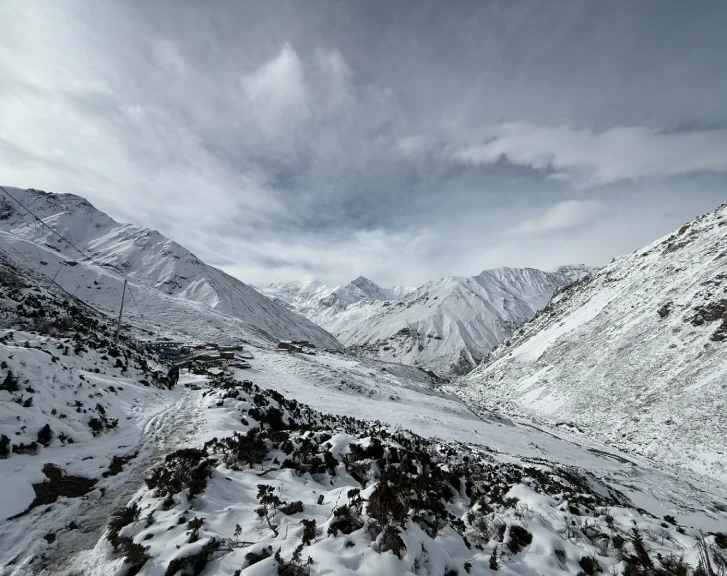
Winter offers trails and beautiful views covered in snow. The temperatures are cold. There is heavy snowfall near Thorong La Pass and Tilicho Lake which can make the trek more difficult. Good warm clothes that can be layered and are comfortable to wear is very important.
Monsoon (June to August)
Monsoon brings rain which makes the forests look green and the trail quite wet. The mountain views are often cloudy. Proper rain gear and flexible travel plans are important during this season.
Annapurna Circuit with Tilicho Lake Trek Difficulty
The Annapurna Circuit with Tilicho Lake Trek is considered a moderately challenging trek. The trail includes long uphill climbs, steep and rocky paths, and the high crossing of Thorong La Pass at 5,416 meters. Trekkers gain altitude gradually from low valleys to high mountains, which makes the journey physically demanding.
Proper preparation for altitude elevation change is important because the risk of altitude sickness increases above 3000 meters, especially around Tilicho Lake and Thorong La Pass. Good fitness and a steady walking pace, enough rest, and proper hydration help reduce the risk and make the trek safer and more enjoyable.
Altitude Challenges During the Trek
When you are at an altitude of over 3,000 meters, it can be tough because air gets thinner and has less oxygen. This can cause some problems for trekkers. You might get a headache or feel dizzy. Some people even lose their appetite.
To deal with this, you should walk slowly and take proper rest days and follow a plan to adapt in high altitude. If you start to feel any symptoms then inform your guide first and get some help from them to descend to a lower altitude, which can make you feel better. Following an acclimatization plan is key to staying safe at high altitude.
Is Annapurna Circuit with Tilicho Lake Trek Suitable for Beginners?
Beginners can do this trek if they are physically fit for long walking days. It can be helpful if you have previous trekking experience, but it is not necessary. You need to be in good shape because the trek is long and has rocky trails, steep sections, and high-elevation places like Thorong La Pass. You can prepare for this trek by doing simple stretch exercises, jogging, and walking. Slow pace, taking enough breaks, and listening to what the guide says will make the trek safe and fun for you. The trek is an adventure, and beginners can have a great time on the trail if they are prepared. The key is to take your time and be ready for the days of walking in high altitude.
Annapurna Circuit with Tilicho Lake Trek Distance
The Annapurna Circuit with Tilicho Lake is a long walk, about 160 to 180 kilometers, which depends on where you start and the path you take. You will walk for 5 to 7 hours a day. Some days are longer. For example, the day you hike to Tilicho Lake and the day you cross Thorong La Pass. These days can take 7 to 9 hours. You will usually walk about 10 to 18 kilometers each day. If you walk at a proper pace and take proper rest days, you will have a great time on this trek, slowly adapting to higher elevation.
Preparation and Safety Measures for the Annapurna Circuit with Tilicho Lake Trek
Getting ready for this trip matters a lot. A few simple exercises like push-ups, jogging, and stair climbing can go a long way in building the stamina you'll need on the trail. Pack warm clothes since it can get chilly up there, along with sturdy trekking boots, a rain jacket, sunglasses, gloves, and a basic first aid kit. While walking, take it slow, drink plenty of water, and build in a few rest days so your body has time to adjust to the altitude. Always listen to your guide, and speak up right away if something feels off or you're not feeling well. With good preparation and careful planning, the trek can be both safe and enjoyable. Keep your guide's advice in mind, look after yourself along the way, and you'll come away with an experience worth remembering.
Physical Fitness
Good physical fitness helps you be comfortable during this trek, so you can start preparing by walking, climbing stairs, doing light jogging, and simple leg exercises. This helps prepare your body for days on the trail and steep climbs.
Acclimatization
Take time to adjust to higher altitude. Walk slowly; do not rush. Drink plenty of water and follow your planned rest days properly. Never rush because proper acclimatization helps lower the risk of altitude sickness; try to understand your body at higher elevation.
Diet and Hydration
Proper energy-giving food is available during the trek; have proper meals that will help you for long walking days on steep and uphill trails. Stay hydrated; no smoking or alcohol consumption. Eat proper food like soup, tea and warm drinks; also help keep your body hydrated at altitude.
First Aid Kit and Medicine
Carry a first aid kit that has bandages, pain relief tablets, blister care, antiseptic cream, personal medicine and basic medicine for colds. You should carry your doctor-advised medicines and prescription with you throughout the trek.
Things to Know Before Joining the Annapurna Circuit with Tilicho Lake Trek
Before joining this trek get a Nepal visa travel insurance with high altitude coverage, and required permits. Expect about 14 to 18 days with travel by road. Tea houses provide simple rooms and meals with safe drinking water and basic facilities. Hire a guide and porter, pack warm gear, prepare for changing weather and carry money for WiFi charging, hot showers, snacks, drinks, tips, and personal expenses.
Insurance and Visa
A Nepal tourist visa is required before starting the trek. You can get it on arrival at Kathmandu Airport or apply in advance. Travel insurance should cover high altitude trekking and emergency helicopter evacuation because medical rescue in remote mountain areas can be expensive.
Permits
You need two permits for this trek. The Annapurna Conservation Area Permit (ACAP) and the TIMS Card if required under current rules. Your trekking company usually arranges these permits before the trek so you can start your journey without any problems.
Transportation
The trek usually starts with a drive from Kathmandu to Besisahar and continues to Chame or another starting point. After crossing Thorong La Pass, the journey ends with a drive from Muktinath or Jomsom back to Pokhara, then Kathmandu.
Duration
Most trekkers complete the Annapurna Circuit with Tilicho Lake Trek in 15 days. The exact length depends on the itinerary, road access, acclimatization days and weather conditions. A slower pace gives your body more time to adjust to higher altitude.
Accommodation
Tea houses provide simple rooms with twin beds, blankets, and shared bathrooms. Facilities become more basic at higher altitude. Most lodges have dining halls where trekkers relax after walking. Hot showers, charging and WiFi may cost extra in many places.
Food and Water
Tea houses serve fresh meals like dal bhat, noodles, fried rice, soup, potatoes, eggs and pasta. Safe drinking water is available by buying boiled water or using water purification tablets. Drinking enough water every day helps your body adjust to altitude.
Guide and Porter
A licensed guide helps with navigation safety, local information and altitude awareness. A porter carries your heavy bag so walking becomes easier. One porter usually carries 30kg shared between two trekkers, making the journey more comfortable.
Weather Condition
Weather changes quickly in the mountains. Spring and autumn bring clear skies and comfortable temperatures. Winter can bring heavy snow around Thorong La Pass, while monsoon brings rain, muddy trails, and cloudy mountain views. Always be prepared for changing conditions.
Essential Gear
Carry warm clothes, a waterproof jacket in case it rains as the weather cannot be predicted, trekking boots for comfort, walking gloves and a hat, sunglasses, sunscreen, a sleeping bag, water bottle, and trekking poles. Pack only what you need because a lighter backpack makes long walking days much easier and more comfortable.
Personal Expenses
Carry enough cash because ATMs are limited on the trail. Extra expenses include hot showers, WiFi, phone charging, drinking water snacks, soft drinks, bakery items, laundry, tips, souvenirs, and personal shopping. Card payment is not available in many mountain villages.



FAQs
General Information
The trek takes place in the Annapurna region of central Nepal within the Annapurna Conservation Area.
The highest point reached during the Annapurna Circuit with tilicho lake trek is Thorong La Pass at 5,416 meters (17,769 feet).
Yes. You can relax at the natural hot springs in Tatopani if your itinerary includes that route.
ATMs are available in Besisahar Chame Jomsom and Pokhara but are limited and unreliable. Carry enough cash.
Preparation and Fitness
No previous climbing or mountaineering experience is needed. Good physical fitness hiking experience and the ability to walk for several hours each day are enough to complete the trek with proper acclimatization.
Pack warm clothing waterproof jacket trekking boots thermal layers gloves hat sunglasses sunscreen sleeping bag water bottle personal medicines trekking poles and a small first aid kit for changing mountain weather.
Prepare by hiking regularly doing cardio exercises climbing stairs and building leg strength. Train at least six to eight weeks before the trek to improve endurance and make long walking days more comfortable.
Yes. Hiking with a backpack before your trip helps improve balance strength and endurance. Practice carrying the same weight you expect on the trek to become comfortable with long uphill and downhill walks.
Health and Safety
Yes. Since the trek reaches over 5,400 meters there is a risk of altitude sickness. Walking slowly staying hydrated and following proper acclimatization days greatly reduce the chances of serious problems.
Common symptoms include headache dizziness nausea loss of appetite tiredness difficulty sleeping and shortness of breath. If symptoms become worse descend immediately and seek medical help as soon as possible.
Diamox can help reduce the risk of altitude sickness for some trekkers. Consult your doctor before using it and never rely on medicine instead of proper acclimatization and gradual ascent.
Basic health posts and small clinics are available in larger villages along the route. Serious medical emergencies usually require helicopter evacuation to hospitals in Pokhara or Kathmandu.
Permits
You need an Annapurna Conservation Area Permit (ACAP) and a TIMS Card before starting the trek. These permits help manage tourism protect the environment and support local conservation efforts.
For most foreign trekkers the total cost of the ACAP permit and TIMS Card is around NPR 5,000. Fees may vary depending on your nationality and current government regulations.
You can obtain the required permits from the Nepal Tourism Board offices in Kathmandu or Pokhara before starting the trek. Most trekking companies also arrange the permits for their clients.
You need a valid passport passport-sized photographs and a Nepal tourist visa. If booking through a trekking company they usually complete the permit process on your behalf.
Insurance and Visa
Travel insurance is strongly recommended for this trek. Choose a policy that covers high-altitude trekking, emergency medical treatment, and helicopter evacuation in case of accidents or altitude-related emergencies.
You can obtain a Nepal tourist visa on arrival at Tribhuvan International Airport in Kathmandu or apply through a Nepalese embassy before traveling depending on your nationality.
Yes. Nepal offers tourist visas for 15 days 30 days and 90 days. You can choose the option that best matches your travel plans and extend your visa if needed visa.
Your insurance should cover trekking above 5,000 meters emergency helicopter evacuation medical treatment trip cancellation and personal accidents. Always check the altitude limit before purchasing your travel insurance.
Guides and Support
A trekking guide gives you knowledge about routes, weather, local traditional, manages safety and assist, during the trek journey. A porter carries your luggage allowing you to walk comfortably with only a light daypack.
A licensed trekking guide usually charges between USD 25 per day depending on experience season and services included. Rates may vary between trekking companies.
One porter usually carries luggage shared between two trekkers with a total weight of 30kg . Packing light helps protect the porter and makes the trek more comfortable.
No. If you book through a reliable trekking company, staff insurance is normally included. Independent trekkers should confirm insurance arrangements before hiring guides or porters directly.
Accommodation
Accommodation mainly has traditional teahouses offering simple private or shared rooms with twin beds, blankets and shared bathrooms. Facilities become more basic as you gain elevation during the trek.
Most villages provide electricity for lighting and charging devices. Paid Wi-Fi or mobile data is available in many places although the connection becomes slower and less reliable at higher elevations.
Yes. Most teahouses provide charging facilities for phones cameras and power banks. Charging usually costs an extra fee especially at higher elevations where electricity is generated by solar power.
Teahouse rooms are simple with twin beds mattresses pillows and blankets. Bathrooms are usually shared and heating is available only in the dining area so carrying a warm sleeping bag is recommended.