 Best Price


Ghorepani Gandruk Circuit Trek
Duration
8 days
Acoomodation
Tea House
Maximum Guests
50
Highest Altitude
3,210 meters / 10,531 feet
Best Season
Mar-May & Sep-Nov
Start/End Point
Kathmandu
The Ghorepani Ghandruk Circuit Trek a 8 days journey, easy to moderate difficulty, and counted as a teahouse trek within Nepal’s wider Annapurna region trek network - a sunrise stop at Poon hill paired with Gurung Magar culture in the villages along the way starting and finishing near Pokhara.
The route crosses Kashki District and clips the edge of Myagdi District, looping through Ghorepani and Ghandruk (Gandruk) in the foothills below Annapurna. Really , it’s famous for one thing above everything else - the Poon Hill sunrise, where the Annapurna Massif and Dhaulagiri Massif both catch gold light at the same time - and you never have to climb past 3300 meters to see it.
What makes this Ghorepani Ghandruk trek stand out is just how much it fits into so little difficulty. As a genuine low altitude trek and short Annapurna trek, it sidesteps the altitude risk that longer routes carry while still handing over real mountain views - arguably making it the most accessible Poon Hill trek is a good option in Nepal for anyone trekking here for the first time.
Ghorepani Gandruk Circuit Trek Overview
Ghorepani Gandruk Circuit Trek starts from Kathmandu, running through - Pokhara, Tikhedhunga, Ulleri, Ghorepani, Poon Hill, Tadapani and Ghandruk before looping back - a well-marked, teahouse trek route inside the Annapurna Conservation Area. Most trekkers begin with a short drive from Pokhara to Nayapul, the trailhead sitting in Kaski district at the edge of the Annapurna foothills.
From Nayapul, the trail climbs through Tikhedhunga before reaching Ghorepani, the base for the early sunrise push up to Poon Hill. From there the loop continues through Tadapani's rhododendron forest and down into Ghandruk - a larger Gurung village, before returning to Nayapul and driving back to Pokhara.
As a genuine beginner-friendly trek, the route stays fully looped rather than backtracking, giving trekkers varied scenery across just a handful of days. Well-marked trails and steady teahouse availability throughout make it one of the more approachable options among Nepal's better-known Nepal trekking route choices.
Ghorepani Ghandruk Trip Highlights
- Sunrise View: See the sun light up the mountains from the famous Poon Hill viewpoint, early in the morning.
- Panoramic Mountain View: See Annapurna I, Dhaulagiri, and Machhapuchhre all together in one view.
- Rhododendron Forest: Walk through the rhododendron forest, Nepal's national flower, best seen in spring.
- Gurung Village: Visit Ghandruk, a Gurung village known for its warm people and mountain culture.
- Teahouse Hospitality: Enjoy real teahouse hospitality, with home-cooked food and a warm bed each night.
- ACAP Wildlife and Flora: See ACAP wildlife and flora, protected inside the Annapurna Conservation Area.
- Suspension Bridges: Cross a few suspension bridges over fast-moving rivers on the way.
- Family-Friendly Trek: This trek has moderate difficulty suited to families and works well for most fitness levels.
Main Attractions
The main attractions along the route are Pokhara: The gateway of the Trek where most trekkers start and end their journey with lake views and mountain air. From there, the trail passes through thick rhododendron forest bursting with red and pink blooms in spring. Ghorepani Village comes next - a small hillside stop known for its cozy teahouses and easy access to Poon Hill. Nearby, Ghandruk Village offers a deeper look into Gurung culture, with stone paths and mountain-facing homes. Tying it all together is the Poon Hill sunrise view, where Annapurna and Dhaulagiri light up gold each morning - the single most talked-about moment of the entire trek.
Pokhara: The Gateway of The Trek
Pokhara serves as gateway city for Ghorepani Gandruk Circuit Trek, and most people get there with a quick flight or drive out of Kathmandu. It's a genuinely scenic lakeside city - built right around Phewa Lake and it makes a relaxed easy base before heading up into the hills.
From Pokhara, getting to the trek starting point usually means a drive from Pokhara to Nayapul about 1.5 to 2 hours depending on traffic. The actual walking starts near Birethanti - a small riverside village where the trail toward Ghorepani really kicks off.
Rhododendron Forest
Between Ulleri and Ghorepani, the trail runs through dense rhododendron forest, with roughly 30 recorded species tucked inside the Annapurna Conservation Area - all bursting into red, pink, and white bloom each March and April. Locals often call this the Ulleri Ghorepani Tadapani stretch, and it's one of the densest ACAP rhododendron species zones anywhere in Nepal, home to the bright red Lali Gurans, the national flower of Nepal.
Walk this forest trail during the spring bloom and there's color everywhere you look, which is exactly why this section tends to be one of the most photographed on the whole route.
Ghorepani Village
Ghorepani is a ridge-top villager at roughly 2860 - 2900m that serves as the overnight base before the pre-dawn climb to Poon Hill, with teahouse lodges offering basic rooms and Himalayan views. Most sources give the exact Ghorepani village elevation as Ghorepani 2874m, placing it firmly within Nepal’s mid-altitude trekking zone. Sitting near the edge of Myagdi District, the village exists almost entirely to support trekkers, with rows of Ghorepani teahouses lining the ridge and offering hot meals, warm rooms, and a good night’s sleep before the early start. As the widely recognized gateway to Poon Hill, Ghorepani sees a steady flow of trekkers passing through nearly every day of the season.
Gandruk Village
Ghandruk sits at elevation 1,940m and is one of the largest Gurung villages in the Annapurna region, and that heritage is really what shapes the whole place. This Ghandruk village is home to a long-established Gurung community, whose stone houses with slate roofs still line the narrow lanes much as they always have. If you're curious about the culture, the Gurung Museum is worth a stop - it walks you through traditional dress, farming tools, and the legacy of Gurkha soldiers from this Gurung village Nepal is so well known for. And the setting doesn't disappoint either, with Annapurna South and Machhapuchhre rising close enough to feel almost within reach.
Poon Hill Sunrise View
Poon Hill (3,210m) is reached by a 45-60 minute pre-dawn climb from Ghorepani and honestly, that's part of what makes it so popular - you don't need days of trekking to earn one of the best views in the Annapurna region. The Poon Hill hike time is short but don't let that fool you; the trail climbs steadily on stone steps through rhododendron forest and most people do it by headlamp in the dark chill before sunrise. It's worth it though once you're up there, the Poon Hill sunrise unfolds across a wide open panorama which is exactly why so many call it the bestsunrise viewpoint Annapurna has. Dhaulagiri (8,167m) and Annapurna I (8,091m) dominate the skyline, while - Annapurna South, Machhapuchhre (6,993m), Nilgiri, and Hiunchuli all catch the early light one after another. Get there a little early - the platform fills up fast in peak season.
Cultural Experience
Villages along the route are home to the Gurung and Magar communities, and spending even a night or two here gives you a real feel for Himalayan hill culture beyond just the mountain views. This Gurung Magar culture shows itself in small, everyday ways - the warmth of hospitality at a traditional teahouse where families often share stories over dal bhat and milk tea or the sight of stone houses stacked along the hillside terraces weathered but sturdy. Many villages also keep - small village museums, modest but genuinely interesting, filled with old farming tools, traditional dress, and photographs tracing Gurkha heritage back generations. It's a quiet reminder that these communities have long sent their sons to serve in Gurkha regiments, a history still spoken of with visible pride.
Gurung
The Gurung community of Ghandruk is one of Nepal's most recognized hill ethnic groups, historically tied to farming, herding, and, most famously, military service. This Gurung ethnic group has long supplied Gurkha soldiers to British and Indian armies, a legacy proudly documented in the Gurung Ghandruk museum, alongside old photographs, medals, and traditional artifacts from daily village life.
Magar
The Magar community around Ulleri is one of Nepal’s oldest indigenous hill peoples, traditionally engaged in agriculture, animal husbandry, and military service. This Magar ethnic group is well represented in Magar villages Annapurna trekkers pass through, including Tikhedhunga and Ulleri itself, where stone stairways, terraced farms, and modest teahouses reflect generations of settled mountain life.
Panoramic Mountain Views
Across the circuit trekkers will experience the Annapurna and Dhaulagiri massifs, Machhapuchhre (which is also known as Fishtail) Nilgiri and Hiunchuli - with Poon Hill giving the widest single panorama and Ghandruk giving the closest view of Machhapuchhre. This mountain views trek offers a remarkable Annapurna Dhaulagiri panorama - especially during clear mornings and evenings. From Poon Hill the Himalayan panorama Nepal is known for it unfolds across several peaks that create an impressive backdrop for sunrise. Machhapuchhre stands out with its unique double summit while Nilgiri adds striking white peaks to the northern skyline. Hiunchuli and surrounding Annapurna ranges further offer rich views along the trail. From Ghandruk, Machhapuchhre appears particularly rising dramatically above the village and nearby hills.
Trek Difficulty
The Ghorepani Gandruk Circuit Trek is rated easy to moderate - it involves daily stone-staircase climbs and 4-6 hours of walking but no technical skills, glacier travel, or extreme altitude.
This trek difficulty level makes it accessible to most people with a reasonable base fitness even those without prior high-altitude trekking experience, since the route stays well below the elevations where altitude sickness becomes a serious concern. That said, don't underestimate it entirely - the endless stone steps, especially the long climb up to Ulleri, can be tough on the knees and lungs alike, and a few consecutive trekking days do add up.
Still, as an easy to moderate trek, it’s widely considered one of the better options for first-timers. Anyone reasonably active, with some basic trail preparation, can call this a beginner-friendly Annapurna trek and complete it comfortably, provided they pace themselves and allow enough rest each evening.
Who is This Trek for?
This trek is suitable for beginner trekkers- easy for families with children, seniors in good general health and travelers with limited time who still want a beautiful Himalayan sunrise experience. It is an excellent choice for beginner trekkers seeking manageable walking days and rewarding mountain views. As a family trek Nepal option, it works well for active families - while those planning their first Himalayan trek can enjoy stunning scenery without tackling extreme altitude or technical terrain. This trek is not as hard as compared with other trekking destinations in Nepal.
Fitness Requirement
A moderate fitness level is enough - if you can comfortably walk for 4-6 hours on hilly terrain a few weeks of regular walking - cycling is sufficient preparation. The fitness level required for Poon Hill Trek is manageable for most active travelers without demanding intensive training. Focus on cardiovascular fitness trekking through brisk walking, cycling or uphill exercises while gradually increasing daily walking hours for trek prep. Building leg strength and endurance can make ascents or descents and long trail days more comfortable.
Age Requirements
There is no strict age limit trek low maximum altitude 3210m means healthy children and senior citizens both complete it regularly, though a doctor's check is wise for older trekkers or those with health conditions. For senior citizens trek in Nepal is at a comfortable pace, regular breaks and proper hydration can make the journey comfortable. Kids trekking Annapurna is also possible with suitable supervision. This family-friendly age range makes Ghorepani Poon Hill suitable for active families and older travelers.
Safety Protocols
Safety on this trek centers on trekking with a licensed guide, carrying travel insurance that includes emergency evacuation - checking weather before the Poon Hill hike and using proper footwear on the trail's many stone staircases. Overall, trek safety is good when basic precautions are followed. Take altitude sickness precautions by ascending gradually and staying hydrated. Guide safety Nepal practices - valid TIMS and ACAP permits, travel insurance trekking coverage and emergency evacuation arrangements add further protection.
Ghorepani and Gandruk Distance
The full circuit covers roughly 40-50 km depending on the exact start/end points chosen - spread across 4 to 9 days of walking. The total trek distance km varies according to the route and transportation used at the beginning or end. The Ghorepani to Ghandruk trek distance is generally around 10-15 km - depending on the specific trail followed. Walking time Ghorepani to Ghandruk usually takes about 5-7 hours - with stone staircases, forest paths, and gradual climbs and descents along the way. Trekkers should expect daily distances to vary based on itinerary, pace, weather and stops for rest or sightseeing.
Ghorepani to Poon Hill Distance
Poon Hill is about a 45-60 minute - roughly 2 km, uphill walk from Ghorepani each way - trekkers do it before sunrise and return to Ghorepani for breakfast. The Ghorepani to Poon Hill distance km is approximately 2 km one way, while the Poon Hill hike duration is around 1-2 hours for the round trip, depending on pace and stops.
Ghorepani and Tadapani Distance
The Ghorepani to Tadapani trek covers about 10-11 km and takes 5-6 hours - climbing over the Deurali ridge through oak and rhododendron forest before descending to Tadapani. The distance can vary slightly depending on the exact trail followed. This trek has a leg-hour trek that includes slow steady walking - short rest breaks and time to enjoy forest and mountain views along the route.
Best Season
The best time to trek Ghorepani Gandruk is during spring (March-May) for rhododendron blooms or autumn (September-November) for the clearest mountain view visibility - both offer stable and moderate weather conditions and flexible temperatures for walking days. Autumn is widely considered the best season for the Annapurna trek - with dry trails, clear skies and excellent Himalayan views. During winter (December-February) - cold weather and occasional snow can make higher sections more difficult and challenging. Monsoon (June-August) brings frequent rain with muddy trails, clouds and reduced mountain visibility. Considering weather by season, spring and autumn provide the most reliable conditions for photography, sunrise views and comfortable trekking.
Ghorepani Ghandruk Trekking in Autumn Season
Autumn, which starts from September to November is the time to trek Ghorepani-Ghandruk because the weather is really nice during the day and the sky is clear.Autumn is a great time to go trekking in Nepal because the trails are dry and it is easy to walk - the visibility is very clear. October is especially good for the Ghorepani Ghandruk Trek because the weather is usually nice and has cool mornings - during the day the temperature is very favourable for walking. The Dashain and Tihar trek season also makes trekking more interesting because you can see the local people celebrating and you can still enjoy the views of the Himalayan mountains and the scenic trails.
Ghorepani Ghandruk Trekking in Winter Season
Winter (December-February) offers cold weather conditions, with daytime temperatures around 2-9°C and slight snowfall at Ghorepani and Poon Hill, but clear-day sunrise views can be especially dramatic against snow-dusted peaks. Winter trekking in Nepal is possible for trekkers who are ready to face challenges in freezing mornings and colder nights. December and January require warm layering clothes that are comfortable in higher elevation, gloves that will keep your hands warm and suitable footwear for walking days with other essential equipment. Snow Poon Hill winter conditions can make some sections slippery - but trails are generally manageable during clear weather making winter a peaceful alternative with crisp mountain views and fewer trekkers in trail.
Ghorepani Poon Hill Trekking Summer/Monsoon Season
Summer and monsoon season from June to August brings rain to the Ghorepani Poon Hill Trek. Trails are often wet - muddy and slippery after rain. Clouds can make mountain views visibility poor, making the landscape look beautiful with lush forests, flowers, waterfalls and green hills. Few trekkers can be seen which makes this journey peaceful and less busy. If you decide to go trekking during the monsoon make sure to bring a jacket, a rain cover, waterproof hiking shoes, clothes that dry quickly and extra socks. Keep checking the weather and be ready to change your plans if rain or trail issues happen.
Logistics and Planning for Ghorepani and Gandruk Circuit
Planning starts in Kathmandu: purchasing gear, arranging your permits, then catching the bus you will start your drive to Pokhara from there a short private/shared jeep to Nayapul or Birethanti, where the trailhead begins. Good trip planning logistics start with getting to Pokhara itself, either by a scenic 25-minute flight from Kathmandu or a longer 6-7 hour drive through the hills.
Getting to Nayapul from Pokhara takes roughly an hour by jeep or bus - or nearby Birethanti depending on the road condition - that the actual walking trail begins, with permit checks conducted right at the entrance before you start your ascent.
Ghorepani Ghandruk Trek Itinerary
Download ItineraryWelcome to Nepal, Upon your arrival at Tribhuvan International Airport Mount Elegance representatives will be there to pick you up. Transfer to a hotel in Thamel and rest up after a long journey. Later our team will contact you for the orientation and gear check. Afterward you can explore around the city and buy necessary gears.
Maximum Altitude: Kathmandu (1,400m/ 4,600ft)
Drive Duration: 30-45 minutes
After breakfast, embark on a scenic drive from Kathmandu to Pokhara along the Prithvi Highway. The journey winds alongside the Trishuli and Marsyangdi rivers, offering views of terraced rice fields, rustic rural villages, and Marsyangdi rivers, offering views of terraced rice fields, rustic villagers, and lush green hills. Upon reaching Pokhara, the gateway to Annapurna region, check in to your lakefront hotel. Spend your evening strolling along the serene shores of Phewa Lake, enjoying the relaxing atmosphere, and taking in mountain reflections.
Altitude: Pokhara (822m/ 2,697ft)
Drive Duration: 7-8 hours
A 3-4 hour scenic drive from Pokhara brings you to Ulleri, where the trek begins with a steep climb up the famous staircase through oak and rhododendron forest. The trail gradually eases near Banthanti, offering early glimpses of snow peaks. After 4-5 hours of trekking, you reach Ghorepani - a cozy village with warm teahouses. Lunch and dinner are included, giving you time to rest before tomorrow’s sunrise hike.
Maximum Altitude: Ghorepani (2,860 m / 9,385 ft)
Meal: Breakfast, Lunch & Dinner
Trek Duration: 4-5 hour
Drive Duration: 3-4 hour
Before dawn, a 45-60 minute climb leads to Poon Hill, rewarding trekkers with sweeping views of Dhaulagiri, Annapurna I, Annapurna South, Machhapuchhre, Nilgiri, and Himchuli at sunrise. After breakfast back in Ghorepani, the trek continues through rhododendron forests and ridgelines toward Tadapani. This longer 6-7 hour day combines the trip’s most iconic viewpoint with varied forest trails, ending in a quiet village surrounded by trees and mountain glimpses.
Maximum Altitude: Poonhill (3,210m /10,531 ft)
Meal: Breakfast, Lunch & Dinner
Trek Duration: 6-7 hour
A shorter, gentler 4-5 hour trek takes you downhill through lush forest trails from Tadapani toward Ghandruk, with close-up views of Annapurna South and Machhapuchhre along the way. Gandruk, one of the largest Gurung villages in the region offers stone houses, narrow lanes, and the Gurung Museum showcasing local heritage. The lighter walking day leaves time to explore the village and enjoy its rich Gurung culture.
Maximum Altitude: Ghandruk (2,630m/ 8,628ft)
Meal: Breakfast, Lunch & Dinner
Trek Duration: 4-5 hour
Enjoy breakfast before taking your final steps on the trail, descending through subtropical forests and quiet hamlets toward Siwa or Ghandruk Phedi along the Modi Khola river basin on your vehicle on the scenic drive passing through Nayapul and back to Pokhara. Upon arrival in Pokhara, check in to your hotel and spend the afternoon at leisure. In the evening, explore the vibrant city of Pokhara or enjoy a good meal at the lakeside.
Altitude: Pokhara (822m/2,697ft)
Meal: Breakfast & Lunch
Trek Duration: 2-3 hour
Drive Duration: 2-3 hour
Bid farewell to the Annapurna region and board your transport for the return drive to Kathmandu. Winding along the river valley highway back toward the Capital city, taking in the final views of Nepal’s rural landscapes. Upon arriving in Kathmandu, transfer to your hotel and settle in. Use the reminder of the afternoon and evening to rest, go souvenir shopping, explore local heritage sites, or enjoy a relaxing evening in Thamel. A farewell dinner will be organized by the company.
Altitude: Kathmandu (1,400m/ 4,600ft)
Meal: Breakfast & Dinner
Drive Duration: 7-8 hour
Enjoy your final breakfast at the hotel as your memorable trek through the Annapurna region comes to an end. Depending on your flight schedule, spend your remaining hours resting at the hotel or taking a final stroll through the neighborhood markets. Our representative will transfer you to Tribhuvan International Airport three hours before your scheduled international departure flight, ensuring you carry home unforgettable mountain memories and stories of your Himalayan adventure.
Altitude: Kathmandu (1,400m/ 4,600ft)
Meal: Breakfast
Drive Duration: 30-40 minutes
Ghorepani Ghandruk Trek Inclusion and Exclusion
Trip Includes:
Accommodation
- Twin-sharing/double accommodation in a 3-star hotel for 2 nights in Kathmandu and 2 Nights in Pokhara including breakfast (Private room accommodation can be organized at an extra cost).
- Sharing guesthouse accommodation during the trek for 3 nights in the Annapurna Region.
Meals & Drinking Water
- All your standard meals during the trek (8 Breakfasts, 4 Lunches and 4 Dinners) including tea or coffee.
- Fresh seasonal fruits each day after dinner during the trek.
- A farewell dinner on the last night in Nepal.
- Purified drinking water during the trek using Water Filter or water purification tablets.
Transportation & Flight
- International airport transfers on a tourist vehicle.
- Tourist Bus from Kathmandu -Pokhara - Kathmandu
- Private Jeep from Pokhara- Jhinu Danda - pokhara
Guide and Staff
- Porters during the trek for carrying luggage (1 porter for every 2 clients).
- Wages, accommodation, meals, gear, insurance and medications for all staff.
Ghorepani Ghandruk Circuit Trek Permits
- Experienced, first-aid trained, government licensed, English speaking, and locally recruited Mount Elegance trekking guide (2 guides for group size more than 8 people).
- Annapurna Conservation Area Permit (ACAP) Permit.
- TIMS (Trekkers’ Information Management System) card.
Equipment and Takeaways
- 1 Mount Elegance duffel bag and Sleeping Bag (Should be returned after trek Completion)
- Mount Elegance Complimentary Tshirt, Cap and Route Map.
- A comprehensive first aid kit, including an Oximeter to check pulse and oxygen levels daily in the mountains.
- Trip completion certificate.
Administrative & Taxes
- All administrative expenses and government taxes.
Trip Excludes:
- Lunch and dinner in Kathmandu and Pokhara.
- International flight fare and airport departure tax.
- Nepal Entry Visa (Visa can be acquired easily after your arrival at Tribhuvan International Airport in Kathmandu with a fee of USD 30 for 15 days visa, USD 50 for 30 days visa and USD 125 for 90 days visa).
- Travel insurance along with high-altitude emergency evacuation coverage.
- Any beverages including bottled and boiled water.
- Tips to trekking staff and drivers.
- Personal trekking gear and equipment.
- Any expenses other than the Price Include section.
Departure Dates
Ghorepani Gandruk Map
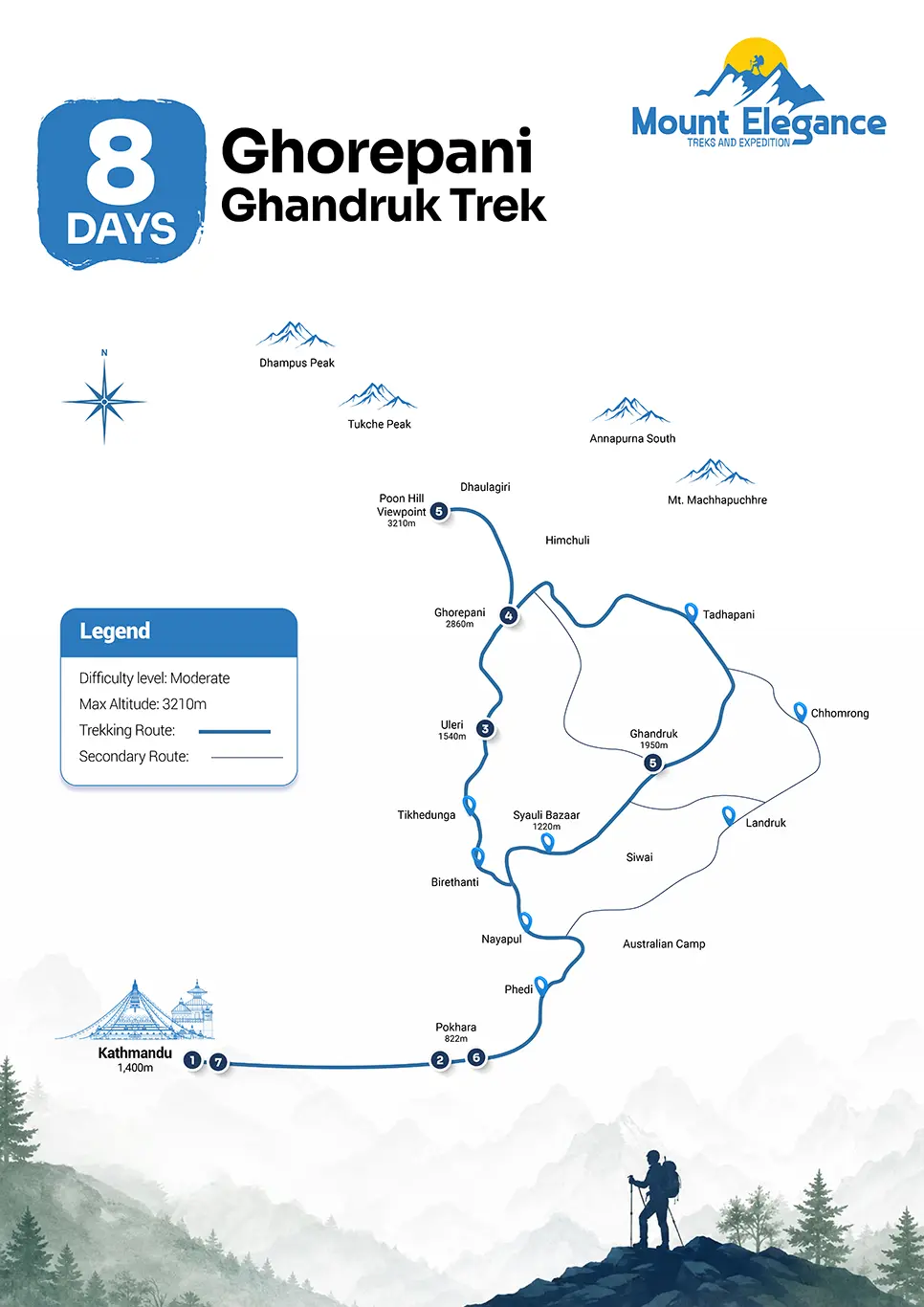
Ghorepani Gandruk Altitude Chart

Packing List for Ghorepani Ghandruk Circuit Trek
Below mentioned are the necessary packing list needed for your Ghorepani Ghandruk Circuit Trek. Services or items provided by Mount elegance Trek are mentioned and other necessary items should be brought by the guest. You can rent or buy these items in Nepal or your host country.
Clothing (Layering System)
- Base Layer: 1–2 pairs of thermal tops and bottoms (high-grade synthetic).
- Trekking Shirts: 2–3 lightweight,long-sleeve shirts for sun and dust protection on the Ghorepani trail.
- Trekking Pants: 2 pairs of stretchable and comfortable trekking pants.
- Insulation Layer: 1 warm fleece jacket or lightweight down sweater. (You can rent down jacket from company at $50 total)
- Hard Shell: 1 breathable waterproof jacket and pants for wind, rain, or alpine snow.
- Underwear: 3–4 pairs of sports underwear.
Footwear
- Trekking Boots: 1 pair of ankle-supportive and water-resistant hiking boots.
- Camp Shoes: 1 pair of lightweight Sports sandals for relaxing in the teahouses.
- Socks: 3–4 pairs of thick merino wool trekking socks and 2 pairs of thin liner socks.
- Gaiters: 1 pair of breathable, waterproof gaiters to seal out snow.
Backpack and Storage
- Main Duffel Bag: 1 heavy-duty, weather-resistant 90L–120L duffel bag (to be carried by porters/yaks and will be provided by the company).
- Daypack: 1 technical 20L–25L daypack (carried by the guest) for layers, raincoat, water, camera, regular medicine, clothes for a day and snack, will be carried by yourself during trekking.
- Dry Bags: A collection of lightweight waterproof dry sacks to segregate and protect electronics and clothing. (It can be kept at duffel bag)
Technical and Trekking Gear
- Sleeping Bag: 1 Weather four-season sleeping bag rated down to at least -5°C (crucial for comfort at Ghorepani which will be provided by the company).
- Trekking Poles: 1 pair of adjustable trekking poles with snow baskets.
- Headlamp: 1 LED headlamp with extra lithium batteries (essential for the midnight and low-light areas).
- Water Storage: Insulated 1-liter Nalgene bottles (must handle boiling water) and thermal bottle jackets to prevent freezing.
- Glasses: 1 pair of high-protection UV Sunglasses.
Health and First Aid
- Altitude & Illness Medication: Diamox (Acetazolamide) for altitude acclimatization, a course of broad-spectrum antibiotics, and anti-diarrheals (Imodium).
- Water Purification: Purification tablets or chlorine dioxide drops to purify your tap water.
- Blister & Wound Care: Comprehensive blister kits (Compeed/Moleskin), athletic tape, sterile gauze, and elastic bandages.
- Personal Pharmacy: Rehydration salts (ORS), Ibuprofen/Paracetamol, and personal prescriptions.
Note: Basic First aid will be carried by guide as well.
Personal Items and Extras
- Sun Protection: SPF 50+ broad-spectrum sunscreen and dedicated SPF zinc lip balm.
- Sanitation: Multiple packs of pocket tissues, wet wipes (for camp showers), and high-alcohol hand sanitizer.
- Power Bank: 2 high-capacity (15,000mAh) heavy-duty power banks.
- Snacks: Energy gels, protein bars & chocolate, which will be taken as snacks during trekking.
Documents and Cash
- Identity & Visas: Original passport valid for 6+ months past travel dates, plus physical paper copies. Visa on arrival and which will be paid in cash.
- Permit: Annapurna Base Camp Area permit (ACAP)
- Insurance Certificate: Printed proof of comprehensive travel insurance covering search, rescue, heli-evacuation, and technical climbing up to 4,200 meters.
- Photos: 2 recent passport-sized photos for local permits and regional SIM cards.
- Cash: Carry nepalese rupee during trek while credit card might not be accepted to get some souvenir or other snacks. You can exchange to Nepali Currency after arriving in Kathmandu.
Final Tips
- Weight Limits: Keep your main duffel bag under 15 kg (33 lbs) to strictly comply with the flights and the porter will also carry 15 kg max per person.’
- Freeze Prevention: Store your phone, camera batteries, headlamp, and power banks inside your inner jacket pockets during the day, and at a warm place at night to prevent freezing temperatures from killing the battery life in base camp.
Booking Checklist
Essential Travel Documents & Identification
- Valid Passport: Must have at least 6 months of validity from your planned entry date.
- Nepal Tourist Visa: Obtainable on arrival at Tribhuvan International Airport (Kathmandu) or online prior to travel.
- Passport-Sized Photos: Carry at least 4–6 physical copies (required for permit processing if obtaining them yourself).
- Hard Copies: Copies of your passport photo page, visa, and insurance policy.
Permits and Cash
- Identity & Visas: Original passport valid for 6+ months past travel dates, plus physical paper copies. Visa on arrival and which will be paid in cash.
- Permit: Annapurna Base Camp Area permit (ACAP)
- Photos: 2 recent passport-sized photos for regional SIM cards.
- Cash in Local Currency (NPR): Carry enough cash (NPR 10,000 – 15,000 per person recommended) to cover snacks, hot showers, charging fees, water, and tips.
- No ATMs on Trail: There are no reliable ATMs past Birethanti/Pokhara, and teahouses accept local cash only.
Travel Insurance & Health Clearance
- Comprehensive Travel Insurance: Ensure your policy specifically covers high-altitude trekking (up to 3,500m) and emergency helicopter evacuation.
- Medical Fitness & First Aid:
- Personal prescription medications.
- Altitude sickness medication (e.g., Diamox).
- Blister plaster/tape, pain relievers, ibuprofen, antiseptic wipes, and rehydration salts.
Equipment & Electronics
- Backpack: 30–40L daypack (if using a porter) or 50L (if carrying your own gear) with a waterproof rain cover.
- Trekking Poles: Highly recommended to relieve knee strain during steep stair ascents and descents.
- Sleeping Bag: Rated 0°C to -5°C (or a lightweight sleeping bag liner for teahouse beds).
- Headlamp: Essential for early-morning hikes (e.g., Poon Hill sunrise climb).
- Power Bank: High-capacity portable charger (electricity charging costs extra at higher elevations).
- Water & Hygiene: Reusable water bottles with purification tablets/filter, quick-dry towel, biodegradable wet wipes, and toilet paper.
What are the Accommodations During Ghorepani and Gandruk Circuit Trek?
Trekkers stay in local homestays or teahouse lodges with basic twin-sharing rooms; lower villages like Ghandrukand Ghorepani sometimes offer private bathrooms, while higher stops like Tadapani are more often shared-bathroom only. These accommodations are simple yet comfortable with warm hospitality, typically featuring a simple bed, blanket, and pillow, with walls thin enough to hear the mountain winds outside. Every lodge Ghorepani Ghandruk trekkers stay at follows a simple twin-sharing room trek setup, ideal for couples or friends traveling together. Hot shower availability varies by altitude and season, usually available for a small extra charge, so packing a quick-dry towel and some cash is wise.
What Food and Drinks Available During the Trek?
Teahouses along the route serve Nepal staples like Dal Bhat, momo and thukpa alongside simple continental dishes such as pasta and eggs - Vegetarian meals are widely available and boiled or purified water is recommended over tap water. The food on trek is generally hearty and filling, with dal bhat trek meal being favorite for its unlimited refills, giving trekkers the energy needed for long uphill climb. Every teahouse menu Nepal offers along this route sticks to the similar basics, and for drinking water trek options, bottled or treated water is best to avoid stomach issues at altitude.
What Permits Required for Ghorepani and Gandruk Circuit Trek?
There are two permits required: the Annapurna Conservation Area Permit (ACAP) and a TIMS (Trekkers' Information Management System) card - your trekking agency usually provides both or you can get in Pokhara/Nayapul. The ACAP permit allows entry into the Annapurna Conservation Area, while the TIMS card records trekker information for safety and management.
What is the Cost for this Trek?
Guided package prices typically range from USD 300 to 400 for a short 3-day circuit to USD 600 to 700 for longer 7-9 day trek with more inclusions - independent trekking without a guide or porter costs less. The overall Ghorepani Ghandruk trek cost depends on trek duration, accommodation, transportation, permits, meals, and the services you take. A basic package price range may be easier for budget-friendly travelers, while longer itineraries with private transportation, experienced guides, porters and additional services increase the total.
Guide and Porter Cost
A licensed guide typically costs around USD 25 per day, while a porter cost Nepal trek usually ranges from USD 20 per day. The guide cost per day may vary based on experience, season, group size, and whether meals, accommodation, transportation, and insurance are included
Tipping Cost
Tipping your guide and porter is a common practice on Nepal treks and is usually given at the end of the journey. For tipping guide porter Nepal, consider around USD 10–20 per day for a guide and USD 5–15 per day for a porter, depending on service.
Guided vs Independent Cost
Choosing between a guided and independent trek changes your overall budget, comfort, and planning needs. Guided vs independent trekking costs are higher with permits - guide fees, and organized services while a solo trek Ghorepani Ghandruk savings can save money from arranging accommodation, meals, transport, and permits yourself, though you handle all logistics independently.
Transportation Cost
Transport between Pokhara and Nayapul costs around USD 5–15 per person by local bus, while a private taxi or jeep costs more depending on group size. Pokhara to Nayapul transport cost varies by season and vehicle, with jeep bus fare trek options offering affordable choices for budget travelers.
Extra Personal Gear Cost
Renting extra gear such as sleeping bags, down jackets, and trekking poles can help reduce your packing costs. Gear rental cost Nepal varies by item and duration, while sleeping bag rental price is generally affordable, making it practical for trekkers who do not want to purchase specialized equipment.
Wifi Cost
WiFi at teahouses typically costs around USD 2–5 per day, depending on location and availability. WiFi cost teahouse rates may increase at higher elevations, while internet charge trekking lodge fees vary by service quality and connection speed.
Hot shower
A hot shower along the trail costs around USD 10 per use, depending on altitude and teahouse facilities. Hot shower price trek rates often rise at higher elevations, while shower charge teahouse Nepal fees vary between lodges.
Drinking water Cost
Bottled or purified drinking water costs around USD 5 per liter in the trail. Bottled water price trek rates increase with altitude, while water purification tablets cost less and offer a practical option for treating refillable water.
What are the Altitude and Challenges of Ghorepani and Gandruk Trek?
The trek’s biggest physical challenges are long stone staircases (notably the climb to Ulleri) and early pre-dawn starts, not altitude - the 3210m maximum at Poon Hill carries low altitude-sickness risk compared to base-camp treks. Among the real altitude challenges trek participants face, fatigue from thousands of steps matters more than thin air, since the max elevation 3210m stays well below the zones where serious altitude sickness typically develops. The trail difficulty stone steps present, especially between Ulleri and Ghorepani, tests the legs more than the lungs. Even so, reaching Poon hill still delivers a rewarding sense of accomplishment alongside its stunning sunrise views.
Is Ghorepani Ghandruk Circuit for Beginners?
Yes - its low maximum altitude, well-marked trail, comfortable teahouse lodging, and moderate 4-6 hour walking days make it one of the most beginner-friendly multiday treks in the Annapurna region. For anyone wondering - is this trek good for beginners - the answer is a clear yes, given its manageable pace and minimal altitude-related risks. As a genuinely beginner-friendly Annapurna trek, it’s often recommended as the perfect starting point for a first time trekker Nepal has to offer.



FAQs
General Information
The stone steps to Ulleri can feel tiring, especially early in the trek. There are many continuous steps, but regular hikers can manage them with a steady pace and short breaks.
Most trekkers prefer the route through Ulleri first and then continue toward Ghorepani and Poon Hill. This direction spreads the climbing more comfortably and works well with typical itineraries.
Trekking poles are useful for balance and reducing pressure on your knees. Microspikes are usually unnecessary, but they can help during winter if snow or ice covers higher trails.
Health and Safety
This depends on your individual health and the stage of pregnancy. Speak with your doctor before trekking, particularly because walking conditions, altitude, and access to medical care can vary.
Altitude sickness is possible because Poon Hill is around 3,200 meters. Ascend gradually, stay hydrated, avoid excessive exertion, and take symptoms such as headache or dizziness seriously.
Yes, insurance is still worthwhile. It can protect you against medical treatment, evacuation, trip interruption, cancellations, and unexpected transportation problems during the trek.
Permits
Common extra costs include hot showers, charging, Wi-Fi, drinks, snacks, tips, transportation changes, and extra accommodation. Carry some Nepali cash because card payments are limited in villages.
Permit fees and trekking regulations can change, so do not rely on old travel blogs. Check current requirements with an authorized agency or official tourism sources before your trip.
Guides and Support
Guide requirements can change under Nepal's trekking regulations. Check the latest rules before departure, especially if traveling independently, because requirements may depend on the specific route and permit arrangements.
You can often arrange a guide in Pokhara, but booking ahead gives you more choice. It also lets you confirm experience, services, price, and itinerary before starting.
Rates vary according to season, experience, services, and whether food or accommodation is included. Ask several agencies for current prices and confirm exactly what the daily rate covers.
Accomodation
Bedrooms usually have limited or no individual heating. Teahouses commonly provide a heated dining area instead, while nights can be cold, so warm clothing and a sleeping bag help.
It can be worthwhile if you want cleaner rooms, better bathrooms, reliable hot showers, or a more comfortable dining area. However, basic teahouses can still provide everything you need.
weather and season
Poon Hill can become crowded around sunrise during the popular spring and autumn seasons. Arriving early helps you find a better viewing spot and enjoy the mountain panorama.
Clouds can block the mountains and sunrise colors. If visibility is poor, you may see very little, but conditions can change quickly, so waiting briefly may still be worthwhile.
Yes. Monsoon brings heavy rain, which can increase leeches, slippery paths, muddy sections, and landslide risks. Waterproof footwear, trekking poles, and flexible plans are helpful.