 Best Price


Annapurna North Base Camp Trek 7 Days
Duration
7 days
Accommodation
Tea house & Tent
Maximum Guests
40
Highest Altitude
4,190 m / 13,746 ft
Best Season
Mar-May & Sep- Nov
Start/End Point
Pokhara
Annapurna North Base Camp Trek Overview
The Annapurna North Base Camp Trek is an isolated trekking route in Nepal’s Annapurna Region and this trek leads you to the northern side of the Annapurna Massif. It is an unforgettable journey to embark into the pristine wilderness, dramatic mountain views, glaciers, and less crowds compared to traditional Annapurna treks.
This route, known locally as the North ABC trek, is still fairly new. It was developed by the Annapurna Rural Municipality (ARM) back in 2019 and follows the historic Maurice Herzog Trail, the same path tied to the first successful climb of Annapurna I (8,091m).
The journey begins with a scenic drive from Pokhara, in Gandaki Province, toward Humkhola, a small settlement tucked in the Myagdi District. As the road climbs higher, the towns fade behind you and the mountains slowly take over the view.
Stepping into the Annapurna Conservation Area Project (ACAP), city noise gives way to running streams and birdsong. The trail passes Narchyang Waterfall, climbs through quiet forest, and continues past the Caves past Busket Mela, Sandikharka, and Gupha Phat, tracing the Myagdi River valley along the way. Every turn brings something new, soft hillsides one moment, a glacial valley shaped by ancient ice the next.
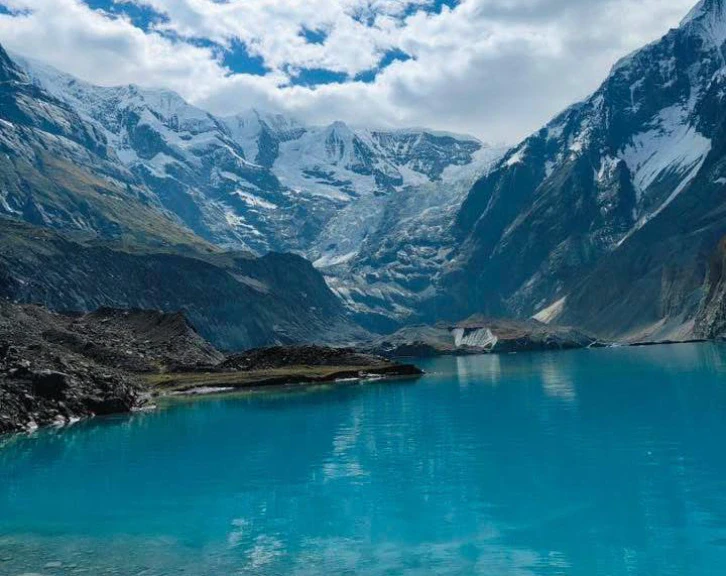
Higher up, the landscape opens into wide alpine landscape and rocky terrain. Panchakunda Lake (Narchyang Lake) offers a calm resting point before the final push to North Annapurna Base Camp at 4,190m in Annapurna Narchyang. From here, the Annapurna Massif rises all around, with views of Machhapuchhre (6,997m), Himchuli (6,441m), Annapurna South, Nilgiri Mountain, and Dhaulagiri (8,167m). A true Himalayan viewpoint framed by snow-covered mountains and sweeping mountain ridges.
Along the way, Narchyang Village welcomes visitors from the Gurung community and Magar community, whose mountain lifestyle blends Buddhist culture, Hindu culture, and Thakali culture with generations of local traditions. Between quiet Himalayan villages, dramatic ridgelines, and unforgettable glacier views, this is Himalayan trekking at its most authentic.
Annapurna North Base Camp Highlights
- Narchyang Village is a beautiful traditional village where you can witness local traditions, visit old temples and enjoy the warm hospitality. You can also experience the cultural celebrations as spending time in this village offers a peaceful and authentic glimpse of what life is really like in the Himalayas.
- Tatopani Hot Spring is a natural hot spring where trekkers usually relax their tired muscles after long days of trekking as it is believed that the warm mineral-rich water helps to reduce body aches, improve blood circulation, and refresh both body and mind.
- Stand beneath the dramatic North Face of Annapurna I, the world's tenth-highest mountain. You will get a chance to observe the towering ice walls and rugged cliffs that create a memorable Himalayan experience. This journey takes you through remote villages and alpine meadows making it ideal for trekkers seeking both the beauty and adventure side of nature.
- A lifetime opportunity to experience how Magar and Gurung communities are known for their unique traditions, local festivals, and delicious homemade food along the trekking journey. Their lifestyle is still the same, and their culture is followed by generations.
- Enjoy stunning mountain views of Tilicho Peak and Nilgiri North along with surrounding snow-covered peaks, with a dramatic valley which is embraced by majestic Himalayas.
- Follow the historic route used by Maurice Herzog and his expedition during the first successful ascent of Annapurna I in 1950, adding a rich mountaineering story to your trek journey.
- Visit the peaceful Panchakunda Lake, a sacred high-altitude lake surrounded by hills, glaciers and mountain peaks, giving you a calm and spiritual environment experience.
- Pass through peaceful Himalayan Villages where people continue to follow the daily charm of traditional farming methods, simple, happy mountain lifestyles that have remained unchanged for generations. This will be a wonderful opportunity to learn about the unique lifestyle and heritage of himalayan communities.
- Discover Ancient Monasteries, stone houses with prayer flags and local customs that reflect the rich cultural heritage and spiritual traditions of this region. Trekkers can learn about the history and heritage that have been preserved without disturbing nature or the environment of the mountains.
- Trek through deep untouched Alpine Landscapes filled with green forests, waterfalls, with rivers, rocky trails and high mountain meadows which shows a true wilderness adventure far from crowded trails it offers a peaceful escape where trekkers can immerse themselves in nature and experience the raw beauty of the mountains.
Flora & Wildlife in Annapurna Conservation Area
The Annapurna region is one of Nepal's most popular destinations known for its nature and as home to different kinds of flora and fauna that can be seen in forests. Himalayan tahr, musk deer, or colorful pheasants can be spotted alongside rare sightings of Snow leopards and red pandas is possible but hard to catch a glimpse of. High-mountain plants have already learned to adapt to the environment and grow their routes in higher altitudes that can survive strong winds and thin oxygen. Spring brings life to the hillsides with wildflowers and rhododendrons that cover the forests with red, pink, and white colors, along with white orchids and other alpine flowers that bloom in higher areas. As elevation gets higher, thick and dense forests slowly change into rocky slopes and open grassland.
Annapurna North Base Camp Route
Your journey starts with a scenic drive from Kathmandu to Pokhara, continuing onward toward Tatopani. This is where the road ends and the real trekking begins. Hitting the foot trail, you’ll trek through Narchyang, Chhotepa, Sandhi Kharka, and Phulbari on your way up to North Annapurna Base Camp. After spending time taking in the incredible mountain scenery at the top, you retrace your steps back down through Narchyang, return to Pokhara, and finish with the drive back to Kathmandu.
Why is Annapurna North Base Camp Known as the North Face of Annapurna I?
Annapurna North Base Camp also locally known as the North ABC sitting below the steep northern side of the Annapurna I, the tenth-highest mountain in the world. Whereas the southern side of the mountain is very popular and crowded. This route brings you closer to the wild and less visited side of the north face of Annapurna while witnessing huge glaciers with steep ice walls and rocky cliffs that create a dramatic mountain landscape. The trek is famous because in 1950 French climber Maurice Herzog and his team used this route to ascend for the very first time.
Why Choose Mount Elegance for the Annapurna North Base Camp Trek?
- We plan your itinerary very carefully according to your comfort as your safety will forever be our first priority, making sure to provide you a very secure, comfortable, and safe trek to Annapurna North Base Camp trying to give you the best and unforgettable Himalayan experience.
- Our team has an experienced guide who leads your trek journey with a good sense of knowledge about trekking routes, the changing of weather and elevation, first aid, and proper communication skills. Good navigation of trekking trails and well trained for emergency evacuation.
- You do not have to worry about cancellation of your trip just because your group size is small. Every single confirmed departure is welcomed with a warm heart. You can make all your travel arrangements for the trek without any worries about it being cancelled due to a number of trekkers on the trek.
- Clean and well maintained sleeping bags are available from our company but if you want you can bring your own sleeping bag as well, for jackets and gears that will be needed for the trek you can rent from the local market who will provide essentials at an affordable price which are well sanitized and cleaned.
- Support is available throughout your trek from the moment you arrive in Nepal until your journey ends. Our team stays in contact with your guide and responds quickly to altitude sickness injuries, weather changes or other unexpected situations including helicopter evacuation coordination when required.
- The booking process is very simple so you will not have any confusion while booking with a quick response from our team for any inquiry. Our travel team helps with trip planning payment confirmation permit arrangements equipment advice and pre departure information making the entire process smooth from your first inquiry to your arrival in Nepal.
Annapurna North Base Camp Trek Itinerary for 7 Days
Download ItineraryThe trek to North ABC begins in lake city of Pokhara, as you drive from your hotel, through the winding path of mountains to reach the trailhead Tatopani. On reaching the tatopani, equip your gears, usually warmer in the lower elevation so your guide will suggest hiking in shirts and t-shirts.
From there the walking begins. Leaving Tatopani, you will cross the Kali Gandaki River and start hiking up toward Upper Narchyang, the path gets steeper near the settlement. Rest up for the long day of walking tomorrow.
Maximum Altitude: Narchyang (2,140 meters /7,020 feet)
Meal: Breakfast, Lunch & Dinner
Trek Duration: 2-3 hour
Drive Duration: 5-6 hour
Leaving the Upper Narchyang descending the quiet path through the lush forest. Walking along the gradually flowing Myagdi River then climbs through a gentle hike crossing several wooden bridges, you will reach the Chhotepa, a peaceful settlement marking the end of human settlement. Stay at the final teahouses before entering the untouched wildness.
Maximum Altitude: Chhotepa (2,369 m/ 7,772 ft)
Meal: Breakfast, Lunch & Dinner
Trek Duration: 5-6 hour
Today the trail starts with continuous climb through dense alpine and bamboo forest. As you gain elevation the shade starts to get thin, open dramatic views lie ahead of you surrounded by cliffs, deep gorges, and cascading waterfalls feeding into the valley below creates the picturesque environment. Walking at a steady pace the terrain turns mountainous rockier and steeper, but the air gets crisp and fresh as you get close to Sandhi Kharka at 3,165m. Today the tent camping begins as from this point no teahouses or lodges will be available.
Maximum Altitude: Sandhi Kharka (3,165m/10,383ft)
Meal: Breakfast, Lunch & Dinner
Accommodation: Tent Accommodation
Trek Duration: 5-6 hour
Leaving the campsite behind vegetation changes from lush greenery to thin patchy snow. As the elevation increases the treeline fades away and you will suddenly feel the air get thinner. Pacing yourself you walk in slow rhythming steps to climb to the Panchakunda lake. The final push to ABC north through the rocky mountainous path. On reaching the sumit clear unobstructed view of the Northern face of Annapurna I and other surrounding mountains is worth every steps. Stay will be in a cozy tent with kitchen equipment carried by the locals for the temporary stay in the North ABC.
Maximum Altitude: North Annapurna Base Camp (4,190 m / 13,746 ft)
Meal: Breakfast, Lunch & Dinner
Accommodation: Tent Accommodation
Trek Duration: 6-8 hour
Summiting the ABC north you have reached the goal of the trip. Soaking in the view from top today you will start to descend marking the return from the trip. You will walk the path made by old glaciers, a rocky path on the ridges of the huge mountains. Branching off from the main trail enjoying the incredible views of open vistas of Annapurna massif. Terrain changes from rocky to grassy meadows as you get to the lower elevation making the huge structure of rock come alive. 7 to 8 hours of walk in total will significantly drop you to an elevation of 3,500m when you reach Thulo Bugin. Stay in a tent as there will be no teahouses.
Altitude: Thulo Bugin (3,500 meters /11,482 ft)
Meal: Breakfast, Lunch & Dinner
Accommodation: Tent Accommodation
Trek Duration: 7-8 hour
Thulo Bugin, a ridge camping site, opens up to a scenic view of surrounding Annapurna massif in the morning. Today is the final day of the walk as you will leave your camp of the night with a scenic view from the ridge campsite. The open views start to become glimpses as you descend down to the vibrant pine and oak forest marking the beginning of the treeline, denser and warmer air fills your surroundings. The trail opens up to an incredible view overlooking the rushing Kali Gandaki river valley as you get closer to the end of your walking trails. Reaching Lete after 6 to 7 hours of walking tired you rest at a teahouse, finally a comfortable bed you will quickly fall asleep.
Altitude: Lete (2,010 meters /6,594 ft)
Meal: Breakfast, Lunch & Dinner
Trek Duration: 6-7 hour
After breakfast your drive to Pokhara begins. Throughout this scenic drive jungle trails turn to local settlements and terrace farming creates vibrant spots on the sides of huge mountains. Following the path alongside the Kali Gandaki river you will arrive at Pokhara.
Pokhara, a beautiful city situated right beside the Phewa Tal(lake) is a tourist hub and a main starting point for many famous treks in the region. A perfect place to end our trip with a celebratory dinner to end off our journey together.
Altitude: Pokhara (820 m / 2,690 ft)
Meal: Breakfast ,Lunch & Dinner
Drive Duration: 5-6 Hour
Looking at other options?
Compare this trip with our other itineraries.
South ABC 11 Days
- Day 1 Kathmandu Arrival (1,400m) - 30 to 45 minutes drive. Overnight stay at a 3 star hotel in Kathmandu.
- Day 2 Drive from Kathmandu to Pokhara (822m)- 7 to 8 hour drive. Overnight stay at a 3 star hotel in Pokhara.
- Day 3 Drive to Birenthati and Trek to Ghandruk (1,940m)- 2 to 3 hour drive and 2-3 hour trek. Overnight stay at the tea house in Ghandruk.
- Day 4 Trek from Ghandruk to Sinuwa (2,340m)- 6 to 7 hours. Overnight stay at the tea house in Sinuwa.
- Day 5 Trek from Sinuwa to Deurali (3,230m) - 6 to 7 hours. Overnight stay at the tea house in Deurali.
- Day 6 Trek from Deurali to Annapurna Base Camp (4,130m) via Machapuchare Base Camp (3,700m)- 5 to 6 hours. Overnight stay at the tea house in ABC.
- Day 7 Trek from Annapurna Base Camp to Bamboo (2,310m) - 6 to 7 hours. Overnight stay at the tea house in Bamboo.
- Day 8 Trek from Bamboo to Jhinu Danda (1,780m) - 5 to 6 hours. Overnight stay at the tea house in Jhinu Danda.
- Day 9 Drive Back to Pokhara (820m) - 2 to 3 hours. Overnight stay at the 3 star hotel in Pokhara.
- Day 10 Drive from Pokhara to Kathmandu- 7 to 8 hours. Overnight stay at the 3 star hotel in Kathmandu.
- Day 11 Departure from Kathmandu- 35 to 45 minutes. Breakfast included.
ABC Flight 8 Days
- Day 1 Kathmandu Arrival (1,400m) - 30 to 45 minutes drive. Overnight stay at a 3 star hotel in Kathmandu.
- Day 2 Flight to Pokhara, Drive to Jhinu danda & Trek to Chhomrong (2,170m)- 25-30 minutes flight, 2 to 3 hour drive & 3to 4 hour trek. Overnight stay at the tea house in Chhomrong.
- Day 3 Trek from Chhomrong to Himalaya (2,920m)- 7 to 8 hours. Overnight stay at the tea house in Himalaya.
- Day 4 Trek from Himalaya to Annapurna Base Camp (4,130m) via Machapuchare Base Camp (3,700m)- 5 to 6 hours. Overnight stay at the tea house in ABC.
- Day 5 Trek from Annapurna Base Camp to Bamboo (2,310m) - 6 to 7 hours. Overnight stay at the tea house in Bamboo.
- Day 6 Trek from Bamboo to Jhinu Danda (1,780m) & Drive to Pokhara - 5 to 6 hours trek & 2-3 hour drive. Overnight stay at the 3 star hotel in Pokhara.
- Day 7 Drive from Pokhara to Kathmandu- 7 to 8 hours. Overnight stay at the 3 star hotel in Kathmandu.
- Day 8 Departure from Kathmandu- 35 to 45 minutes. Breakfast included.
Khopra Danda 10 Days
- Day 1 Drive from Pokhara to Birenthati & Trek to Tikhedhunga (1,540m) - 2 to 3 hour drive & 2 to 3 hour trek. Overnight stay at a tea house in Tikhedhunga.
- Day 2 Trek from Tikhedhunga to Ghoepani (2,860m)- 5 to 6 hours. Overnight stay at the tea house in Ghorepani.
- Day 3 Hike Poonhill (3,210m) & Trek to Tadapani (2,630m) - 6 to 7 hours. Overnight stay at the tea house in Tadapani.
- Day 4 Day 4: Trek from Tadapani to Bayli Kharka (3,450m - 5 to 7 hours. Overnight stay at the tea house in Bayli Kharka.
- Day 5 Trek from Bayli Kharka to Khopra Danda (3,670m) - 5 to 6 hours. Overnight stay at the tea house in Khopra Danda.
- Day 6 Hike Khayer Lake (4,660m) & Trek back to Khopra Danda to - 5 to 6 hours. Overnight stay at the tea house in Khopra Danda.
- Day 7 Trek from Khopra Danda to Tadapani- 5 to 6 hours. Overnight stay at the tea house in Tadapani.
- Day 8 Trek from Tadapani to Ghandruk (1,940m)- 4 to 5 hours. Overnight stay at the tea house in Ghandruk.
- Day 9 Trek from Ghandruk to Birenthati & drive to Pokhara (822m)- 2 to 3 hours hike & 2-3 hour drive. Overnight stay at the 3 star hotel in Pokhara.
- Day 10 Drive from Pokhara to Kathmandu- 7 to 8 hours. Farewell dinner on this day.
Annapurna North Base Camp Trek Cost: Inclusion and Exclusion
Trip Includes:
Accommodation
- Sharing guesthouse accommodation during the trek for 3 nights in the Annapurna Region.
- Tented camp accommodation and all meals during the 3 night stay at Sandhi Kharka, North ABC and Thulo Bugin, where climbers can expect shared twin-share tents.
Camp Facilities: Fully equipped dining tents, kitchen gear, dining tables, chairs, and toilet tents for basic mountain comfort.
Meals & Drinking Water
- All your standard meals during the trek (6 Breakfasts, 7 Lunches and 7 Dinners) including tea or coffee.
- Fresh seasonal fruits each day after dinner during the trek.
- A farewell dinner on the last night in Nepal.
- Purified drinking water during the trek using Water Filter or water purification tablets.
Transportation
- Sharing Jeep/ Bus from Pokhara - Tatopani and Lete - Pokhara after trek.
Guide and Staff
- Experienced, first-aid trained, government licensed, English speaking, and locally recruited Mount Elegance trekking guide (2 guides for group size more than 8 people).
- Porters during the trek for carrying luggage (1 porter for every 2 clients).
- Wages, accommodation, meals, gear, insurance and medications for all staff.
North Annapurna Base Camp Permits
- Annapurna Conservation Area Permit (ACAP) Permit.
- TIMS (Trekkers’ Information Management System) card.
Equipment and Takeaways
- 1 Mount Elegance duffel bag and Sleeping Bag (Should be returned after trek Completion)
- Mount Elegance Complimentary Tshirt, Cap and Route Map.
- A comprehensive first aid kit, including an Oximeter to check pulse and oxygen levels daily in the mountains.
- Trip completion certificate.
Administrative & Taxes
- All administrative expenses and government taxes.
Trip Excludes:
- Accommodation in Kathmandu and Pokhara
- Lunch and dinner in Kathmandu and Pokhara.
- International flight fare and airport departure tax.
- Nepal Entry Visa (Visa can be acquired easily after your arrival at Tribhuvan International Airport in Kathmandu with a fee of USD 30 for 15 days visa, USD 50 for 30 days visa and USD 125 for 90 days visa).
- Travel insurance along with high-altitude emergency evacuation coverage.
- Any beverages including bottled and boiled water.
- Tips to trekking staff and drivers.
- Personal trekking gear and equipment.
- Any expenses other than the Price Include section.
Departure Dates
Annapurna North Base Camp Trek Map, Distance and Elevation Profile

Altitude Chart

Packing List and Essential Gear for the Annapurna North Base Camp Trek
Below are necessary gears and equipment for your North Annapurna Base Camp Trek. The items which are provided by the company are also mentioned. Check the list below and pack your things accordingly and you can buy or rent these items either in your host country or after arriving in Kathmandu.
Clothing (Layering System)
- Base Layer: 1–2 pairs of thermal tops and bottoms (high-grade synthetic).
- Trekking Shirts: 2–3 lightweight,long-sleeve shirts for sun and dust protection on the ABC trail.
- Trekking Pants: 2 pairs of stretchable and comfortable trekking pants.
- Insulation Layer: 1 warm fleece jacket or lightweight down sweater.
- Hard Shell: 1 breathable waterproof jacket and pants for wind, rain, or alpine snow.
- Underwear: 4–5 pairs of sports underwear.
Footwear
- Trekking Boots: 1 pair of ankle-supportive and water-resistant hiking boots.
- Camp Shoes: 1 pair of lightweight Sports sandals for relaxing in the teahouses.
- Socks: 4–5 pairs of thick merino wool trekking socks and 2 pairs of thin liner socks.
- Gaiters: 1 pair of breathable, waterproof gaiters to seal out snow.
Backpack and Storage
- Main Duffel Bag: 1 heavy-duty, weather-resistant 90L–120L duffel bag (to be carried by porters/yaks and will be provided by the company).
- Daypack: 1 technical 25L–30L daypack (carried by the guest) for layers, raincoat, water, camera, regular medicine, clothes for a day and snack, will be carried by yourself during trekking.
- Dry Bags: A collection of lightweight waterproof dry sacks to segregate and protect electronics and clothing. (It can be kept at duffel bag)
Technical and Trekking Gear
- Sleeping Bag: 1 Weather four-season sleeping bag rated down to at least -10°C (crucial for comfort at Annapurna Base Camp which will be provided by the company).
- Glasses: 1 pair of high-protection UV Sunglasses.
- Trekking Poles: 1 pair of adjustable trekking poles with snow baskets.
- Headlamp: 1 LED headlamp with extra lithium batteries (essential for the midnight and low-light areas).
- Water Storage: Insulated 1-liter Nalgene bottles (must handle boiling water) and thermal bottle jackets to prevent freezing.
Health and First Aid
- Blister & Wound Care: Comprehensive blister kits (Compeed/Moleskin), athletic tape, sterile gauze, and elastic bandages.
- Altitude & Illness Medication: Diamox (Acetazolamide) for altitude acclimatization, a course of broad-spectrum antibiotics, and anti-diarrheals (Imodium).
- Water Purification: Purification tablets or chlorine dioxide drops to purify your tap water.
- Personal Pharmacy: Rehydration salts (ORS), Ibuprofen/Paracetamol, and personal prescriptions.
Personal Items and Extras
- Power Bank: 2 high-capacity (15,000mAh) heavy-duty power banks.
- Sun Protection: SPF 50+ broad-spectrum sunscreen and dedicated SPF zinc lip balm.
- Sanitation: Multiple packs of pocket tissues, wet wipes (for camp showers), and high-alcohol hand sanitizer.
- Snacks: Energy gels, protein bars & chocolate, which will be taken as snacks during trekking.
Documents and Cash
- Cash: Carry nepalese rupee during trek while credit card might not be accepted to get some souvenir or other snacks. You can exchange to Nepali Currency after arriving in Kathmandu.
- Identity & Visas: Original passport valid for 6+ months past travel dates, plus physical paper copies. Visa on arrival and which will be paid in cash.
- Permit: Annapurna Base Camp Area permit (ACAP)
- Insurance Certificate: Printed proof of comprehensive travel insurance covering search, rescue, heli-evacuation, and technical climbing up to 4,200 meters.
- Photos: 2 recent passport-sized photos for local permits and regional SIM cards.
Final Tips
- Weight Limits: Keep your main duffel bag under 15 kg (33 lbs) to strictly comply with the porter who will carry 15 kg max per person.
- Freeze Prevention: Store your phone, camera batteries, headlamp, and power banks inside your inner jacket pockets during the day, and at a warm place at night to prevent freezing temperatures from killing the battery life in base camp.
Best Time for the Annapurna North Base Camp Trek
The best time for the Annapurna North Base Camp trek is during spring (March - May), and autumn (September - November) has good weather conditions with crisp trails, clear skies, and mountain peaks. Whereas winter (December- February) offers peaceful and snowy trails and cold temperatures. Monsoon (June - August) brings heavy rainfall with slippery trek routes.
Spring (March – May)
Spring is one of the best seasons for the Annapurna North Base Camp Trek, with clear skies, blooming rhododendron forests, and mild temperatures that create perfect trekking conditions. Mountain views stay beautiful while comfortable weather makes long walking days enjoyable with colorful landscapes across the trail.
Autumn (September – November)
Autumn offers stable weather clear mountain views and pleasant temperatures. Fresh air after the monsoon season makes every day bright and scenic. Dry trails comfortable conditions and excellent visibility make this the most popular time for the Annapurna North Base Camp Trek.
Winter (December – February)
Winter brings peaceful trails, crisp mountain views and fewer trekkers. Snow covers higher sections, creating stunning scenery. Cold temperatures require warm clothing but clear days reward trekkers with beautiful Himalayan landscapes and a quiet trekking experience.
Monsoon (June – August)
Monsoon brings frequent rainfall, cloudy skies and slippery trails. Rivers become stronger while leeches appear in lower forests. Mountain views remain limited on many days making this the least recommended season although lush green landscapes look beautiful after the rain.
Annapurna North Base Camp Trek Difficulty
The Annapurna North Base Camp Trek is considered a moderately challenging trek because of its uneven trails, steep climbs, and higher elevation. You will usually walk for 6 to 8 hours each day, depending on the route and weather. The trek involves a slight altitude gain from low villages to Annapurna North Base Camp at around 4,190 meters, so good fitness and proper acclimatization are important for a safe and enjoyable journey. You have to be prepared mentally and physically for this trek for long walking days and unpredictable weather changes.
Is the Annapurna North Base Camp Trek Suitable for Beginners?
The Annapurna North Base Camp Trek is not the best choice for complete beginners, however first-time trekkers with good physical fitness, strong determination, and proper preparation can complete it successfully because the trail is remote, with steep climbs, long walking days, and high elevation. It is recommended that if you are a beginner for this trek, you can start doing regular hiking, walking, or cardio training for a few weeks before the trek to enjoy a safer and more comfortable experience.
Annapurna North Base Camp Trek vs Annapurna Base Camp Trek
Feature | Annapurna North Base Camp Trek | Annapurna Base Camp Trek |
Location | Northern side of Annapurna I | Southern side of Annapurna I |
Maximum altitude | 4,190 m | 4,130 m |
Difficulty level | Moderate to challenging | Moderate |
Duration | 7 days | 6 days |
Trail condition | Remote rough trails, river crossings and rocky paths | Well-marked trails with stone steps and village paths |
Crowds | Very few trekkers | One of Nepal's most popular trekking routes |
Accommodation | Mix of tea houses community lodges and camping in some areas | Comfortable tea houses throughout the route |
Scenery | Wild valleys glaciers waterfalls and the massive north face of Annapurna I | Forests rivers terraced fields and the Annapurna Sanctuary |
Mountain view | Annapurna I North Face, Nilgiri, Tilicho Peak, and surrounding snow peaks | Annapurna I Machhapuchhre Hiunchuli Annapurna South and Gangapurna |
Culture | Traditional Magar and Gurung villages with fewer visitors | Gurung and Magar villages with well-developed tourism |
Best for | Trekkers looking for adventure, quiet trails, and a less-explored route | Trekkers seeking classic Himalayan views with comfortable facilities |
Suitable for | Possible for fit beginners with trekking support and good preparation | Yes, suitable for most beginners with a reasonable level of fitness |
Preparation and Safety Measures for the Annapurna North Base Camp Trek
Prepare with regular fitness training, proper trekking gear, and travel insurance. Stay hydrated, walk at a steady pace, acclimatize gradually, monitor altitude sickness symptoms, follow your guide's advice, and check weather conditions daily before trekking.
Physical Fitness
Being in shape is really important if you want to have a great time on the trek. You should try to hike up and down hills to make your legs stronger. You should also work on your stomach muscles so that you can carry a backpack for a time like five hours without getting too tired.
Acclimatization
When you are walking up the mountain you should go slow so your body can get used to the altitude. If you start to feel sick, dizzy or get a headache you should not keep going up. Instead, take a break. Listen to what your guide says. If you need to go down to a lower altitude to feel better.
Diet and Hydration
You need to eat food that's good for you like healthy meals and snacks so you have energy to walk for a long time. You should drink a lot of water. Try to have warm soup, fruit and local food to help you hike every day and recover at night.
Essential Gears
You need to have hiking boots that can grip the ground and warm clothes for cold nights. You should also bring a jacket that can keep the wind out, gloves, a hat, sunglasses, tablets to make water clean, sunscreen, and a sleeping bag to keep you warm.
First Aid & Medicine
You should have a bag with things like bandages, medicine for pain and cream for blisters, and something to clean your cuts. You should also bring any medicine you might need for small health problems.. Do not forget to bring tablets to make water clean. It is very important to be able to get to these things if you get hurt
Insurance and Visa
It is necessary to get travel insurance covering high altitude trekking and emergency rescue. Most visitors will need a Nepal tourist visa, which can be obtained upon arrival. You should check the latest visa regulations before your trip to avoid any problems.
Permits
You will need to get the required trekking permits before your tour. Your trekking agency can assist you in getting the necessary documents. In addition, make sure you carry your permits with you at all times since they may be demanded for inspection.
Transportation
Your tour will start with a road drive from Kathmandu to Pokhara and another drive to the trailhead. This might seem challenging as the roads can be rough and rocky at times, but it is a good opportunity to enjoy the magnificent landscape.
Duration
The Annapurna North Base Camp Trek generally takes 7 days. The distance, speed, weather, and even the number of days allocated for acclimatization to higher altitudes can determine the duration of the trekking trip.
Weather
It is essential to understand that the weather is unpredictable in the mountains; being prepared for uncertain weather changes is important. However, the best period for trekking is during the dry seasons of spring and autumn, which have bright days, good climbing opportunities, and superb views of the mountains.
Guide and Porter
A guide is needed to help you navigate through the trails and will give knowledge about the local culture and tradition and about the people living there. On the other hand, a porter is needed to carry your heavy bag so you can trek with more comfort and convenience.
Accommodation
The lower part of the trek has simple local lodges and teahouses where you can rest each night. As you reach higher areas there are no permanent places to stay so comfortable tents with a kitchen crew are arranged. Facilities are basic but suitable for the mountain environment.
Food and Water
Fresh meals are served throughout the trek to keep your energy up. In the lower villages, you can enjoy local dishes at teahouses. During the camping section, the kitchen team prepares hot meals and boiled water to stay healthy.
Personal Expenses
Carry extra cash for snacks, drinks, hot showers, charging devices, tips and personal items. There are very few places to buy supplies on the trail so it is best to bring everything you may need before the trek starts.




FAQs
General Information
The trek usually takes 7 days depending on the itinerary weather and acclimatization schedule.
The trek usually starts from Narchyang in Myagdi District and ends at the same point before driving back to Pokhara.
This is a moderate to challenging trek with long walking days rough trails and high altitude.
Yes. Basic snacks drinks and small essentials are available in lower villages. Higher sections have very limited supplies so pack everything you need before the trek.
Preparation and Fitness
A good level of fitness is needed. You should be comfortable walking 5 to 7 hours each day on mountain trails.
Previous trekking experience is helpful but not essential. Fit beginners with proper preparation and guidance can complete the trek.
Pack warm clothing waterproof gear sturdy boots gloves a hat sunglasses sunscreen a sleeping bag water bottles personal medicine and basic toiletries.
Carry a small daypack with daily essentials while your porter carries your main duffel bag within the weight limit.
Health and Safety
Not everyone gets AMS but it is possible above 3000 meters. Walking slowly and proper acclimatization help reduce the risk
Common symptoms include headache dizziness nausea tiredness loss of appetite and difficulty sleeping.
Walk in steady pace, do not run or try to force yourself ti walk faster take proper rest and following your guide's advice
Basic health services are available in some lower villages. Higher sections have no medical facilities so emergency evacuation may be required if needed.
Permits
You need the Annapurna Conservation Area Permit (ACAP). Permit requirements can change so confirm before your trip.
No. A Restricted Area Permit is generally not required for the Annapurna North Base Camp Trek.
No permit doesn’t include helicopter evacuation; you need to get insurance that covers high-altitude rescue for emergency helicopter evacuation
Most trekkers arrange permits through their trekking company or after arriving in Nepal.
Insurance and Visa
Your insurance should cover high altitude trekking emergency medical treatment and helicopter evacuation.
Not always. Check your policy carefully because many standard plans do not include helicopter rescue.
Choose a policy that covers trekking up to at least 4500 meters.
Some policies do but coverage varies. Read the policy details before buying insurance.
Guides and Support
A guide is highly recommended for safety navigation and local knowledge especially on the remote sections.
Yes. Professional guides carry a basic first aid kit and know how to respond to common trekking emergencies.
Yes. Reputable trekking companies provide licensed guides with first aid and high altitude training.
A porter usually carries up to 30 kg, which is shared between two trekkers. Each trekker should pack no more than 15 kg in their duffel bag.
Accommodation
The camping section includes tents sleeping mats kitchen tents dining tents and cooking equipment arranged by the trekking company.
Electricity and Wi-Fi are available in some lower villages. They are usually not available during the camping section.
You stay in local lodges during the lower section and in comfortable tents at higher camps near the base camp.
Lower villages offer basic rooms meals and charging services. Higher camps provide tents dining space simple toilets and essential camping facilities.