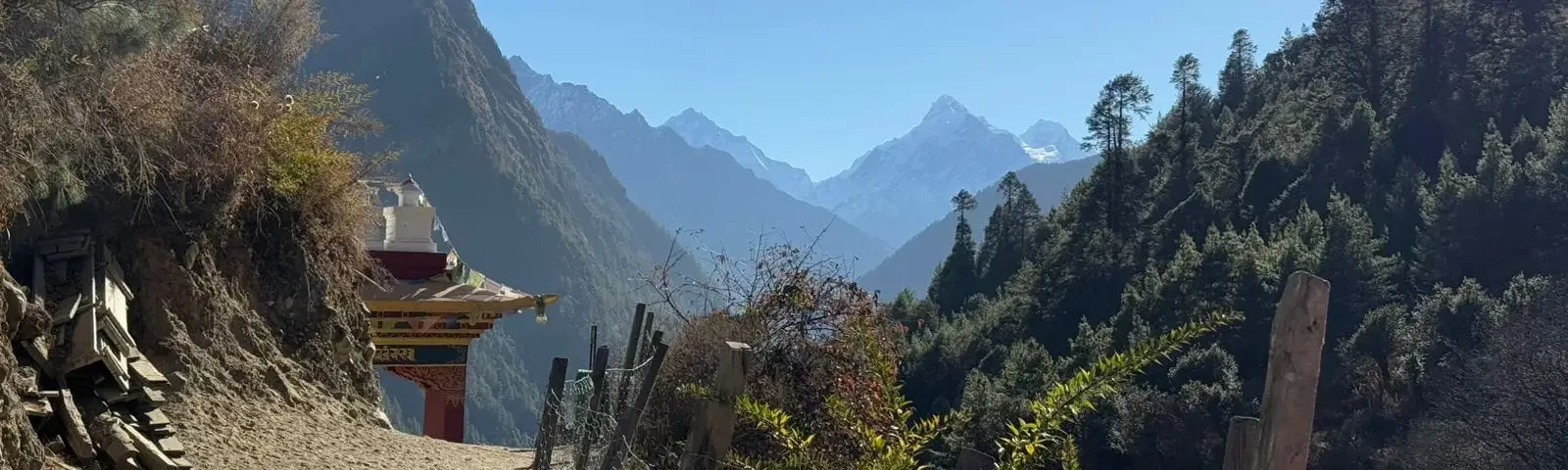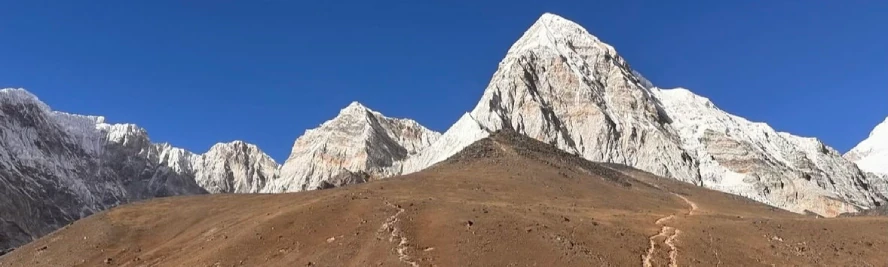
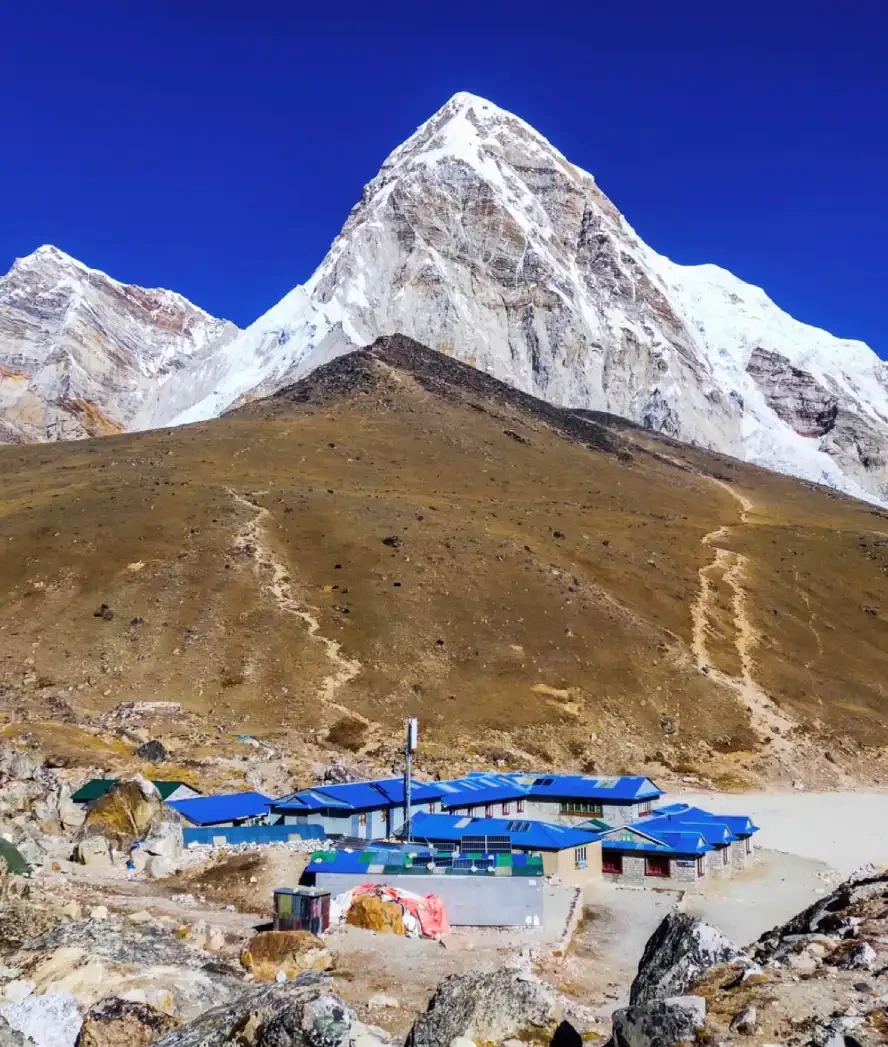
Gorak Shep is a tiny, windswept settlement in Nepal's Khumbu Region, and it holds a special place in the Everest Base Camp Trek as the last place to sleep before reaching base camp itself. Sitting at roughly 5,164 meters inside Sagarmatha National Park is one of the highest inhabited spots in the entire Everest Region and honestly one of the starkest. There's no farming here, no real village life in the usual sense but just a handful of lodges built to support trekkers passing through.
Despite its size, Gorak Shep carries real weight for anyone trekking through the Nepal Himalayas. It's the final high-altitude settlement before the trail pushes on to Everest Base Camp and up Kala Patthar for sunrise views of Everest itself. Surrounded by glacial moraine and framed by peaks on every side remains one of the most memorable stops and one of the most physically demanding in the entire Himalayan village trekking circuit even if calling it a village is a bit of a stretch. It's less a settlement rooted in Sherpa culture and more a functional basecamp for trekkers chasing the same dream that's drawn people here for decades to a place built entirely around one final trekking destination.
What is Gorak Shep?
The Gorak Shep is a settlement that sits on what was once a frozen lakebed, now dried into flat, sand-covered terrain wedged right up against the Khumbu Glacier. What locals still call Gorak Shep Lake isn't really a lake at all anymore - just a dusty, pale basin that gives the place its name, which in the Sherpa language roughly translates to "dead crow" or "dead ground," a fitting description for such a barren stretch.
Administratively part of Nepal's Solukhumbu District, Gorak Shep functions almost entirely as a trekking waypoint rather than a real village. It exists because the Everest Base Camp route needed somewhere for trekkers to sleep this high up, and a scattering of lodges grew up around that single need - nothing more, nothing less.
Why Is Gorak Shep Famous on the Everest Base Camp Trek?
On the Everest Base Camp Trek, Gorak Shep earns its fame from two things: what it's next to, and what's just above it. As the final overnight stop before base camp, it's where nearly every trekker sleeps the night they finally reach Everest itself - a genuine trekking milestone after days of steady climbing along the Khumbu Glacier trail.
But the real draw sits just above town: Kala Patthar, a rocky hill that's become the most famous Mount Everest viewpoint on the entire Everest trekking circuit. Most trekkers wake up in the dark and climb it specifically for sunrise, when the first light hits Everest and the surrounding peaks all at once. As a sunrise viewpoint, Kala Patthar delivers a wider Himalayan panorama than base camp itself, which is actually boxed in by mountains and can't see Everest's summit directly. For anyone chasing a proper high-altitude adventure, that early morning climb is often the real highlight of the whole trek - Gorak Shep is simply where it all begins.
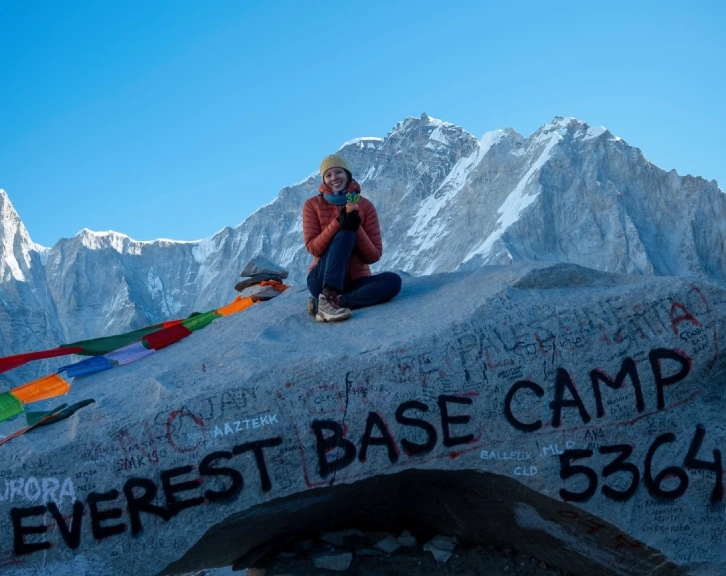
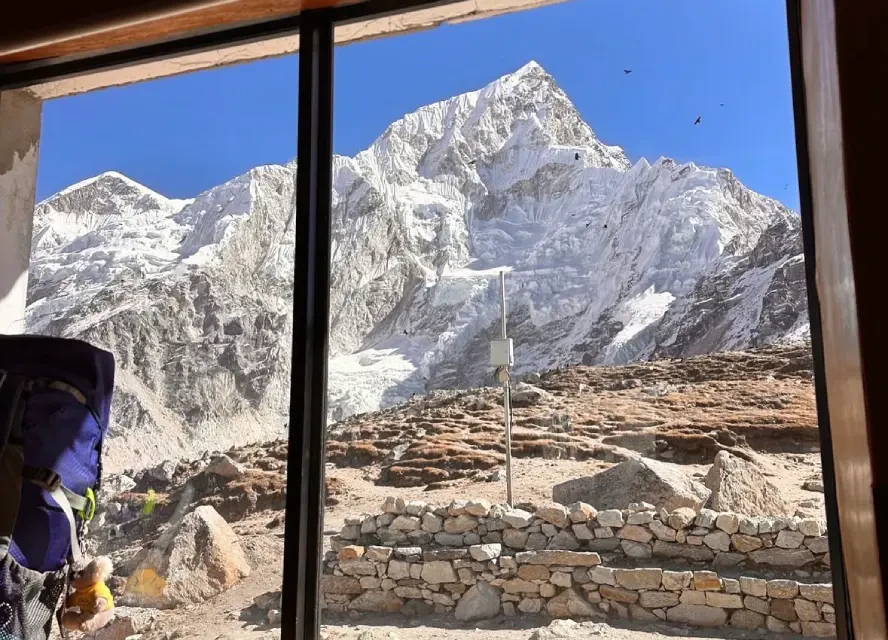
Why Do Trekkers Stay at Gorak Shep?
Trekkers stay at Gorak Shep mostly out of necessity, there's really nowhere else this high up to sleep. The handful of tea houses here provide basic overnight accommodation, and for most people on a standard trekking itinerary, it works as both the Everest Base Camp departure point and the launch pad for the pre-dawn Kala Patthar ascent.
It also functions as a genuine rest stop after the long push up from Lobuche, giving trekkers a chance to eat, sleep, and adjust before the final stretch. As the final rest stop on the way to base camp, its mountain lodges are simple - thin walls, shared bathrooms, and only the most basic facilities but at this altitude, a hot meal and a bed are honestly enough. Most trekkers only stay a single night, using it purely as a base for early morning hikes before moving on.
Where is Gorak Shep Located?
Gorak Shep sits high in Nepal's Solukhumbu District, tucked into the upper Khumbu Valley within Sagarmatha National Park. It's part of the broader Everest Region close enough to the Nepal-China border region that Tibet is only a mountain range away though the border itself lies well beyond the trail.
On the trekking route, Gorak Shep sits a few hours past Lobuche right along the main Everest Base Camp trail with the Khumbu Glacier running along its edge for most of the approach. Surrounded by some of the tallest peaks in the entire Himalayan mountain range, it falls administratively within the Khumbu Pasang Lhamu Rural Municipality - the local government body covering this stretch of the Everest region.
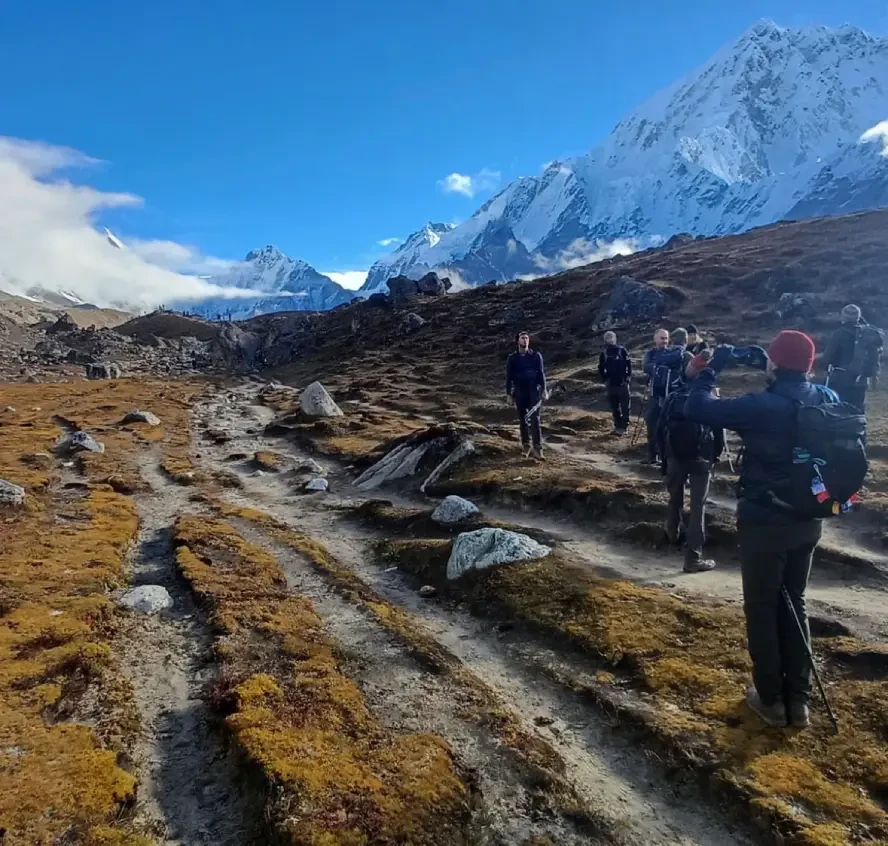
What is the history of Gorak Shep?
Long before it became a trekking stopover, Gorak Shep played a real role in Mount Everest climbing history. In 1952, this flat, dried lakebed served as the staging ground for the Swiss Everest expedition, where Raymond Lambert and Tenzing Norgay used it to acclimatize before pushing to a then-record altitude on the mountain. The following year, the 1953 British expedition ( the one that finally put Hillary and Norgay on the summit ) used the same site as a key supply and acclimatization point before the main camp moved higher up the Khumbu region settlements area, closer to the icefall.
Once climbing operations shifted to the current Everest Base Camp location, Gorak Shep's role changed too. It stopped being a staging ground for Everest expeditions and slowly became part of Nepal's growing early trekking routes, as interest in the Himalayan trade routes and the region's mountains pulled in more outside visitors. That shift tracked closely with the broader story of Everest tourism development across the Khumbu.
Even so, Gorak Shep never really became a village in the traditional sense. It sits apart from the traditional Sherpa lifestyle found in the settled villages of the Sherpa community, like Namche or Khumjung, existing instead almost entirely to serve trekkers. Its place in mountaineering culture remains tied to that 1950s history, while its modern identity is shaped almost entirely by the broader Nepal tourism industry and the steady flow of people retracing, in their own way, the same ground Hillary and Norgay once used to prepare for history.
How Did Gorak Shep Get Its Name?
The Gorak Shep name origin traces back to the Sherpa language, with some Tibetan language influence given how closely the two are historically linked. Most sources translate it as "dead raven" or "dead crow" the idea being that even hardy scavengers struggled to survive at this altitude, giving the barren spot its grim nickname.
That said, the exact dead ravens isn't universally agreed on. Some sources tie "shep" instead to the dried, gravel-like ground itself, making the name more about the lifeless lakebed than any bird. As with much Himalayan folklore, the story has likely shifted through generations of retelling.
Either way, it's stuck as part of local Sherpa traditions, passed down through local legends - a name reflecting real cultural heritage as much as the landscape itself.
How Did Gorak Shep Become a Popular Trekking Stop?
Gorak Shep's shift from expedition campsite to trekking stop tracks closely with the rise of Everest Base Camp trekking itself. Once Mount Everest expeditions moved their operations to the current base camp site, the old staging ground was left mostly empty until Nepal's tourism industry started opening up the Khumbu to independent trekkers in the decades that followed.
As interest grew, basic trekking infrastructure slowly followed it up the valley. Tea house development turned a handful of simple shelters into functioning lodges, giving trekkers somewhere to actually sleep this high up rather than camping out. That shift matched the broader pattern of tourism growth across the region, as adventure tourism pulled in more visitors chasing the same views once reserved for expedition climbers.
A big part of that pull has always been Kala Patthar popularity - the sunrise views from up there turned Gorak Shep into a required stop rather than just a passing waypoint. Combined with its spot along one of the most established Himalayan trekking routes, that single viewpoint did more than almost anything else to cement Gorak Shep's place on the modern EBC itinerary.
What Is the Altitude of Gorak Shep?
Gorak Shep sits at roughly 5,164 metres elevation, making it one of the highest points most trekkers will ever sleep at. That kind of Himalayan elevation puts it firmly inside a genuine high-altitude environment, where oxygen levels run noticeably lower than what the body's used to at sea level - usually somewhere around half of normal.
At this height, the thin air isn't just a minor discomfort; it's the reason altitude sickness becomes a real concern for anyone moving too fast through this stretch of the Everest region altitude. Gorak Shep sits well within the danger zone often called the high altitude zone, where proper acclimatization stops being optional and starts being the whole point of a slow, staged trekking itinerary.
How Does Gorak Shep’s Altitude Affect Trekkers?
Up here, the low oxygen concentration hits almost everyone to some degree, no matter how fit you are. Acute Mountain Sickness (AMS) is a genuine risk, and it tends to show up through a pretty recognizable set of symptoms - headache, nausea, shortness of breath, plus a heavier, deeper kind of fatigue than normal trekking tiredness ever produces.
Real altitude adaptation is basically the only thing that actually works, climb high during the day, sleep lower when you can, move slowly, and give the body time it actually needs instead of rushing the schedule. Some trekkers turn to Diamox (acetazolamide) to smooth out that adjustment, though that's a conversation for a doctor before the trip, not something to sort out mid-trail. Past that, the basics carry more weight than people assume: steady hydration, real rest and recovery, and paying attention when your body says slow down. If symptoms get worse instead of better, especially confusion, or trouble breathing even at rest - that's the moment to descend. No view is worth pushing through that.
How Do Trekkers Acclimatize Before Reaching Gorak Shep?
The acclimatization process on the way to Gorak Shep starts well before anyone gets near that altitude. Most itineraries build in a rest day at Namche Bazaar, around 3,440 meters, giving the body its first real chance to adjust before pushing higher. A second rest day usually follows at Dingboche, further up the valley, reinforcing the same pattern.
These rest days aren't really about resting in the literal sense, most guides still recommend a short hike up and back down, following the old "climb high, sleep low" principle that supports gradual altitude gain without overwhelming the body. Combined with a deliberately slow trekking pace through each stage, this approach gives trekkers a genuine shot at proper high-altitude adaptation before reaching Gorak Shep's thin air.
Some trekkers also track their oxygen saturation with a simple pulse oximeter, just to catch early warning signs before symptoms show up. Building all of this into the trekking schedule from day one rather than bolting it on as an afterthought - is really the core of altitude safety on this route, and it's the main reason well-planned itineraries take 12 to 14 days instead of rushing the climb in half that time.
Why Is Gorak Shep the Last Settlement Before Everest Base Camp?
Gorak Shep holds the title of highest inhabited stop on the route simply because nothing else exists past it. Base camp itself sits directly on the moving ice of the Khumbu Glacier, which rules out permanent structures entirely; the Everest Base Camp distance from Gorak Shep, roughly two hours on foot, is basically the last stretch where any kind of building can actually stand on solid ground.
This comes down to limited settlements being physically possible at all in the extreme altitude zone surrounding the mountain. The Khumbu Glacier surroundings are shifting, crevassed, and completely unsuited to lodges or year-round habitation, which is exactly why base camp itself is seasonal and temporary rather than a real village.
As a remote Himalayan location, Gorak Shep exists at the very edge of what trekking logistics can support; any settlement further up simply isn't viable. That makes it the natural final mountaineering support point before the trail hands off entirely to the glacier, tents, and whatever expedition or trekking group is heading up from there.
What Is the Trekking Route to Gorak Shep?
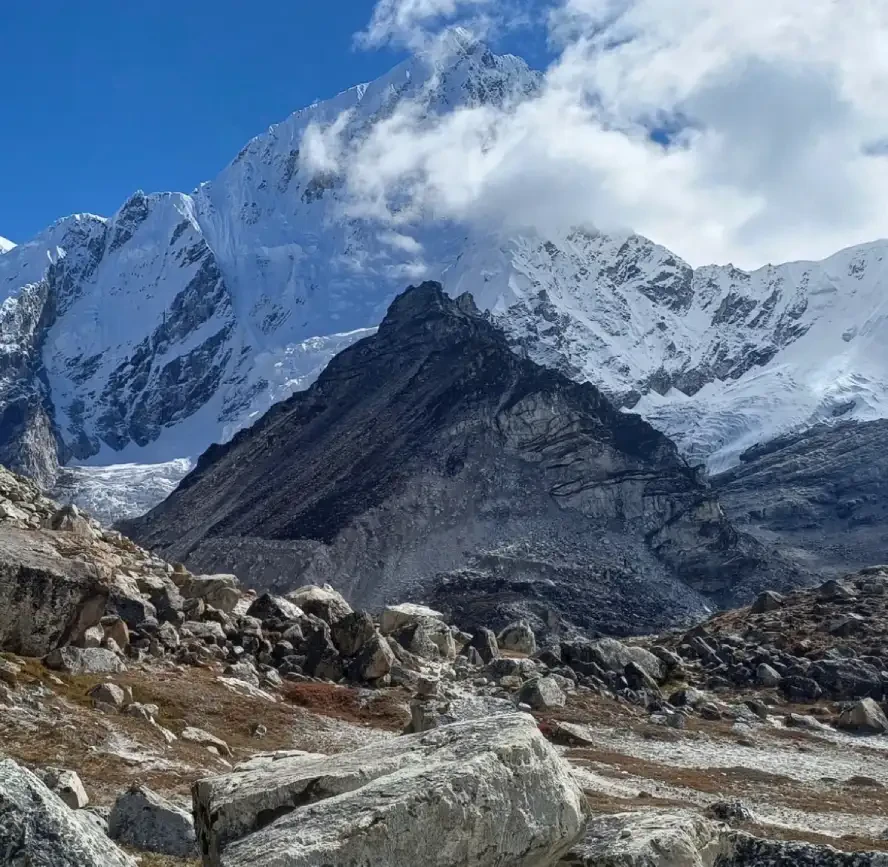
The trekking route to Gorak Shep leads through an extreme altitude zone along the Khumbu Glacier surroundings. Sitting as a remote Himalayan location, Gorak Shep is the highest inhabited stop before the mountain. Because of limited settlements further up, it acts as the main mountaineering support point, helping handle trekking logistics for the remaining Everest Base Camp distance.
What Facilities are Available on Gorak Shep?
Facilities at Gorak Shep are limited, but enough to get by. The tea houses and guesthouses here offer basic accommodation along with a shared dining room where most meals, socializing, and warming up happen. Beyond a bed and a hot meal, don't expect much else.
Charging facilities exist, but usually at a per-device fee, since most power comes from solar power setups rather than a stable grid. WiFi services are sometimes available too, though slow and often paid separately from the room rate, reliable enough for a quick message home, not much more. Drinking water is sold by the lodge or available for boiling, since untreated water isn't safe to drink directly at this altitude. Toilets are simple and mostly shared, often just outside the main building.
Most lodges also connect trekkers to basic trekking services, arranging porters, confirming permits, or helping sort out the next day's route making Gorak Shep functional despite how remote and stripped-down it actually is.
Accommodation and Rooms
Tea house rooms at Gorak Shep are about as basic lodging as the Everest Base Camp trek gets. Most are simple twin-sharing rooms, two narrow beds, thin plywood walls, and little else. Don't expect much insulation; blankets are usually provided, but most trekkers still bring their own sleeping bags, since nighttime temperatures here regularly drop well below freezing.
Heating facilities are limited to the shared dining hall, usually warmed by a single yak-dung stove that everyone gathers around after dark, Bedrooms themselves are almost never heated. Lodge owners are used to trekkers passing through exhausted and cold, and the dining hall doubles as the social hub of the evening, where people eat, charge devices, and try to warm up before heading to bed.
Room availability can get tight during peak trekking months, so peak season booking ahead of time or at least confirming a spot the morning you leave Lobuche is worth doing rather than risking a scramble for beds after a long day's walk.
Food and Dining
Trekker meals at Gorak Shep are simple, carb-heavy, and built around what's actually practical to cook this high up. Dal Bhat remains the reliable staple - lentils, rice, and vegetables, often with a free refill, which makes it one of the better value options on the menu. Beyond that, most lodges offer a familiar rotation of Sherpa cuisine, along with noodles and various soups that go down easily after a cold day of walking.
Hot drinks matter more here than almost anywhere else on the trek. Tea, milk, ginger, or lemon gets ordered constantly, partly for warmth and partly because staying hydrated at altitude takes real effort. Alcohol and heavy caffeine are generally best avoided this high up, since both can interfere with the body's high-altitude nutrition needs and make acclimatization harder rather than easier.
Given the physical demands of trekking at altitude, energy requirements run well above normal, so most trekkers end up eating more than they would at sea level just to keep going. All of it happens in the shared dining room, which is the warmest, most social spot in the lodge usually packed every evening with trekkers comparing notes on the day's walk.
Utilities and Connectivity
Electricity at Gorak Shep is limited and inconsistent, with most lodges relying on solar charging rather than any stable grid connection. That means real power limitations, lights might dim in the evening, and outlets aren't always guaranteed to work when the sun's been hiding behind clouds all day.
Battery charging for phones and cameras is usually available, but almost always for a small per-device fee, and it's worth topping up whenever the chance comes up rather than waiting until the battery's nearly dead. Mobile network coverage exists through Nepal's main carriers, though signal strength varies a lot depending on weather and terrain. WiFi and broader internet access can sometimes be bought through the lodge, but speeds are slow and connections drop often fine for a quick text, frustrating for anything more.
For anything urgent, most trekkers rely on basic communication facilities built around these same limited tools rather than expecting anything close to home connectivity. It's worth setting expectations accordingly: staying in touch is possible here, just slower and less reliable than almost anywhere else on the trek.
Medical and Emergencies
At this altitude, altitude sickness treatment almost always comes down to one thing: descend. Medication eases symptoms, but going lower is the only real fix once AMS worsens. Basic first aid is worth carrying yourself, since lodges stock very little.
Trekking guides often catch trouble early, having seen enough cases to spot warning signs fast. Simple health monitoring, like checking oxygen saturation, adds another safeguard.
For real emergencies, rescue services cover the Khumbu, and helicopter evacuation flies from Gorak Shep when weather allows, never guaranteed instantly. Emergency communication relies on satellite phones or patchy mobile signals. If oxygen support is needed and no helicopter can fly, descending on foot remains the fallback. Altitude-specific travel insurance is worth having.
Gorak Shep vs Everest Base Camp: What Is the Difference?
Feature | Gorak Shep | Everest Base Camp |
Elevation | ~5,164 m | ~5,364 m |
Accommodation | Tea houses, lodges | None (tents only, seasonal) |
Permanent settlement | Yes | No |
Overnight stays | Yes, regularly | Only during climbing season, for expedition members |
Everest summit visible | No (blocked by terrain) | No (blocked by Nubtse/West Shoulder) |
Best viewpoint nearby | Kala Patthar | N/A |
Food and facilities | Basic tea house meals, charging, Wi-Fi | Expedition-supplied only |
Surface | Solid ground, dried lakebed | Shifting glacier ice |
Who visits | Trekkers and climbers alike | Mainly climbing expedition teams |
Purpose | Final trekking stop and rest point | Launch point for Everest ascent |
What Is the Weather Like in Gorak Shep?
The Himalayan weather in Gorak Shep brings severe changes in temperature variation, dropping quickly once the sun goes down. A harsh mountain climate means frequent freezing temperatures all over the year, especially during exterm winter conditions. Heavy snowfall can cover the trails suddenly, while strong wind conditions make the air feel much colder. Clear morning visibility often gives way to afternoon clouds and fog, making the thin air feel even colder and more unpredictable.
What Is the Best Time to Visit Gorak Shep?
Like most of the Khumbu, Gorak Shep has two clear peak trekking seasons: spring season, running March-May, and autumn season, running September-November. Both windows offer the most clear mountain views, with stable weather and the best odds of a genuinely good sunrise from Kala Patthar rather than a wall of cloud.
Spring brings milder daytime temperatures and rhododendrons blooming lower in the valley, while autumn tends to have the sharpest, driest air right after the rains clear out. Outside those two windows, conditions get noticeably tougher. Monsoon season, from June through early September - brings heavy rain, low cloud, and trails that turn muddy and slippery lower down the valley, visibility up at Gorak Shep drops accordingly.
What is the Distance from Gorak Shep to Everest Base Camp?
Winter trekking is possible but genuinely demanding, with temperatures at this altitude regularly falling well below freezing overnight and some lodges closing entirely during the coldest stretch. It's quieter and cheaper, but really only suited to well-prepared, experienced trekkers rather than first-timers.
The walk from Gorak Shep to Everest Base Camp covers roughly a 3.5 km distance one way, though it feels considerably longer given the terrain. This isn't a flat, easy stretch; the walking route follows an uneven glacier trail across the edge of the Khumbu Glacier, weaving around loose rock, ice, and moraine the entire way.
Trek duration for this final push usually runs 2 to 3 hours each direction, adding up to roughly 5 to 7 hours for the full round trip when you include time spent at base camp itself. There's also a real elevation gain to account for around 200 meters from Gorak Shep's 5,164 meters up to base camp's roughly 5,364 meters which doesn't sound like much on paper but feels significant this high up, with the air already thin to begin with.
Most trekkers do this as a day hike, dropping bags at Gorak Shep before setting out light, then returning to the same lodge for the night rather than carrying full packs the whole way.
What Is the Trail Condition Between Gorak Shep and Everest Base Camp?
This stretch is easily one of the roughest on the entire trek. The path runs directly across Khumbu Glacier moraine, a jumble of loose rocks, gravel, and shifting debris sitting on top of the ice itself. It's genuinely rocky terrain, with an uneven trail that never really settles into a rhythm the way earlier, gentler sections of the trek do.
Underneath all that rubble, the glacier surface is constantly moving, however slowly, which means the trail itself gets rerouted from season to season as ice formations shift and crevasses open up in new spots. Trekking poles genuinely help here, more than almost anywhere else on the route, given how unstable the footing can get underfoot.
Weather changes fast up here too, with clear skies turning to wind or cloud with very little warning. Combined with the demands of high-altitude walking, this section calls for real care rather than casual hiking. Basic mountain safety sticking to the marked route, moving with a guide if possible, and turning back at the first sign of serious trouble matters more on this stretch than on almost any other part of the trek.
What is the difference between other Routes vs. the Gorak Shep Route ?
Shep isn't really a separate "route" the way the others are. It's a place where trekkers take rest and eat proper food on the trail, at about 5,164m, and climb Kalapatthar for the famous Everest views. So "Gorak Shep Route" is really just the final stretch of the standard Everest Base Camp Trek, not an alternative to it.
Here's how everything else in your list actually relates:
The starting point
- Lukla, where almost everyone starts. You fly into Lukla (from Kathmandu or Ramechhap), then walk from there. It's a gateway, not a route itself.
The region
- Khumbu Region is the whole area these treks are in. Everything else on your list sits inside it.
The main trekking routes (these ARE actual alternative paths)
Route | What is it |
Everest Base Camp | The classic route: Lukla → Namche → Tengboche → Dingboche → Lobuche → Gorak Shep → EBC/Kalapatthar. Most popular, ~12-14 days. |
Jiri Route | The old-school approach — the classic route before flights to Lukla existed (used by Hillary/Tenzing's era). You start walking from Jiri instead of flying, adding 7-8 extra days of lower-altitude trekking through Sherpa/Rai villages before joining the standard EBC trail. Longer, cheaper, more gradual acclimatization, less crowded. |
Gokyo Lakes Trek | A different valley altogether — goes up the Dudh Kosi valley west of the main EBC trail to the turquoise Gokyo Lakes and Gokyo Ri (arguably better Everest panorama than Kalapatthar, without the EBC crowds). |
Three passes trek | The "grand tour" — combines EBC + Gokyo by crossing all three high passes (Kongma La, Cho La, Renjo La), linking both valleys into one loop. Hardest, longest (~18-21 days), most complete. |
- Cho La Pass (5,420m) — connects the EBC valley (Dzongla/Lobuche side) to the Gokyo valley.
- Renjo La Pass (5,360m) — connects the Gokyo valley to the Namche/Thame side.
So in short: your real choice is between EBC alone, EBC + Gokyo via Cho La, Gokyo alone, or the full Three Passes loop with Jiri as a slower, non-flight alternative starting point, and Gorak Shep simply being the last stop before Base Camp on any of these.
Is Jiri to Everest more difficult than Gorak Shep?
Yes, trekking from the classic Jiri to Everest route is slightly more difficult than flying into Lukla and taking the standard route to Gorak Shep. The Jiri route adds five to seven extra trekking days of continuous walking through remote mountain villages, extending the total trek duration to around three weeks. Unlike the steady, gradual ascent from Lukla, starting in Jiri forces you to repeatedly climb up high mountain passes and descend deep into river valleys, thousands of extra meters of steep elevation gain before you even reach the main Everest trail. This demands far greater physical endurance, long days of carrying heavy packs, and comfort with basic tea house facilities. However, the one big advantage of this tough physical challenge is superior natural acclimatization, as spending an extra week walking at lower and mid-altitudes gives your body plenty of time to adapt, drastically reducing the risk of altitude sickness by the time you finally reach the thin air of Gorak Shep and Everest Base Camp trek.
Should you Choose Everest Three Passes Trek ?
The Everest Three Passes Trek is an amazing choice if you are in good physical shape, have plenty of hiking experience, and want to see the best views the Himalayas have to offer. Instead of just going straight to Everest Base Camp and back down, this route takes you on a complete loop across three massive mountain passes that are—Kongma La, Cho La, and Renjo La—plus the gorgeous Gokyo Lakes. It takes about three weeks and gets you away from the big crowds on the main trail, but it is a serious challenge. You will spend days walking on rocks path, crossing icy glaciers, and staying at very high altitudes for long periods of time
On the other hand, you should skip this trek if you are new to high-altitude trekking, short on time, or prefer a more straightforward walk. Going above 5,300 meters multiple times is tough on the body, and bad weather can easily block the high passes. If you want a simpler or quicker trip, the basic trek to Base Camp or just heading up to Gokyo Lakes are much safer and easier options. But if you have strong legs, three weeks to spare, and want a real mountain adventure, it is hard to beat.
Which EBC Trek Route is Suitable for Beginners?
The Classic Everest Base Camp Trek via Lukla is really great for people who are beginners . This route is very comfortable because it has a lot of facilities along the way. You will see a lot of teahouses where you can rest for the day. You get two days to rest, one in Namche Bazaar and the other is Dingboche. These rest days are important because they help your body adjust to the high-altitude air. This helps stop you from getting sick from the altitude.