Who Was Tenzing Norgay Sherpa?
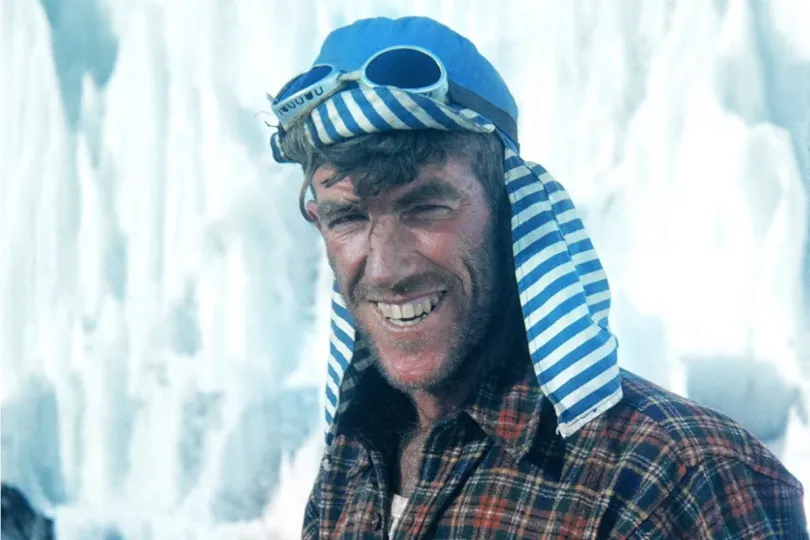
Tenzing Norgay was a Sherpa mountaineer and high-altitude climber who spent years as a mountain guide and expedition climber before 1953, steadily earning a name as a serious Himalayan mountaineer. His summit with Edmund Hillary turned him into a mountaineering pioneer and world-famous climber, an international mountaineering icon almost overnight. Often called a Nepalese-Indian mountaineer, he later trained a new wave of professional climbers at the Himalayan Mountaineering Institute in Darjeeling. Today, Norgay stands as a genuine mountaineering legend, a national hero in Nepal, an inspirational figure worldwide, proof that Himalayan expeditions and high-altitude mountaineering can earn real global recognition.
Both men live across the Khumbu, in the airport's name, trailside memorials, and the Himalayan Trust's ongoing work supporting Sherpa communities.
When and Where was Tenzing Norway Born and Raised?
Tenzing Norgay's birth date isn't something historians agree on cleanly, most put it at 29 May 1914, though a handful of sources just settle for 1914 and skip the exact day, since precise record-keeping wasn't really a thing in rural Himalayas villages back in the early 20th century. As the story goes, once his Everest summit landed on 29 May, he simply decided to celebrate that date as his birthday from then on.
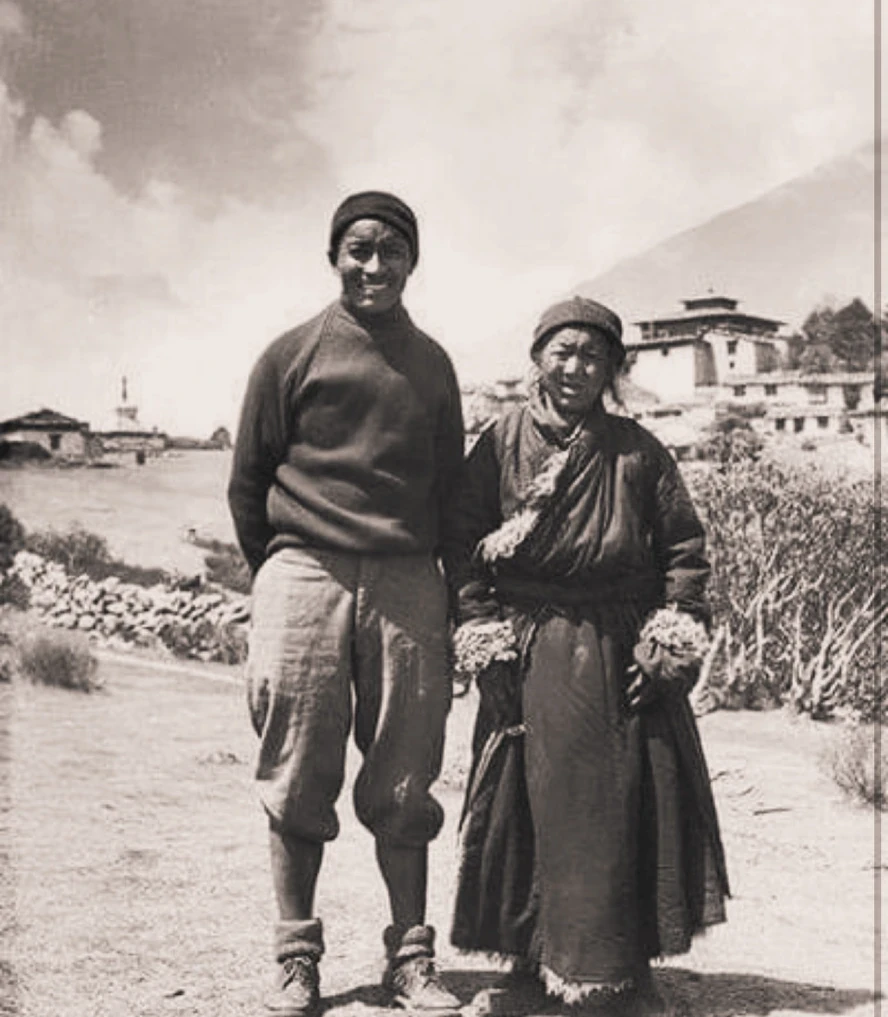
His birthplace gets even murkier. In his own autobiography, Norgay described himself as a Sherpa born and raised in the Khumbu region of Nepal, somewhere in the Solukhumbu District near Everest. Later research tells a different story, though, including accounts from his own family pointing instead toward the Kharta Valley in Tibet, up on the Tibetan Plateau, with the family moving to Sherpa settlements in Nepal's Himalayan villages while he was still a child.
Whichever version is closer to the truth, his childhood home was somewhere deep in the Himalayan region, a high-altitude environment built around yak-herding mountain communities. Whatever his precise geographic origin turns out to be, his early surroundings in those remote hometown villages clearly left their mark on the climber he became.
Tenzing Norgay's Childhood, Lifestyle and Education
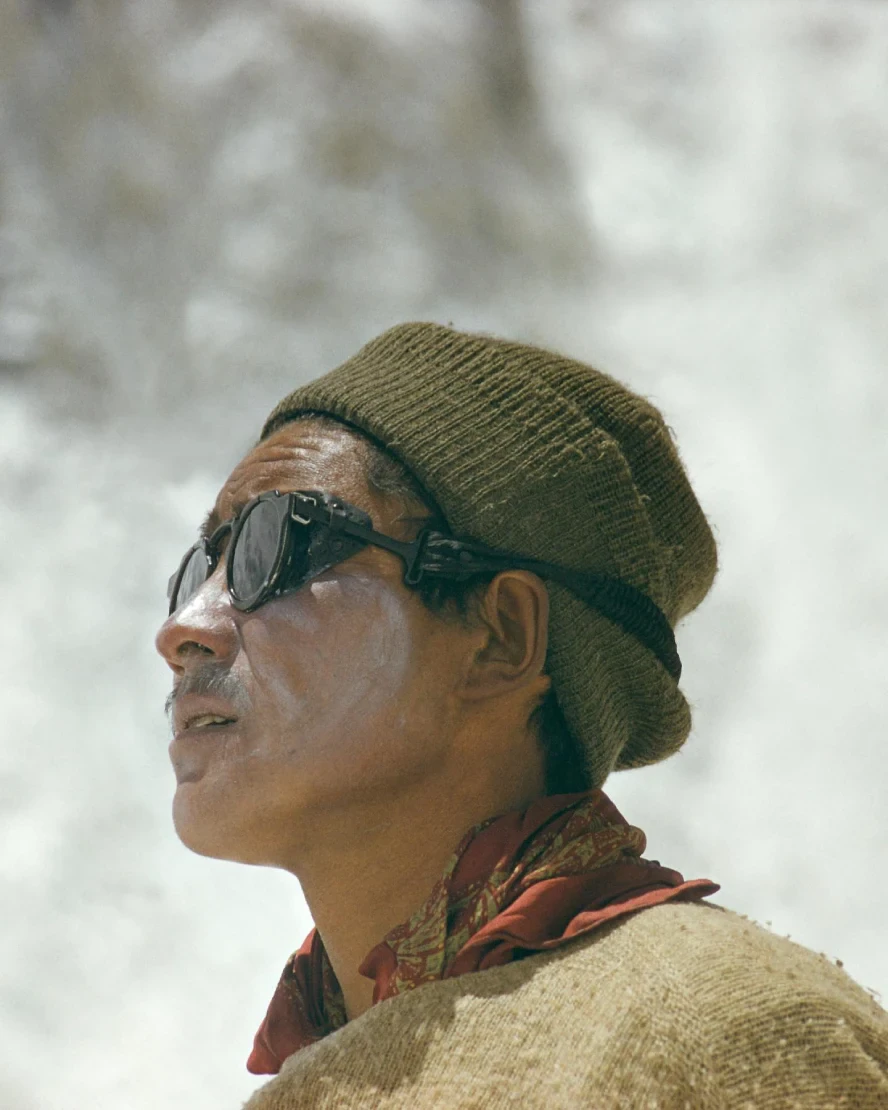
Norgay grew up living the traditional Sherpa lifestyle. yak herding, some farming, and the kind of high-altitude living that left little room for much else. Formal schooling wasn't really part of the picture, he had a short stretch of monastery education as a boy before drifting back to herding. Most of what he actually learned came through informal education, soaked up from everyday Himalayan village life.
That upbringing shaped a real mountain lifestyle for him, physical endurance, sharp outdoor skills, survival skills that only come from growing up in thin air. As a teen, he left home and worked as a porter on early Everest expeditions, where his mountaineering skills first got noticed. Hard work, self-reliance, and quiet discipline carried him, eventually, to the top of the world.
Why is Tenzing Norgay Famous?
Tenzing Norgay is famous, above all, for the first confirmed ascent of Mount Everest, a historic achievement shared with Edmund Hillary on 29 May 1953. As a seasoned high-altitude climber, he'd spent years building the skill behind high-altitude mountaineering long before the world took notice.
That climb turned him into a mountaineering legend and adventure pioneer, earning international recognition almost overnight and a permanent spot in mountaineering history and exploration history. He became a global icon and national hero in Nepal, remembered for the courage, determination, and leadership it took to get there. Even now, his global influence shapes how people talk about risk and ambition making him an inspirational figure far beyond climbing circles.
Tenzing Norgay's Journey to Mount Everest
Norgay's path to Mount Everest started long before 1953, working as a high-altitude porter on British Everest expeditions through the 1930s. Each trip added to his climbing experience and deepened his understanding of Himalayan mountaineering, even as most expedition members barely noticed the Sherpas doing the heaviest work. Coming from the Khumbu region himself, he already understood the terrain better than most climbers arriving from abroad.
By the 1940s and early '50s, that early groundwork turned into something bigger. He joined a string of Himalayan expeditions, including a near miss Everest attempt in 1947 and Swiss led climbs in 1952, sharpening his skills as both a Sherpa guide and, increasingly, a genuine mountain guiding partner rather than just support staff. Each trip meant fresh climbing preparation, testing gear, studying the expedition route, and building the kind of acclimatization that high-altitude survival depends on.
When the 1953 British expedition set out from base camp, Norgay's summit ambition was hardly a secret anymore. Years of near-misses had built toward one thing: his own long-held Everest dream, finally within reach.
What Were Tenzing Norgay's Previous Everest Expedition Attempts?
Before 1953, Norgay had already racked up several pre 1953 expeditions, starting out as a high-altitude porter on the 1935 British Everest Expedition under Eric Shipton. He went back for the 1936 British Everest Expedition, then again for the 1938 British Everest Expedition, piling up climbing experience and high-altitude experience on each trip north through Tibet even as bad weather kept cutting those attempts short.
His real breakthrough came with the 1952 Swiss Mount Everest Expedition. During the spring 1952 expedition, he and climber Raymond Lambert pushed up the South Col Route and got to roughly 8,595 meters, setting a new altitude record and getting closer to the top than anyone before them. That autumn, he went back for another try, the autumn 1952 expedition but conditions turned the team back again. Trip after trip, these Everest expeditions stacked up the Himalayan mountaineering know-how, the acclimatization, and the plain stubbornness that eventually made his summit attempt with Edmund Hillary possible the following year.
What Was the 1953 British Everest Expedition?
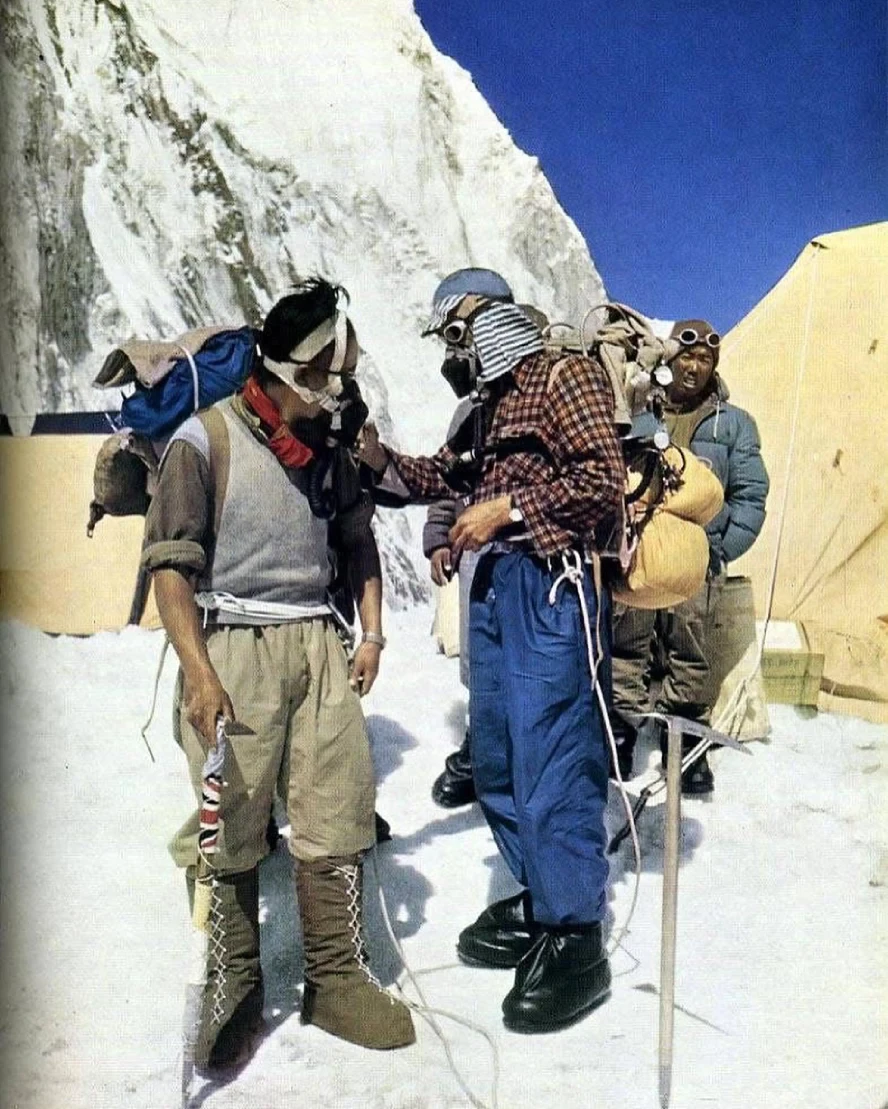
The 1953 British Mount Everest Expedition was the ninth British attempt on the mountain, and the one that finally succeeded. Led by John Hunt, a former army officer with serious expedition planning experience, the British expedition team brought together dozens of climbers, scientists, and Sherpas in one of the most carefully organized Himalayan expedition efforts of its time.
The route followed the now-famous South Col Route, up through the treacherous Khumbu Icefall, across the flat expanse of the Western Cwm, then up to the exposed South Col itself before the final push toward the top. Hunt built his climbing team in pairs, sending one duo ahead as a trial summit attempt before selecting Edmund Hillary and Tenzing Norgay for the second, decisive push.
On 29 May 1953, that pairing made the first successful ascent of Everest, cementing the expedition's place in mountaineering history as a genuinely historic expedition. Tenzing Norgay's role went far beyond that of a hired porter, his route-finding, high-altitude experience, and steady presence were central to the climb's success, and the Hillary-Tenzing partnership that resulted became the defining image of the entire Everest summit attempt.
How Did Tenzing Norgay Become an Everest Climber?
Norgay's path into climbing started with a small Sherpa from the Khumbu region who left home as a teenager and found his way to Darjeeling, where a large Sherpa community was already tied up in the growing world of Himalayan mountaineering. That community gave him his first real opening, and by 19 he'd talked his way into work as a high-altitude porter, the entry point for almost every Sherpa involved with Mount Everest at the time.
From there, it was years of grinding, unglamorous work that built him into something more. The British Everest expeditions of the 1930s taught him route-finding and expedition skills most porters never picked up. The Swiss Everest expeditions of 1952 pushed his high-altitude endurance and acclimatization experience further than almost anyone else's at the time. Slowly, the label stopped fitting, he wasn't just carrying loads anymore, he was operating as a genuine mountain guide and professional mountaineer in his own right.
By the time 1953 rolled around, his climbing experience and years of summit preparation across a decade of Everest expeditions meant he wasn't chosen by chance. He'd simply earned it.
The Historic Ascent of Mount Everest
On May 29, 1953, New Zealander Edmund Hilary and Nepali Sherpa Tenzing Norgay successfully summited the first recorded and confirmed ascent to the Mount Everest(8,848 m). Operating by ninth British Everest expedition by Colonel John Hunt. The pair had spent the previous night camped high along the South Col Route, setting out before dawn for the final stretch to the Everest summit.
The last obstacle came in the form of a steep rock and ice wall on the summit ridge, later named the Hillary Step in his honor a technical, exposed section that demanded careful climbing at nearly 8,800 meters, with almost no margin for error. Past that, the ridge finally leveled out, and just before noon, the pair stood on top of the world.
It was a fitting end to a route that had tested them from the very start through the shifting, crevasse riddled Khumbu Icefall, across the flat basin of the Western Cwm, and up the final slopes most climbers before them hadn't survived. The climb became an instant historic achievement, a defining mountaineering milestone in Himalayan mountaineering and high-altitude mountaineering alike. That single moment of summit success earned both men global recognition overnight and secured their place permanently in world mountaineering history.
What Was Tenzing Norgay's Role in the 1953 Everest Expedition?
Tenzing Norgay served as both the Sirdar (head of the Sherpa team) and a primary summit climber, co-leading the logistical support and making the historic first ascent alongside Sir Edmund Hillary on May 29, 1953.
Tanzing Norgay's Life After Everest Expedition
Norgay's post Everest life didn't slow down after 1953 if anything, his mountaineering career simply took a different shape. Rather than chasing more summits, he shifted toward teaching, becoming the first Director of Field Training at the newly founded Himalayan Mountaineering Institute in Darjeeling in 1954. In that role, he spent years shaping serious mountaineering education and building training programs that turned a new generation of Sherpas and climbers into capable mountain guides and climbing instructors in their own right.
Beyond the institute, Norgay became something of a public figure and unofficial mountaineering ambassador, representing Sherpa climbing expeditions and the wider Sherpa community on the international stage. His fame also helped put Nepal's Himalayas on the map for early adventure tourism, long before trekking became the industry it is today. He published his autobiography, released as Man of Everest (and Tiger of the Snows in some editions), giving the world a firsthand account of his climb and his life. Between the institute, the writing, and years of international recognition, Norgay spent his remaining decades less as a climber chasing peaks and more as a teacher passing on everything Himalayan mountaineering had taught him.
What was Tenzing Norgay's relationship with Sir Edmund Hillary?
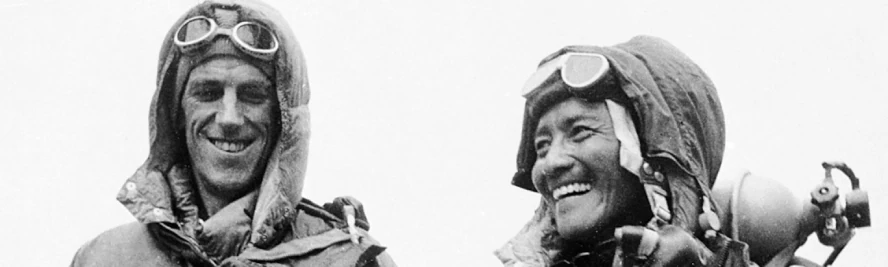
Tenzing Norgay and Edmund Hillary were climbing partners and expedition teammates on the 1953 British Mount Everest Expedition, picked as the final pair to make a real attempt at the Everest summit. Their mountaineering partnership didn't come together overnight, It was built over weeks of climbing side by side, leaning on each other through some of the nastiest terrain Mount Everest had to offer.
What made it work was mutual respect, plain and simple. Hillary brought a New Zealander's climbing background Norgay brought the instincts of an experienced Sherpa climber. Neither one was getting to the top alone, and both knew it. The trust, teamwork, and cooperation between them held through the hardest, most exposed stretch of the climb, right up to the moment of the first confirmed ascent of Mount Everest.
Afterward, neither man would say who actually set foot on the summit first, a quiet bit of loyalty that spoke to their bond just as much as the climb had. As summit companions, their shared achievement turned into something closer to real friendship, a lifelong connection that outlasted 1953 by decades. People still point to it as one of the most historic partnerships in mountaineering.
How Did Tenzing Norgay Change Mountaineering?
Before Norgay, Sherpa climbers were mostly treated as support carrying loads, fixing camps, rarely credited by name in the story of any climb. His summit changed that almost overnight. As a genuine mountaineering pioneer, he forced a shift in Sherpa recognition that rippled through mountaineering history for decades afterward, turning expedition support into something closer to real climbing partnership.
His influence went beyond symbolism, too. Through his years training climbers at the Himalayan Mountaineering Institute, he helped formalize professional mountain guiding as a real career path within the Sherpa community, passing along high-altitude climbing skills that shaped how Everest climbing and high-altitude mountaineering were taught going forward. That legacy is still visible in how Himalayan mountaineering operates today, with Sherpa guides recognized as skilled professionals rather than hired hands.
More broadly, his climb became a source of mountaineering inspiration for the wider global mountaineering community, opening the door for adventure climbing as a pursuit accessible to more than just Western explorers. Decades later, his Sherpa legacy remains woven into nearly every serious Everest expedition that's followed.
Tenzing Norgay's Family and Descendants
Tenzing Norgay's family history reflects a genuine mountaineering family, built across three marriages within a traditional Sherpa family structure. His children included sons Norbu Tenzing Norgay, Jamling Tenzing Norgay, and Dhamey, along with daughters Pem Pem and Deki, seven children in total, born into a household shaped by his years of Himalayan expeditions and his deep ties to the Sherpa community.
That family legacy didn't stop with his own generation. Jamling Tenzing Norgay's Everest climb came in 1996, when he summited as part of an IMAX filming expedition following directly in his father's footsteps. A grandson, Tashi Tenzing, reached the summit himself in 1997, making him the third generation of the family to stand on top of Everest. Even further down the family tree, a great-grandson found fame as an actor, showing just how far the family's public profile has stretched beyond climbing.
Rooted in a shared Himalayan family background and Sherpa lineage, the Norgay descendants have kept family traditions alive, some through actual climbing, others through guiding, writing, and advocacy work tied to Sherpa causes. Their story reflects a broader climbing legacy and a strong sense of Sherpa identity, carried forward by next generation climbers who grew up under the weight and the pride of the Norgay name, all part of a larger Himalayan heritage that Tenzing helped put on the map.
Books, Movies and Documentaries About Tenzing Norgay
Tenzing Norgay's life story has been told and retold across decades of mountaineering literature and film. His own autobiography, co-written with James Ramsey Ullman and published as Man of Everest (released as Tiger of the Snows in the US), remains one of the most personal pieces of Everest literature available, a genuine climbing memoir from someone who lived the climb rather than just reporting on it. A second biography-style book, After Everest, followed years later, covering his life beyond the summit.
On film, The Conquest of Everest stands as the definitive documentary film of the era, a 1953 British production, shot largely by expedition cameraman Tom Stobart, that captured the 1953 Everest expedition records almost as they happened and earned an Academy Award nomination for its trouble. More recent efforts, like the docudrama Beyond the Edge, have revisited the same first ascent accounts using dramatized recreations alongside real archival footage, giving newer audiences another way into the story.
Beyond that one climb, Norgay's broader place in Everest history shows up throughout Himalayan exploration films, museum exhibits, and academic historical archives covering Sherpa stories and the wider world of climbing documentaries and mountaineering documentary work. Between the books and the footage, his story remains one of the most thoroughly documented in the entire history of mountaineering.
Why Was Lukla Airport Named After Tenzing Norgay and Edmund Hillary?
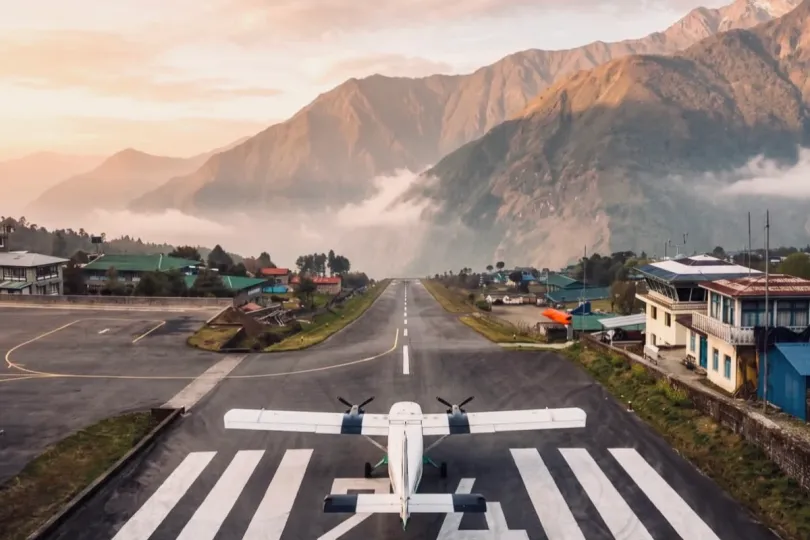
Lukla's small airstrip carries the Tenzing-Hillary Airport name as a direct tribute to Tenzing Norgay and Sir Edmund Hillary, the two men behind the first confirmed ascent of Mount Everest on 29 May 1953. The Tenzing-Hillary Airport naming history goes back to January 2008, when Nepal's government officially renamed the airstrip shortly after Hillary's death that same year nearly two decades after Norgay himself had passed.
The choice made sense on more than one level. Hillary was the one who originally pushed for an airstrip near Lukla in the first place, funding its construction through the Himalayan Trust to make the Khumbu Region easier to reach for trekkers and easier to support for the local Sherpa community. Renaming the airport after both Everest pioneers, rather than just Hillary alone, reflected how central Norgay's role in the climb had always been even if history sometimes remembers the pair unevenly.
Today, in Solukhumbu District, this small mountain airport stands as one of the more meaningful pieces of aviation history anywhere in the world not because of its size, but because of what it represents. As the main Everest gateway, it ties directly back to the 1953 climb, the 1953 British Mount Everest Expedition, and the wider sweep of mountaineering history that followed. The name itself is a quiet, permanent form of tribute and recognition, keeping the Tenzing-Hillary legacy and the story of Himalayan mountaineering more broadly alive every single time a plane lands on that short, sloped runway.
Who was Edmund Hillary to the Sherpa people?
To the Sherpa Community, Sir Edmund Hillary was far more than a climber who happened to reach the summit alongside Tenzing Norgay during the 1953 British Mount Everest Expedition. After the First Ascent of Mount Everest, Hillary kept coming back to the Khumbu Region not for more climbs, but to help build the basic infrastructure the area badly needed.
Through the Himalayan Trust, founded in the 1960s, Hillary funded and helped build schools, hospitals, and airstrips across the Khumbu Valley. In Khumjung Village, locals asked him directly to build a school, and the first classroom opened there in 1961 now known simply as Hillary School. A few years later, in 1966, the trust built Kunde Hospital nearby, still serving the Sherpa community today. He also funded the airstrip at Lukla in 1964, along with dozens of other schools and hospitals built across Solukhumbu over the following decades.
None of this replaced the region's own Sherpa mountaineering tradition. If anything, it supported it, giving families near Namche Bazaar and beyond better access to education and healthcare without pulling them away from mountain life. For his lasting focus on Sherpa welfare and education and healthcare development, Hillary is remembered locally less as a foreign mountaineer and more as someone who genuinely gave back to the people who made his climb possible in the first place.
Why is Lukla the Most Dangerous Airport in the World?
Lukla'sTenzing-Hillary Airport earns its "most dangerous" reputation from a mix of factors that rarely all show up at one airport at once. As a high-altitude airport sitting at nearly 2,860 meters in Nepal's Solukhumbu District, it's already working with thinner air than most runways ever have to deal with and that's before factoring in the terrain around it.
The physical layout doesn't help. This mountain airport has an unusually short runway, and it's sloped at roughly 12%, ending in a solid rock wall on one side and a steep drop into the Khumbu Region valley on the other. It's officially classified as a STOL airport (Short Takeoff and Landing), meaning only smaller, specially suited aircraft, mainly Twin Otter aircraft and similar Dornier planes are even capable of using it safely.
Then there's the weather. Mountain aviation here depends entirely on clear skies, and extreme weather conditions sudden fog, low visibility, and strong winds funneling through the valley can shut the airport down with little warning. Add in the genuinely steep terrain surrounding this remote airport, and pilots are left with almost no margin for error on approach.
None of this means aviation safety is being ignored, though. Nepal aviation authorities apply strict pilot-training rules specifically for this route, and incidents remain rare given how many flights land here each season. It's demanding, no doubt, but as the main Everest trekking gateway, Lukla has learned to manage that danger rather than simply accept it.
When Did Tenzing Norgay Sherpa Die?
Tenzing Norgay died on 9 May 1986, at age 71, at his home in Darjeeling, India. His death is generally attributed to a cerebral hemorrhage, with natural causes tied to a long-standing health decline rather than any single sudden event.
In his final years, Norgay largely stepped back from the public eye, spending much of his later life focused on training climbers and supporting Sherpa causes rather than chasing headlines. The passing of a mountaineering legend was still felt widely as a genuine Sherpa icon and Everest pioneer, his death brought tributes and honours from across Nepal, India, and the wider world of Himalayan mountaineering.
Decades later, his mountaineering legacy hasn't faded. He remains a defining historical figure in the story of Everest, remembered with the same global recognition he earned back in 1953 proof that some achievements only grow larger with time.