Lukla (2,860 m) also referred to as the gateway to Everest, sits quietly in Nepal's Solukhumbu District. A small town tucked into the hills before the giants of the Himalayas take over. You could walk across it in fifteen minutes. But almost everyone heading to the Everest Base Camp trek, Gokyo Lakes, or the Three Passes, walks through here first, because there's no real way around it.
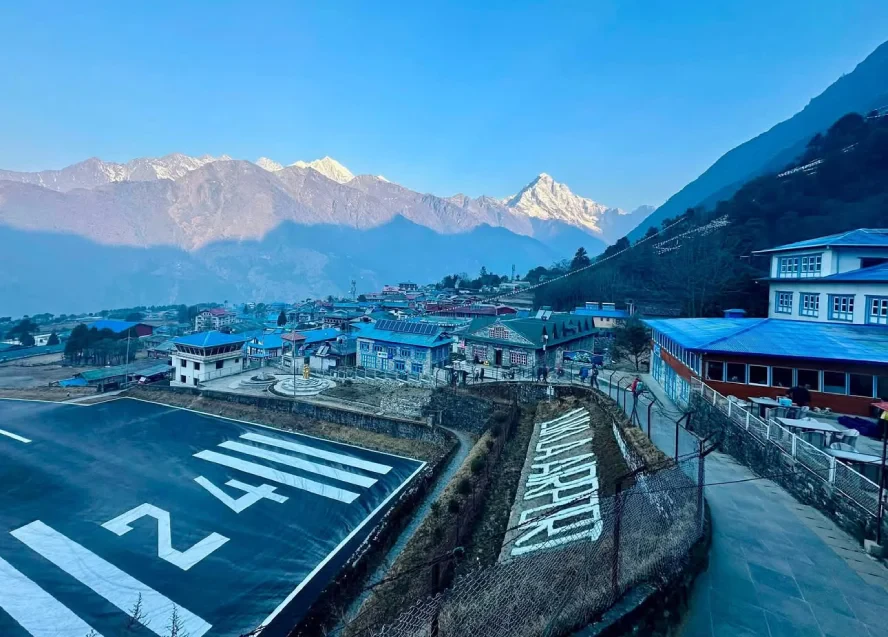
Getting here is its own little adventure. The flight from Kathmandu to Lukla takes just 25 to 35 minutes, sometimes from Ramechhap instead, depending on the season. It lands at the Tenzing-Hillary Airport, a runway so short and so steeply angled that pilots need nerves of steel. Weather decides everything here from flights getting delayed, sometimes cancelled, and you just learn to wait.
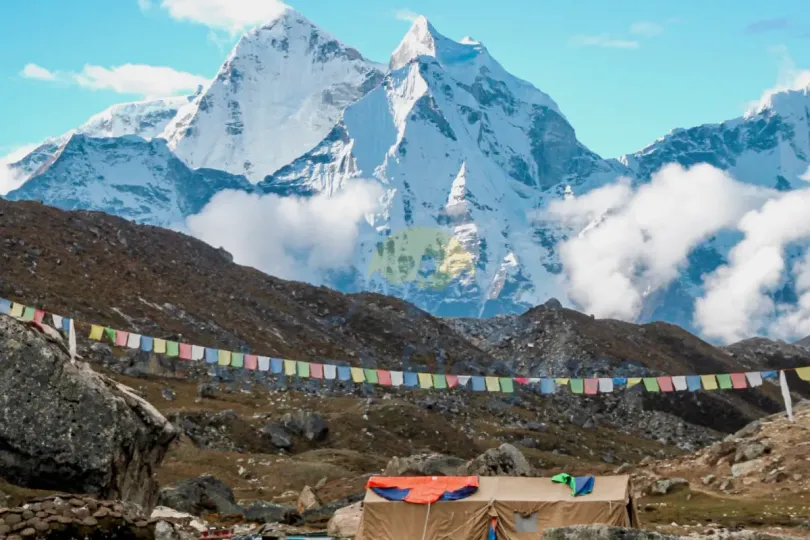
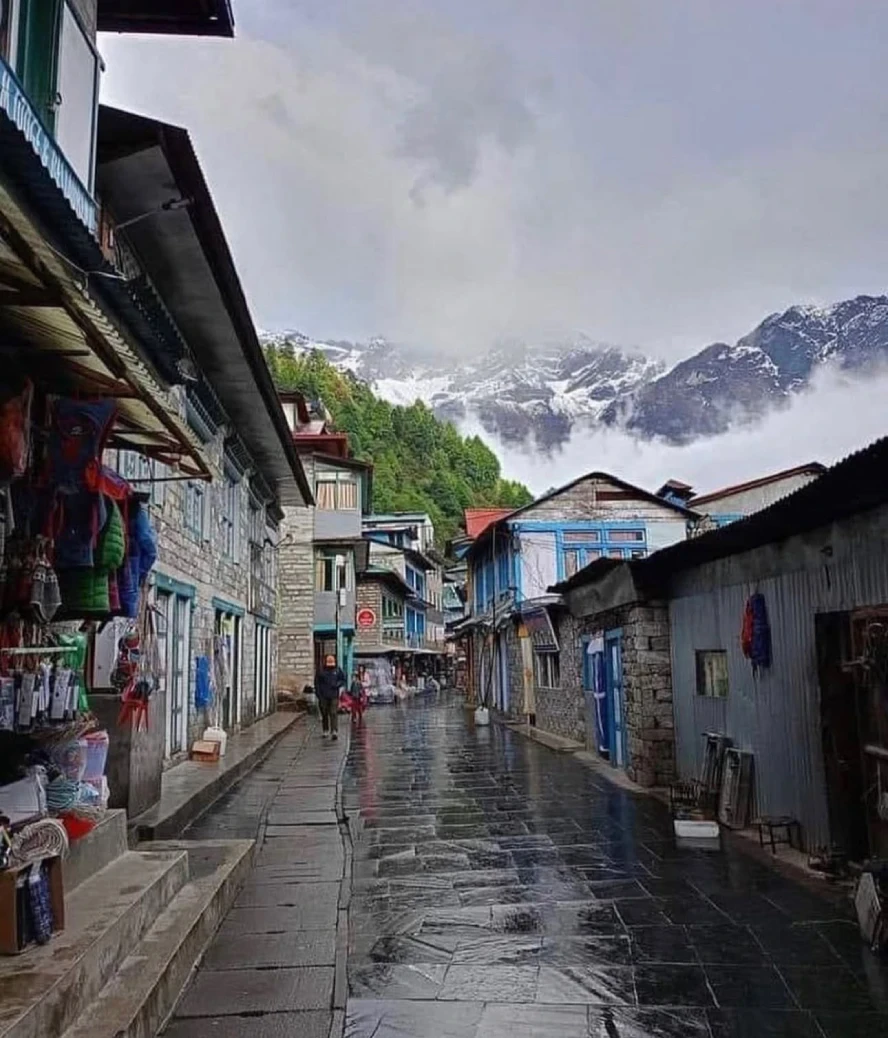
Once you're on the ground, Lukla takes care of you. There are gear shops if you forgot something, SIM card stalls, small bakeries with surprisingly good bread, and teahouses where tea just tastes better at altitude. Prayer flags flapping in the wind above rooftops. Old mani walls line the path out of town, a quiet reminder that this is Sherpa land shaped by generations who called these mountains home long before trekkers arrived.
Some travelers skip the flight altogether and walk in from Jiri instead, adding extra days but trading the runway drama for slow, winding trail time through the Khumbu region and down toward the Dudh Koshi Valley.
And weeks later, when the trek is done and boots are worn thin, you come back through Lukla again tired, sunburned and maybe a little emotional. You sit at a teahouse, order something warm, and let it sink in. This little town was your first step into the mountains, and now it's your last one home.
Lukla Quick Facts
Fact | Detail |
Elevation | 2,860 meters elevation (9,383 ft) |
District | Solukhumbu District, Koshi Province |
Distance from Kathmandu | 138 km from Kathmandu (NE) |
Coordinates | 27.6867° N, 86.7290° E |
Airport | Tenzing-Hillary Airport (LUA) |
Runway | 527-meter runway, ~12% gradient |
Flight time | 25–35 minutes |
Distance to Everest Base Camp | 65 km to Everest Base Camp (trail) |
Permits | Checked ahead at Monjo |
What and Where is Lukla?
Lukla is a mountain town in northeastern Nepal that serves as the region's trekking hub, the last proper stop before the trail takes over. Steep hillsides press in on either side, the Dudh Koshi runs somewhere down below, and the whole town is wedged into the Solukhumbu District like it barely fits. Most travelers fly in and a few if they've got days to burn, still walk the old route from Jiri instead. Either way, this is the point where roads give up and the actual trek begins.
What is the total population of Lukla?
Official census-based figures from 2011 put it at around 230 people, while more recent tourism guides describe a resident population closer to 2700 and some sources cite figures as high as 5000. The wide range likely reflects seasonal trekking traffic and workers versus permanent residents.
Why is Lukla Called the Gateway to Everest?
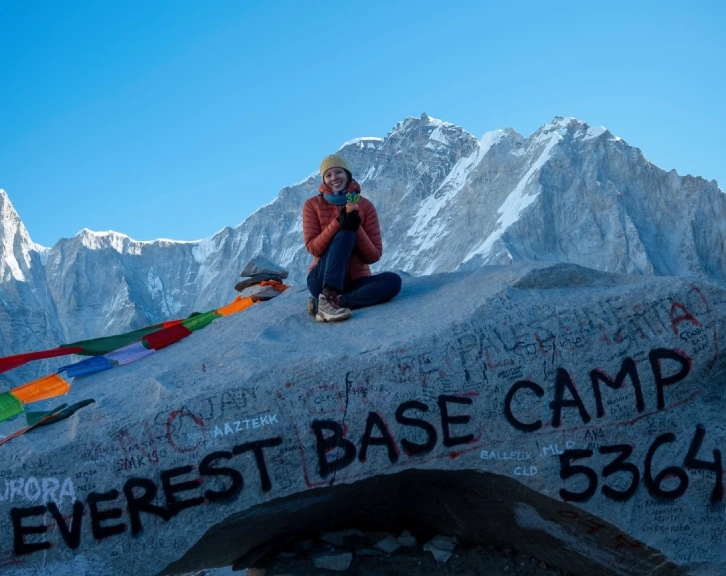
Lukla is called the Gateway to Everest because there's really no other way in, it's the main access point into the Khumbu Valley and nearly every trek to Everest Base Camp, Gokyo, or the Three Passes kicks off right at its runway, the trail runs north through Phakding, then Namche Bazaar, before working its way up toward EBC. Try skipping Lukla and you're adding several days on foot from Jiri or Salleri, most people just don't bother.
There's also the practical side of things: you'll hire porters and guides, pick up any last bit of gear you forgot, and eat one final hot meal before the mountains take over. So much of what happens further up the trail traces back to this one small town, which is probably the real reason people still call it "where the real trek begins."
What is Lukla Famous for?
Lukla is famous for being the gateway to the Everest region - nearly every Everest Base Camp trekker starts and ends their journey here. It’s home to Tenzing-Hillary Airport, often called the world’s most dangerous airport due to its short, steep runway wedged into the mountainside. Lukla is also named after Pasang Lhamu Sherpa, the first Nepali woman to summit Everest, honored at the town’s memorial gate.
How to Get to Lukla
There are three ways to get to Lukla: flying, trekking overland, or chartering a helicopter. Most people take flights to Lukla from Kathmandu or Ramechhap, landing in just 25–35 minutes. Those with more time walk in via the overland route from Jiri (6–7 days) or Salleri (3–4 days). A helicopter charter covers the same ground in under an hour, at a much steeper price. Fastest: helicopter. Cheapest: the flight. Most scenic: walking in from Jiri.
Lukla Flights from Kathmandu and Ramechhap
Lukla flights operate from Kathmandu or Manthali Airport, Ramechhap depending on the season. During peak trekking season (March through May, and late September into November) most flights get shifted over to Manthali airport, Ramechap instead, which means a 4–5 hour drive out of Kathmandu the evening before, then an early start the next morning. Outside those months, flights just go direct from Kathmandu. Either way, the Kathmandu to Lukla flight only takes 25–35 minutes, and it's always scheduled as one of the early morning flights, since clouds tend to roll in and shut things down by midday.
A few things worth knowing before you book: grab your seat early if you're flying during peak season, since slots fill up fast. Try to go with an operator that actually tracks the weather and rebooks you instead of just leaving you stranded at the airport. And build in 1–2 buffer days, because delays happen more often than anyone likes to admit. However you look at it, Lukla is reached from Kathmandu or Ramechhap, so it's worth planning for both. And if you'd rather skip managing the Ramechhap transfer yourself, most Everest Base Camp trek packages handle that part already or you can book a direct helicopter ride to Lukla from Kathmandu and back.
Trekking to Lukla from Jiri or Salleri
You can also reach Lukla on foot from Jiri or Salleri, the original expedition routes used long before the airport existed. Jiri to Lukla (6–7 days) follows the same original expedition route that Hillary's team once walked back in the 1950s. The Salleri option is a bit shorter, an 8–10 hour jeep or bus ride from Kathmandu, followed by Salleri to Lukla (3–4 days) on foot. Both routes get you there without flying, and both build in extra acclimatization along the way.
These trails suit anyone who wants quieter paths, a more gradual gain in altitude, or just doesn't love the idea of a short mountain runway. It's slower, sure, but for flight-anxious trekkers, it's often worth every extra day.
Kathmandu to Lukla by Helicopter
Helicopter flights to Lukla take about 45 minutes from Kathmandu, and they dodge most of the delays that keep fixed-wing planes grounded. A Lukla helicopter flight tends to make sense in a handful of situations say, bad weather's piled up a backlog and you just need to get moving, or a group of 4–5 wants to split the cost of a charter, or the trip's already built around a higher-end, luxury-style itinerary where saving time matters more than saving money.
Pricing usually breaks down one of two ways: charter vs shared seat. Book the whole aircraft as a private charter and you're covering the full cost yourself unless the group fills every seat. Grab a shared seat instead, if one's open, and it's cheaper, it depends on other passengers booking around the same time. Rates shift with season and demand, so rather than quoting a fixed number here, it's better to check current pricing on the package page.
Weather is really where helicopters pull ahead. They can often fly when fixed-wing planes can't, and they rarely get caught in the kind of multi-day backlog that grounds regular flights providing weather flexibility. That kind of flexibility isn't cheap, you're usually looking at several times the price of a standard ticket. Still, for anyone working with a tight schedule, an add-on tour, or a heli-return already worked into the trip, it tends to pay off.
Lukla Airport: Landing at Tenzing-Hillary Airport
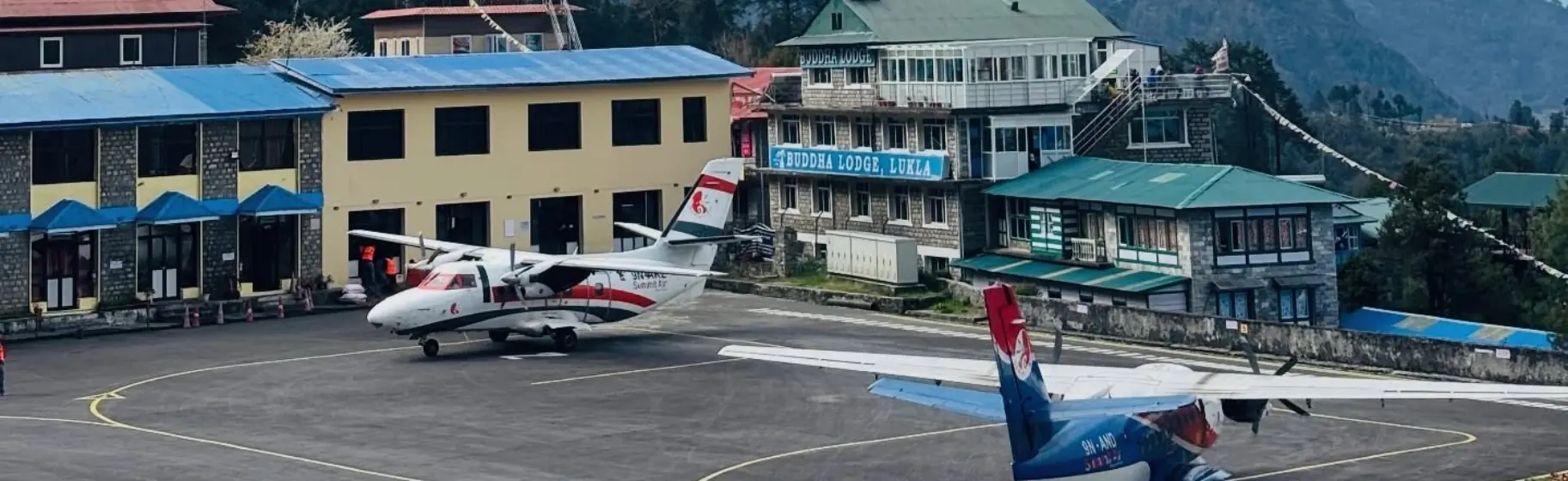
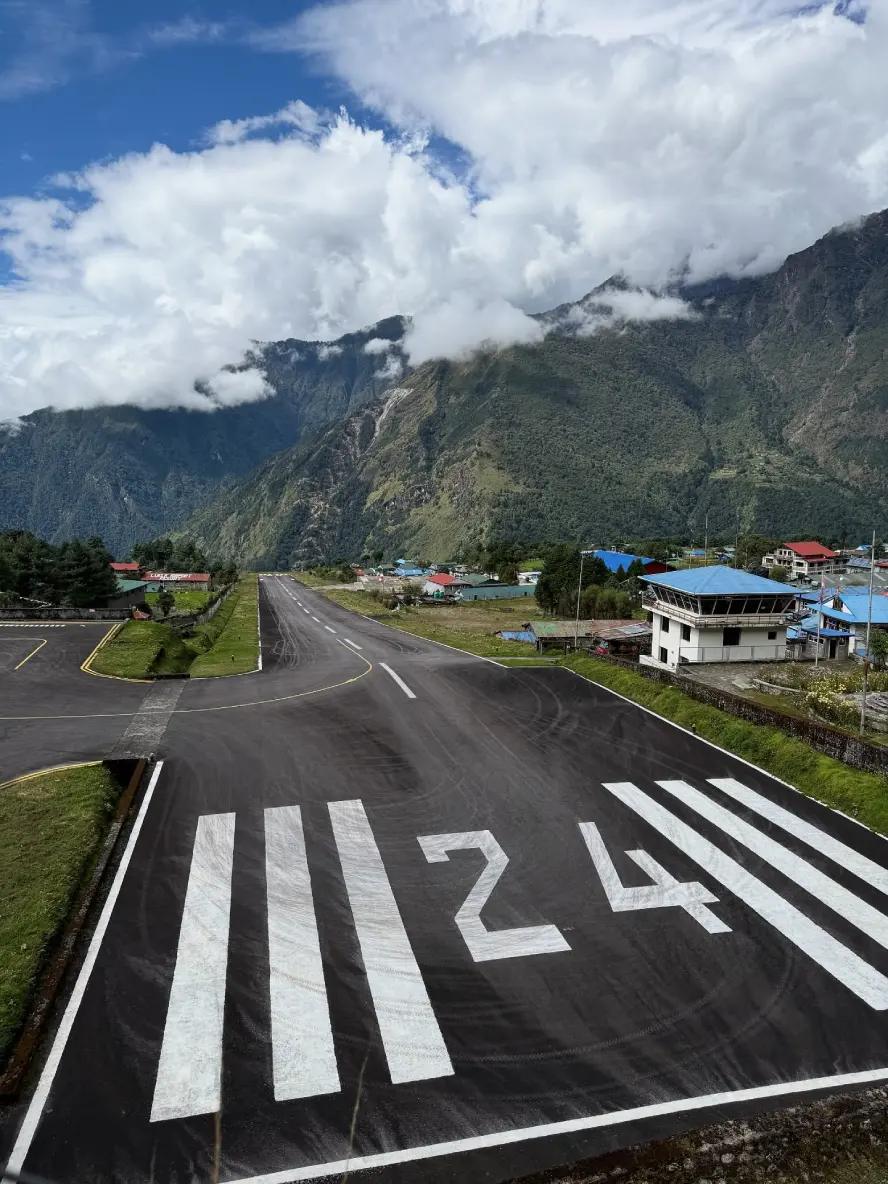
Lukla's Tenzing-Hillary Airport is famous for its short, sloping runway and that dramatic mountain approach, it's the kind of landing that keeps showing up on "scariest airports" lists, year after year. The name honors Tenzing Norgay and Edmund Hillary, the pair who first summited Everest back in 1953, and it's a fitting tribute given how much this little mountain airstrip ended up opening the Khumbu to outsiders.
People throw around the "world's most dangerous airport" label a lot, and honestly, it's easy to see why at first glance, a runway just 527 meters long, sitting on a slope, with a rock wall on one end and a drop on the other such a short mountainous airstrip. But look past the headlines and the picture calms down quite a bit. Pilots here go through training specific to this one airport. Flights only run in clear morning skies. Even that slope isn't a flaw, it's built that way on purpose, helping planes slow down after landing and pick up speed before takeoff. Thousands of trekkers pass through safely each season. Sure, it's dramatic. But dramatic and unsafe aren't the same thing.
Is Lukla Airport Safe?
Lukla Airport is safer than its reputation suggests because the rules about who's even allowed to fly here are strict, not just on paper. The Civil Aviation Authority of Nepal(CAAN) won't let just anyone near the controls captains need real STOL (short takeoff and landing) training, plus 100+ Lukla landings logged before they're cleared to fly the route on their own. Every flight leaves early, while the skies are still calm and clear. Weather cancellations happen all the time, and that's not the system breaking down, that's the system doing exactly what it's supposed to. Serious incidents have stayed rare over the past several years.
One thing worth knowing: this airport runs on visual flight rules, no modern instrument landing system to fall back on, which is why pilots lean so heavily on clear morning skies. Can't see, can't take off there's no gray area there. It's also why delays pile up so often during peak trekking months; airlines would much rather scrap a dozen flights than gamble on one bad landing. None of this means zero risk, of course mountain flying never quite gets there but the margins here are respected, not just claimed.
The Runway: Why It's Called the World's Most Dangerous Airport
The Tenzing-Hillary runway is just 527 meters long with a 12% gradient running uphill, and that slope isn't an accident, it's built into the design on purpose. Landing uphill helps planes slow down fast, while taking off downhill gives them the extra push to lift. A mountain wall closes off one end of this cliffside runway; a steep valley drop waits at the other. Once a pilot commits to landing there's no go-around the terrain simply doesn't allow it.
You feel it before you fully understand the plane drops through clouds, valley walls seem to close in from both sides and then almost too suddenly the wheels hit tarmac of sloped runway uphill, engines roaring as the plane brakes against momentum itself and it's over in seconds. Passengers usually clap. Pilots usually don't.
What are the Best Restaurants in Lukla?
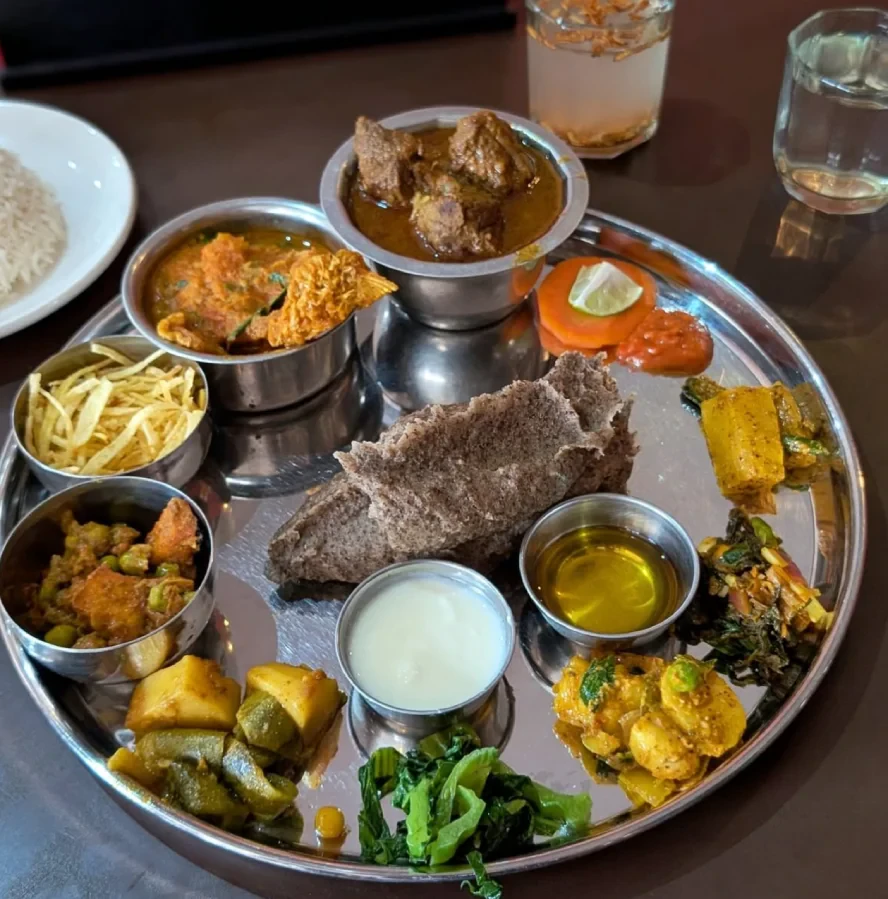
Lukla doesn’t have single standout best restaurants in the traditional sense - most trekkers rely on teahouses and simple lodges clustered around the main trail and airport area. These spots typically serve Sherpa staples like momos (dumplings), Thukpa (noodle soup), and DalBhat (rice, lentils and vegetables), alongside international options like pizza, burgers and pastries for trekkers craving familiar food. Bakeries and coffee shops are also popular for a rest stop before or after flights. Given the altitude and limited supply routes, expect simple menus, moderate prices and food built for energy rather than variety. Most places are family-run and cater specifically to the trekking crowd passing through.
What Accommodation, Food and Facilities do you get in Lukla?
Lukla is well equipped for trekkers, with teahouses, lodges, gear shops and pretty much everything else you'd need before heading up into the mountains. The teahouses in Lukla come in a few grades, some are simple, with just a bed and a shared bathroom down the hall, and others are a bit nicer, with your own bathroom and hot water. It really just comes down to how much you want to spend. Food is mostly what you'd expect on any trek here: dal bhat, fried noodles, momos, pancakes. A few small bakeries in town also make pretty good pie, which feels a bit strange this high up but works.
Past food and beds, the town has most of what trekkers need. Think gear shops, SIM cards, ATMs, pharmacies, and small clinics if the altitude starts giving you trouble. There are even a couple of bars for anyone celebrating after a long trek. With the permit office, the shops, and all the lodges packed into one small town, Lukla covers both ends of the trip the nervous rush before you head out, and the happy walk back in. This trip gives surprisingly good trekking facilities on that elevation.
Tea Houses and Lodges in Lukla
Tea houses in Lukla offer twin rooms with blankets and shared bathrooms, while newer lodges lean more upscale, with private bathrooms, hot showers, and Wi-Fi built in. As of 2026, budget teahouses run roughly NPR 500–2,500 per night, and some even go free if you're eating dinner and breakfast on-site. The upgraded lodges cost more, but the trade-off of a hot shower after a long day tends to feel worth it to most people.
Most trekkers overnight in Lukla either before starting the trek, right after finishing it, or while waiting out a flight delay that just won't clear. If you're booking through a guided trekking package, teahouse stays are usually already included, so it's one less thing to sort out yourself.
Shops, Gear Rental, ATM and Wi-Fi
Lukla has dozens of gear shops for last-minute trekking equipment, selling everything from genuine branded gear to cheaper knockoffs that work just fine for a two week trek. Gear rental is common too, a down jacket rental, sleeping bag, or trekking poles can all be picked up here if you'd rather not carry your own from home or buy new.
There's technically an ATM in Lukla, but it's not something to rely on, it runs out of cash or goes offline more often than you'd like. It's much safer to carry Nepalese rupees from Kathmandu before you fly in. For mobile coverage, both Ncell and NTC work well enough around town and along most of the trail. Most lodges also offer paid Wi-Fi, though don't expect much speed, it's fine for messages, painfully slow for anything else.
Sherpa Food to try in Lukla
Sherpa cuisine in Lukla is hearty mountain food, starting with momos steamed or fried dumplings that come stuffed with veg, chicken, or yak meat, depending on what the kitchen has that day. From there, it's worth trying thukpa, a thick noodle soup that goes down easily after a cold morning flight, and Sherpa stew, a heavier potato-and-vegetable dish that's basically built for high-altitude appetites. Yak butter tea is the local specialty to at least sample once salty, rich, and an acquired taste for most first-timers.
For something sweeter, Lukla's bakeries turn out a surprisingly good apple pie, along with cinnamon rolls and other pastries that taste better than they have any right to at this altitude. Inside the village, there are a couple of small bakeries known for good cakes and coffee, tucked along the short strip near the airport that most trekkers pass through anyway. Between the momos, the stew, and a warm slice of pie, Lukla offers a real taste of Sherpa culture and cuisine before the trail even begins.
What are the Things to Do in Lukla?
The main things to do in Lukla are visiting its monastery, the Pasang Lhamu Memorial Gate, and just wandering the short main street before the trek swallows up all your time. Lukla Monastery sits up above town, hung with prayer flags and worth the short climb for the mountain views alone. Down at the trailhead arch, the Pasang Lhamu Memorial Gate marks where the trek officially begins and it's about as photographed a spot as you'll find in town. Past that, there isn't much of a checklist. People wander the shops, sit at a cafe for coffee, and hang around the airport fence for a while, plane spotting as planes come in on that short, steep runway. It never quite stops being interesting.
What is the Best Time to Visit Lukla?
The best time to visit Lukla is spring (March–May) and autumn (late September–November). This is when Lukla weather settles down and flights actually run on time more often than not. Spring means rhododendrons blooming across the lower hills, plus generally calm skies. Autumn comes right on the heels of monsoon, so the air's washed clean and the mountain views are about as sharp as they get. Step outside those two windows and things change fast: monsoon season brings rain almost daily and no shortage of monsoon cancellations, while winter turns cold, dry, and much quieter cheaper too, if that matters, though fog and frost still cause delays, and the trail higher up tends to ice over.
Season | Weather | Flight Reliability | Crowds | Verdict |
Spring (March–May) | Mild, rhododendrons in bloom | High | Busy | Great all-round choice |
Autumn (September–November) | Clear, post-monsoon skies | Highest | Very busy | Best overall window |
Monsoon (June–early Sept) | Rainy, cloudy | Low | Quiet | Frequent cancellations |
Winter (December–February) | Cold, dry | Moderate | Quiet | Cheaper, but fog/frost delays |
Lukla Travel Tips: Delays, Health and Money
The most important Lukla travel tip is to build 1–2 buffer days into your itinerary because flight delays and cancellations are common. Weather frequently disrupts flights in the Khumbu region, so extra time helps protect your trekking schedule and return flight. Along with buffer days, travel insurance, altitude sickness awareness, and carrying enough cash will help your trip begin smoothly.
Flight delays are common on the Lukla route, sobuffer days aren't optional. Add 1–2 spare days to your itinerary to protect your trek and your flight home from flight delays and cancellations caused by mountain unpredictable weather.
Travel insurance covering trip delay and evacuation isn't optional for a Lukla-based trek. Choose a policy that explicitly covers trip delay, high-altitude trekking, and emergency evacuation, since a helicopter rescue in the Khumbu can cost thousands of dollars without coverage. Confirm the policy covers your planned trekking altitude and includes Lukla flights specifically before you go.
Acute sickness awareness needs to start the moment you land in Lukla at 2,860 meters, not once you reach Namche Bazaar. Stay well hydrated, keep an easy pace on the short first day to Phakding, and if you're prone to AMS, talk to your doctor before your trip about carrying Diamox and taking it as prescribed.
Carry enough cash from Kathmandu as ATMs are scarce to nonexistent once you're in the Khumbu, and card payments aren't reliable in teahouses along the trail. Withdraw or exchange enough cash in Kathmandu before you fly to cover accommodation, meals, and extras for your entire trek.
Book flights through an operator who monitors weather Choosing a trekking operator who actively monitors weather conditions and proactively rebooks flights when delays hit, rather than leaving you to navigate Lukla's chaotic airport alone. A good operator can turn a weather delay into a minor scheduling hiccup instead of a missed international flight.
Treks That Start from Lukla
Almost every major Khumbu trek starts from Lukla, including the classic routes that wind through Sherpa villages, rhododendron forests, and high alpine passes toward the world's highest peaks. Here's a quick look at the main options:
Everest Base Camp Trek ( 14 days ) is the most beautiful trail to EBC via Namche Bazaar, Tengboche, Dingboche, Lobuche, then Gorak Shep to EBC. The classic, World-famous journey taking you straight to the foot of Mt Everest.
Gokyo Lake Trek leading through the most mesmerizing turquoise glacial water, the adventurous trek crossing high mountain passes, The trail leads through Namche Bazaar before going off toward the turquoise glacial lakes of the Gokyo Valley, during a climb up Gokyo Ri widely considered one of the best viewpoints in the entire Khumbu, with sweeping panoramas of Everest, Cho Oyu, and the Ngozumpa Glacier, Nepal's
The largest Three Passes trek crosses high mountain passes, and the shorter Everest View Trek ideal for tight schedules. The adventure combines EBC and Gokyo via Kongma La, Cho La, and Renjo La.
Everest View Trek a short, comfortable route to Tengboche and Everest View Hotel, perfect for tight schedules. It's a popular choice for trekkers short on time traveling with family or easing into higher-altitude trekking for the first time.
Who is Edmund Hillary and Norgay Sherpa ?
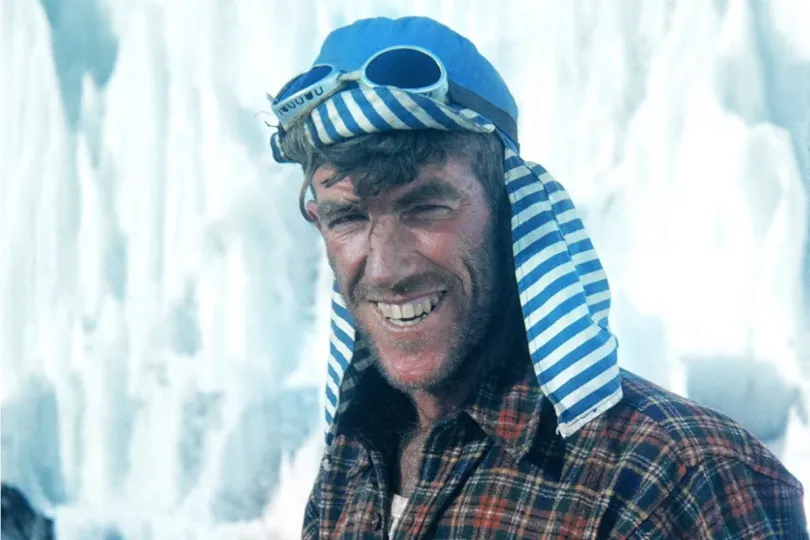
Edmund Hillary and Tenzing Norgay stood on top of Mount Everest together on May 29, 1953 the climb that later gave Lukla's airport its name. Hillary, a New Zealand mountaineer who'd worked as a beekeeper before the fame hit, was knighted afterward and spent much of the rest of his life funding schools and clinics for Sherpa communities in Nepal. Norgay, born in Nepal and raised into mountaineering, had already tried and failed to summit Everest a few times before that one finally worked.
Edmund Hillary's cause of death: He died on 11 January 2008, at 88, after suffering a heart attack at Auckland City Hospital.
Tenzing Norgay's cause of death: Norgay died on 9 May 1986, at 71, at home in Darjeeling, India. Most accounts point to a cerebral hemorrhage, though a few also mention a long-running lung condition as part of the picture.
Both men are remembered throughout the Khumbu in the airport's name, in memorial gates and monuments along the trail, and in the ongoing work of the Himalayan Trust, which still supports Sherpa communities today.
Why People Named Lukla as Edmund Hillary Airport ?
Edmund Hillary Airport is named under the famous mountaineer Sir Edmund Hillary, one of the first recorded climbers of Mount Everest.
What happened to Hillary after Everest?
After the legendary summit of Mount Everest, Sir Edmund Hillary devoted his life to humanitarian work around Nepal's rural area Building schools, Founding trust funds and hospitals. Especially focused on Khumbu region development and played a major role in the development of trekking in Solukhumbu region.
Is Tenzing Norgay Sherpa Nepalese or Indian?
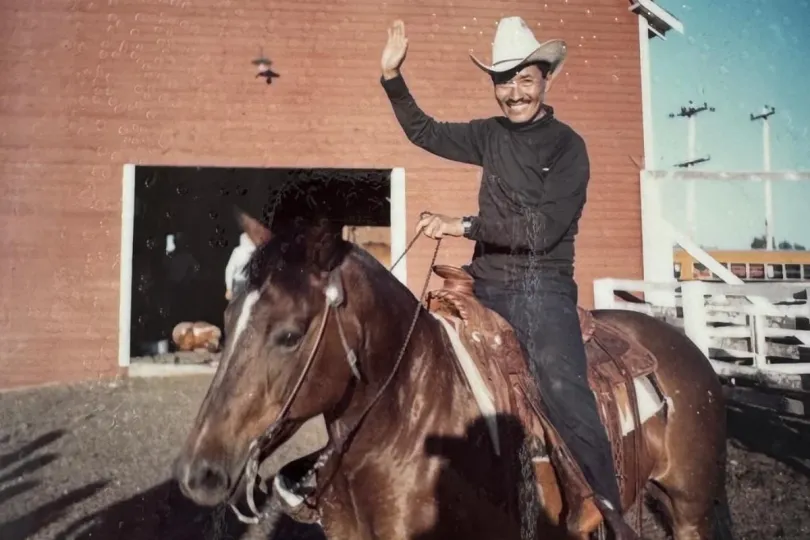
Tenzing Nogay Sherpa is both Nepalese and Indian as his origin is Nepal and moved to Darjeeling India for his career. When asked about his dual identity after climbing Everest, Tenzing famously summed it up himself: "I was born in the womb of Nepal and raised in the lap of India." Both nations proudly claim him as a national hero.