Nirmal Purja the man who made impossible look easy. Nimsdai - the nickname most of the climbing world knows him by, is a Nepalese mountaineer who went from a childhood in the hills of Nepal to becoming one of the most talked-about names in modern high-altitude climbing. Nirmal Purja, he served for years as a Gurkha soldier and later in Britain's special forces before turning his focus fully toward the mountains.
His defining achievement came through Project Possible, an ambitious plan to summit all fourteen of the world's 8,000-meter peaks in under seven months - a record previously thought to require close to eight years. Purja completed it in just over six months, reshaping what the climbing world believed was physically possible.
In the years that followed, he continued leading major Himalayan expeditions through his own guiding company, pushing both his own limits and those of the climbers who joined him. Purja died on 30 July 2026, killed in an avalanche on Broad Peak in Pakistan's Karakoram range, alongside nine other members of his expedition team. This guide covers his early life, his path into mountaineering, the full story behind Project Possible, and the legacy he left behind.
Who is Nirmal Purja (Nims Dai)?
Nirmal Purja, widely known as Nims Dai, was a Nepal-born mountaineer, climber, and adventurer whose achievements reshaped what people believed was possible in high-altitude climbing. Born in Myagdi District, western Nepal, in 1983, he grew up in modest circumstances before enlisting in the British Army's Brigade of Gurkhas, later becoming a former soldier in the UK's elite Special Boat Service.
He carried that same military discipline into mountaineering, eventually becoming a record holder on a scale few climbers have matched - completing all fourteen of the world's 8,000-meter peaks in just over six months in 2019, a feat that shattered the previous record and made him an international name almost overnight. Purja died on 30 July 2026 in an avalanche on Broad Peak, Pakistan, but his legacy as one of the defining climbers of his generation remains firmly intact.
When and Where Was Nirmal Purja Born?
Nirmal Purja was born on 25 July 1983 in Dana, a small village in Myagdi District, western Nepal, near the base of the Dhaulagiri range. At around four years old, his family relocated to the Chitwan District, where he spent much of the rest of his childhood, though Dana remained the place he was actually born.
Nirmal Purja's Early Life and Education
Purja came from a Gurkha family in every real sense, his father served as a Gurkha soldier, and all three of his older brothers followed that same path, so a military ambition was pretty much baked into his childhood from the start. Being part of the Magar community, one of Nepal's larger ethnic groups with deep ties to Gurkha service, made that path feel less like a decision and more like something already laid out for him.
Money was tight growing up, and genuinely so. Purja talked openly about it - at one point he didn't even own a pair of flip-flops as a kid. Still, his brothers pooled together what they could to fund his education at an English-medium boarding school, a real sacrifice that opened doors the family otherwise couldn't have reached. That school environment built real discipline into him, and somewhere along the way he also picked up kickboxing - an early hint of the physical grit that would later carry him through both his military career and eventually the mountains.
Why Is Nirmal Purja Called Nimsdai?
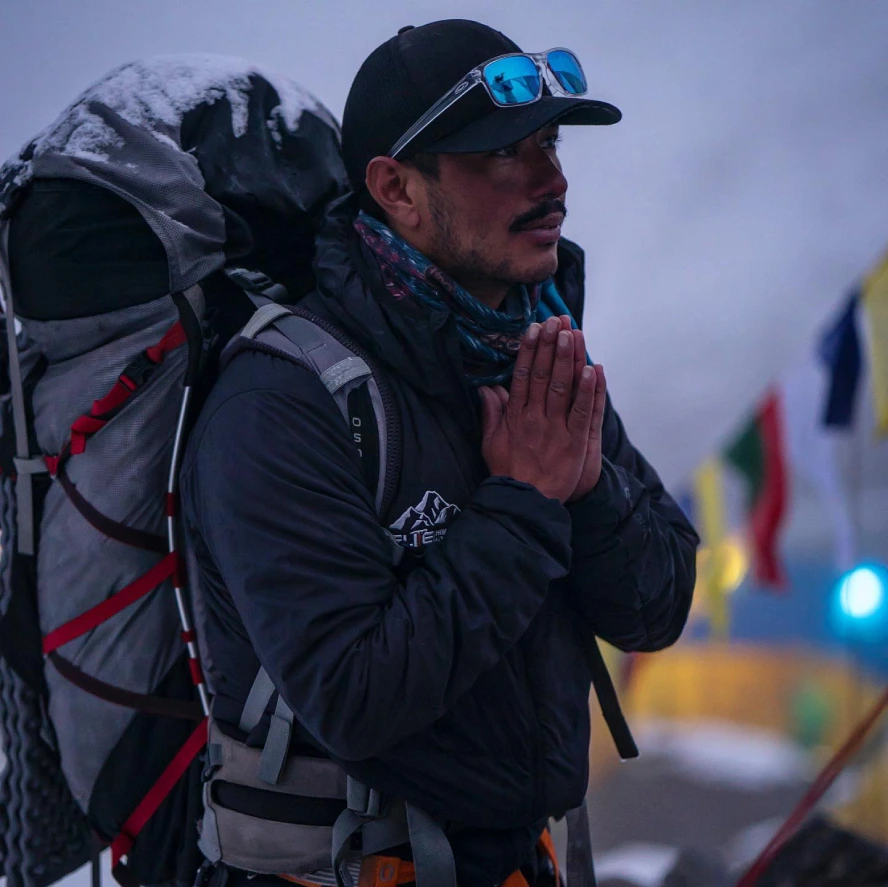
Nirmal Purja’s nickname “Nimsdai” - is a combination of his friendly shortened name “Nims” and a Nepali term “Dai” - meaning elder brother (widely used in Nepali culture as an affectionate title of respect, trust, and companionship for someone who is older or admired) as an respect and affection. Combining the two terms “Nimsdai” became his mountaineer identity. After summiting the 14 peaks in his project possible and his netflix documentary Nimsdai became the famous name of the modern generation mountaineering.
He later formally adopted the name for his commercial climbing enterprise, Nimsdai Brands, and his charitable organization, the Nimsdai Foundation.
What Was Nirmal Purja's Military Career Like?
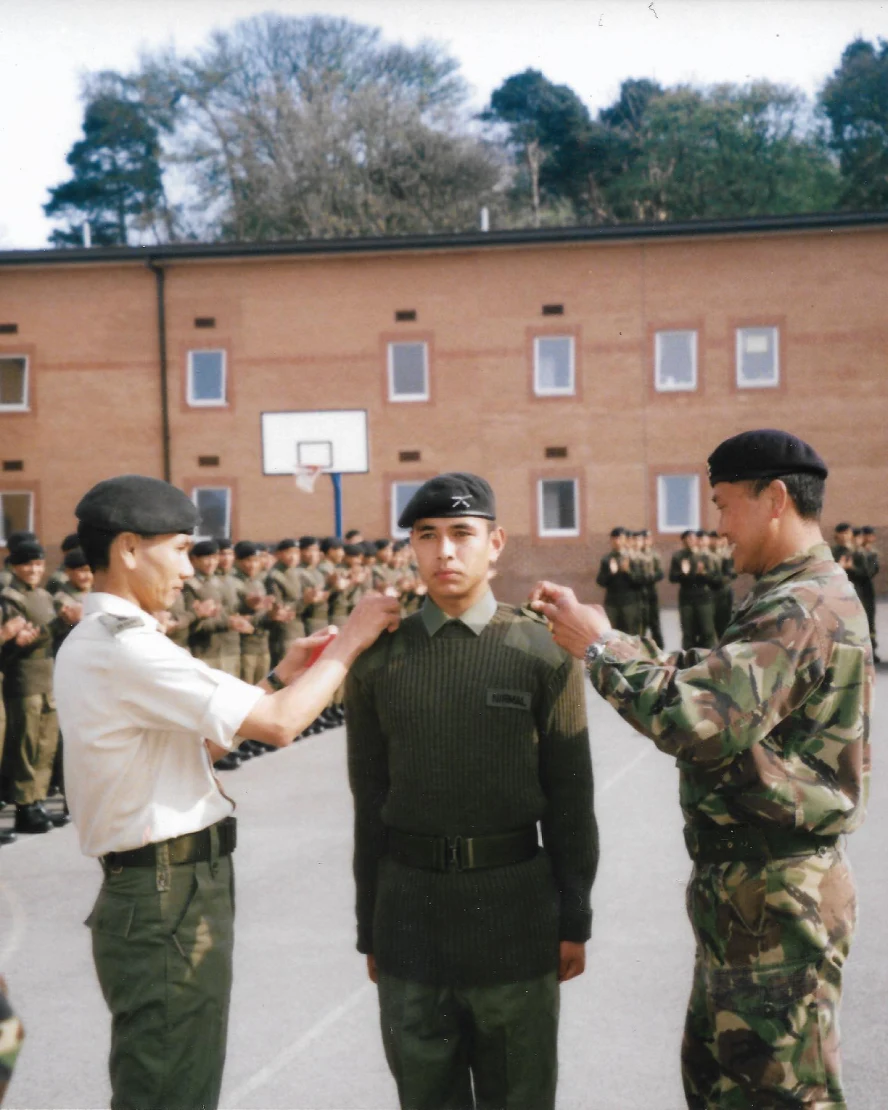
Purja joined the British Army in 2003, enlisting through the Brigade of Gurkhas and following the same path his father and brothers had already taken. That decision kicked off a military service that would eventually stretch across roughly 16 years, taking him well beyond what most Gurkha recruits ever experience.
In 2009, Purja made history by becoming the first Gurkha ever accepted into the UK's Special Forces community, specifically the Royal Navy's Special Boat Service (SBS) - a genuinely rare achievement given how selective and traditionally closed that unit had been. Within the SBS, he became a specialist in extreme cold-weather warfare, operating in some of the harshest conditions the military trains for. That background gave him a level of physical and mental conditioning that later translated almost directly into his climbing career, and in 2018 he was appointed an MBE in recognition of both his military service and his emerging mountaineering achievements.
When Did Nirmal Purja Join the British Military?
Nimal ‘Nimsdai’ Purja joined the British Military in 2003 during the military recruitment in the Brigade of Gorkhas. He served in the military for 16 years in the United Kingdom and later became the first Gorkha to join the elite Special Boat Service (SBS) in 2009.
Nirmal Purja's Role in the Special Boat Service (SBS)
The SBS sits alongside the SAS as one of the two core units of UK Special Forces, and Purja became the first Gurkha ever to pass its notoriously tough selection, in 2009. As part of this elite military unit, he trained across high-altitude operations, parachuting, diving, and cold-weather warfare. Over roughly a decade, he deployed to Afghanistan on counter-terrorism operations and took on reconnaissance taskings building the exact mix of endurance, planning, and pressure tolerance that later defined his climbing career.
How Did Military Experience Help Nirmal Purja in Mountaineering?
Purja's 16 years in the military laid the real foundation for his climbing career. SBS cold-weather training translated almost directly into high-altitude survival, building the kind of survival skills that hold up in genuinely extreme conditions, while years of endurance training gave him a physical baseline few climbers ever reach. Special forces conditioning also built real mental resilience - the ability to keep making sound decisions under extreme fatigue, exactly what's needed above 8,000 meters. His logistics background and military-honed leadership proved essential for coordinating Project Possible's helicopters, permits, and teams across countries. Most importantly, the military taught him genuine composure under life-or-death pressure, often cited as the biggest reason he could push so hard without everything falling apart.
Nirmal Purja's Gurkha Training and Military Achievements
After the Purja recruitment in the Brigade of Gurkhas in 2003 at 18, following his father and brothers he spent six years with the Queen's Gurkha Engineers building foundational discipline. His biggest achievement came in 2009, passing selection for the Special Boat Service, a Royal Navy unit within UK Special Forces - becoming the first Gurkha ever accepted. He served roughly a decade with the SBS, earning an MBE in 2018 after 16 years of total military service.
How Did Nirmal Purja Start His Mountaineering Career?
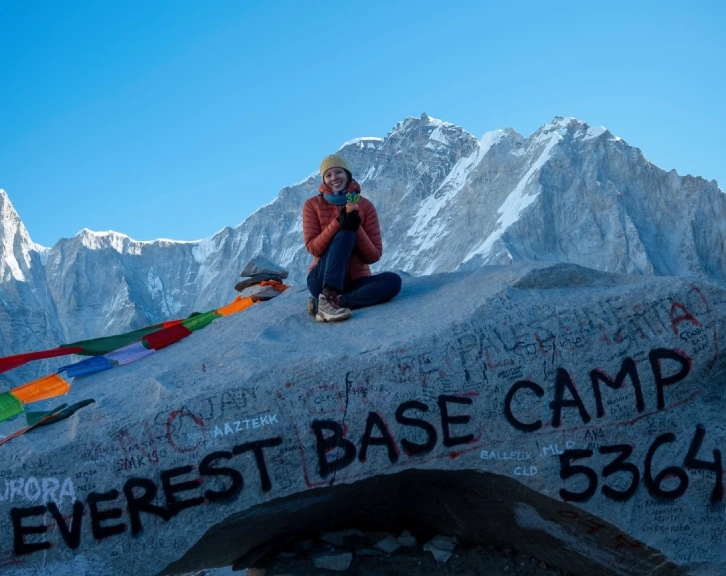
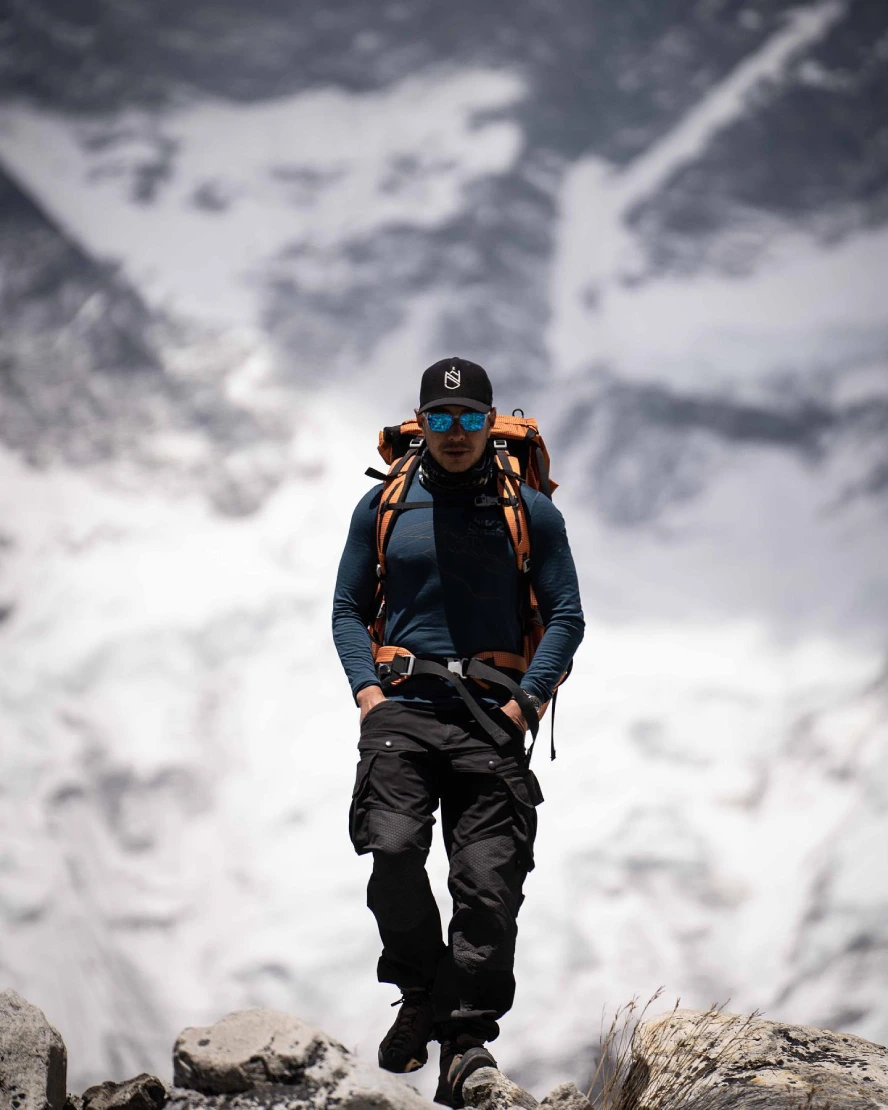
Purja's path into Himalayan climbing began almost by accident, during a 2012 trip meant to be a straightforward trek to Everest Base Camp while he was on leave from the SBS. Once there, he talked his guide into letting him attempt nearby Lobuche East instead - a genuine climb rather than just a trekking peak and that experience seems to have flipped something in him. What started as a holiday detour quickly turned into a serious pull toward high-altitude mountaineering.
From there, his first expeditions followed fairly quickly. He summited Mount Everest for the first time in 2014, still balancing the climb around his active military service and using annual leave to make it happen. Over the next few years, he added peaks like Dhaulagiri and Manaslu to his record, steadily building the technical skill and altitude experience that would later make Project Possible even conceivable. By the time he left the military in 2018, mountaineering had gone from a hobby squeezed into leave time to something close to a second full career.
What Was Nirmal Purja's First Himalayan Expedition?
In December 2012, Nirmal “Nims” Purja had his first Himalayan climb to Lobuche East (6119 meters) . During his break from his military duties he was originally on a simple trek to Everest Base Camp but he decided to attempt Lobuche East instead and reached the top successfully. This unexpected success motivated his passion for high-altitude mountaineering and laid the foundation for his record-breaking climbing career. Later on in May 2014, he achieved his first major 8000-meter peak by successfully reaching the summit of Dhaulagiri.
When Did Nirmal Purja Achieve His First Major Summit?
Purja's very first climb, in 2012, followed a trip meant to be a simple trek to Everest Base Camp, before he talked his guide into an unplanned ascent of Lobuche East. His first 8000-meter summit came in May 2014, on Dhaulagiri. It wasn't until 13 May 2016 that he stood on top of Mount Everest for the first time, timed around military leave following a deployment to Afghanistan.
What Are Nirmal Purja's Major Mountaineering Achievements?
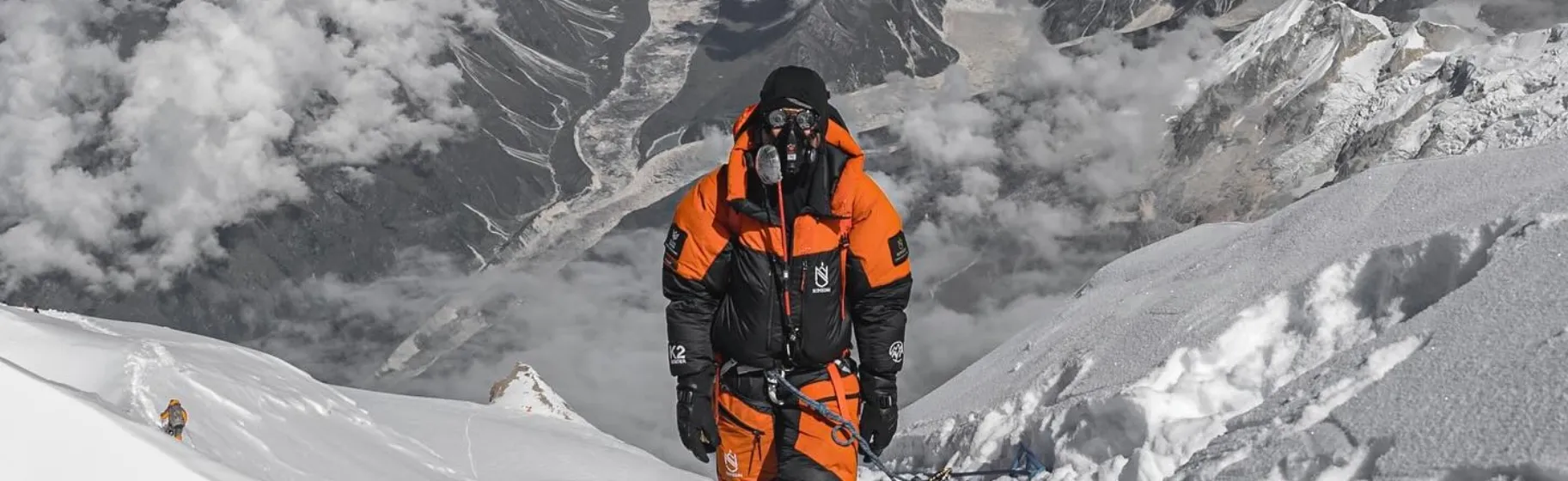
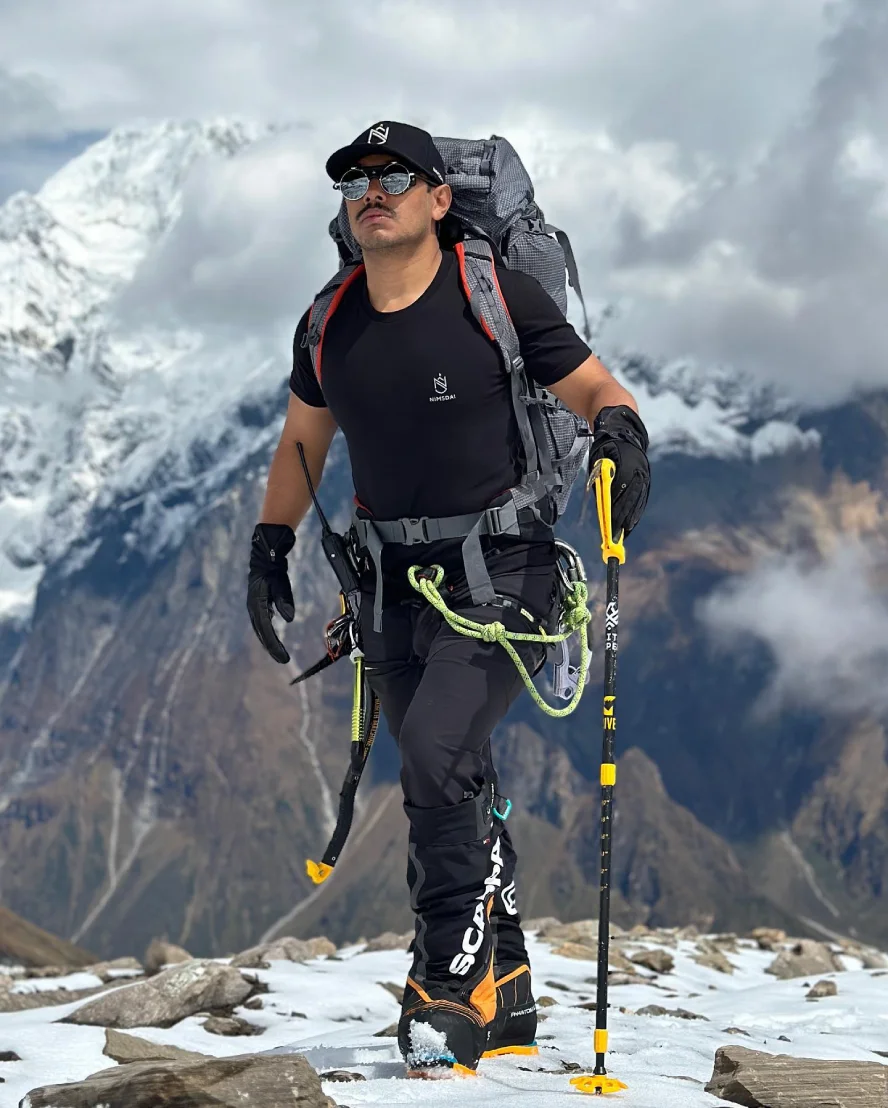
Purja's signature achievement, Project Possible, saw him summit all fourteen of the world's eight-thousanders in six months and six days in 2019 - smashing a record that once took nearly eight years. He set multiple world records too, including a Guinness-recognized Everest-Lhotse turnaround in just over ten hours, and led the first winter ascent of K2 in January 2021. By his death in 2026, he'd summited 57 Himalayan peaks above 8,000 meters, and was pursuing a second full round of all fourteen.
Has Nirmal Purja Climbed Any 8000-Meter Peaks Without Supplemental Oxygen?
Yes, Nirmal "Nims" Purja has climbed all 14 eight-thousanders without using oxygen. While he used oxygen during his famous 2019 speed run he later returned to the high peaks to push his limits using pure alpine climbing techniques. Showing physical endurance and technical mountaineering skill he summited challenging mountains like Annapurna, Nanga Parbat and K2 including his historic 2021 winter climb on K2 completely oxygen-free. In October 2024 he completed an oxygen-free climbing milestone by conquering every 8,000-meter summit without gas including a record-breaking Everest ascent and rapid climb, to Lhotse without relying on oxygen.
The Story Behind Nirmal Purja's Project Possible Challenge
Nirmal Purja started this Project to see how far people can really go and to make the world notice that humans can climb high mountains without oxygen supplements. He began his expedition in 2019, wanting to climb all 14 highest peaks of the world that are over 8000 meters high. While other climbers took over seven years to achieve this milestone, Nirmal Purja did it really fast, climbing in a six months timeline. This showed that people can do things if they work hard and help each other. Nims Dai and his team did something with Project Possible that made the impossible look easy.
How Did Nirmal Purja Complete the 14 Highest Mountains in the World?
Nirmal Purja did the Project Possible by climbing all fourteen mountains that are over 8,000 meters tall by doing this in three parts. The first part started in Nepal by climbing Annapurna I on April 23 then he climbed Dhaulagiri I on May 12 Kanchenjunga on May 15 , and the most unexpected climb was on May 22 which was Mount Everest and Lhotse in one day . he finished the part by climbing Makalu on May 24. Next went to Pakistan for phase two of Project Possible. He climbed Nanga Parbat on July 3, Gasherbrum I on July 15, Gasherbrum II on July 18, climbed K2 on July 24 and climbed Broad Peak on July 26.For the part three Nims dai climbed Cho Oyu on September 23, Manaslu on September 27, and Finally got a permit from China to climb Shishapangma on October 29. Nirmal finished climbing all fourteen mountains in just six months and six days.
What Records Has Nirmal Purja Achieved in Mountaineering?
Nirmal Purja is widely famous for his Nimsdai record legacy. He became well-known all around the world for doing some amazing impossible summits on high-altitude mountain peaks that are over 8,000 meters in just six months and six days back in 2019 by setting a world record for the fastest completion of 14 peaks. He even set a record for climbing three of the highest mountain peaks, Everest, Lhotse and Makalu in just 48 hours which was beyond human imagination. Being a leader of the first group to ever climb K2 in the winter.. He also climbed all those high-elevation peaks again, but this time without using any extra oxygen supplement, which is a really hard thing to do.
Nirmal Purja's Rescue Operations and High-Altitude Missions
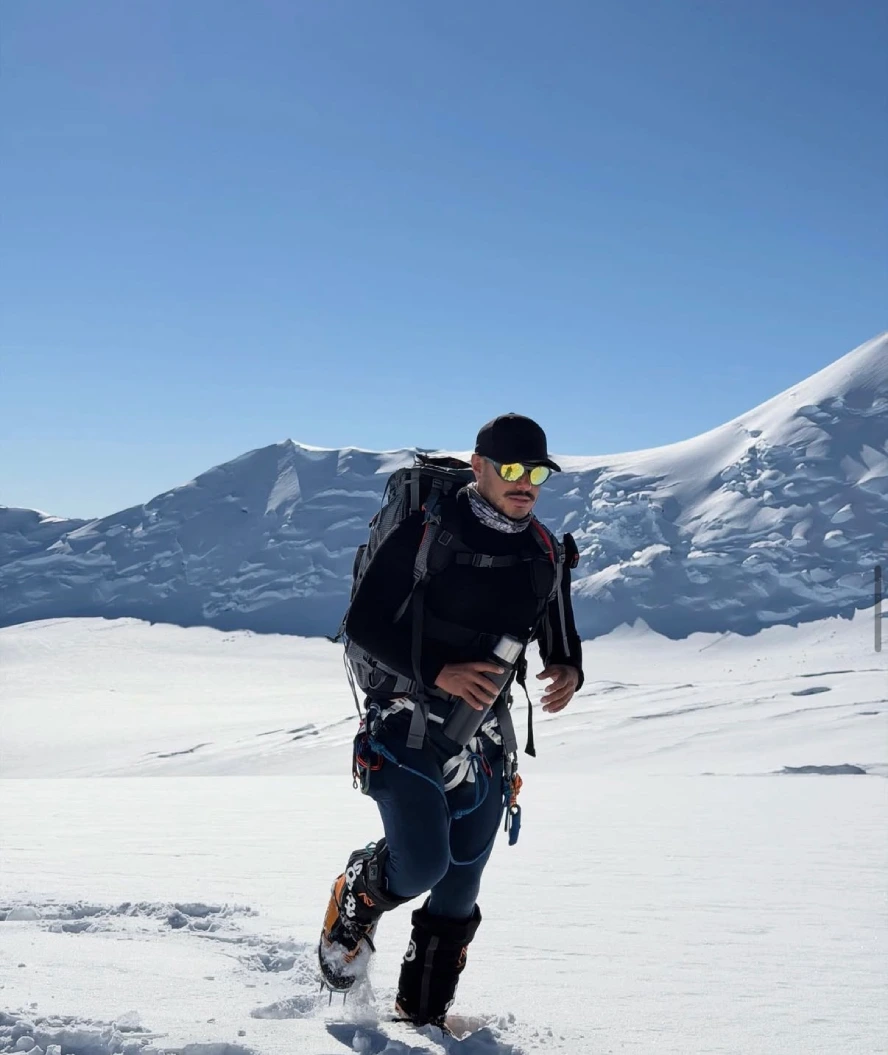
Nirmal "Nims" Purja did more than just set speed records; he also earned a lot of respect for doing dangerous mountain rescue missions in the death zone. In 2019, Nirmal stopped trying to set records for a while to help with 2023 rescue in Annapurna . He wanted to save a climber from Malaysia who was stuck.
In 2021, he used the skills he learned in the UK Special Forces to help with rescues on K2 during the winter and helped people who were in danger through helicopter rescue coordination at very high altitudes in Nepal and Pakistan. He led the rescue teams to help get climbers evacuated even when it was very hard to do. This showed that he really cared about saving lives in the dangerous mountains in the world. Nirmal "Nims" Purja a brave man who risked his life to help others and will always be remembered for the lives he saved.
Documentaries and Movies About Nirmal Purja's Mountaineering Journey
Nirmal Purja’s mountaineering journey has been shown in documentaries and climbing films that highlight his determination, the risks he took and the achievements he made in the Himalayas. One of the popular films on Netflix is called 14 Peaks: Nothing Is Impossible. This film shows his goal to climb all 14 mountains that are more than 8,000 meters high in a very short time. The movie lets people see the difficulties he faced, the tough weather, how the team worked together and the personal sacrifices needed for climbing at high altitudes. Along with mountain views it tells his climbing stories, including times when he felt scared, very tired and unsure. These movies help people learn not only about his record-setting accomplishments but also about the hard work and bravery it takes to do such tough climbs, in the Himalayas.
14 Peaks: Nothing Is Impossible
The movie 14 Peaks: Nothing Is Impossible is a documentary on Netflix. It is about Nirmal Purja and his big plan called Project Possible. He climbed all 14 of the world's highest mountains that are over 8,000 meters, and he did it in six months. The movie came out in 2021, It shows how hard it was for Nirmal Purja to climb these mountains, how challenging the weather was and how tired he got. It also shows the problems his team had to face along the way. The movie gives us a chance to see how determined Nirmal Purja was.during Torquil this movie was directed by Jones, whereas Jimmy Chin and Elizabeth Chai Vasarhelyi were the filmmakers.
Nirmal Purja's Final Expedition and Legacy
Nirmal Purja's climbing journey has made a difference in the way people or climbers explore the Himalayas. His difficult expeditions, record-setting achievements, and determination have given inspiration for many to take an interest in high-altitude Himalayan exploration. His story shows how courage, preparation, and teamwork can help climbers to face some of the world's toughest mountain climbs. His mountaineering impact goes beyond the records he has set, as his achievements have brought greater attention and inspiration to Nepal future climbers and their important role in Himalayan expeditions. His famous dialogue “Giving up is not in the blood sir, not in the blood” will always remain in the hearts of people. For future climbers, his journey can be shown as an example of pushing personal limits while respecting the risks and challenges of the mountains.