
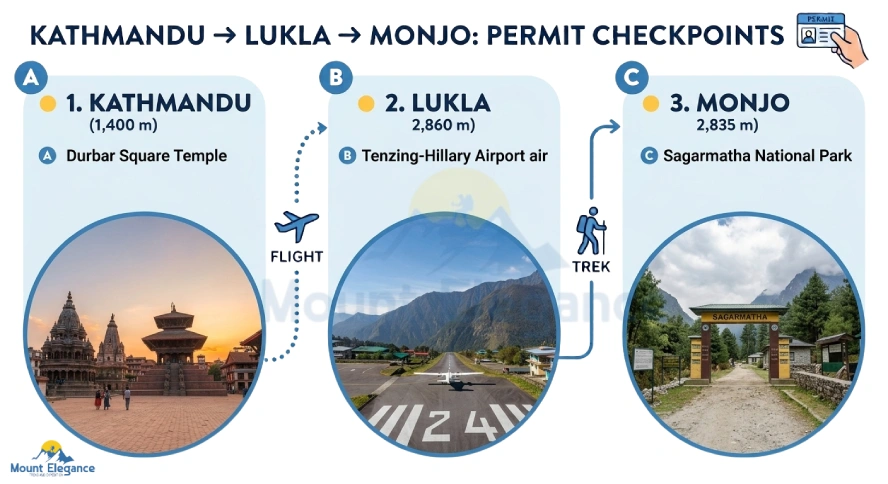
Trekking to Everest Base Camp requires two official permits - the Sagarmatha National Park Entry Permit and the Khumbu Pasang Lhamu Rural Municipality Permit, both mandatory for every trekker entering the region. The Sagarmatha National Park Entry Permit can be obtained either at the Nepal Tourism Board office in Kathmandu or directly at the park entry gate in Monjo, since the trail passes through this UNESCO World Heritage Site. The Khumbu Pasang Lhamu Rural Municipality Permit, must be purchased in Lukla or at the Monjo checkpoint, as it is not available in Kathmandu. Combined, these two permits typically cost around NPR 5000 for the 2026/27 season. A TIMS card is not required for the standard Everest Base Camp route, unlike some other trekking regions in Nepal.
What Permits Do You Need for the Everest Base Camp Trek?
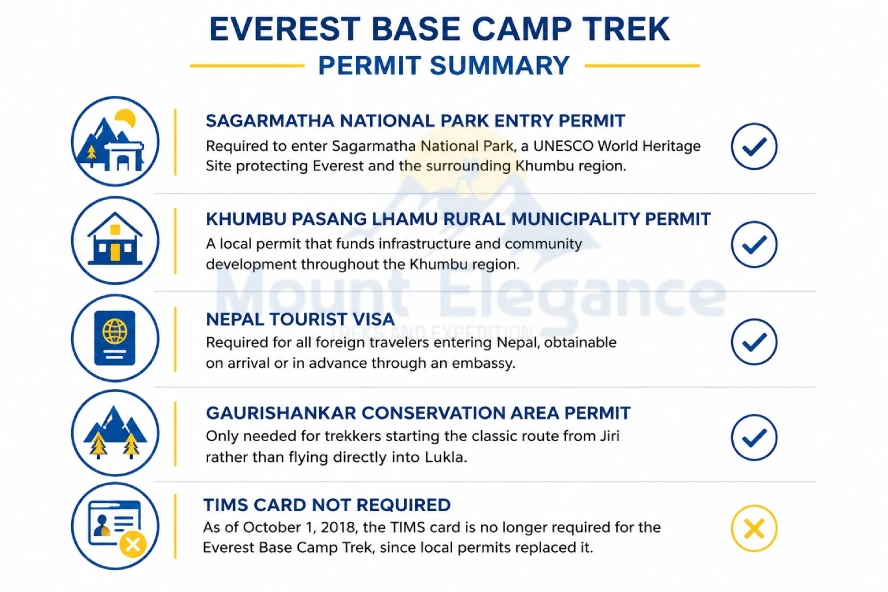
Trekkers need two mandatory permits to complete the Everest Base Camp Trek: the Sagarmatha National Park Entry Permit and the Khumbu Pasang Lhamu Rural Municipality Permit.
- Sagarmatha National Park Entry Permit - required to enter Sagarmatha National Park, a UNESCO World Heritage Site protecting Everest and the surrounding Khumbu region
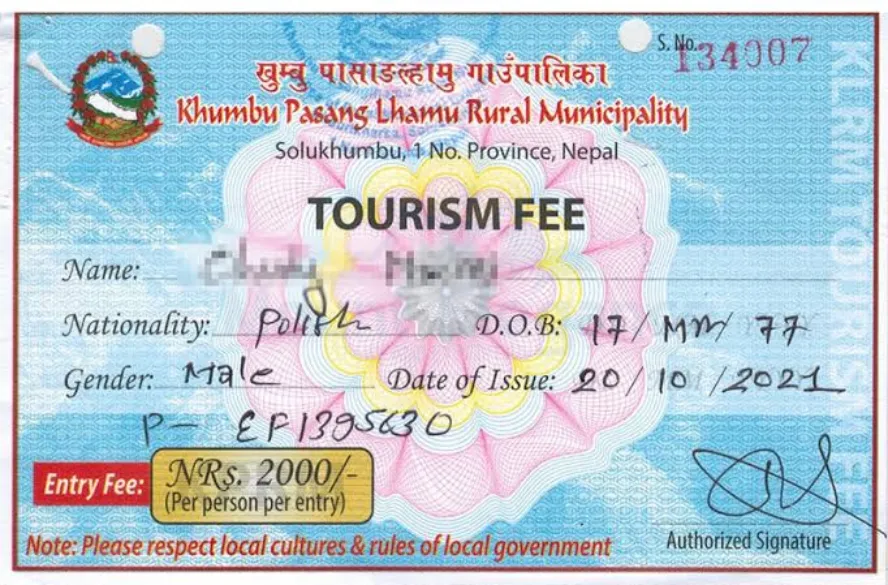
- Khumbu Pasang Lhamu Rural Municipality Permit - a local permit that funds infrastructure and community development throughout the Khumbu region
- Nepal tourist visa - required for all foreign travelers entering Nepal, obtainable on arrival or in advance through an embassy
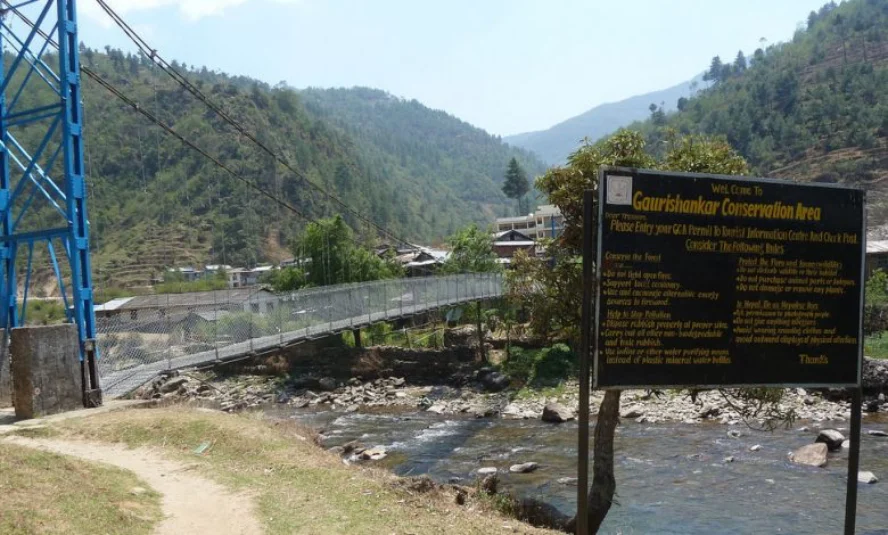
- Gaurishankar Conservation Area Permit - only needed for trekkers starting the classic route from Jiri rather than flying directly into Lukla
- TIMS card not required - as of October 1, 2018, the TIMS card is no longer required for the Everest Base Camp Trek, since local permits replaced it
Sagarmatha National Park Entry Permit
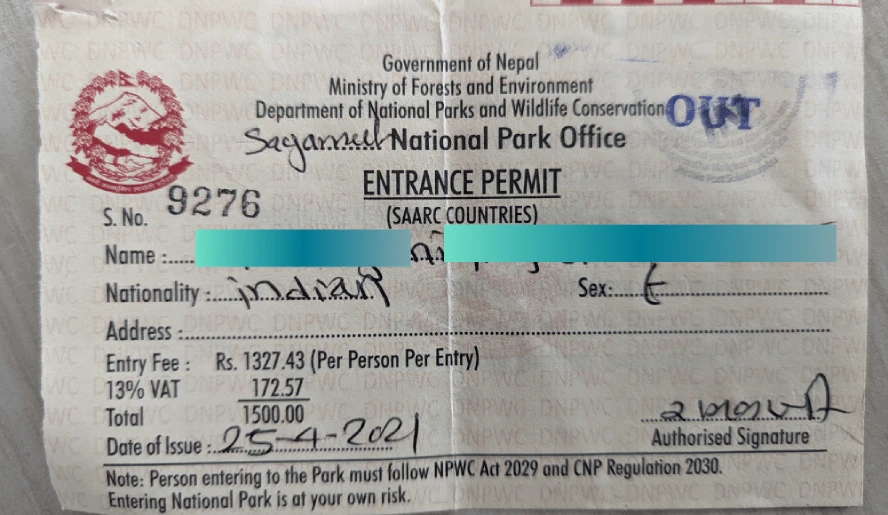
The Sagarmatha National Park Entry permit is one of two mandatory permits required for the Everest Base Camp Trek and its cost varies by nationality. According to Nepal Tourism Board foreign trekkers pay NPR 3000 SAARC nationals pay a reduced NPR 1500 and Nepali citizens pay just NPR 100, with a 13% VAT added on top of all fees. Children under 10 years old enter free of charge. This permit grants access to Sagarmatha National Park which was established on July 19, 1976 and recognized as a UNESCO World Heritage Site in 1979 in honor of its dramatic mountain landscaped and rich Sherpa culture. Trekkers can obtain the Permit either at the Monjo entry gate along the trail or in advance at the Nepal Tourism Board office in Kathmandu which many prefer to save time once the trek begins. It's important to note that the permit fee is non-refundable and non-transferable once issued, so trekkers should confirm their travel dates before purchasing. Whether picked up in the capital or right at the checkpoint, this permit remains a required step for anyone entering the park en route to Everest Base Camp.
Khumbu Pasang Lhamu Rural Municipality Entry Permit

The Khumbu Pasang Lhamu Rural Municipality Entry Permit is the second mandatory permit required for trekkers heading to Everest Base Camp, priced at NPR 2,000 per person. This local permit was introduced in 2018, following Nepal's shift toward decentralized governance, giving the Khumbu region its own dedicated system for managing tourism revenue. Unlike the national park permit, this one goes directly toward local government funding rather than federal conservation efforts, supporting trail infrastructure, waste management, and community development throughout the Khumbu region. Trekkers can obtain this permit at either the Lukla checkpoint or the Monjo checkpoint, depending on their route into the region, though it's worth noting this permit cannot be purchased in advance in Kathmandu, unlike the Sagarmatha National Park permit. This local entry fee effectively replaces the TIMS card for the Everest Base Camp route, streamlining what used to be a more complicated permit process. Along with proper documentation, trekkers should keep this permit accessible throughout the journey, since checkpoint staff may request to see it at multiple points along the trail.
Is a TIMS Card Required for the Everest Base Camp Trek?
A TIMS card is not required for the Everest Base Camp Trek, since the Khumbu region has followed its own local permit system since 2018. TIMS, short for Trekkers' Information Management System, was originally designed to help track trekkers across Nepal for safety and emergency response purposes, jointly issued by the Nepal Tourism Board and the Trekking Agencies' Association of Nepal (TAAN). While the Khumbu region moved away from this system in favor of the Sagarmatha National Park Entry Permit and the Khumbu Pasang Lhamu Rural Municipality Permit, the TIMS card remains mandatory on most other major trekking routes across Nepal, including Annapurna and Langtang. So while EBC trekkers can skip this particular document, it's still worth checking requirements carefully if planning treks in other regions of the country.
Gaurishankar Conservation Area Permit (Jiri Route)
Gaurishankar Conservation Area before reaching the Main Everest trail. This permit is entirely separate from the Sagarmatha National Park Entry Permit and the Khumbu Pasang Lhamu Rural Municipality Permit, meaning Jiri-route trekkers ultimately need three permits in total rather than two. The Gaurishankar Conservation Area Permit can be obtained in advance at the Nepal Tourism Board office in Kathmandu or picked up en route at checkpoints along the way such as in Shivalaya. While fewer trekkers choose this longer more traditional route today those who do opt for Jiri approach get to experience some of the original Everest expedition trail, making the extra permit a small trade-off for a richer, more historic journey.
How Much Do Everest Base Camp Trek Permits Cost?
Everest Base Camp trek permits cost a combined total of roughly NPR 5,000, or approximately USD 35 to 45, depending on nationality and current exchange rates. The two mandatory permits - the Sagarmatha National Park Entry Permit and the Khumbu Pasang Lhamu Rural Municipality Permit - carry different rates based on where a trekker is from.
Permit | Foreigner | SAARC National | Nepali Citizen |
Sagarmatha National Park Entry Permit | NPR 3,000 | NPR 1,500 | NPR 100 |
Khumbu Pasang Lhamu Rural Municipality Permit | NPR 2,000 | NPR 2,000 | NPR 2,000 |
Where Can You Get Everest Base Camp Trek Permits?
Everest Base Camp trek permits are issued at a few key locations, giving trekkers some flexibility in when and where they complete the paperwork before heading into the Khumbu region.
- Nepal Tourism Board office, Kathmandu - the Sagarmatha National Park Entry Permit can be obtained here in advance, which many trekkers prefer to save time once the trek begins
- Monjo checkpoint - located at the entrance to Sagarmatha National Park, this is where trekkers can pick up their national park permit if they haven't already secured it in Kathmandu
- Lukla checkpoint - the Khumbu Pasang Lhamu Rural Municipality Permit is issued here, since this local permit cannot be purchased in the capital
- Registered trekking agency - many trekkers choose to let their guide or agency handle the permit process entirely, saving time and avoiding paperwork confusion along the way
- Passport required - a valid passport is necessary at every permit checkpoint, so trekkers should always keep it accessible
- Passport-sized photographs required - most permit applications ask for at least one or two passport photos, so it's worth carrying a few spares before starting the trek
What Documents Do You Need to Apply for Permits?
Applying for Everest Base Camp permits requires a small set of documents, so it's worth gathering everything ahead of time to avoid delays at checkpoints along the trail.
- Valid passport - required at every permit stage, since officials need to verify identity and nationality for correct fee calculation
- 2 passport-sized photographs - most permit applications request at least two photos, so carrying a few spares is a smart precaution
- Completed application form - a short form filled out at the point of purchase, usually taking just a few minutes to complete
- Travel insurance details - while not always checked during the permit process itself, having proof of insurance on hand is strongly recommended given the altitude and remoteness of the trek
- Trekking agency booking confirmation if applicable - trekkers going through a registered agency may need to show proof of their booking, especially if the agency is handling permit arrangements on their behalf
What Is the Step-by-Step Process to Get Everest Base Camp Permits?

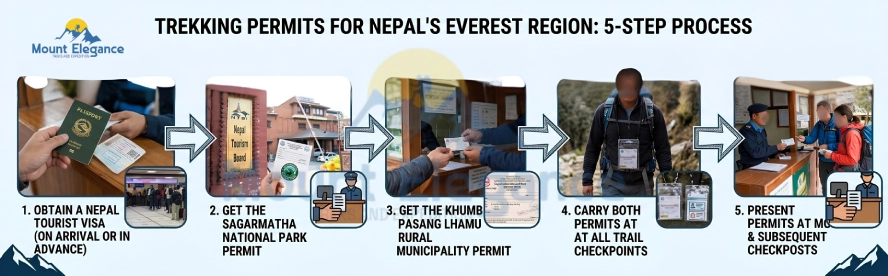
Getting Everest Base Camp trek permits follows a straightforward five-step process, and most trekkers can complete it without much hassle if they plan ahead.
- Obtain a Nepal tourist visa - before anything else, trekkers need a valid Nepal tourist visa, which can be arranged either on arrival at Tribhuvan International Airport or in advance through a Nepal embassy or consulate, depending on personal preference and nationality.
- Get the Sagarmatha National Park permit - this can be picked up in Kathmandu at the Nepal Tourism Board office before heading out or alternatively obtained directly at the Monjo checkpoint once the trek is already underway.
- Get the Khumbu Pasang Lhamu Rural Municipality permit - unlike the national park permit, this one must be purchased locally either at the Lukla checkpoint upon arrival or at Monjo further along the trail.
- Carry both permits at all trail checkpoints - once issued both permits should stay easily accessible throughout the trek, since officials may ask to see them at multiple points along the route.
- Present permit at Monjo and subsequent checkposts - trekkers will need to show their permits when passing through Monjo and other checkpoints further up the trail, so keeping them organized and within reach makes the process smoother at every stage.
Can You Get Everest Base Camp Permits Online?
Everest Base Camp trek permits cannot currently be purchased through a complete, self-service online system, as no such portal exists as of 2026 for individual trekkers to apply and pay independently from abroad. Both required permits still call for in-person application, whether at the Nepal Tourism Board office in Kathmandu or directly at trailside checkpoints like Monjo and Lukla. That said, trekkers don't necessarily need to handle this themselves, since registered trekking agencies can process both permits on a trekker's behalf, often as part of a broader trek package. This arrangement saves time and paperwork for travelers, especially those arriving in Nepal with limited days before starting the trek. For now, anyone hoping to skip the in-person process entirely should plan to work through a trusted agency rather than expecting to complete everything independently online before arrival.
Where Are Everest Base Camp Trek Permits Checked?
Permits are checked at several points along the Everest Base Camp trekking route so trekkers should keep both documents easily accessible throughout the journey rather than packed away.
- Monjo checkpoint - located at the entrance to Sagarmatha National Park this is typically the first major point where both permits are reviewed
- Lukla entry point - trekkers arriving by flight often have their permits checked here as they begin the trail
- Additional checkpoint along the Khumbu trail - smaller checkpost appear at various points further up the route where officials may request to see permits again
- Trekkers must carry permits at all times - since checks can happen unexpectedly permits should stay on hand rather than left behind at a teahouse or in a duffel bag
- Penalty for trekking without a valid permit - trekker caught without proper documentation may face fines or be turned back from continuing further
- A lost permit must be reported to the nearest checkpost - reporting promptly helps avoid complications, through a reissuance fee may apply to replace the lost document
Are Permits Included in an Everest Base Camp Trek Package?
Yes - the permits are included in guided Everest Base Camp trek packages including both required permits as part of the overall package price, saving trekkers the hassle of navigating the application process on their own. Agencies typically handle the paperwork directly, submitting applications and covering fees for the Sagarmatha National Park Entry Permit and the Khumbu Pasang Lhamu Rural Municipality Permit on the trekker's behalf, often before the trek even begins. This is one of the practical advantages of booking through a trekking agency rather than going independently, since it removes a layer of logistics that can otherwise eat into limited time in Kathmandu. Independent trekkers, on the other hand, need to arrange both permits themselves, either in advance or upon arrival at the relevant checkpoints. Given how much package inclusions can vary between operators, it's always worth confirming directly with the agency whether permits are bundled into the quoted price before finalizing a booking, so there are no unexpected costs later on.
Do You Need a Guide or Porter for the Everest Base Camp Trek?
- A guide is required to obtain and manage essential trekking permits while helping trekkers understand local regulations and route requirements. Guides also assist with navigation, daily planning, accommodation arrangements and communication with teahouse owners along the trail. Their experience can be especially valuable when weather or trail conditions change unexpectedly.
- A porter carries trekking gear and reduces the trekker’s load allowing trekkers to focus more comfortably on walking and acclimatizing. Porters can carry clothing - sleeping equipment and other heavier items while trekkers keep a smaller daypack with essentials.
- A government-licensed guide is required in restricted trekking areas and regulations may apply to routes within the Everest region. Using a licensed guide helps ensure that trekkers follow current permit and safety requirements while receiving professional support throughout the journey.
- Hiring local guides and porters also supports Sherpa community employment by creating income opportunities for people living in the Khumbu region. Their local knowledge, experience and cultural understanding can make the Everest Base Camp Trek safer - smoother and more meaningful.
What Are the Rules for Trekking in Sagarmatha National Park?
- Sagarmatha National Park requires trekkers to carry out all personal waste and dispose of it properly at designated collection points. Trekkers should avoid leaving plastic bottles, food packaging - tissues or other rubbish along the trail to help protect the fragile Himalayan environment.
- Sagarmatha National Park requires trekkers to obtain the necessary Civil Aviation Authority of Nepal permit before using a drone. Drone flights are regulated - so trekkers should not operate drones without securing the required authorization and following applicable aviation rules.
- Sagarmatha National Park requires trekkers to avoid disturbing wildlife and maintain a respectful distance from animals. Feeding - chasing, touching or attempting to photograph wildlife too closely can cause stress and disrupt natural behavior.
- Sagarmatha National Park requires trekkers to stay on marked trails wherever possible. Following established routes helps protect vegetation - reduce trail erosion and keeps trekkers safer in steep or environmentally sensitive areas.
- Sagarmatha National Park requires trekkers to respect local Sherpa customs, traditions, prayer sites and monasteries. Trekkers should dress and behave respectfully around religious places - avoid entering restricted areas and follow local instructions when visiting villages and monasteries.
What Mistakes Should You Avoid When Applying for EBC Permits?
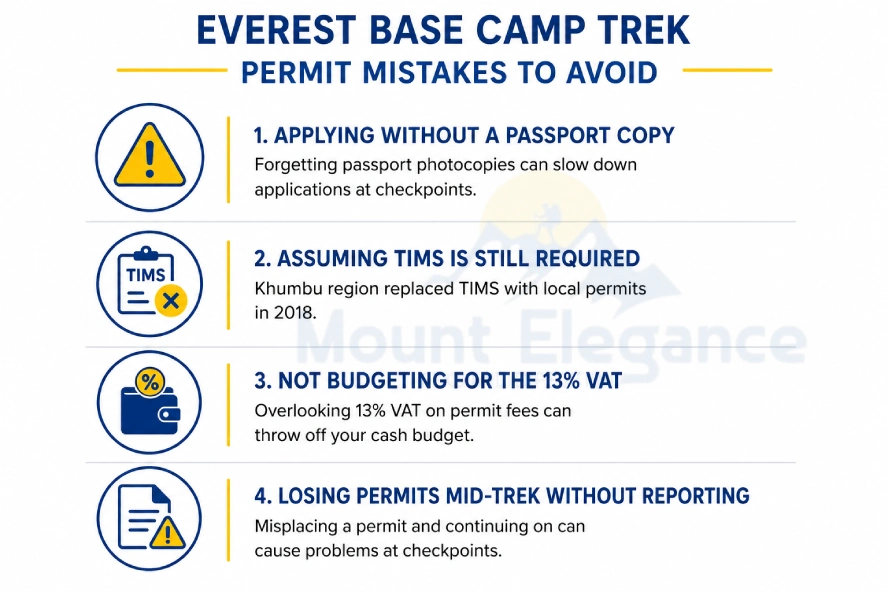
The most common Everest Base Camp permit mistakes are avoided with a bit of preparation so it’s worth knowing what trip up trekkers most often before heading out.
- Applying without a passport copy - forgetting to bring passport photocopies along can slow down applications at checkpoints, especially in more remote locations without printing access
- Assuming TIMS is still required - some trekker showup expecting to need a TIMS card only to realize the Khumbu region replaced it with local permits back in 2018 causing unnecessary confusion
- Not budgeting for the 13% VAT - overlooking this added tax on permit fees can throw off a trekker’s cash budget, especially when paying in local currency at checkpoints
- Losing permits mid-trek without reporting to a checkpost - misplacing a permit and continuing on
What Else Should You Prepare Before Your Everest Base Camp Trek?
Beyond permits, a few other things are worth preparing before your Everest Base Camp trek, including travel insurance, proper trekking gear, physical training, flight arrangements, enough cash, and a flexible itinerary. Booking accommodation early and carrying essential medicines can also make the journey smoother and more comfortable.
Do You Need a Nepal Visa Before Getting Everest Base Camp Permits?
Yes - a Nepal tourist visa is required before getting Everest Base Camp permits. Most international trekkers can obtain a visa on arrival at Tribhuvan International Airport in Kathmandu. After completing the visa process trekkers can arrange the necessary permits for their Everest Base Camp journey.
How Does the Sagarmatha National Park Permit Application Work?
The Sagarmatha National Park permit is applied for through the designated permit office or authorized trekking agency. Trekkers provide basic identification details and pay the required fee during the process and for current costs and requirements refer to the full Everest Base Camp permit breakdown.
Do You Need a TIMS Card for Other Nepal Treks?
Yes a TIMS card is required for many other Nepal treks outside the Khumbu region depending on the route and current regulations. Requirements can vary by trekking area - so trekkers should check the specific permit and registration rules before starting their chosen trek.
How Does the Khumbu Rural Municipality Permit Work?
The Khumbu Rural Municipality permit is applied for after arriving in the Khumbu region, usually through the local permit office or an authorized trekking agency. Trekkers provide basic details and pay the applicable fee so see the full Everest Base Camp permit application process for step-by-step information.
How Much Does the Khumbu Pasang Lhamu Permit Cost?
The Khumbu Pasang Lhamu permit costs vary based on the season and current local regulations. Since the detailed fee table is already provided above trekkers can refer to it for the latest rates - Checking the updated amount before departure helps avoid confusion when preparing the trekking budget.