
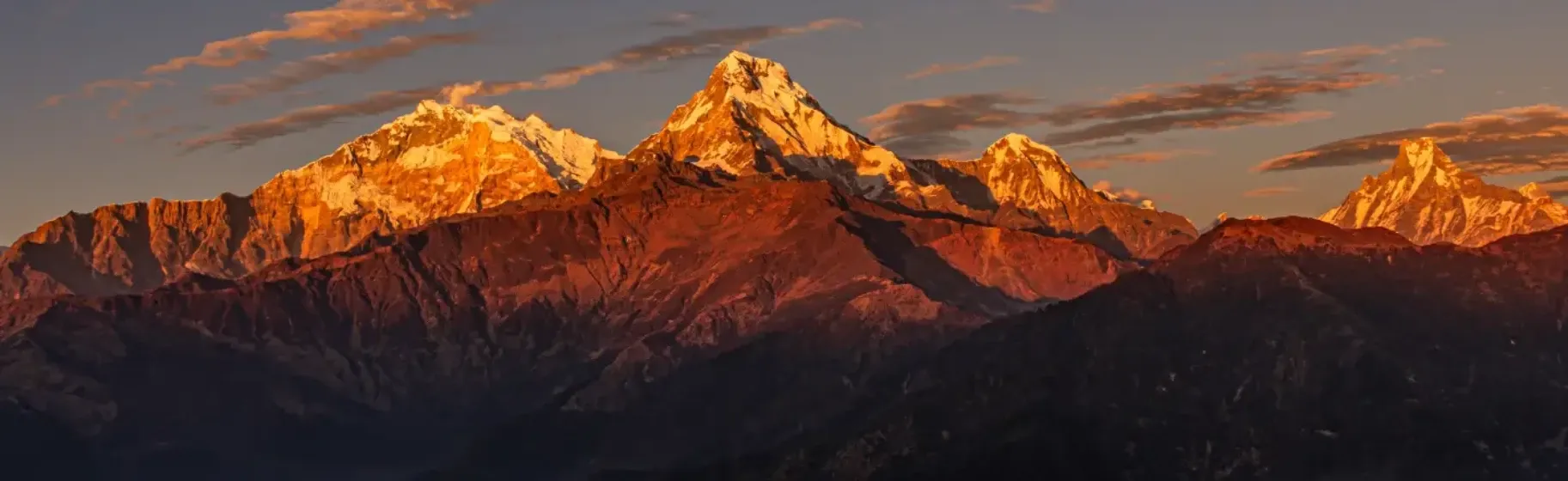
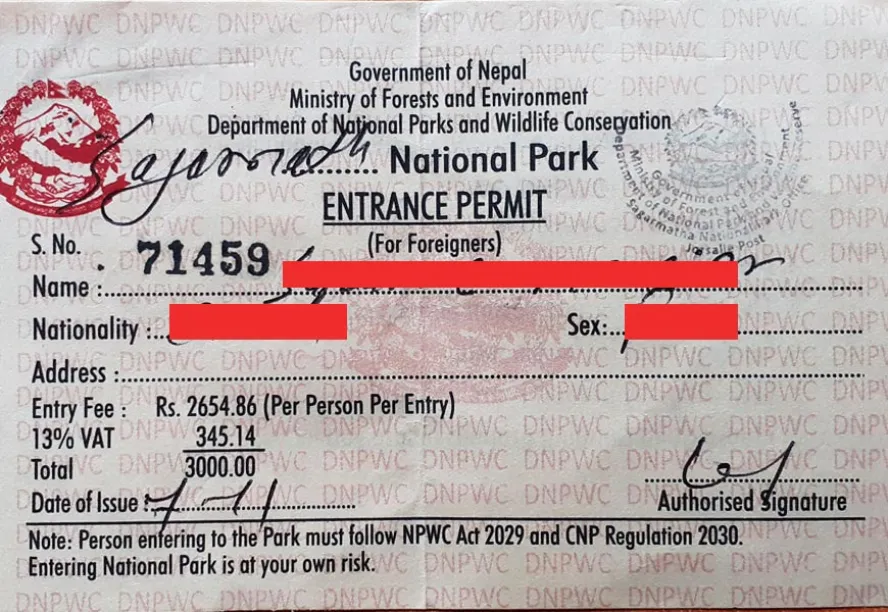
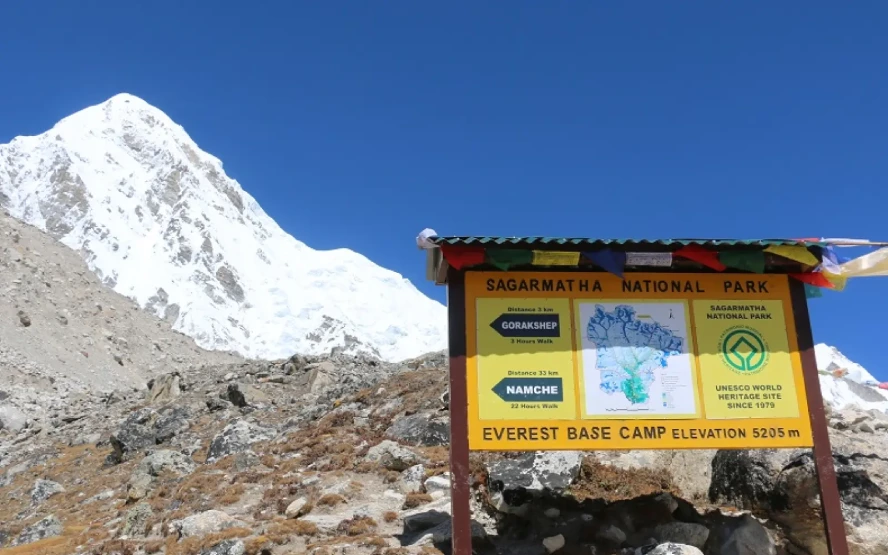
The Sagarmatha National Park Permit is a mandatory entry document for anyone trekking through Sagarmatha National Park on the way to Everest Base camp, since the whole route runs straight through this protected zone. As of 2026, foreign Nationals pay NPR 3000 per person at the entrance, according to the Nepal Tourism Board - though it’s worth double-checking this closer to your travel dates, since rates can shift. The Department of National Parks and Wildlife Conservation issues and regulates the permit and the money goes toward conservation work across the park Sagarmatha National Park has held UNESCO World Heritage status since 1979 protecting the rugged high-altitude terrain that makes up the Everest Base Camp (EBC) trek in Solukhumbu District, Nepal skip this permit and you simply can’t get past the park’s entry checkpoints along the way.
What Is the Sagarmatha National Park Permit?
The Sagarmatha National Park Permit is an official entry document issued by the Department of National Parks and Wildlife Conservation, Nepal required for anyone entering this protected high-altitude region on the way to Everest Base Camp. Sagarmatha National Park was established on July 19, 1976, covering an area of 1148 square kilometers or roughly 443 square miles in the northeastern part of the country near the border with Tibet. The park takes its name for Mount Everest, which sits at the heart of this dramatic landscape alongside other towering peaks, glaciers and deep valleys.
In recognition of its outstanding natural value the park was inscribed as a UNESCO World Heritage Site in 1979, cementing its status as one of the most ecologically significant protected areas in the world. The permit fee collected from trekkers goes directly toward conservation efforts within the park helping fund wildlife protection, environmental monitoring and the upkeep of trails and infrastructure across this fragile alpine ecosystem. Given the park’s unique combination of biodiversity, cultural heritage and extreme elevation the permit system plays an important role in balancing tourism access with long-term preservation. Every trekker heading toward Everest Base Camp needs this document to legally pass through the park’s boundaries.
Why Do You Need a Sagarmatha National Park Permit for the EBC Trek?
Every trekker needs the permit because the EBC trails run entirely inside Sagarmatha National Park - there’s simply no route to base camp that skips the protected area. That makes this permit non-negotiation, not some optional add-on. Officials check Monjo, right at the park’s main entrance along the trail, confirming every trekker has proper documentation before letting them continue.
Money from the permit fee goes straight into park management - trail upkeep, wildlife conservation, environment monitoring and all the work that keeps this fragile high-altitude ecosystem functioning. Since the Department of National Parks and Wildlife Conservation oversees the park, the permit system also helps track how many people are moving through such a remote and sensitive region.
Show up at Monjo without one, though, and you're turned back on the spot - no continuing until you've sorted the paperwork, whether that means a trip back to Lukla or Kathmandu. Given how strictly this gets enforced, it's worth handling the permit well before you reach this checkpoint, so you're not scrambling for it mid-trek.
How Much Does the Sagarmatha National Park Permit Cost?
The Sagarmatha National Park Permit costs different amounts depending on nationality, and a few details are worth flagging before you budget for it.
Nationality | Fee |
Foreign nationals | NPR 3,000 (~USD 22–25) |
SAARC nationals | NPR 1,500 |
Nepali citizens | NPR 100 (some sources list NPR 25) |
According to the Nepal Tourism Board, foreign nationals pay NPR 3,000 per person, while SAARC nationals pay a reduced NPR 1,500. For Nepali citizens, sources disagree slightly — most cite NPR 100, though the official Nepal Tourism Board page lists NPR 25, so it's worth confirming this figure directly at the point of purchase. Some counters also add a 13% VAT on top of the base fee, which can catch trekkers off guard if they haven't budgeted for it. Regardless of nationality, the fee is a one-time, single-entry charge rather than a daily rate, meaning it covers your entire stay within the park boundaries for that trek, not each day you're inside.
Where Do You Get the Sagarmatha National Park Permit?
You can get the Sagarmatha National Park Permit at a few different locations, giving trekkers some flexibility depending on where they are in their planning.
- Nepal Tourism Board office, Bhrikutimandap Kathmandu - the most common place to secure the permit in advance, before heading toward Lukla.
- Monjo entry check point, en route to Namche Bazaar - trekkers who haven’t arranged the permit in Kathmandu can purchase it directly here, right at the park boundary.
- Through a registered trekking agency - many agencies handle this permit as part of a full trek package, saving trekkers a separate trip to the Tourism Board Office.
- Department of Immigration online permit platform - this applies specifically to Restricted Areas treks like Upper Mustang or Manaslu, not to Sagermatha itself, since according to the department of immigration, restricted areas are highly regulated and free individual trekkers are strictly forbidden there, with permits only issued through the Department of Immigration via an authorities agency whereas Everest falls under Nepal’s open trekking areas and its park permit is still obtained directly at the Tourism Board or Monjo checkpoint.
What Documents Do You Need to Get the Permit?
You need these documents to apply for the Sagarmatha National Park Permit:
- Passport - most sources indicate a passport copy is accepted alongside the original, though requirements can vary by counter, so it's safest to carry both just in case.
- Two passport-size photographs - standard requirement across all application points, whether in Kathmandu or at Monjo.
- Completed park entry application form - available at the Nepal Tourism Board office or at the Monjo entry gate.
- Confirmed trekking dates - needed to complete the application and align with your permit's validity window.
- Licensed guide details - Nepal's April 2023 rule requires trekkers to go with a licensed guide, and this general requirement should be factored into your permit paperwork, though it's worth confirming current enforcement specifics for the Sagarmatha route with your agency or the Nepal Tourism Board before you go.
How Long Is the Sagarmatha National Park Permit Valid?
The Sagarmatha National Park Permit is valid for a single entry - it gets checked once at the Monjo checkpoint as you head toward Namche Bazaar and that’s it. No need to show it again at later gates along the trail. The permit’s non-transferable too, directly to the holder’s passport, so nobody else can use it on your behalf. There’s no separate expiry date beyond one recorded entry, since it’s really just meant to cover your whole stay in the park of that trek, not act as some time-limited pass with a hard cutoff.
What Rules Must You Follow Inside Sagarmatha National Park?
Trekkers inside Sagarmatha National Park must follow these rules to help protect the region's fragile ecosystem and rich cultural heritage.
- No hunting or killing wildlife - the park is home to species like the Himalayan tahr, musk deer, and snow leopard, and harming any wildlife is strictly prohibited under national park regulations.
- No removing plants, animals, or cultural artifacts - taking rhododendron branches, alpine flowers, or any cultural or religious items from monasteries and villages is not allowed, as it disrupts both the natural environment and local heritage.
- No camping above the tree line - camping is restricted in higher, more fragile alpine zones to minimize environmental impact, so trekkers should stick to designated teahouses and lodges instead.
- Licensed guide required in restricted sections - certain parts of the broader Khumbu region require a licensed guide, in line with Nepal's wider trekking regulations aimed at improving safety and accountability.
- Trekkers must stay on designated trails - wandering off the marked path can damage vegetation, disturb wildlife habitats, and increase the risk of accidents in unfamiliar or unstable terrain.
What Happens If You Trek Without a Sagarmatha National Park Permit?
Trekking without the required permit results in serious trouble that can quickly derail an otherwise well-planned trip. Get caught without valid paperwork and you’re typically turned back right at the Monjo checkpoint - no continuing further into Sagarmatha National Park until things get sorted. On top of that, trekking without a licensed guide can bring a fine of up to NPR 12000 part of Nepal’s wider push to enforce guide rules across its major trekking regions. In cases where guide-related violations come up specifically, officials might go further still and cancel the permit outright, ending that trekker’s ability to continue under the existing documentation. Combine that with the fine and you’re often looking at outrage removal from the trail - meaning a backtrack to fix the issue before you can even think about pushing on toward Everest Base Camp.
What Happens If You Trek Without a Sagarmatha National Park Permit?
Trekking without the required permit results in being turned back at the Monjo checkpoint where officials can check whether trekkers have the necessary documents before letting them continue into Sagarmatha National Park. Trekkers without a valid permit may required to have one before proceeding and could face additional penalties. For unguided trekking or violations of the applicable guide rules - fines of up to NPR 12000 may apply. In serious situations authorities may cancel the permit issued to a trekker or guide and require the person to leave the trail. These rules are intended to control access, support visitor safety and protect the national park. Trekkers should arrange all required permits before entering the protected area and carry them throughout the journey.
Is the Sagarmatha National Park Permit the Same as the Khumbu Rural Municipality Permit?
No, the Sagarmatha National Park Permit and the Khumbu Rural Municipality Permit are two different permits required for the Everest Base Camp trek. The Sagarmatha National Park Permit supports the protection and conservation of the national park and its natural resources of the area. The Khumbu Rural Municipality Permit on the other hand contributes to local infrastructure and development within the Khumbu region. Trekkers may also have different checkpoints for these permits. The Sagarmatha National Park Permit is generally checked at Monjo, while the Khumbu Rural Municipality Permit is collected and checked around Lukla. Both permits should be kept safely throughout the trek because they serve different purposes and are required for different authorities.
Can You Buy the Sagarmatha National Park Permit Online?
Yes, from March 2026 you can apply for the permit through the Department of Immigration online permit platform but you need an approved Nepal tourist visa number to complete the process. The system also allows you to pay the permit fee in advance before arriving in Nepal which can make the process easier.
Does the Sagarmatha National Park Permit Cost Change by Season?
No, the permit fee stays fixed throughout the year. The price does not change between busy and quiet seasons but more trekkers visit Sagarmatha National Park during spring from March to May and autumn from September to November. This means these months are busier but the permit cost remains the same.
Is Sagarmatha National Park a UNESCO World Heritage Site?
Yes, Sagarmatha National Parkhas been a UNESCO World Heritage Site since 1979 this is the first protected site in Nepal to receive this global recognition as the park is known for its beautiful mountain landscapes, including Mount Everest along with its rich plants and wildlife. Its unique natural beauty and biodiversity make it an important place to protect.
What Other Permits and Documents Do You Need for the Everest Base Camp Trek?
Besides the Sagarmatha National Park Permit, the Everest Base Camp trek requires several important permits and documents. The Everest Base Camp Trek Permit is an umbrella term covering the main permits needed for the route. Trekkers also need a valid Nepal Visa - a TIMS Card and a Khumbu Rural Municipality Permit. Please arrange these documents before or during the trek as required. Keeping passport copies and permit documents safely accessible helps avoid delays at checkpoints along the trekking trail.
Everest Base Camp Trek Permit
The Everest Base Camp Trek Permit refers to the permits required to trek along the Everest Base Camp route. It is a general term that covers the Sagarmatha National Park Permit and the Khumbu Rural Municipality Permit - which are the two main permits required for the standard EBC trail as the Sagarmatha National Park Permit provides entry to the protected area while the Khumbu Rural Municipality Permit supports access and trekking within the local Khumbu region - trekkers may need to show these permits at checkpoints during the trek journey. Understanding the Everest Base Camp Trek Permit requirements before starting the trek helps ensure a smooth and hassle-free experience on the trail.
Nepal Visa
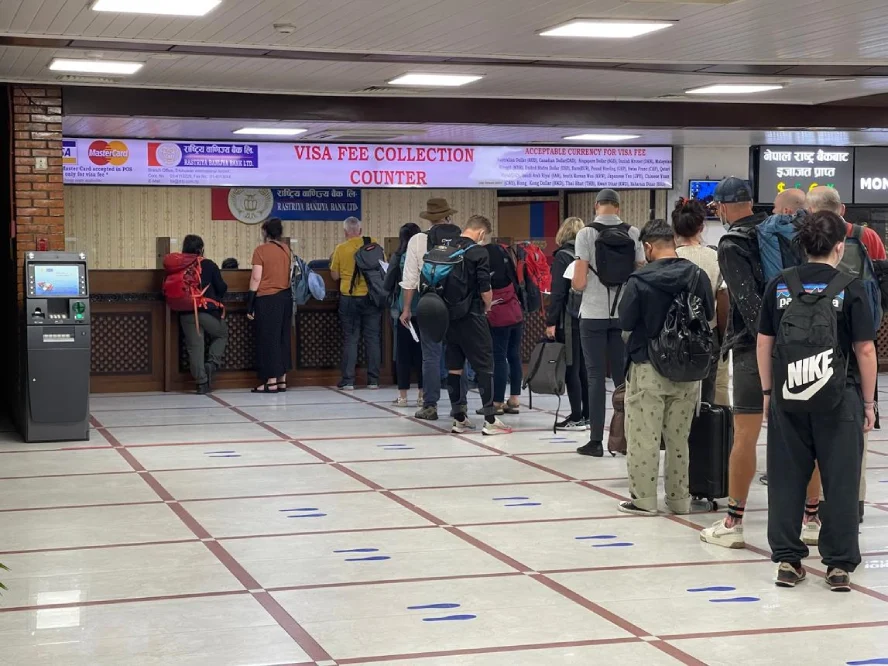
A Nepal visa is a required entry document for international trekkers before any trekking permit. Most travelers can get a visa on arrival at Tribhuvan International Airport in Kathmandu. The visa is available for 15, 30 or 90 days with fees of USD 30, USD 50 and USD 125 respectively. Trekkers should choose a visa duration that covers their entire stay in Nepal including travel days before and after the Everest Base Camp trek; a valid passport with sufficient validity is also required during the application process. For detailed requirements with fees and application information - check the Nepal Visa guidelines before traveling to Nepal.
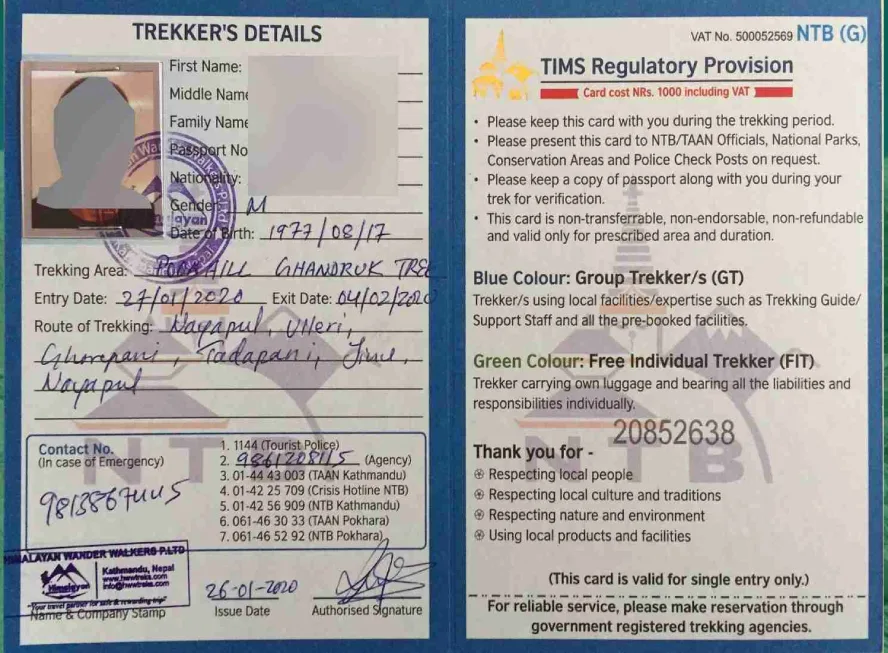
TIMS (Trekker's Information Management System) Card
The TIMS (Trekkers Information Management System) card is a trekking registration document issued through the Nepal Tourism Board (NTB) and Trekking Agencies Association of Nepal (TAAN) to record trekker information and safety as Current NTB guidance lists the Everest Base Camp Trek among routes where a TIMS Card and licensed guide are required, despite the claim that TIMS stopped being required in July 2023. Some competitor sources may still state so - writers should verify the latest NTB notice before publication. The TIMS (Trekkers Information Management System) Card should therefore not be described as replaced by the Khumbu Rural Municipality Permit without further verification.

Khumbu Rural Municipality Permit
The Khumbu Rural Municipality Permit is a local entry permit issued by the Khumbu Pasang Lhamu Rural Municipality for trekkers who are entering the Everest region. It is generally obtained at Lukla on arrival before starting the trek and is required alongside the Sagarmatha National Park Permit. The official Khumbu Pasang Lhamu Rural Municipality website currently lists a Trek-Card fee of NPR 3000 for visitors from different countries other than SAARC countries and China - while some travel sources still report rates between NPR 2000 and NPR 3000. Trekkers should keep the Khumbu Rural Municipality Permit during the trek for checkpoint verification.