A TIMS (Trekkers' Information Management System) card is a trekking permit jointly issued by the Nepal Tourism Board (NTB) and the Trekking Agencies Association of Nepal (TAAN). It was created to help track trekkers moving through Nepal’s mountain regions, mainly for safety and emergency response purposes. Under 2026 trekking rules most regions across Nepal still require this card, though Free Individual Trekkers (FIT) now face tighter restrictions in several areas, following the country’s broader shift toward mandatory guided trekking. The Everest Base Camp route stands out as an exception since the Khumbu region relies on its own local permits instead of TIMS. For nearly everywhere else in Nepal, the TIMS card remains a standard part of trip preparation.
What Is a TIMS Card?
A TIMS card is a Trekkers Information Management System card that officially registers trekkers and records essential safety details before they set out on the trail. Historically, the system used two categories: a green TIMS card (organized/group trekkers) issued through the Trekking Agencies Association of Nepal(issuing body for organized/group trekkers) and blue TIMS card (independent/FIT trekkers) issued through Nepal Tourism Board(independent/FIT trekkers). This differs from national park and conservation-area permits which grant physical access to protected land and from restricted-area permits which govern entry into politically sensitive border regions - TIMS instead exists purely for trekker identification and safety record purposes according to NTB and TAAN.
Current rules (Last updated 2026): Since the mandatory guide requirement took effect on April 1, 2023 the blue FIT card has effectively been phased out. Solo trekking without a licensed guide is no longer permitted on TIMS-application route and all TIMS cards are now issued through registered trekking agencies rather than directly to independent travelers.
Who needs it: foreign trekkers, SAARC nationals and Nepalese citizens all require TIMS on most routes (Everest excluded, due to its separate local permit system); guides and organized groups are registered under the same system.
Pricing: foreigners pay around NPR 2000, SAARC nationals around NPR 1000, paid in cash at NTB or TAAN offices.
At checkpoints: officials use TIMS records to verify who is on the trail and during emergencies, to speed up search-and-rescue coordination.
Why Is a TIMS Card Required for Trekking in Nepal?
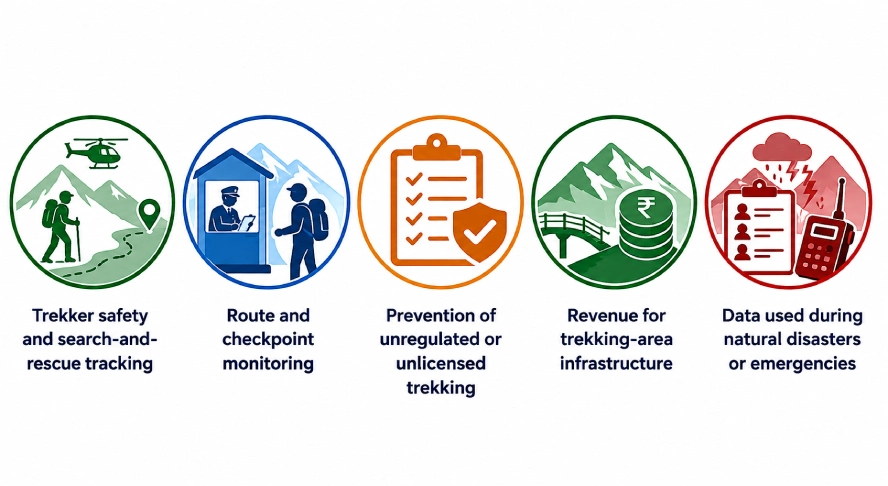
Nepal requires a TIMS card to serve several important safety and regulatory functions across its major trekking regions.
- Trekker safety and search-and-rescue tracking - by registering key details like route, itinerary, and emergency contacts, TIMS helps authorities respond quickly if a trekker goes missing or needs assistance in remote mountain terrain
- Route and checkpoint monitoring - the card allows officials at various checkpoints to track trekker movement along popular routes, helping maintain oversight of who is where along the trail at any given time
- Prevention of unregulated or unlicensed trekking - requiring TIMS registration, especially alongside the mandatory guide rule, helps ensure trekkers aren't heading into remote areas without proper preparation or support
- Revenue for trekking-area infrastructure - fees collected through TIMS contribute to maintaining trails, checkpoints, and other infrastructure that keeps popular trekking regions functional and safe
- Data used during natural disasters or emergencies - according to TAAN, the centralized TIMS database becomes especially valuable during large-scale emergencies like earthquakes or avalanches, when authorities need to quickly account for trekkers across an entire region rather than searching blindly
Do You Still Need a TIMS Card in 2026?
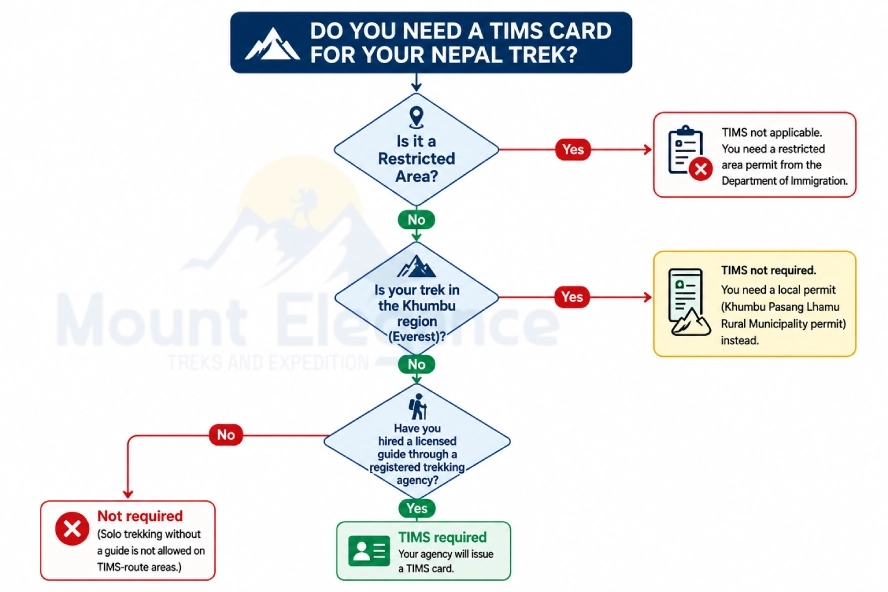
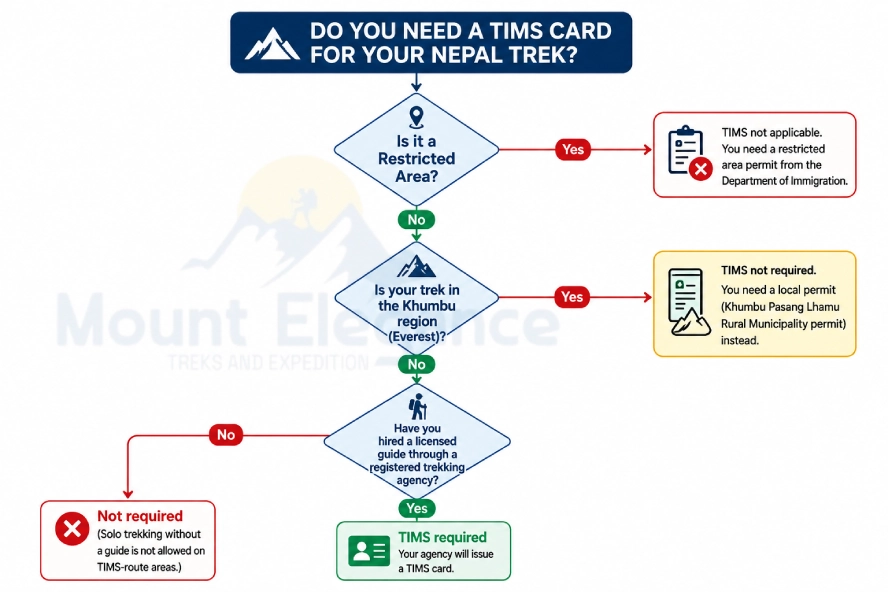
Trekkers still need a TIMS card in 2026, though the system now works alongside significant rule changes introduced a few years earlier. Since the 2023 mandatory-guide rule for independent trekkers came into effect, solo trekking without professional support has largely been phased out across most designated trekking regions in Nepal. This means trekkers can no longer set out entirely on their own through TIMS-application areas since a licensed trekking guide is now a required part of the Journey.
Despite this shift, the TIMS card itself was retained alongside the new guide requirement rather than eliminated. According to a joint TAAN and Government of Nepal 2023 directive, TIMS continues to serve its original purpose of registering trekker details and supporting safety coordination even though the process now runs entirely through registered trekking agencies instead of being issued directly to independent travelers. In practice, this means trekkers still receive a TIMS card, but only as part of a guided arrangement rather than a standalone registration.
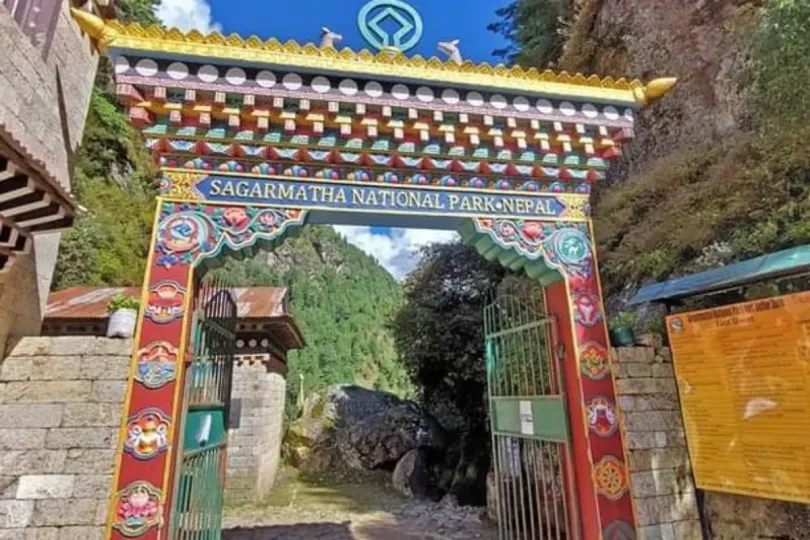
Not every region follows this same system, though. Everest Base Camp is a notable example where TIMS doesn't apply at all, since the Khumbu region relies instead on its own local Rural Municipality Permit alongside the Sagarmatha National Park Permit. Because of this split, it's important for trekkers to confirm which system governs their specific route before assuming TIMS is required everywhere in Nepal.
What Are the TIMS Card Fees and Types?
A TIMS card costs different amounts depending on trekker type and nationality, though rates have shifted a few times over the years as Nepal's guide and permit rules evolved.
Trekker Type | SAARC Nationals | Non-SAARC (International) |
Group/organized trekker | NPR 1,000 (~USD 8) | NPR 1,000 (~USD 8) |
Individual/FIT trekker | NPR 600 (~USD 5) | NPR 2,000 (~USD 15) |
According to NTB/TAAN fee notices, foreign individual trekkers are generally charged around NPR 2000 while group rates for both SAARC and non- SAARC trekkers sit closer to NPR 1000. SAARC individual trekkers typically pay a reduced NPR 600.
It’s worth noting that these figures vary noticeably across different travel and trekking websites with some citing older pre-2023 rates or slightly different USD conversions depending on the source’s update date. Since the 2023 mandatory-guide rule effectively phased out the old independent “blue card” category, most TIMS registration in 2026 are processed through registered trekking agencies rather than issued directly to solo travelers, so it’s best to confirm exact current pricing with your agency or the Nepal Tourism Board before booking.
What Documents Do You Need to Apply for a TIMS Card?
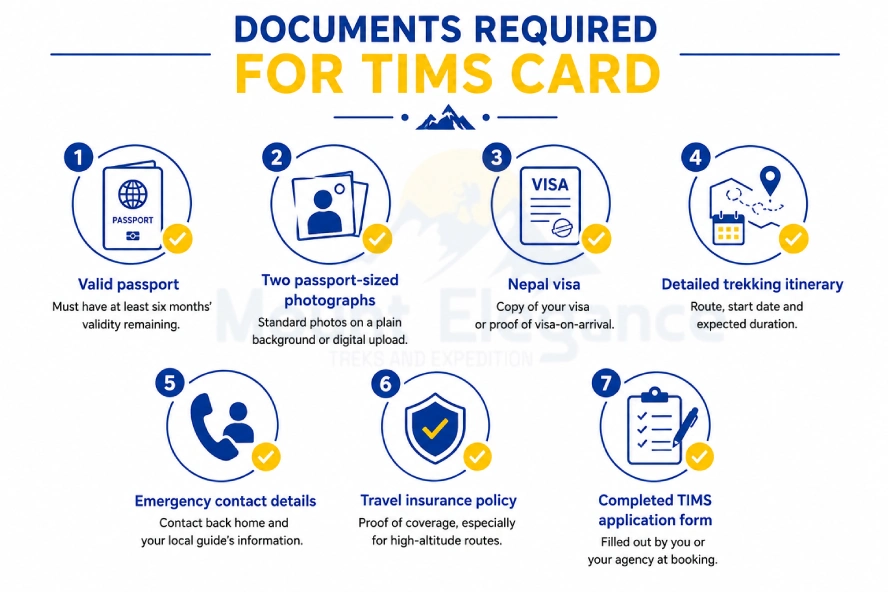
A TIMS card application requires the following documents and details, most of which are gathered by your registered trekking agency as part of the mandatory-guide booking process.
- Valid passport - must have at least six months' validity remaining; agencies typically ask for a scanned or photocopied version rather than the physical original
- Two passport-sized photographs - standard printed photos on a plain background are usually requested, though several agencies now accept a digital upload instead
- Nepal visa - a copy of your visa (or proof of visa-on-arrival) is generally included with the application
- Detailed trekking itinerary - route, start date, and expected duration, since this feeds directly into the safety database
- Emergency contact details - a contact back home, plus your local guide's information
- Travel insurance policy - some agencies request proof of coverage, particularly for high-altitude routes
- Completed TIMS application form - filled out by you or your agency at the time of booking
How Do You Get a TIMS Card in Kathmandu or Pokhara?
Trekkers get a TIMS card from a handful of official locations, though as of the 2023 mandatory-guide rule most applications now go through a registered trekking agency rather than being picked up independently.
Office Name | Area / Neighborhood | How to Reach |
TAAN Secretariat | Maligaun, Kathmandu | Take a taxi or local bus to Maligaun/Gairidhara. Located near the Alliance Française, about a 10–15 minute drive from Thamel. |
TAAN TIMS Counter | Saatghumti, Thamel, Kathmandu | Walkable from anywhere inside the Thamel area; situated right near the Saatghumti intersection. |
Nepal Tourism Board (NTB) | Bhrikutimandap / Pradarshani Marg, Kathmandu | Take a 10-minute taxi ride or local bus from Thamel toward Ratna Park / Bhrikutimandap, located near the City Hall (Rastriya Sabha Griha). |
TAAN Pokhara Office | Lakeside / Pokhara | Located near the main tourist precinct; reachable via a short walk, local bus, or taxi along Lakeside Road. |
Nepal Tourism Board Offices | Damside, Pokhara | Take a short taxi ride or local bus south from Lakeside to the NTB office complex at Damside. |
Always confirm the latest TIMS rules, fees, office hours and documents with NTB or TAAN before applying because procedures can change.
TAAN and Nepal Tourism Board TIMS Counter Locations and Hours
TIMS counters in Kathmandu and Pokhara operate on the following hours, based on the official TAAN office-hours notice:
Location | Weekday Hours | Saturday/Public Holiday |
TAAN Secretariat, Maligaun | 10 AM – 5 PM (10 AM – 4 PM in winter, Nov 1–Jan 31) | Closed |
TAAN TIMS counter, Saatghumti, Thamel | 7 AM – 6 PM | 10 AM – 1 PM |
TAAN Pokhara office | 10 AM – 5 PM | Closed |
Nepal Tourism Board offices | 10 AM – 5 PM | Closed |
Where Is the TIMS Card Checked on Nepal Trekking Routes?
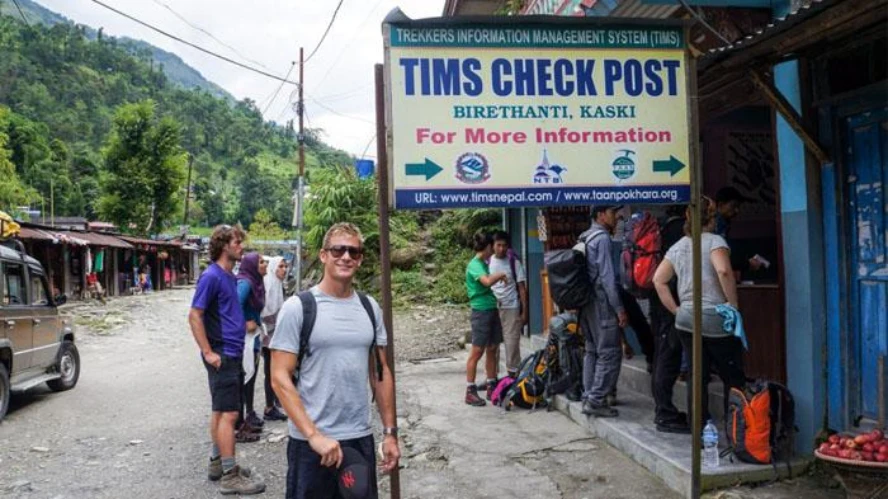
TIMS cards are checked at trekking checkpoints to confirm required documents. Checkpoints vary by region and enforcement can differ by route. Missing TIMS may cause delays or penalties where it is required. Trekkers should check current rules before starting.
Region | Common Checkpoint Areas | Enforcement |
Everest Region | Lukla and Monjo | Check rules before trekking |
Annapurna Region | Besisahar and major trail points | Depends on route |
Langtang Region | Dhunche and Syabrubesi | Document checks apply |
Manaslu Region | Jagat and other checkpoints | Strict document checks |
Kanchenjunga Region | Taplejung and route checkpoints | Permit and TIMS checks |
Missing TIMS Region | Relevant checkpoints | May cause delays or penalties |
If a trekker does not have the required TIMS card where it is needed, they may face delays or be asked to obtain the card and can even receive a penalty. Since TIMS rules have changed on some routes, trekkers should check the latest requirements before starting their trek.
TIMS Checkpoints on the Everest Base Camp Trek
On the Everest Base Camp trek, TIMS cards are checked at several checkpoints along the route - where officials verify trekkers' documents and permits:
- Monjo checkpoint: This is an important checkpoint on the route to Everest Base Camp. Trekkers may be asked to show their TIMS card - passport and other required permits documents before going toward Namche Bazaar.
- Lukla: Trekkers may have their documents checked at or around Lukla in the beginning of the trek. This helps confirm that visitors have the required paperwork before entering the trekking route.
- Namche Bazaar: Officials may check trekking documents in Namche Bazaar because it is a major trading and trekking center in the Khumbu region.
- Khumbu Pasang Lhamu Rural Municipality checkpoint: Local authorities may verify the required local permit and other trekking documents at designated points.
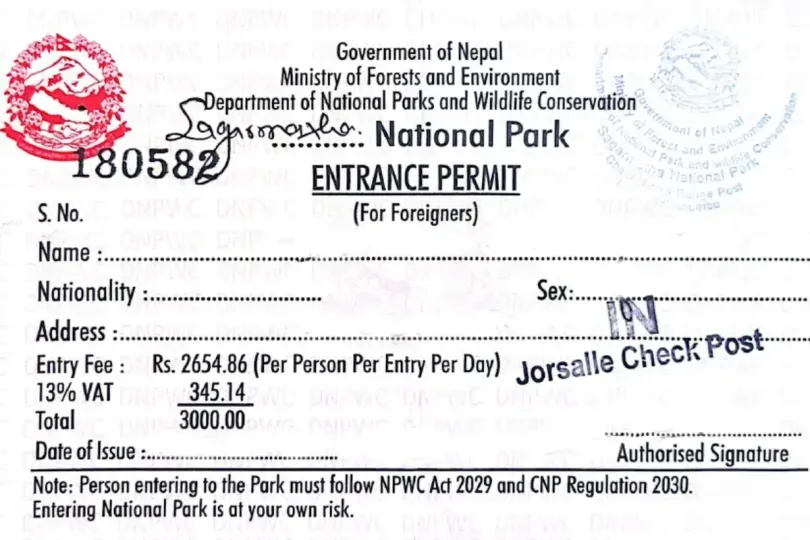
- Sagarmatha National Park entry gate: Trekkers must provide the required national park permit when entering the protected area. Keeping all documents easily accessible makes these checks quicker and easier.
What Happens If You Trek Without a TIMS Card?
Trekking without a TIMS card can make your trek delay with a possible on-the-spot fine of NPR 12000 for a trekker found on designated trekking trails without the required card or guide - according to the 2023 trekking guideline reported by The Kathmandu Post that trekkers without proper documents may also be denied entry or asked to stop at checkpoints until the required paperwork is arranged. This can cause delays while passing through national park entry gates or local permit checkpoints. More importantly TIMS records provide authorities with information such as a trekker’s identity - itinerary and contact details which can support search and rescue efforts during accidents or natural disasters. TAAN explains that proper trekker records help officials identify trekkers during emergencies and effectively coordinate rescue operations. So - carrying a valid TIMS card and other required permits helps avoid fines, checkpoint problems and unnecessary delays while also supporting safer trekking in the Everest region.
How Is a TIMS Card Different From Other Nepal Trekking Permits?
A TIMS card differs from a trekking permit because TIMS mainly registers and records trekkers while other permits permit entry or travel through specific areas - the TIMS system is designed to maintain trekker information that can assist with monitoring and emergency coordination. It does not replace entry permits required for protected areas or restricted regions.
Document | Main purpose | Issued by | What it covers |
TIMS card | Trekker registration and safety tracking | NTB/TAAN or authorized agencies, depending on current rules | Records trekker details, route, and emergency information |
National park/conservation area entry permit | Provides legal entry into a protected area | Nepal’s protected-area authorities | Covers access to places such as Sagarmatha National Park or Annapurna Conservation Area |
Restricted area permit | Controls access to specially regulated trekking zones | Government of Nepal | Required for designated restricted areas with additional entry conditions |
Rural municipality trekking permit | Supports local administration and tourism management | Relevant rural municipality | Covers trekking within the municipality’s designated area |
A national park or conservation area permit is an area-access document. For example - trekkers heading to Everest Base Camp trek required Sagarmatha National Park entry permit. A restricted area permit is different because it applies only to specially designated zones and is issued under government regulations. A rural municipality permit is a local fee collected by the municipality for trekking within its region. Trekkers may need several documents for one journey with each serving a different purpose. Checking the latest route-specific requirements before departure is important because permit and TIMS rules can change.
Which Other Permits and Documents Do You Need Alongside TIMS for the Everest Base Camp Trek?
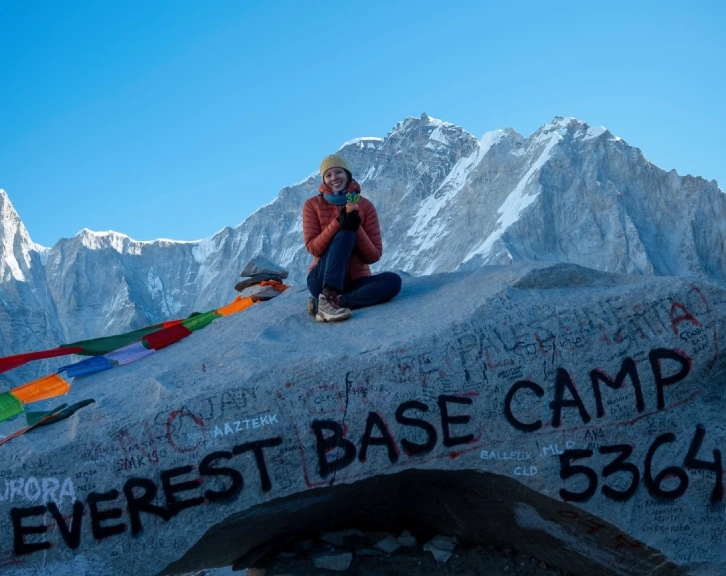
Alongside a TIMS card, the Everest Base Camp trek requires several other documents depending on the current route rules. Trekkers need an Everest Base Camp Trek Permit, Sagarmatha National Park Permit, a valid Nepal Visa and the applicable Khumbu Rural Municipality Permit or Khumbu Pasang Lhamu Permit. These documents cover national park entry - local area access and immigration requirements. Carrying your passport, permits and copies of important documents throughout the trek helps make checkpoint and entry checks easier.
Do You Need an Everest Base Camp Trek Permit Along With Your TIMS Card?
Yes, the Everest Base Camp trek requires an Everest Base Camp Trekking Permit along with your TIMS card. The permit is issued at the Monjo checkpoint and currently costs NPR 3000 for foreign trekkers - it is required for entering the Khumbu trekking area and should be kept safely with your other trekking documents throughout the journey.
Do You Need a Sagarmatha National Park Permit for the EBC Trek?
Yes, the Everest Base Camp trek requires a Sagarmatha National Park permit issued at the Monjo entry gate as the fee differs for SAARC and non-SAARC visitors. Sagarmatha National Park has been a UNESCO World Heritage Site since 1979, recognized for its natural beauty and biodiversity.
Do You Need a Nepal Visa Before You Apply for a TIMS Card?
Yes, a Nepal visa is required before applying for a TIMS card, either through a Nepal e-visa or visa-on-arrival to make sure your visa remains valid during the TIMS application, while your passport should have at least 6 months of validity remaining.
How Do You Get the Khumbu Rural Municipality Permit?
Trekkers get the Khumbu Rural Municipality permit at Lukla checkpoints where officials process the local permit before the trek continues. The fee is NPR 2000 and trekkers normally need their TIMS card and passport copy for processing.