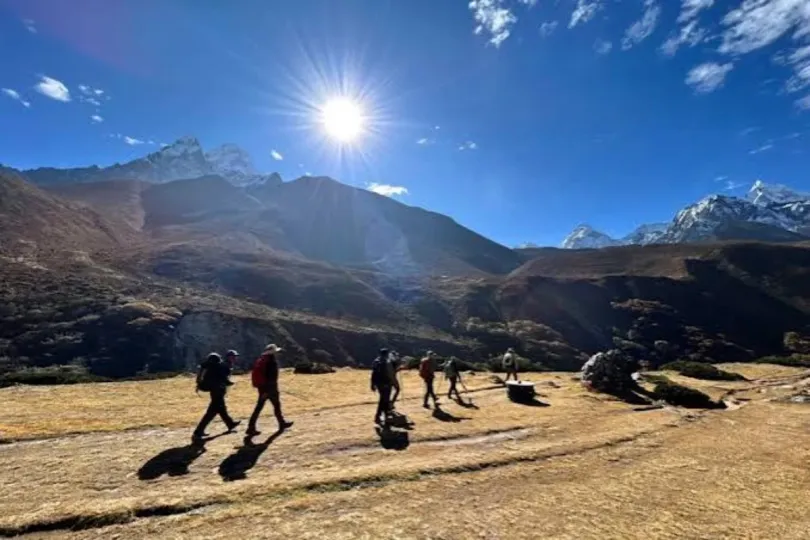
Everest Base Camp Trek in November falls right in the heart of the post - monsoon autumn season, widely regarded as one of the best windows for trekking in the Khumbu region. By this point, the monsoon rains have long cleared out, leaving behind clear skies and dry trails that make for far more comfortable and predictable hiking conditions. Visibility tends to be excellent throughout the month, with mountain views of Everest, Lhotse, Ama Dablam, and the surrounding giants of Sagarmatha National park often unobstructed for days at a stretch. This stable weather is one of the best draws, since trekkers can generally count on consistent conditions without the sudden storms or heavy cloud cover that plague other seasons.
It’s no surprise that November sits firmly within the peak trekking season, and teahouses, lodges and trails alike see a noticeable uptick in foot traffic. Booking accommodations a little ahead of time is a smart move, especially in popular stops like Namche Bazaar and Tengboche, where rooms can fill up fast during the busier weeks. That said, the trade-off for all this favorable weather is temperature, since it does get colder as the month progresses, particularly at higher elevations like Gorak Shep and Kala Pathar. Early November still feels relatively mild during the day, but by the later weeks, nighttime temperatures can drop well below freezing, so proper cold-weather gear becomes necessary.
Overall, for trekkers prioritizing visibility, stable trails, and reliable weather patterns over solitude, November remains one of the strongest months to attempt the Everest Base Camp trek, provided they’re prepared for the increasing chill and the crowds that come with peak season.
Is November a Good Month for the Everest Base Camp Trek?
Yes, November brings stable, dry, clear weather, making it one of the most reliable months for trekking. It's busy early November, thins out later, easing crowds as the month progresses. Lukla flights generally reliable, though cold nights near EBC demand proper gear. Festival timing is a bonus too, with Mani Rimdu and Tihar festivals often falling within this window.

What Is the Weather Like on the EBC Trek in November?

November lands right at the end of monsoon, and honestly, that timing is what makes it work so well for trekking. As the dry season begins, the rain pretty much stops altogether - trails firm up, the dust settles, and you get none of that unpredictable, sudden-shower nonsense from earlier months. There's also just something different about the air up there; that clear crisp air settles over the Khumbu region, and mornings end up feeling sharp and refreshing, even with the cold creeping in more each week. Put it all together and you get some of the best unobstructed mountain views all year - Everest, Nuptse, Ama Dablam, all standing out crisp against a deep blue sky. Trekkers who go in November tend to walk away with pretty spectacular photos, temperatures dropping steadily or not.
What Are the November Temperatures at Each Stop on the Trail?
Stop | Elevation | Day Temp (Nov) | Night Temp (Nov) |
Lukla | 2,829 m | 10 to 15°C | 0 to -2°C |
Namche Bazaar | 3,463 m | 8 to 11°C | -2 to -5°C |
Dingboche | 4,483 m | 0 to 6°C | -10 to -13°C |
Lobuche | 4,910 m | 0 to 4°C | -12 to -14°C |
Gorak Shep | 5,180 m | -1 to 3°C | -14 to -18°C |
Does It Snow or Rain on the EBC Trek in November?
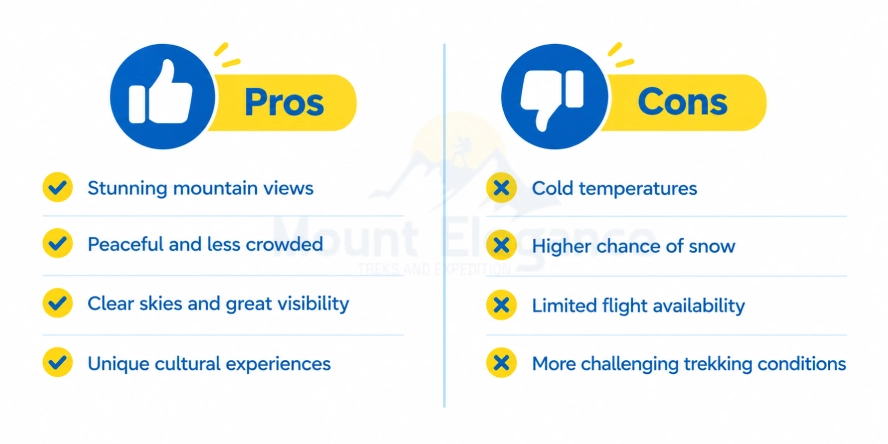
Rain is largely a non-issue by this point in the season, with near-zero rainfall recorded throughout most of November across the Khumbu region. Snow, on the other hand, is a different story, and trekkers can expect some light to moderate snowfall early November, particularly at higher elevations like Dingboche, Lobuche and near Everest Base Camp itself. This early dusting usually clears fairly quickly and trail conditions improve throughout the month as skies stay clear and temperatures stabilize. Compared to the muddy, slippery paths common during the wetter months, November Trekkers benefit from noticeably better ground grip than monsoon season, making the steep, rocky section far more manageable underfoot. That said, higher passes and exposed ridgelines can still see occasional light snow, so packing proper footwear and gaiters is a smart precaution for anyone heading toward the upper stretches of the trail.
What Are the Pros and Cons of Trekking to EBC in November?
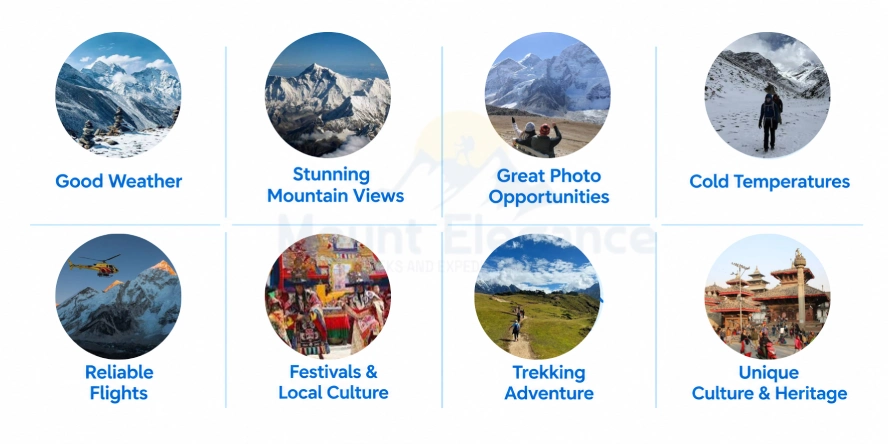
November stands out as one of the most popular months for the Everest Base Camp trek, thanks to its reliable weather and stunning visibility, but like any season, it comes with its own set of trade-offs worth weighing before you commit to a trek date.
What Are the Advantages of the November EBC Trek?

- Less Rain: Monsoon rains are gone. The trails stay dry and easy to walk on.
- Lively Trails: Many international trekkers visit in November. Teahouses and viewpoints are energetic and fun.
- Snow-Covered Mountains: Mountains have fresh snow. They look beautiful against the clear blue sky.
- Clear Mountain Views: The autumn air is clean. You get sharp views of Everest, Lhotse, and Ama Dablam.
- Stargazing and Night Photos: Night skies are clear. It is a great time to look at stars and take photos.
- Warm Daytimes: Walking during the day is comfortable in the lower villages. Nights and mornings stay cold.
- Reliable Flights: Flights to Lukla run smoothly. There are fewer flight delays than in monsoon or winter.
- Vibrant Festivals: You can see local festivals like Mani Rimdu and Tihar. They add rich local culture to your trip.
What Are the Drawbacks of the November EBC Trek?
- Busy Trails: Early November is peak season. Trails and viewpoints can feel very crowded with many trekkers.
- Book Teahouses Early: Lodges in main villages fill up fast. You must book your rooms in advance.
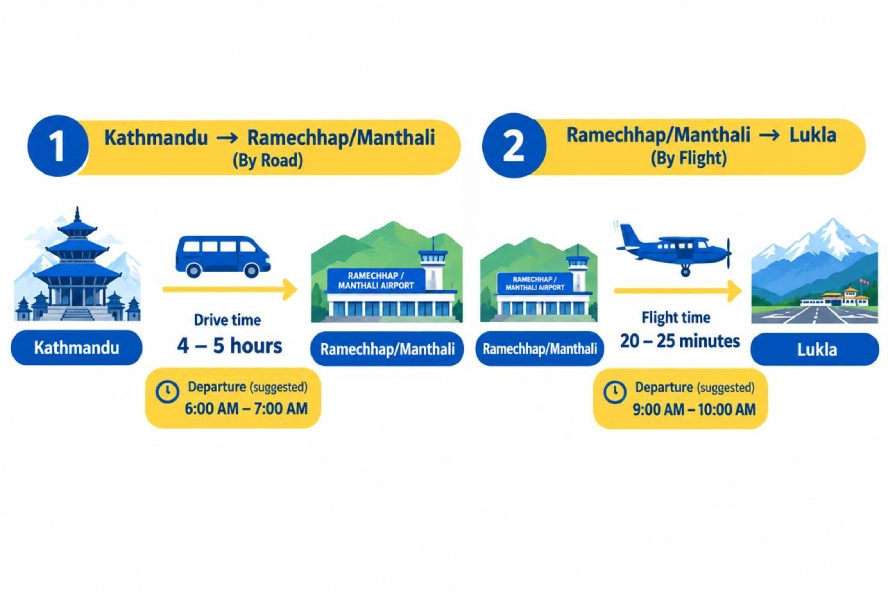
- Long Drive to Airport: Flights to Lukla often leave from Ramechhap. This requires a long 4 to 5-hour drive from Kathmandu.
- Freezing Cold Nights: Higher stops like Lobuche and Gorak Shep get extremely cold at night. You need heavy warm gear.
- Shorter Days: Sunlight does not last long in November. Start walking early so you arrive before dark.
Do Lukla Flights Operate Normally in November?

Lukla flights in November generally run more smoothly than during monsoon or winter months, but they are rarely as simple as a direct hop from Kathmandu. Due to seasonal congestion and air traffic management at Kathmandu’s airport, flights may depart from Manthali or Ramechhap instead, an arrangement that’s become fairly standard in recent years. Whether flights operate from Kathmandu directly or shift to Ramechhap depends on season and airport congestion, with authorities often rerouting Lukla- bound traffic during the busier autumn months to ease pressure on the main international airport.
If your flight departs from Ramechhap, be prepared for a roughly 4 hour drive from Kathmandu to Ramechhap, usually undertaken the evening before or in the early hours of departure day. Because mountain weather tends to be calmest in the morning, early 2-3 AM departures common from Kathmandu are typical, giving trekkers just enough time to reach Ramechhap before sunrise flights begin.
Even with November's relatively stable conditions, weather related delays remain a reality, particularly if fog or cloud cover rolls in over Lukla's short mountain runway. For this reason, most trekking agencies recommend 1-2 buffer days built into your itinerary, ideally both before and after the main trek, to absorb any unexpected delays without jeopardizing international flight connections home. Planning around this flexibility helps keep the overall trip stress-free.
How Crowded Is the EBC Trail in November?
November lands right in the thick of the region’s peak autumn season alongside September and October and it’s honestly one of the busiest stretches the Everest Base Camp trail sees all year - clear skies and steady weather pull in big numbers of trekkers all chasing the same reliable mountain views. Early in the month tends to be the busiest in early November, with flights into Lukla and teahouses along the route filling up fast as trekkers spill over from the tail end of October’s rush; by contract, things get noticeably quieter by late November, as numbers drop off and the pace on the ground eases up. Teahouses open throughout the month regardless, so finding a bed usually isn’t a real problem but advance lodge booking recommended advice still holds in early November specifically, since the most popular stops near Namche Bazaar and Tengboche can fill up fast on the busiest days.
What Is the Mani Rimdu Festival at Tengboche Monastery?

Mani Rimdu is a Sherpa Buddhist festival that unfolds at Tengboche Monastery every autumn, timed to the Tibetan lunar calendar and pulling in crowds from well beyond the Khumbu itself. Its roots trace back to Rongbuk Monastery in Tibet - the”mother monastery” that first held the festival in the early 20th century - tied to the teachings of Guru Rinpoche or Padmasambhava, the saint credited with bringing Buddhism to Tibet in the first place.
The full observance stretches across 19 days, most of it private: ritual, sand mandala construction, chanting all happening inside the monastery walls. Only the final 2-3 days open to the public, when trekkers, pilgrim and Sherpa families all show up together. Cham dances by lamas and monks take center stage - elaborate costumes, a packed monastery courtyard, each dance acting out the defeat of demons and the spread of Buddhist teaching.
Tengboche stays the biggest and best-known venue for Mani Rimdu, though smaller versions turn up at Thame and Chiwong monasteries too, each running on its own separate date somewhere within the same autumn stretch.
What Other Festivals Happen in Nepal During November?
November often lines up with Tihar, also known as Deepawali - one of Nepal’s biggest celebrations, and famously called the festival of lights, each day handed to a different figure: cows gets honored first, then dogs, cow before build toward the worship of Goddess Lakshmi, marking prosperity and good luck heading into the year ahead.
The whole thing wraps with bhai Tika, a day built entirely around thebrother-sister bond, where sisters give their brothers tika and garlands in exchange for gifts and a promise of protection. At the same time, Nepal’s Newar community runs its own parallel traditions - Newari Swanti and Mha puja among them, a self worship ritual tied to the Newari New Year. Down in the southern plains, communities mark the same stretch with Chhath puja in the Terai region, a tough multi-day ritual built around fasting and prayer by the riverside, all dedicated to the sun god.
What Does the EBC Trek Itinerary Look Like in November?
November fits neatly into the standard 12-14 day duration most trekking agencies build their Everest Base Camp itineraries around, since the stable autumn weather suits the usual pacing without much need for adjustment. The route follows the same familiar sequence used throughout the season: a flight into Lukla, a gradual climb through the Khumbu with two built-in acclimatization stops, a push to Everest Base Camp itself, and a side trip up Kala Patthar for the best direct views of Everest before heading back down.
Day | Stop | Notes |
1 | Kathmandu | Arrival in Kathmandu. |
2 | Phakding | Flight to Lukla then short, gentle first walking day |
3 | Namche Bazaar | Steep climb into the region's main hub |
4 | Namche Bazaar | Acclimatization day |
5 | Tengboche | Descent to river, climb to monastery village |
6 | Dingboche | Continued ascent up the valley |
7 | Dingboche | Acclimatization day |
8 | Lobuche | Final village before the glacier stretch |
9 | Gorak Shep | Last stop before base camp |
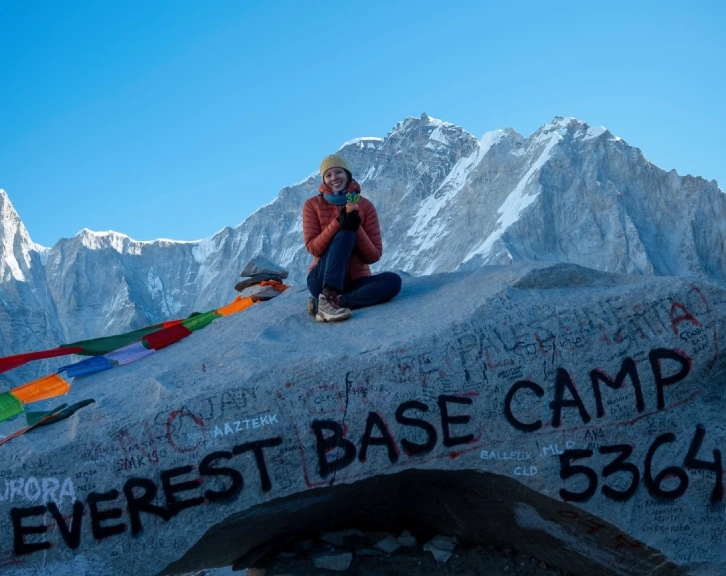
10 | Everest Base Camp (5,364m) | Day hike from Gorak Shep and back |
11 | Kala Patthar (5,545m) | Sunrise viewpoint, then descent begins |
12-14 | Return to Lukla | Retrace the route, flight back to Kathmandu |

How Should You Train for the November EBC Trek?

Training for a November EBC trek isn't fundamentally different from preparing for any other season, but the cold does raise the stakes a little on fitness and preparation. A solid training plan usually covers a few core areas: cardiovascular endurance for the long daily walking hours, leg strength for steady climbs and descents, and some general load-carrying practice with a daypack. Beyond the physical side, a bit of cold-weather conditioning helps too, since November mornings and evenings run noticeably colder than in peak spring or early autumn. The categories below break down what to focus on in the weeks leading up to departure, roughly in order of priority.
Why Does Cardiovascular Endurance Matter for This Trek?
Cardiovascular fitness is really the foundation of the whole trek. Most days on this route involve 7-8 hours daily walking, and that kind of sustained effort puts steady, repeated demand on the heart and lungs - a demand that only grows heavier as the air gets thinner with altitude. Good cardio conditioning improves oxygen circulation throughout the body, helping muscles and organs work efficiently even when there’s less oxygen available in the air, this matters even more at altitude, since strong cardiovascular fitness genuinely reduces hypoxia and AMs risk by helping the body adapt faster and cope better with lower oxygen levels overall.
Building this kind of endurance doesn’t require anything exotic - consistency matters more than intensity. Useful options includes;
- Running or fast walking, especially on bumpy or hilly ground
- Swimming which helps your breathe better without hurting your joints
- Jumping rope for quick and easy heart exercise
- Rowing which works your heart and strengthens your arms and upper body
- Biking especially up hills
- Climbing stairs which feels very similar to hiking up a mountain
Doing a mix of these several times a week in the months before departure builds real trail-ready stamina.
Why Do You Need Core Strength for This Trek?
A strong core does more work on this trek than most people expect. It provides real stability and balance on - rugged terrain, keeping the body steadier across uneven trails, loose rock, suspension bridges and steep descents. That stability matters directly for safety, since a solid core genuinely reduces fall and injury risk on the kind of unpredictable footing this route delivers day after day. Core strength also helps distribute backpack weight, more evenly, keeping the load off the shoulders and lower back so fatigue doesn't build up as fast over long trekking days.
Useful exercises for building this before the trek include:
- Planks, for overall core endurance
- Crunches, targeting the abdominal muscles directly
- Bicycle crunches, adding rotational strength
- Reverse crunches, focused on the lower abs
- Sit-ups, a classic core builder
- Leg raises, strengthening the lower core and hip flexors
A few sessions a week, mixing these exercises, builds the kind of core resilience that pays off with every step on uneven ground.
Why Does Flexibility Matter for This Trek?
The best approach usually combines two types of stretching: dynamic stretching as warm up before each day’s walk, getting blood flowing and muscles ready to move and static stretching to cool down afterward, helping the body recover and stay loose overnight. Key areas worth focusing on include:
- Quadriceps, heavily used on climbs
- Hamstrings, critical for descents
- Shoulder especially under pack weight
- Neck often tense form pack straps
- Lower back prone to stiffness on long days
- Calves worked constantly on uneven ground
Consistent stretching in the weeks before departure keeps the body noticeably more resilient on the trail.
Why Do You Need Strong Legs for This Trek?
Strong legs form the foundation of any successful high-altitude trek, especially given the relentless uphill and downhill sections that define trails like Everest Base Camp. Leg strength provides the power and endurance for steep terrain, allowing trekkers to push through long climbing days without their muscles giving out halfway through. Beyond raw power, a strong leg is also crucial for shock absorption, cushioning the impact of thousands of steps on uneven, rocky ground. This, in turn, reduces joint injury risk, protecting knees and ankles from the strain of repetitive descents over multiple trekking days.
To build this kind of strength, a solid pre-trek routine should include:
- Squats
- Lunges
- Calf raises
- Leg extensions
- Leg curls
- Deadlifts
- Stair climbing
Ideally, trekkers should commit to 3-4 weeks training before departure, gradually increasing intensity to build both strength and muscular endurance suited to the demands of multi-day mountain trekking.
How Do You Avoid Altitude Sickness on the November Trek?

Altitude sickness - or Acute Mountain Sickness (AMS), if you want the medical term - is honestly one of the bigger worries for anyone heading up toward Everest Base Camp, no matter what time of year you go. Watch for headache, breathlessness, palpitations, nausea, loss of appetite, sleeplessness, plus general fatigue that tends to creep in slowly as you climb higher. Risk increases above 2,500-3,000m, so once you're past Namche Bazaar and still gaining elevation into the Khumbu region, it's worth paying closer attention to how your body's actually feeling.
Pacing yourself is really the best defense here, which is exactly why most itineraries build in acclimatization days at Namche Bazaar and Dingboche - giving your body a proper chance to catch up before you push higher. On these rest days, a short hike up to higher ground and then back down to sleep tends to help the body adjust that much better.
Hydration matters more than people expect too, so lean into hydration - soup, ginger tea, warm water - really anything warm and fluid throughout the day works in your favor. And it's worth skipping the temptation to avoid alcohol and smoking altogether, since both just make symptoms worse and mess with your body's ability to adjust naturally.
If symptoms show up and don't ease with rest, don't wait it out - the rule is simple: descend immediately if symptoms worsen, rather than gambling on pushing forward into something more serious like HAPE or HACE. And because the terrain gets pretty remote up there, most trekkers also sort out helicopter evacuation insurance above 5,000m beforehand, just so emergency support is actually reachable if things go wrong.
What Should You Know About Food and Eating Meat on the Trail?
Food on the trail is pretty simple, mostly hearty staples, and dal bhat ends up being the meal most trekkers lean on - partly because of the unlimited refills, partly because it just gives you the energy to keep walking all day. Warm drinks help too; ginger tea settles the stomach and takes the edge off some of that altitude discomfort, and honestly, warm soups for hydration work better than you'd think for staying fluid-balanced instead of just chugging cold water all day.
Meat's a different story though. Most guides will tell you straight up to avoid meat at high altitude teahouses, and it's not just caution for caution's sake. Since meat isn't fresh - it's transported from lower villages over several days with no real refrigeration along the way, food safety genuinely becomes something to worry about the higher you go. There's a cultural piece to this too - Sherpa Buddhist practice discourages killing living beings, so livestock generally isn't slaughtered in these higher villages at all. Sticking with vegetarian options - dal bhat, noodles, vegetable dishes - is really just the safer, more respectful call while you're up there.
What should you pack for the EBC Trek in November?
Packing for the EBC trek in November requires preparation for cold, dry and changing high-altitude conditions. Your essentials should cover warm clothing with trekking footwear - sleeping gear, personal medications, basic toiletries, electronics and important documents. Layering is especially useful because temperatures can vary considerably between sunny afternoons - freezing mornings or nights. A well-planned packing list helps keep you warm, comfortable and prepared throughout the trek.
What Clothing Should You Bring for the November Trek?

- Thermal base layers: Pack thermal tops and bottoms as your first layer. They help keep your body warm and retain heat during cold periods, especially when you gain elevation
- Fleece jacket: A warm fleece jacket works well as a middle layer as it provides insulation while remaining breathable and comfortable during active walking.
- Insulated down jacket: Bring a good insulated down jacket for colder sections and chilly evenings. It becomes especially useful at higher elevations where temperatures can drop significantly.
- Waterproof outer shell: A waterproof and windproof outer will protect your inner layers from rain, snow and strong mountain winds so, choose one that is lightweight and easy to pack.
- Trekking pants and shorts: Carry comfortable, quick-drying trekking pants for colder conditions and shorts for warmer afternoons at lower elevations.
- Warm gloves:Insulated gloves keep your hands warm during early-morning starts and cold, windy sections. Carrying good-quality gloves can help you from freezing temperatures at high elevations.
- Woolen or fur-lined cap:A warm woolen or fur-lined cap protects your head and ears from cold temperatures as sometimes the weather can be cold and windy.
- Buff or scarf: A buff or scarf provides extra protection around your neck and face against wind, dust and cold air.
- Warm trekking socks:Carry several pairs of warm wool or thermal socks to keep your feet dry - warm and comfortable throughout long walking days.
- Sweat-absorbing T-shirts: Pack several sweat-absorbing, quick-drying T-shirts for daytime trekking which will help manage moisture and keep you comfortable during climbing to uphill sections.
What Essential Gear Should You Bring for the November Trek?

- Rucksack or duffel bag: Choose a strong, lightweight rucksack or duffel bag with enough capacity for your clothing, personal items and trekking essentials. A waterproof cover is also useful for protecting your belongings from unexpected rain or snow.
- Daypack: A comfortable 20/30-liter daypack is useful for carrying water, snacks, sunscreen, extra layers, valuables and other items you may need during the day.
- Sturdy hiking boots: Wear well-broken-in, waterproof hiking boots with good ankle support and durable soles for rocky, uneven and sometimes icy trails which make your walking days more comfortable and keeps your feet relaxed.
- Trekking poles: Poles provide stability on steep ascents and descents while helping reduce strain on your knees during long walking days.
- Sleeping bag rated -15 to -25°C: A warm sleeping bag is essential for November nights - especially at higher elevations where temperatures can fall well below freezing. A good quality sleeping bag is very essential to keep yourself warm and comfortable during the night.
- Headlamp with spare batteries: Useful for early morning starts, late arrivals and moving around lodges after dark.
- Polarized sunglasses: Protect your eyes from strong mountain sunlight and glare, particularly at higher elevations. A snowy path can make you go snow blind if you don't have good quality polarized sunglasses.
- Sunscreen: Bring high-SPF sunscreen regularly because UV exposure becomes stronger at altitude even when the daytime temperature is cold the UV rays of sun in higher elevations can still be very strong.
- Power bank: Keep your phone, camera and other devices charged when charging facilities are limited.
- Quick-dry towel: A lightweight quick-dry towel is convenient for personal hygiene and dries quickly after use. Because you have to walk for 5-6 hours a day in sunny weather so make sure you have a quick-dry towel.
- Flip-flops: Useful for relaxing inside teahouses and giving your feet a comfortable break after wearing hiking boots all day.As your feet needs to be free and relaxed for your next walking days on a long trail.
What Health and First Aid Items Should You Pack?
- Diamox: Bring Diamox (acetazolamide) if it has been advised for you by a licensed healthcare provider. It can be used to assist in preventing altitude sickness but it must not substitute for adequate acclimatization.
- Paracetamol: Effective for mild headaches, fever, or common aches that may arise during extended trekking days as you have to walk through different uneven trekking trails, facing different weather.
- Anti-diarrheal drugs: Carry appropriate medication for unexpected diarrhea, oral rehydration salts, to aid in handling stomach issues and lower the chance of dehydration.
- Pain-relief ointment: A tiny ointment can offer short-term comfort for fatigued muscles, slight pains and tightness following prolonged walking.
- Purification tablets for water: Bring purification tablets as a contingency when safe drinking water is lacking or the source is questionable.
- Dressings, antiseptic solution and blister relief: Pack essential first-aid items for minor injuries - abrasions and blisters resulting from extended walking.
- Oximeter or pulse checker: Helpful for tracking blood oxygen levels and pulse rate in high altitudes, although results should be interpreted in conjunction with symptoms.
- Sunscreen, lip balm and hand sanitizer: Shield bare skin from intense UV radiation - avoid chapped lips and ensure hand cleanliness during your hike.
What Permits and Fees Are Required for the November Trek?

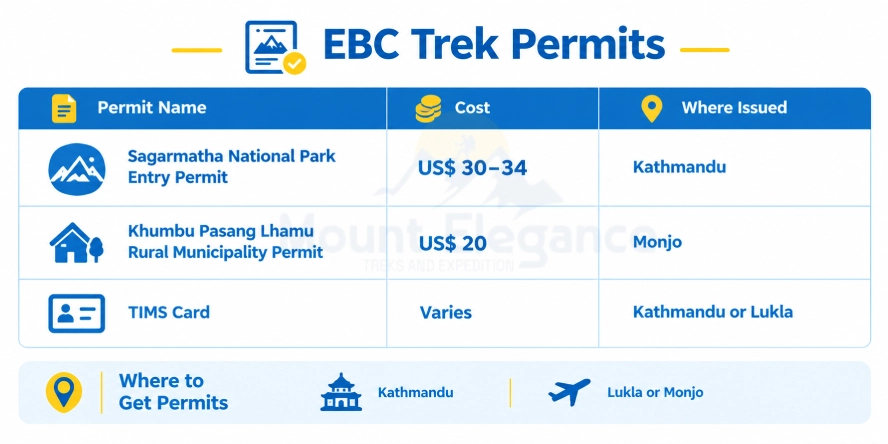
If you are planning a November trek in the Everest region - you need to arrange the required permits before or during the journey. These permits support conservation, local administration and trekking management across the Khumbu area. Keep your original passport details and some Nepalese cash available because permit offices may require identification and payment at the time of issue.
Sagarmatha National Park Entry Permit: This permit is required to enter Sagarmatha National Park, a protected mountain area covering much of the Everest trekking route. The fee is generally around US$30–34, depending on applicable taxes and current regulations.
Khumbu Pasang Lhamu Rural Municipality Permit: Trekkers also need a local entry permit for Khumbu Pasang Lhamu Rural Municipality. It costs approximately US$20 and contributes to local tourism management and infrastructure.
TIMS Card: A Trekkers Information Management Systems (TIMS) card may be required depending on your trekking arrangement and current regulations. It helps maintain trekker records and supports safety and monitoring.
Where to Get Permits: Depending on the permit, you can arrange them in Kathmandu - Lukla or Monjo. Check current requirements before departure because fees, issuing points and TIMS rules can change.
Do You Need a Guide or Porter for the November Trek?
A guide is legally required for trekking in Nepal major trekking regions which include routes in the Everest region. For a November trek, hiring a licensed guide is especially useful because autumn is a busy trekking season and experienced guides can help with navigation - accommodation, weather changes and altitude-related concerns. A guide generally costs around $25 per day, depending on experience, route and services included.
A porter is not always required - but hiring one can make your trek more comfortable by reducing physical strain. A porter can typically carry around 15–20 kg of your shared trekking gear allowing you to walk with only a light daypack. Porter costs generally range from $15 per day - depending on the trek and arrangement.
Hiring both a guide and porter also provides practical support throughout your journey while contributing directly to the local economy by creating employment for trekking professionals and their families. For safety, fair wages and reliable arrangements, it is best to book your guide and porter through a licensed trekking agency. Confirm what is included in the daily rate, such as meals, accommodation, insurance and transportation before starting your trek.
How Much Does the EBC Trek Cost in November?

Trekking to Everest Base Camp in November is a popular choice because the weather is clear, dry, and great for mountain views. Since November is the high season in Nepal, prices are fairly set and flights and teahouses fill up quickly.
If you choose an all-inclusive agency package, expect to pay between $1050 and $1600+ per person for a standard 12 to 14-day trip. The round-trip flight to Lukla will cost around $500. You will also need about $50 total for mandatory local permits. On the trail, everyday costs are simple: teahouse rooms run $25 to $30 a night, and meals cost around $10 each, though food gets more expensive the higher you climb. Most trekkers also hire a local guide for approx $25 a day and a porter around $15 a day to carry gear and help navigate.
Expenses | Estimated cost |
Lukla flight ( round trip ) | Approx 500 USD |
Permit | Approx 50 USD |
Accommodation | Approx 25 to 30 USD per day |
Meals | Approx 10 USD per meaL |
Guide | Approx 25 USD per day |
Porter | Approx 15 USD per day |
Overall trek package | Approx 1050 to 1600 USD |
Do You Need Travel Insurance for the November EBC Trek?
Yes, travel insurance is an absolute must for an Everest Base Camp trek in November. Standard travel policies usually stop coverage at 3000 meters, so you need a specialized high-altitude plan. The most important feature is emergency helicopter evacuation coverage above 5,000 meters, which ensures you can be airlifted immediately if you suffer severe altitude sickness or injuries near base camp 5364m. Your policy should also include broad medical expense coverage to pay for any doctor visits or hospital stays in Nepal. Mountain weather in the Himalayas is unpredictable which makes flight cancellation and delay coverage essential for frequent Lukla flight disruptions. Finally - baggage loss coverage protects your expensive trekking gear and personal items if items go missing during transit or on the trail. A reliable 30 day policy from an adventure insurer costs approximately $150 and provides complete peace of mind on the mountain.
What Alternate Routes Can You Take in November?
In November, the clear skies and steady weather with good weather conditions makes a great time to explore alternate routes around Everest. Instead of taking the busy main trail to Base Camp you can trek toward the peaceful Gokyo Lakes and cross the dramatic Cho La Pass. For more adventure the challenging Three Passes Trek links together high mountain passes with breathtaking panoramic views. You can also start further back in Jiri or Phaplu to enjoy a quieter - gradual walk through green hills before joining the main route to Namche.
What Is the Three High Passes Trek?

The Three High Passes Trek is a demanding circuit that crosses three of the highest navigable mountain passes in the Everest region: Kongma La, Cho La and Renjo La. Elevating the standard Everest Base Camp journey into a much more challenging and demanding variant, this route takes advantage of the main trails and goes deep into remote Himalayan wilderness. Because it involves uneven, rugged terrain with steep glacial moraines and altitude topping 5300 meter as this expedition is recommended for experienced trekkers only who possess high fitness levels and previous high-altitude experience. In return it offers unmatched panoramic views of iconic peaks like Everest, Lhotse and Makalu.
What Is the Gokyo Lakes and Renjo La Pass Route?

The Gokyo Lakes and Renjo La Pass offers a stunning alternative route to the standard Everest Base Camp trail taking trekkers through a high-altitude wilderness which is centered around six turquoise glacial lakes. This journey takes adventurers alongside the massive Ngozumpa Glacier, one of the largest glaciers in the Himalayas before climbing towards the Gokyo Ri viewpoint for beautiful panoramic views of Mount Everest - Lhotse, Makalu and Cho Oyu. Crossing the dramatic Renjo La Pass at 5360 meters rewards trekkers with a stunning view of Golyo lake and its clear blue lake.
What Is the Everest Base Camp Helicopter Trek?

The Everest Base Camp Helicopter Trek is a time-saving alternative to a traditional EBC trek that combines trekking with a helicopter flight. It can minimize the trek day journey in fewer days than it normally takes. This option is suited to travelers with limited time or mobility who still want to experience the Everest region. Normally - the journey begins with a helicopter flight from Kathmandu, with a stopover near Everest Base Camp or Kala Patthar for mountain views and sightseeing. After the flight, travelers continue selected sections of the route on foot. Because it combines private helicopter transportation with trekking services it likely becomes more expensive than a standard EBC trek.
What Is the Classic Route via Jiri or Salleri?

The classic Everest Base Camp route via Jiri or Salleri is a historic path used by some of the earliest Everest expeditions. Rather than flying directly to Lukla, trekkers begin by traveling overland from Kathmandu to Jiri or Salleri before going on foot toward the Everest region. This longer approach adds more villages - forests and traditional mountain landscapes to the journey making it appealing to trekkers who want a deeper experience of the region. Depending on the itinerary and starting point the route can require more than 20+ total trekking days.
What Wildlife and Landscapes Might You See in November?
November is a great time to see wildlife and different kinds of landscapes during the Everest Base Camp trek through Sagarmatha National Park. As you trek through lower sections you can pass through beautiful rhododendron and pine forests - where Himalayan tahr may sometimes be spotted although Red pandas also live in this region, but they are rare to spot on the trekking trail. Snow leopards that are rarely seen are also present at higher elevations but are extremely rare to encounter. The landscape changes as you climb - with rocky valleys, high mountain passes and impressive glaciers. Khumbu Glacier is one of the most striking sights along the route. You will also cross or follow rivers such as Dudh Koshi and Imja Khola river. Clear November skies can reveal spectacular views of Everest - Lhotse, Nuptse, Ama Dablam, Thamserku, Cho Oyu, Makalu and Pumori.
Is November a good month for the Everest Base Camp Trek?
Yes, November is a good month for the Everest Base Camp trek as it falls at the end of autumn season offering generally stable weather, clear mountain views and mostly dry trails. However, the temperatures become colder as November month progresses, especially at higher elevations, so trekkers should prepare with warm layers and suitable cold-weather gear.
How cold does it get during the EBC trek in November?
During the Everest Base Camp trek in November, the daytime temperatures near Everest Base Camp and Gorak Shep can raise from around 0°C to 5°C. At higher elevations, nighttime temperatures can drop gradually, often reaching -10°C to -20°C. Proper insulated clothing, warm sleeping gear and cold-weather protection are essential.
Do Lukla flights operate normally in November?
Yes, generally Lukla flights operate in November as it is part of the main trekking season. However - the flights may sometimes depart from Manthali or Ramechhap instead of Kathmandu. Weather can still cause delays or cancellations so it is wise to keep one or two buffer days in your itinerary.
Will teahouses and restaurants be open in November?
Yes, most teahouses and restaurants along the Everest Base Camp route remain open in November as it is part of the busy autumn trekking season. Accommodation and dining services are generally available throughout the route. so - popular stops can become crowded, so you may need to share rooms or accommodation on busy nights.
Is the EBC trek crowded in November?
Yes, the Everest Base Camp trek can be busiest in early November - especially during the first half of the month, when autumn trekking conditions are still at their best. Crowds usually begin to thin out by late November as temperatures drop, making trails and teahouses quieter.
Do I need a guide or porter for the EBC trek in November?
Yes, you need a licensed guide for the EBC trek in November, as guided trekking is required in Nepal’s Everest region. A porter is optional but highly recommended for carrying your gear and reducing physical strain. Hiring local guides and porters is also an affordable way to support the local economy.
Can beginners do the Everest Base Camp Trek in November?
Yes, beginners can do the Everest Base Camp trek in November with reasonable physical fitness, proper preparation and with slow and steady pace. November generally brings stable weather and dry trekking trails making route navigation easier than during the monsoon or colder winter months. But the trekkers should still prepare carefully for high elevation and cold weather conditions.
When Is the Best Time to Trek Everest Base Camp?
The best time to trek Everest Base Camp is spring (March–May) or autumn (September–November) both offering stable weather and clear mountain views. Spring brings blooming rhododendrons and mild temperatures; autumn offers the clearest skies and driest trails post-monsoon. Winter and monsoon are possible but harsher, with extreme cold or heavy rain limiting visibility and comfort along the route.
Is Base Camp Trek in June better than November?
November is generally the better choice. It falls within autumn, one of the two peak trekking windows, with stable weather, clear skies, and reliable mountain views. June sits at the start of monsoon season bringing daily rain, muddy trails, leeches at lower elevations, and frequent cloud cover that can obscure Everest and the surrounding peaks entirely.
That said, June does offer thinner crowds, lower teahouse prices, and lush, green scenery for trekkers who don't mind the trade-offs and prioritize solitude over guaranteed visibility.
Is December harder than November for EBC Trek?
Yes, December month is generally harder than November. Temperatures drop significantly further, especially at night, with readings well below freezing at higher elevations like Gorak Shep and Everest Base Camp itself. Early winter snowfall becomes more likely as December progresses, which can complicate trail conditions and occasionally disrupt Lukla flights.
November, particularly early-to-mid November, still falls within the tail end of autumn's stable weather window, offering a milder transition before winter fully sets in. By late December, trekkers face colder days, harsher nights, and a higher chance of snow-related delays, making it a tougher, though still doable, month for the trek.