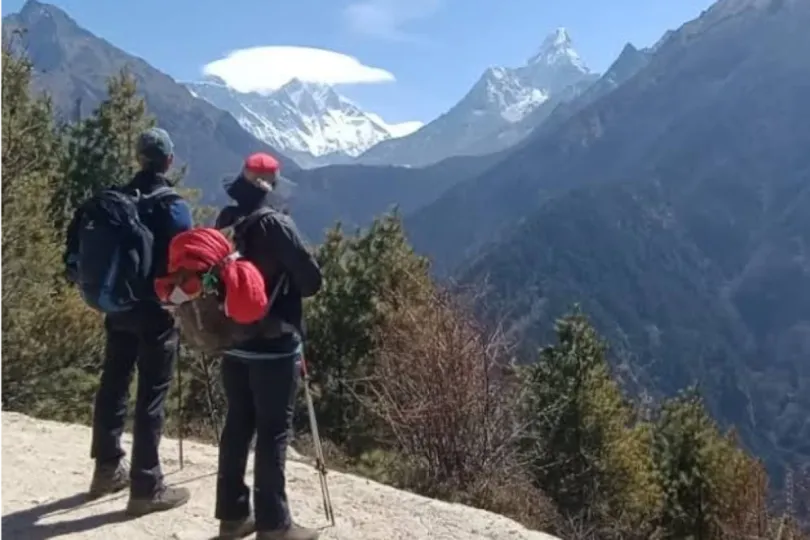
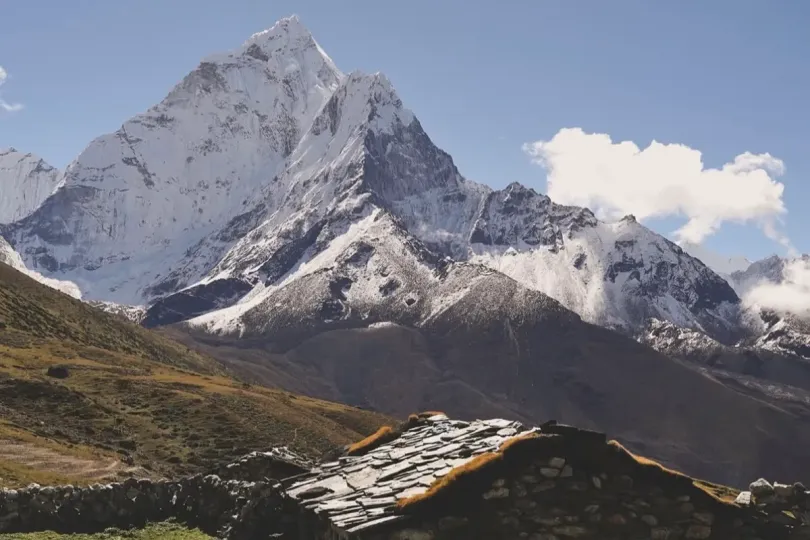
October is widely considered the absolute best month for the Everest Base Camp (EBC) trek. EBC trek in October falls right in the middle of Nepal’s autumn trekking season and it’s easy to see why so many trekkers choose this month. Clear skies, steady weather and easy trails make it a great time to walk through the Khumbu Region and into Sagarmatha National Park, all the way to Everest Base Camp at 5364 meters. From there, you get an incredible close-up view of Mount Everest, standing tall at 8849 meters. Most trekkers follow a 12 to 14 day itinerary, moving slowly through Sherpa villagers and forests to help the body adjust to altitude. October also brings the colorful Mani Rimdu Festival, giving trekkers a chance to see traditional dances and local buddhist culture up close. Many also hike up to Kala Patthar at 5545 meters for one of the best views of Everest on the whole trek.
What Is the Everest Base Camp Trek Like in October?

The Everest Base Camp Trek in October is a rewarding journey that takes trekkers through some of the most stunning scenery in the Khumbu Region, covering a round-trip distance of roughly 130 km over the course of 12 to 14 days. The adventure begins in Lukla, sitting at 2846 meters where trekkers set off on a gradually ascending path through forests, suspension bridges and traditional Sherpa villages. As the trail winds deeper into Sagarmatha National Park, the landscape opens up to reveal sweeping mountain views with peaks like - Everest, Lhotse and Ama Dablam rising in the distance.
October falls squarely within the autumn post-monsoon season which means trekkers benefit from clear skies, dry trails and stable weather throughout most of the journey, making navigation easier and views more consistent than other times of year. The trek reaches Everest Base Camp itself at 5364 meters, a milestone moment for most trekkers before many continue on to Kala Patthar - the highest point of the journey at 5545 meters for what’s often considered the best close-up view of Everest on the entire route. With good weather, manageable trail conditions and steady acclimatization built into the itinerary, October offers one of the most balanced and enjoyable versions of this classic Himalayan trek.
Why Is October a Good Month to Trek Everest Base Camp?

October is a good month to trek Everest Base Camp because it combines near-perfect weather with a lively culture atmosphere, making it one of the most rewarding times of year to attempt the trek.
- Clear Himalayan views from stable post-monsoon air - with the monsoon clouds gone the air stays crisp and dust-free giving trekkers consistently clear views of Everest, Lhotse, Ama Dablam and other surrounding peaks throughout the journey
- Peak autumn trekking season - October sits right in the middle of autumn, widely regarded as one of the two best trekking windows of the year drawing trekkers from around the world
- Minimal rainfall compared to the monsoon months - rain become rare this time of year keeping trails dry, firm and much easier to navigate than the muddy conditions seen earlier in the year
- Well stocked teahouses at full operation - with peak season in full swing, teahouses along the route run at full capacity, offering reliable food, warm rooms and consistent service
- Festival season atmosphere (Dashain, Tihar, Mani Rimdu) - trekkers often get to witness major Nepali festivals during this time, adding a rich cultural layer to the trek through decorated villages, local celebrations and traditional monastery events like Mani Rimdu
Is October Peak Season for the Everest Base Camp Trek?
Yes, October is peak season for the Everest Base Camp Trek because it sees some of the highest trekker numbers of the year, matched only by November. As part of the autumn trekking season October offers the kind of stable weather and clear mountain views that draw large crowds from around the world. This surge in popularity means Lukla flights reach their highest demand of the year, so booking well in advance becomes especially important to avoid last-minute availability issues. Teahouses along the route also operate at full capacity during this time, filling up quickly in busier villages like Namche Bazaar and Tengboche. While the trail feels livelier and more social, trekkers should plan ahead to secure flights and accommodation smoothly.
Are Mountain Views Clearer in October Than Other Months?

Mountain views are clearer in October than in the monsoon months because humidity drops sharply once the monsoon clears out, leaving the air noticeably crisper and less hazy. With far less moisture lingering in the atmosphere, cloud cover becomes minimal, especially during morning and midday hours when most trekkers are on the trail. This creates ideal conditions for spotting iconic peaks like - Mount Everest, Lhotse, Nuptse and Ama Dablam in sharp detail against blue skies. As a result, October consistently falls into the clear Himalayan views classification, alongside other autumn months, making it one of the most reliable times of year for trekkers hoping to capture unobstructed mountain photography and panoramic views throughout the journey.
What Is the Weather Like on the Everest Base Camp Trek in October?
The weather on the Everest Base Camp Trek in October is widely considered some of the most stable and pleasant of the entire year, falling firmly into the post-monsoon, clear-sky weather classification that autumn is known for. Daytime temperatures stay comfortable at lower elevations and drop steadily as trekkers gain altitude, while nights turn noticeably cold across the entire route, especially above 4000 meters. Rainfall is minimal this time of year, since the monsoon clouds have cleared out by early October, leaving trails dry and skies mostly clear for consistent mountain views throughout the trek.
Location | Elevation | Daytime Temp Range | Nighttime Temp Range |
Namche Bazaar | 3,440 m | 12°C to 15°C | -2°C to 3°C |
Dingboche | 4,410 m | 8°C to 12°C | -6°C to -2°C |
Lobuche | 4,940 m | 5°C to 9°C | -10°C to -5°C |
Gorak Shep | 5,164 m | 3°C to 7°C | -12°C to -8°C |
Kala Patthar | 5,545 m | 0°C to 5°C | -15°C to -10°C |
What Are October Temperatures by Village on the EBC Route?
Village-by-vilage temperatures on the October Everest Base Camp trekking route range from mild, comfortable days lower down to sharply cold nights as elevation increases. Understanding these shifts helps trekkers pack the right layers for each stage of the journey.
Village | Elevation | Daytime High | Nighttime Low |
Phakding | 2,610 m | 16°C to 18°C | 2°C to 5°C |
Namche Bazaar | 3,440 m | 12°C to 15°C | -2°C to 3°C |
Tengboche | 3,867 m | 10°C to 13°C | -4°C to 0°C |
Dingboche | 4,410 m | 8°C to 12°C | -6°C to -2°C |
Lobuche | 4,940 m | 5°C to 9°C | -10°C to -5°C |
Gorak Shep | 5,164 m | 3°C to 7°C | -12°C to -8°C |
Kala Patthar | 5,545 m | 0°C to 5°C | -15°C to -10°C |
What Festivals Happen During an October EBC Trek?

October on the Everest Base Camp Trail overlaps with several major festivals, making it one of the richest times of year to experience Nepali and sherpa culture firsthand. Dashain, the country’s biggest and most widely celebrated festival, often falls within this window, bringing a festive spirit to villagers along the route as families gather, homes are decorated and communities come together for traditional rituals. Shortly after, Tihar follows, known for its vibrant lights, offerings and celebrations honoring different animals and family bonds over several days.
Perhaps most relevant to trekkers heading through the Khumbu region is the Mani Rimdu Festival, a significant Buddhist celebration rooted in Sherpa culture. This festival is centered around Tengboche Monastery, one of the most important spiritual sites along the entire trekking route, where monks perform elaborate masked dances symbolizing the victory of good over evil. Trekkers passing through during this period often get the rare chance to witness these ceremonies in person offering a deeper look into the region’s religious traditions and community life. Together, these festivals add a layer of cultural richness to the October trek that goes well beyond the scenery, giving trekkers a genuine glimpse into the customs, spirituality and daily life of the Sherpa people living along the Everest trail.
When Is the Mani Rimdu Festival at Tengboche Monastery?

The Mani Rimdu Festival at Tengboche Monastery in 2026 falls in October, when tengboche Monastery hosts the colorful Mani Rimdu festival, a culmination of Buddhist celebrations featuring a religious gathering, songs, ritual dances and enactments of the lives of legendary figures according to the Nepal Tourism Board(NTB). Tengboche Monastery, the largest gompa in the Khumbu region, sits on the ridge with sweeping views of - Everest, Lhotse and Ama Dablam making it a natural centerpiece for the celebration. During the festival, monks perform elaborate masked Cham dances, drawing pilgrims, trekkers and photographers eager to witness this deeply rooted expression of Sherpa culture. Visitors are welcome to take part in the festival and many trekkers pan their journey specifically to coincide with the event. For Buddhists, the festival carries real spiritual weight, symbolizing protection and the triumph of good over evil making it one of the most meaningful cultural stops along the Everest Base Camp trekking route.
Do Dashain and Tihar Fall During the October Trekking Season?
Dashain and Tihar fall during the October trekking season in most years, though the exact dates shift because both follow Nepal’s lunar calendar. According to the Nepal Government holiday calendar, Dashain 2026 runs from October 11 to 25, with the main tika day falling on October 21, while Tihar follows later from November 8 to 11. Dashain - Nepal’s largest Hindu festival and Tihar - the festival of light, both carry deep cultural weight across the country and their dates shift year to year based on lunar calculations rather than fixed Gregorian dates. This matters for trekkers since porters and guides often travel home to celebrate with family during festival week, which can make availability tighter and advance booking more important for anyone planning an October trek around this period.
How Crowded Is the Everest Base Camp Trail in October?

The Everest Base Camp Trail is at its most crowded in October because this month falls right at the Heart of the peak autumn trekking season, when weather conditions are at their most favorable and mountain views are consistently clear. Alongside November, October sees the Highest monthly trekker volume of the entire year, drawing hikers from all over the world who want to experience the trail under ideal conditions. As a result, popular stops like Namche Bazaar, Tengboche and Dingboche often feel bustling with trekkers from dozens of countries sharing the same paths, dining halls and viewpoints throughout the journey.
Will the Everest Base Camp Trek be crowded in October? Yes, it generally is especially compared to quieter months like June or December. The trail’s popularity means teahouses fill up quickly, particularly in smaller villages with limited rooms, so booking accommodation in advance is strongly recommended to avoid scrambling for a bed after a long day of walking. Despite the crowds, many trekkers find the busier atmosphere adds to the experience, offering more chances to connect with fellow hikers and share the journey. Still those hoping for a quieter, more solitary trek might want to consider shoulder months instead where trails are calmer and accommodation is easier to secure without advance planning.
What Wildlife and Vegetation Can You See on the EBC Trek in October?
Wildlife and vegetation on the Everest Base Camp Trek in October include a rich mix of species and plant life shaped by the varied elevations found throughout Sagarmatha National Park, a protected UNESCO World Heritage site known for its biodiversity.
- Sagarmatha National Park flora and fauna - the park is home to a wide range of species adapted to high-altitude Himalayan conditions, making it one of the richest wildlife zones along the entire trekking route
- Himalayan tahr - a wild goat species often spotted grazing on steep, rocky slopes, particularly around the middle sections of the trek
- Musk deer - a shy, elusive animal found in forested areas at lower elevations, though sightings require patience and a keen eye
- Impeyan pheasant - Nepal's national bird, known for its strikingly colorful plumage, occasionally seen darting through underbrush near lower trail sections
- Rhododendron and birch forest at lower elevations - dense forest cover dominates the trail below Namche Bazaar, offering shade and scenic variety during the early days of the trek
- Alpine vegetation above Namche Bazaar - as elevation increases, trees thin out and give way to hardy alpine plants, mosses, and shrubs suited to the harsher, thinner air found higher up the route
What Is the Day-by-Day Everest Base Camp Itinerary in October?

The standard Everest Base Camp Trek itinerary in October runs 12 to 14 days and covers a well-paced route through the Khumbu region, gradually gaining altitude to help trekkers acclimatize properly while taking in some of the most stunning mountain scenery in the world.
Day | Route | Elevation |
1 | Arrival in Kathmandu | 1,400 m |
2 | Flight to Lukla, trek to Phakding | 2,860 m - 2,610 m |
3 | Phakding to Namche Bazaar | 3,440 m |
4 | Acclimatization in Namche Bazaar | 3,440 m |
5 | Namche Bazaar to Tengboche | 3,860 m |
6 | Tengboche to Dingboche | 4,410 m |
7 | Acclimatization in Dingboche | 4,410 m |
8 | Dingboche to Lobuche | 4,940 m |
9 | Lobuche to Gorak Shep, Everest Base Camp | 5,180 m - 5,364 m |
10 | Kala Patthar climb, trek to Pheriche | 5,545 m - 4,240 m |
11 | Pheriche to Namche Bazaar | 3,440 m |
12 | Namche Bazaar to Lukla | 2,860 m |
13 | Flight from Lukla to Kathmandu | 1,400 m |
14 | Departure from Kathmandu | — |
What Difficulties Might You Face on the Everest Base Camp Trek in October?
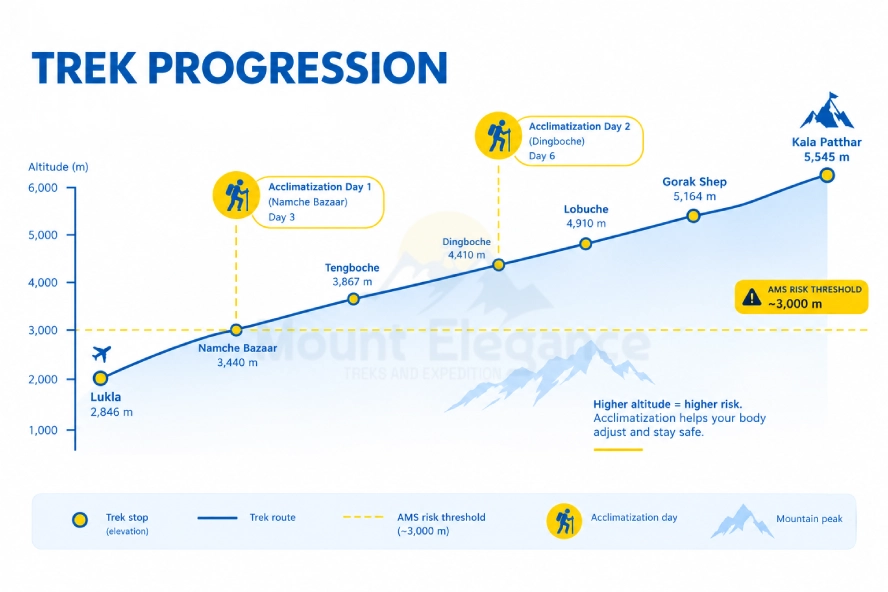
Where October offers clear skies and stable weather the combination of high altitude steep terrain and heavy peak season traffic presents notable challenges with proper preparation, realistic expectation and effective planning helps on these factors.
Actual Mountain sickness ( AMS )
Gaining elevation quickly above 3000 meters can trigger symptoms like headaches, nausea, dizziness, fatigue and poor sleep. Ascending gradually with designated acclimatization days is crucial to prevent serious altitude-related illness.
Difficulty on the route above Dingboche
Trails above Dingboche become more demanding because of increasing altitude rocky sections with thinner air. The route toward Lobuche and Gorak Shep can feel slow and strenuous even for physically fit trekkers.
Accommodation shortage due to peak crowds
As October is a prime trekking month, popular stopovers like Namche Bazaar, Dingboche, and Gorak Shep frequently face room shortages. Booking teahouse accommodation well in advance prevents lodging issues along the routes.
Peak- season price spikes
High demand drives up the costs of flights to lukla, accommodations, and local services. Carrying extra cash for variable costs such as meals, devices charging, hot shower and incidental expenses is essential
Strict Acclimatization Needs: Skipping scheduled rest days greatly increases the risk of AMS and makes high-altitude hiking feel significantly harder. Building dedicated acclimatization time into the itinerary gives the body necessary space to adjust.
Physical Demands of High Altitude: Long daily trekking hours, steep ascents, chilly temperatures, and reduced oxygen levels require strong physical endurance. Pacing yourself, staying properly hydrated, and wearing suitable thermal layers help manage the physical strain.
Is Altitude Sickness a Risk on the October EBC Trek?

Yes, altitude sickness is a risk on the October Everest Base Camp Trek because the route climbs above 3000 meters where Acute Mountain Sickness becomes more common. The maximum altitude is usually Kala Patthar at 5545 meters where the thin air can make walking and breathing much harder. October offers generally stable trekking conditions but altitude remains a major concern regardless of season. Proper acclimatization is therefore essential. Most itineraries include acclimatization days at Namche Bazaar and Dingboche allowing your body time to adjust before climbing higher. Trekkers should maintain a slow pace stay hydrated and watch for symptoms such as headache - nausea, dizziness, and unusual fatigue. If symptoms worsen descending to a lower altitude is the safest response.
What Should You Pack for the Everest Base Camp Trek in October?

Packing for the Everest Base Camp Trek in October requires a balanced combination of warm clothing, reliable trekking equipment and essential safety items. October can bring cold mornings and evenings especially at higher elevations so proper preparation is important.
- Three-layer clothing system: Pack a moisture-wicking base layer, an insulating mid-layer, and a waterproof, windproof outer layer. This allows you to adjust clothing as temperatures change.
- Down jacket: Bring a good-quality down jacket for cold evenings early-morning hikes and higher elevations around Lobuche Gorak Shep and Kala Patthar.
- Insulated trekking boots: Choose waterproof boots with good ankle support and enough room for warm socks for comfortable walking in uneven trails.
- Sleeping bag: A sleeping bag rated around -10°C to -15°C is recommended for cold nights at higher elevations.
- Trekking poles: Poles provide stability on steep rocky sections and can reduce pressure on your knees during descents.
- Headlamp: Carry a reliable headlamp with spare batteries for early starts and possible power interruptions.
- UV-protection sunglasses: Strong sunlight and snow glare at high altitude make quality UV-protection sunglasses essential.
- Water purification: Carry purification tablets, a filter or another reliable treatment method to make drinking water safer.
- First-aid kit: Keep a blister treatment, basic medicines, bandages, pain-relief supplies, and personal medications.
- Trekking gear checklist: Also include a backpack rain cover, water bottles, thermal socks gloves, sunscreen, lip balm, power bank, and necessary documents.
What Clothing Layers Do You Need for October EBC Temperatures?

- Base layer: Wear a moisture-wicking thermal layer that keeps sweat away from your skin and helps maintain body warmth during long walking days.
- Mid layer: Use a fleece jacket or light down layer for insulation - you can add or remove this layer as temperatures change during the trek.
- Outer layer: Carry a windproof and water-resistant shell jacket to protect against cold winds, rain and changing mountain weather.
- Insulated gloves: Pack warm insulated gloves for cold mornings evenings and higher elevation around Gorak Shep and Kala Patthar.
- Wool trekking socks: Wool socks provide warmth and help manage moisture during long trekking days. Carry several pairs so you can change them regularly.
- Buff or neck gaiter: A buff protects your neck and face from cold wind and can also provide extra warmth during early morning treks.
What Footwear and Technical Gear Are Required?
Waterproof insulated trekking boots: Choose comfortable boots with strong ankle support and a durable sole for rocky uneven and steep trails. Break them in well before the trek to prevent blisters and foot pain during long walking days.
Gaiters: Carry lightweight gaiters to keep dust dirt and small stones out of your boots they are also useful on sections of trail that may have light snow or damp ground.
Sleeping bag rated to -10°C to -15°C: A warm sleeping bag is important for cold nights at higher elevations. Choose one designed for trekking conditions and suitable for temperatures expected during October.
Sleeping bag liner: A liner adds warmth and keeps the sleeping bag cleaner; it can also provide extra comfort when temperatures drop at higher elevations.
Trekking poles: Poles provide stability on uneven terrain and reduce strain on your knees during steep climbs rocky descents and long hiking days.
How Much Does the Everest Base Camp Trek Cost in October?

The Everest Base Camp Trek in October costs around USD 1,400–1,900 per person for a standard 12- to 14-day guided package, depending on group size, agency, accommodation, meals, and whether flights and porter services are included.
Cost Item | Typical October Cost | Details |
Sagarmatha National Park entry permit | NPR 3000 USD approx 23 | Foreign trekkers pay NPR 3,000 for entry into Sagarmatha National Park. |
Khumbu Pasang Lhamu Rural Municipality entry fee | NPR 2000 - 3000 USD 15 to 23 | This local permit is required for the Everest region. Current 2026 sources differ on the exact fee so trekkers should confirm before departure. |
TIMS card | Not generally required for EBC | The Khumbu region uses its local entry permit instead of a standard TIMS card. |
Round-trip Lukla flight | About USD 360–440 | October is peak season and flights can cost more depending on airline availability and departure arrangements. |
Teahouses and accommodation | About USD 5–15 per night | Basic rooms are cheaper at lower elevations while prices can increase at higher villages such as Lobuche and Gorak Shep. |
Guide daily charge | About USD 25–50 per day | Rates depend on experience qualifications and whether the guide is hired independently or through an agency. |
Porter daily charge | About USD 1,400–1,900 | The final cost depends on trekking duration and porter arrangements. |
12-14 days trek package | About USD 1,400–1,900 | A standard guided package commonly includes permits, accommodation meals guide porter and round-trip Lukla flights. |
For a comfortable October budget, trekkers should keep extra money for meals, Wi-Fi, charging, hot showers, tips, insurance, snacks, equipment, and emergencies. These expenses may not be included in packages. Since October is peak season, booking flights and trekking packages early helps secure availability and better prices.
What Permits Do You Need for the Everest Base Camp Trek?

The Everest Base Camp Trek requires two permits: the Sagarmatha National Park Entry Permit and the Khumbu Pasang Lhamu Rural Municipality Entry Permit. A TIMS Card is generally not required for the standard EBC route because the local Khumbu entry permit is used instead.
Permit / Requirement | Cost & Details | Where to Obtain |
Sagarmatha National Park Entry Permit | NPR 3,000 for foreign nationals. SAARC nationals generally pay a lower rate of NPR 1,500. | Nepal Tourism Board office in Kathmandu or the park entry point |
Khumbu Pasang Lhamu Rural Municipality Permit | NPR 3,000 for the first four weeks and NPR 5000 after four weeks. The fee for SAARC trekkers is NRS 2000. | Kathmandu or Monjo checkpoint |
TIMS Card | Generally not required for the standard Everest Base Camp route when using the local Khumbu permit. | Not normally needed for EBC |
SAARC vs. non-SAARC | SAARC trekkers receive a reduced Sagarmatha National Park fee while non-SAARC foreign trekkers pay the standard foreigner rate. | Permit offices or entry checkpoint |
Are Lukla Flights Diverted to Ramechhap in October?

Yes, Lukla flights are diverted to Ramechhap in October because Ramechhap (Manthali) Airport looks over many Kathmandu–Lukla flights during the busy trekking season. Tenzing-Hillary Airport in Lukla is located at 2846 meter high while Ramechhap is used to manage increased flight traffic.
Trekkers usually need to travel about 4 hours by road from Kathmandu to Ramechhap for an early morning flight. October and November are the months when this arrangement is most commonly used. Flights normally operate in the morning - so travelers may need to leave Kathmandu very soon. Weather can still cause delays or cancellations so it is important to keep a flexible schedule. October is one of the busiest months for the Everest Base Camp Trek, so flights gets booked quickly. Good autumn weather does not completely remove the risk of delays. strong wind, poor visibility or changing mountain weather can affect Lukla flights. Trekkers should therefore keep some flexibility in their itinerary and avoid scheduling important international flights immediately after returning from the Everest region.
Are Teahouses and Accommodation Available on the EBC Trail in October?
Yes, teahouses and accommodation are available on the Everest Base Camp Trail in October but crowds are more because October is one of the busiest trekking months. Most teahouses operate fully during this period and provide rooms and meals for trekkers throughout the route. Teahouse accommodation is the standard option on the EBC trail here the rooms usually have simple beds with mattresses and blankets most bedrooms are unheated so trekkers need a warm sleeping bag for cold nights. Bathrooms may be shared where hot showers are usually available for an additional charge.
Most teahouses have heated dining rooms where trekkers can eat meals and relax in the evening. The dining area is often the warmest place in the lodge because it may have a stove or heater. Advance recommended in Dingboche, Lobuche and Gorak Shep because these villages become very busy during October as popular teahouses can fill quickly, especially when trekking groups arrive at the same time. Booking ahead can make it easier to secure a room and avoid searching for accommodation after a long hiking day. Overall, October offers good accommodation availability in the EBC route, but peak-season crowds can make early booking a smart choice, particularly at higher-altitude villages where lodging options are more limited.
Is Sherpa Culture Part of the October EBC Trekking Experience?
Yes, Sherpa culture is central to the October Everest Base Camp trekking experience because the trail passes through villages and communities where Sherpa traditions are part of everyday life. The journey offers trekkers good opportunities to learn about local customs - Buddhist practices, food and mountain lifestyles while walking through the Khumbu region.Namche Bazaar often known as the Sherpa capital is an important trading and cultural center on the journey. Trekkers can explore local shops - bakeries, markets and monasteries while experiencing the busy atmosphere of this mountain town.Another important cultural stop is Tengboche Monastery which is known for Buddhist monasteries in the Everest region. The monastery offers views of surrounding mountain peaks and provides insight into the spiritual traditions followed by local Sherpa communities.
October is for Mani Rimdu which is an important Buddhist festival celebrated at Tengboche Monastery. The festival includes prayers, religious ceremonies are done by sherpa people wearing masks and dances and the community gatherings can be seen during this festival celebration. However, the exact dates vary each year so, trekkers should check the festival calendar before planning around it.Throughout the trek many teahouses are operated by Sherpa families. Staying in these family-run lodges allows trekkers to experience local hospitality.
Do You Need Travel Insurance for an October EBC Trek?
Travel insurance is required for the Everest Base Camp Trek in October because the trek involves high altitude, remote mountain trails and possible flight delays. A policy should include helicopter evacuation coverage in case of serious illness or injury at high altitude. Check that the policy has high altitude coverage up to at least 6000 meters as the Everest Base Camp route reaches up to 5364 meters and Kala Patthar reaches about 5643 m. October is also a peak trekking season so Lukla flights can face delays or cancellations because of weather issues. Choose insurance that includes trip cancellation and travel delay coverage to help manage unexpected costs caused by it. Many trekking agencies commonly recommend providers such as World Nomads, IMG Global and Seven Corners but coverage varies between plans and nationalities.Carry a copy of your insurance policy and emergency contact details during the trek.
Is Kala Patthar Worth the Climb During an October EBC Trek?
Yes, Kala Patthar is worth the climb during an October Everest Base Camp Trek because it offers one of the best close-up views of Mount Everest from the standard trekking route as Kala Patthar stands at around 5,545 m and provides a wide mountain panorama that includes Everest, Nuptse - Pumori and other Himalayan peaks. October is a particularly good month for the climb because the post-monsoon air is usually clear and dry, which gives trekkers better visibility of the surrounding mountains. Most trekkers start the climb from Gorak Shep before sunrise. The early morning hike can be cold and steep but reaching the viewpoint before sunrise offers a beautiful experience as the first light reaches Everest and the surrounding peaks. The climb usually takes several hours depending on fitness, weather and acclimatization. Although the altitude makes the climb physically demanding - the views and experience make Kala Patthar a major highlight of the October EBC trek. Trekkers should walk slowly at a steady pace, stay warm and allow enough time to enjoy the view.
Can You See the Khumbu Icefall on the Standard EBC Trek in October?
Yes, trekkers can see the Khumbu Icefall on the Everest Base Camp Trek in October because the Khumbu Icefall is clearly visible from the Everest Base Camp itself. The Khumbu Icefall is a section of the Khumbu Glacier, located below the higher slopes of Mount Everest. The Khumbu Icefall is also known as one of the technically dangerous sections of the climbing route to the summit of Mount Everest. Trekkers do not cross the icefall during the EBC trek. The trekking trail ends at Everest Base Camp. Remains separate from the technical climbing route used by mountaineering expeditions. October is also outside the Everest climbing season as climbing activity around the icefall is normally minimal, during a normal trekking visit. This can make the area feel quieter while still providing opportunities to observe the glacier and the surrounding mountains. Trekkers should remain at designated viewpoints. Avoid approaching unstable glacier areas because ice formations can shift without warning.
Tips for a Successful October Everest Base Camp Trek
A successful October Everest Base Camp Trek depends on good preparation, careful planning and choosing reliable support for the journey:
- Make teahouse reservations in advance: October is one of the busiest trekking months in the Everest region. Book accommodation early, especially in Dingboche - Lobuche and Gorak Shep where rooms can get booked quickly during peak season.
- Prepare for altitude discomfort: The trail reaches high elevations where some trekkers may experience headaches - tiredness or other signs of altitude sickness. Follow a gradual itinerary like walking at a steady pace - drink enough water and allow proper acclimatization days.
- Choose an established trekking guide and agency: An expert local guide can help with route conditions, accommodation, altitude management and unexpected emergencies. Choose a registered and established trekking agency with trained guides and clear emergency procedures.
- Allow extra time for flights: October has high demand for Lukla flights and weather can still cause delays. Keep a buffer day in your itinerary to reduce pressure if your flight is postponed.
- Pack for changing conditions: Carry warm layers - waterproof clothing, good trekking boots - gloves and a suitable sleeping bag for cold nights at higher elevations.
Who Should Trek Everest Base Camp in October?
Yes, the Everest Base Camp Trek in October suits trekkers who want clear Himalayan views and do not mind larger crowds during the peak trekking season. It is ideal for those who prefer stable weather with low rainfall and generally reliable trail conditions. October also appeals to travelers who want to experience Nepal’s festive atmosphere alongside their trek with opportunities to enjoy Dashain, Tihar or the Mani Rimdu Festival depending on the dates and location. High-altitude trekking experience is helpful but not essential for October EBC trekkers. Beginners can complete the journey successfully with proper acclimatization, gradual pacing, adequate hydration and preparation for changing mountain conditions. Trekkers should be comfortable walking for several hours each day and managing long uphill and downhill sections. Those seeking a balance between favorable weather, spectacular mountain scenery - cultural experiences and an energetic trail atmosphere will find October especially rewarding. Trekkers who strongly prefer quiet trails may find peak-season crowds less appealing.
Explore Other Seasons for the Everest Base Camp Trek
Beyond October, the Everest Base Camp Trek changes character across spring, winter, and monsoon seasons, giving trekkers different experiences based on weather, scenery, and trail conditions. Springseason from March to May, offers clear mountain views, pleasant trekking temperatures, and blooming rhododendrons along the route. Winter season from December to February, brings colder temperatures, snowy landscapes, fewer trekkers, and a quieter Himalayan atmosphere. The monsoon season, from June to August, brings frequent rain, cloudy skies, and wetter trails but also fewer crowds and greener landscapes. Exploring these seasonal guides can help trekkers choose the best time for their preferred Everest Base Camp experience.
Is October the Best Month to Trek Everest Base Camp Overall?
October ranks among the best months to trek Everest Base Camp overall, though the ideal month depends on your priorities. Spring (March–May) and autumn (September–November) are the two peak trekking seasons, offering favorable weather and excellent mountain visibility. October stands out for stable conditions, clear skies, and comfortable trekking temperatures, but it also brings larger crowds. September can be slightly quieter while still offering good conditions, whereas November is colder with shorter days. Spring provides blooming rhododendrons and fresh mountain scenery, with March generally colder and May becoming warmer before monsoon. Overall, October is an excellent choice for trekkers seeking reliable weather and spectacular Himalayan views.
How Does the Everest Base Camp Trek in January Differ From October?
The Everest Base Camp Trek in January differs from October in weather, crowd levels, and overall trekking conditions. January falls within the winter dry season, bringing cold and generally dry conditions, while October is part of the autumn post-monsoon season with milder temperatures and clearer, more stable trekking weather. Night temperatures are much colder in January, especially at higher elevations - requiring warmer clothing and better preparation for freezing conditions. January also sees far fewer trekkers than October, creating a quieter and more peaceful trail experience. Another practical difference is flight logistics. January does not typically require the Ramechhap flight diversion used during peak periods, so flights to Lukla generally operate from Kathmandu.
Is the Everest Base Camp Trek in November Similar to October?
Yes, the Everest Base Camp Trek in November is similar to October,since both fall within the autumn post-monsoon peak season, offering generally clear skies, dry trails, and excellent mountain visibility. Ramechhap flight diversion is active in both months, so trekkers may need to travel through Ramechhap for flights to Lukla depending on current airport operations. However, November trends slightly colder than October, especially during early mornings and nights at higher elevations. Daytime conditions can still be comfortable for trekking, but temperatures drop as winter approaches. Overall, November provides similar stable trekking conditions to October while requiring warmer clothing and better preparation for colder nights.
How Different Is the Everest Base Camp Trek in August From October?
The Everest Base Camp Trek in August differs from October in almost every major weather factor that shapes the trekking experience. August sits within monsoon season, bringing frequent rainfall, humid air and muddy trails, especially at lower elevations where leeches become a common nuisance in forested sections of the route. October, falls into the post-monsoon window, offering drier trails, clearer skies and far more predictable weather overall. Cloud cover in August often builds up quickly, reducing mountain visibility and making unobstructed views of Everest and its neighboring peaks less reliable. October trades that unpredictability for consistently crisp air and steady mountain panoramas, making it the more favourable month for trekkers who prioritize clear views and drier walking conditions throughout the journey.