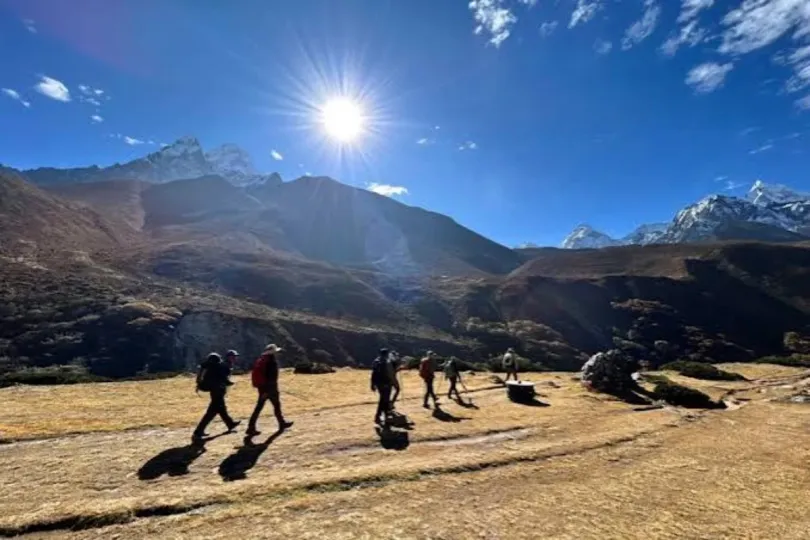
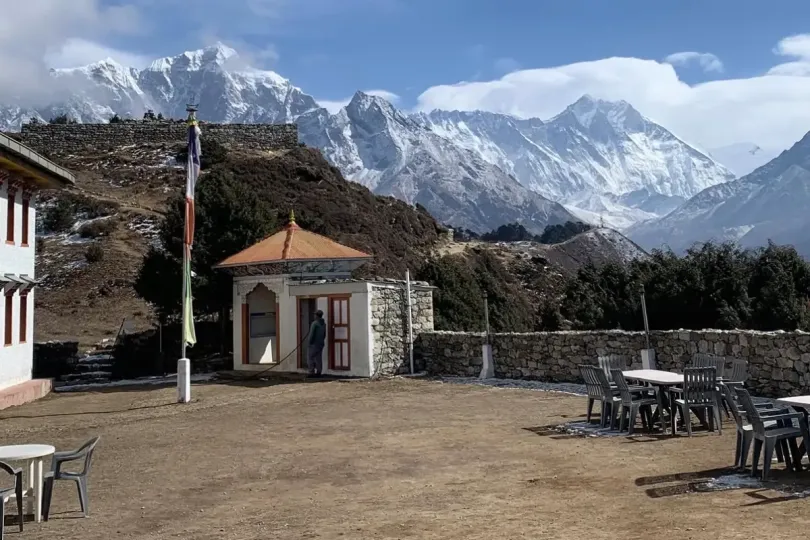
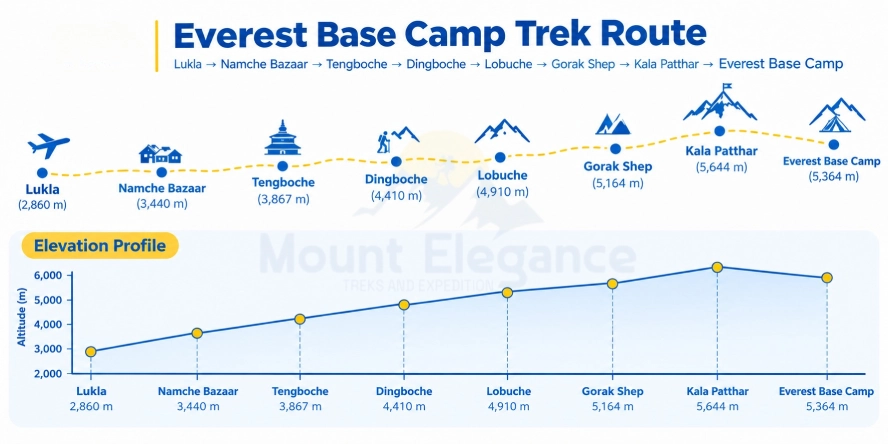
Everest Base Camp Trek in May is one of the best times to go, right in the middle of the pre-monsoon season before the rains roll in. Mornings are crisp and clear but don't be surprised if clouds creep in by afternoon especially higher up the trail. The weather also shifts a bit as the month goes on - early May is usually calmer while the last week or two can get hazier as monsoon clouds start forming. Since this is the peak season expect company. Teahouses fill up fast and trails feel lively partly because climbers are also making their summit push on Everest around the same time. Flights to Lukla often get rerouted through Ramechhap so it's smart to book early and build in a buffer day. You'll also need permits for Sagarmatha National Park and the local rural municipality. The route itself takes you through - Namche, Tengboche, Dingboche, Lobuche, and up to Kala Patthar - and if timing allows, you might catch Buddha Jayanti or the Dumji festival along the way.
Why Is May Considered One of the Best Months to Trek Everest Base Camp?
May sits in the second half of spring right at the tail end of the pre-monsoon season when Everest Base Camp trekking sees some of the calmest, most reliable weather all year. Days stay warm across the Khumbu Region, so long stretches on the trail feel less punishing than in colder months.
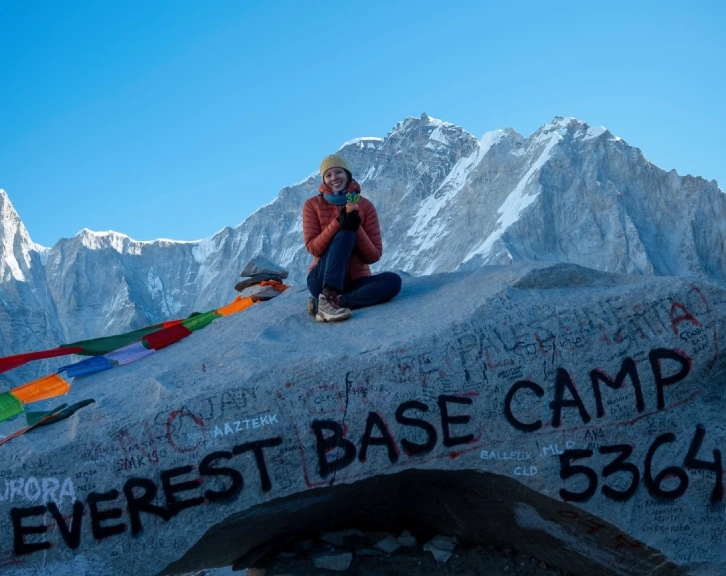
The extra daylight helps too - trekkers get more hours to move at a comfortable pace and still take in the scenery instead of racing the sunset. Rhododendrons that started blooming in April often haven’t faded yet, so the trail through Sagarmatha National Park still carries that burst of color against the grey and white of the mountains. And with clear skies overhead for much of the month the views of Mount Everest open up well before trekkers reach the base camp itself, sitting at 5,364 meters.
What Is the Weather Like at Everest Base Camp in May?
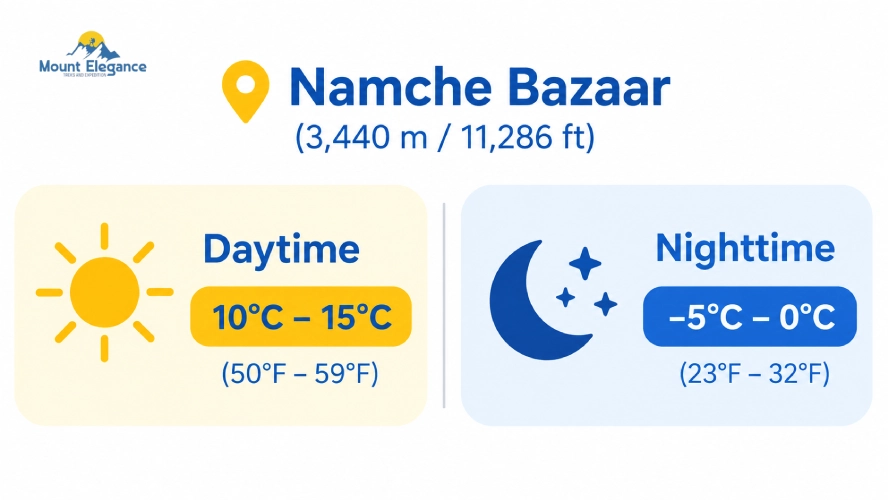
Weather at Everest Base Camp in May is shaped by a mix of daytime warmth and nighttime cold and it shifts noticeably as trekkers climb higher in elevation. Mornings tend to stay clear higher in elevation. Mornings tend to stay clear, while afternoons often bring in cloud cover - a pattern worth panning around each day. Since this is pre-monsoon weather, humidity builds gradually through the month and skies that start out sharp and clear in early May can turn hazier by the final week as moisture moves in ahead of the rains.
What Are Daytime and Nighttime Temperatures Like in May?
Daytime and nighttime temperatures in May differ sharply enough that many trekkers underestimate just how much the numbers swing in a single day. Down at lower elevations like around Lukla or Namche, afternoon highs can climb to 12 to 18°C, warm enough to trek in a light layer under direct sun. But once the sun drops that warmth disappears fast (0°C to 5°C). At higher camps like Dingboche or Gorak Shep night temperatures fall well below freezing -1°C to -5°C , sometimes dipping into double-digit negatives. This gap between a mild afternoon and a bitterly cold night (12°C to -5°C) is one of the trickiest parts of packing for May - trekkers who plan only for daytime comfort often find themselves underprepared once the sun sets and the cold sets in at altitude
How Does Temperature Change by Altitude on the Trek?
Temperature drops steadily as you gain altitude on the way to Everest Base Camp, and the pattern is fairly predictable - roughly 6 to 8°C colder for every 1,000 metersclimbed. Starting from the warmth of Kathmandu, the drop becomes noticeable almost immediately after landing in Lukla, and it keeps intensifying all the way to the base camp itself. By the time trekkers reach Gorak Shep and push on to Everest Base Camp, daytime warmth is minimal and nights turn seriously cold. Below is an approximate range for May (actual conditions vary year to year, so it's worth checking a current forecast closer to departure):
Location | Altitude | Daytime Range | Nighttime Range |
Kathmandu | 1,400m | 25–28°C | 15–18°C |
Lukla | 2,860m | 15–18°C | 3–6°C |
Namche Bazaar | 3,440m | 12–15°C | 0–3°C |
Tengboche | 3,860m | 10–13°C | -3–0°C |
Dingboche | 4,410m | 8–11°C | -6 to -3°C |
Lobuche | 4,940m | 5–8°C | -10 to -7°C |
Gorak Shep | 5,164m | 3–6°C | -12 to -9°C |
Everest Base Camp | 5,364m | 2–5°C | -14 to -10°C |
How Does Weather Differ Between Morning and Afternoon in May?

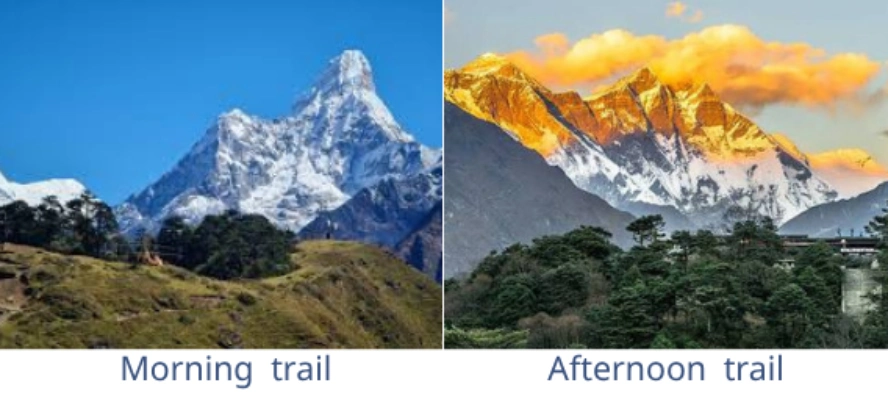
Mornings in May feature calm, cold and clear conditions with optimal mountain visibility for photographs.
As pre-monsoon humidity and heat rise throughout the day cloud cover develops over the peaks. By afternoon - haze, thick clouds, and brief showers become common, particularly later in the month.
Trekking guides recommend early morning starts to take advantage of cooler walking conditions, superior visibility and to avoid afternoon weather shifts at higher elevations.
How Does Early May Compare to Late May?
Early May and late May differ in a few practical ways. The first half bringing drier more stable weather and clearer mountain views but also bigger crowds thanks to overlapping climbing seasons. The second half sees more cloud and rain risk as monsoon moisture builds though trails and teahouses often feel quieter and easier to book.
Factor | Early May | Late May |
Pre-monsoon stability | More stable, drier | Increasing monsoon influence |
Crowds | Busier (climbing + peak trekking season) | Slightly quieter, easier teahouse availability |
Visibility | Stronger, clearer mornings | Higher cloud and rain risk |
Atmosphere | High energy, climbing-season buzz | Calmer, but weather less predictable |
What Are the Trail Conditions in May?
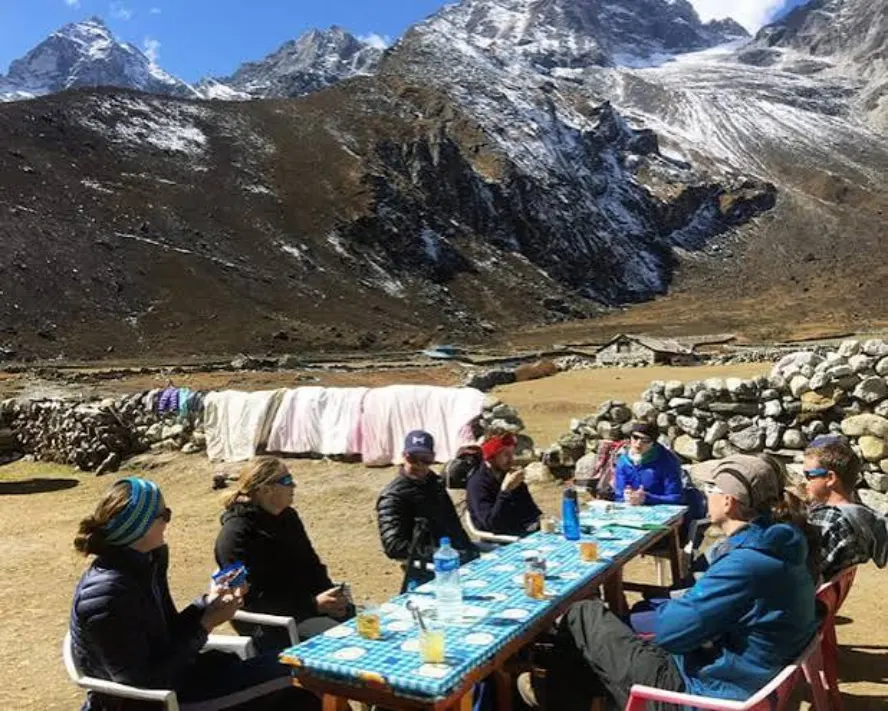
Trail conditions in May are generally favourable, with dry firm paths across most of the lower and mid-altitude sections of the route. Once trekkers climb higher particularly between Lobuche and Gorak Shep patches of residual snow or ice can still linger in shaded spots where the sun doesn’t reach as often.
Long daylight hours work in trekkers favor here, giving more flexibility for daily hiking windows with most days involving roughly 6 to 7 hours on the trail. That extra light also means less pressure to rush, since there’s more room to pace things comfortably and still reach teahouses before dark.
Afternoon cloud build-up is worth panning around. Which is why most guides recommend starting hikes early in the morning. Getting a head start not only gives clearer views but also less chance of walking into cloud cover or reduced visibility later in the day.
Why Is May a Popular Trekking Month?
May is a popular trekking month because it’s one of the two peak windows for Everest Base Camp, alongside the autumn season in October and November. Stable weather and clear mountain views draw a large number of trekkers which means teahouses fill up fast and the trail carries a lively social atmosphere - plenty of company along the way and a real buzz around the limited space so booking accommodation and permits ahead of time matters more in May than in quieter months.
Especially, for trekkers hoping to avoid the heaviest crowds without giving up good weather, timing within the month makes a real difference - which is exactly why comparing early May against late May is worth doing before locking in the start date.
What Makes the Everest Climbing Season Unique in May?

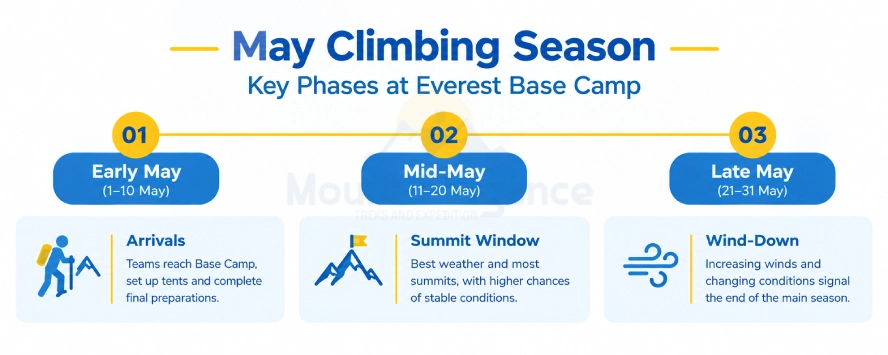
May is unique among trekking months because it hosts the primary Everest summit window, a narrow stretch of just three to seven days in mid to late May when jet stream shifts and high-altitude winds finally calm down enough for climbers to push for the top. This brief “golden window” is what expedition teams spend weeks acclimatizing for.
Trekkers arriving at Base Camp during this stretch get to witness something few other months offer. Colorful expedition tents dot the Base Camp landscape, climbing teams move through their final rotations between camps and helicopters buzz overhead ferrying supplies and support for the mountaineers above.
It's a layer of experience that goes beyond scenery or weather - sharing the trail with people actively attempting one of the world's biggest climbs adds a different kind of energy to the trek. For many visitors, catching this overlap between trekking season and summit season is part of what makes a May trip to Base Camp feel especially memorable.
What Should You Know About Lukla Flights in May?
Lukla flights in May come with a few things to know like changing weather and busy travel conditions. Ramechhap diversion and flight delays are the two key flight factors to consider. As May moves toward the monsoon - cloudy weather can affect flight schedules, normally later in the month. Keep some flexibility in your itinerary and allow extra time for unexpected delays.
Why Do Flights Divert to Ramechhap/Manthali Airport in May?

Flights divert to Ramechhap/Manthali Airport in May because Kathmandu's runway becomes too busy during the peak trekking season. From March to May - along with September to November - Lukla flights are often shifted to Manthali Airport in Ramechhap district to reduce pressure from international and domestic traffic.
Ramechhap is about 130/140 km from Kathmandu, taking around 4/5 hours by road. Because flights from Manthali usually operate early in the morning, trekkers often leave Kathmandu around 2/3 am to reach the airport on time. This early transfer can make the journey more tiring - especially after arriving in Nepal. If you want to avoid the road transfer and early departure, a direct helicopter charter from Kathmandu to Lukla is the alternative. However - helicopter flights depend on weather and availability.
How Do You Handle Flight Delays With Buffer Days?
You can handle flight delays in May by building flexibility into your Everest Base Camp itinerary, as morning fog and cloud can still delay or cancel Lukla flights despite generally favorable spring weather. Plan for 1/2 buffer days near the end of your trek - so a delayed flight does not disrupt your international departure from Kathmandu. These extra days also give airlines and trekking operators more time to reschedule flights when weather conditions get better. Keeping your return schedule flexible is especially important because Lukla flights can be affected by changing mountain weather.
What Permits Do You Need for the May EBC Trek?
The permits you need for the May EBC trek are the Sagarmatha National Park Entry Permit and the Khumbu Pasang Lhamu Rural Municipality Entry Permit. Both are required for trekkers who are going toward Everest Base Camp - and you should arrange them before your trek starts. Normally permits are handled by trekking agencies as part of a guided package, while independent trekkers can obtain them directly at the designated offices.
- Sagarmatha National Park Entry Permit: Available at the park entrance near Monjo or in Kathmandu that normally costs around NPR 3000.
- Khumbu Pasang Lhamu Rural Municipality Entry Permit: you can Obtain It in Lukla and it normally costs around NPR 2,000.
- Documents required: Carry passport copies and passport-size photos when arranging your permits carry your original passport for verification
- For guided trekkers: Your trekking agency generally manages the permit process, Carry all the necessary documents that are needed to obtain permits - you only need to provide the required documents.
- For independent trekkers: You can obtain the permits yourself by visiting the relevant offices, checking the current fee and issuing location before departure - as local procedures can change.
What Are the Key Landmarks on the Everest Base Camp Trek in May?
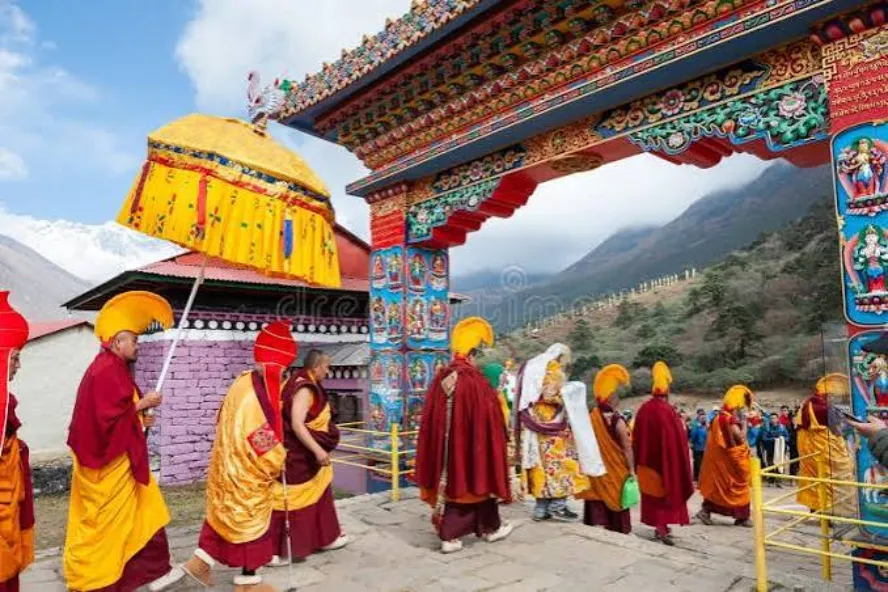
Key landmarks on the Everest Base Camp trek include historic Sherpa villages with Buddhist monasteries that have dramatic viewpoints and glacial landscapes which define the route to the world’s highest mountain. In May the weather is generally comfortable as spring makes it a popular time to experience these highlights with clearer mornings often offering excellent mountain views.
- Lukla: Lukla is the main gateway and starting point of the Everest Base Camp trek which is also known as home to Tenzing-Hillary Airport. After landing - trekkers start their journey through the lower Khumbu Valley toward Phakding and Namche Bazaar.
- Namche Bazaar: Namche is the main Sherpa trading hub and one of the most important acclimatization stops on the trek. Trekkers usually spend an extra night here while exploring the surrounding hills and viewpoints. To adapt to higher elevations having an acclimatization stop here is very important.
- Tengboche: Tengboche is home to the largest and most famous monastery in the Khumbu region. The village also provides panoramic views of Everest, Ama Dablam, Lhotse, Nuptse and surrounding peaks.
- Dingboche and Lobuche: These high-altitude villages are important stages before the final approach to Everest Base Camp. Dingboche is another major acclimatization stop - while Lobuche provides a final overnight point before reaching Gorak Shep.
- Gorak Shep: Gorak Shep is the last settlement before Everest Base Camp and serves as the main base for the final trek to Base Camp and Kala Patthar.
- Kala Patthar (5,545 m): Kala Patthar is widely considered one of the best viewpoints for seeing Mount Everest itself. The summit provides a dramatic panorama of Everest, Nuptse, Pumori and other surrounding peaks.
- Khumbu Glacier: The Khumbu Glacier is one of the most notable features near Base Camp. It sits alongside this glacier - giving trekkers an unforgettable view of the rugged ice formations and surrounding Himalayan peaks.
What Festivals Happen During the May Trek?

Trekkers in May may get to witness colorful festivals and local traditions in the Everest region. May is a good time to see Buddhist culture in villages and monasteries along the trail. Festival dates can change each year, so it is best to check the local calendar before your trek.
- Buddha Jayanti: Buddha Jayanti - also known as Buddha Purnima or Vesak which is the most sacred festival and celebrates the birth of Lord Buddha and is held on the full moon in May. Trekkers may see prayers - butter lamps and other Buddhist activities at monasteries such as Tengboche.
- Dumji Festival: This is one of the most important annual festivals celebrated by the Sherpa community in theEverest region - honoring Guru Rinpoche and includes prayers, gatherings and traditional masked dances. Its date follows the Tibetan lunar calendar - so it can fall in late May or shift into June. Check the exact date before booking your trek.
What Are Accommodation and Food Options Like in May?

Accommodation and food during the May EBC trek are normally easy to find, but teahouses can be busy as May is part of the peak trekking season. Rooms may fill up quickly in popular villages, so booking before your trek is a good idea. Trekking with a guide can be very helpful as they can arrange and reserve rooms before you arrive and also help you with route navigation, weather conditions and any health-related issues in higher elevations. Food choices are simple but fulfilling and freshly cooked with common meals that are available throughout the route.
- Teahouse accommodation: Most trekkers stay in basic teahouses with shared bathrooms, simple beds and blankets. Booking earlier before your trek starts is helpful - especially in busy stops such as Namche, Dingboche and Lobuche. May is the peak season for trekking.
- Food: Standard menu items include dal bhat, noodles - soups, momo, eggs and simple snacks. Prices usually increase as altitude rises because supplies become harder to transport. The food is basic but fulfilling and freshly made.
- Drinking water: Drink boiled - purified or properly treated water throughout the trek. Avoid untreated tap or stream water to reduce the risk of stomach problems. Carry water purification tablets or reusable water bottles so you can fill water in teahouses on your way.
How Should You Prepare for the May EBC Trek?
Preparing for the May EBC trek starts with building good fitness, getting used to long walking days and preparing yourself for high altitude. May is a busy trekking month, so having a steady plan for your trek can make the journey easier and more enjoyable. Start training around 2/3 months before your trek and slowly increase your walking time.
Build fitness: Focus on cardio, leg and core strength - Start practicing multi-hour hikes with a loaded backpack to prepare your body for long uphill and downhill walks.
Prepare mentally: Be ready for long hours walking trek days on uneven trails and frequent climate change with basic teahouse facilities can be tiring, so having patience and a positive mindset are useful. You must know and should be mentally prepared for any uncertain emergencies.
Plan acclimatization: Include acclimatization days at Namche Bazaar and Dingboche. Watch for common AMS symptoms such as headache, nausea and unusual fatigue if symptoms are seen, take it seriously and inform your guide quickly if symptoms get worse emergency evacuation will be provided.
Trek with support: A guide and porter are recommended, especially for first-time trekkers and guides can also help arrange the required permits. Beginners and experienced trekkers can both complete the trek with suitable pacing, rest and preparation.
What Should You Pack for the May EBC Trek?
Packing for the May EBC trek means preparing for warm daytime walks, cold nights in changing mountain weather and strong sunlight at high altitude during daytime. May can bring comfortable trekking conditions but temperatures still drop suddenly after sunset, especially in villages which are at higher elevations. Keep your backpack limited and avoid carrying unnecessary items. Choose clothing that you can layer easily as the temperature changes.
- Clothing: Pack lightweight, breathable clothes for warm daytime trekking. Bring thermal layers and a warm insulated or down jacket for cold mornings and nights at higher elevations. Having warm clothes is very necessary during cold temperatures at higher elevations to keep your body warm and avoid health risks.
- Rain protection: Carry a waterproof jacket for occasional afternoon showers and sudden changes in mountain weather. A backpack rain cover is also useful as rainy weather conditions sometimes cannot be predicted. You will experience sudden rainfall so waterproof gear and clothes are very necessary.
- Footwear and poles: Take sturdy and comfortable hiking boots for uneven trails and long walking periods. Trekking poles can provide extra balance and reduce strain on your knees during steep sections.
- Sun protection: Pack UV-protection sunglasses, high-SPF sunscreen and a sun hat is necessary as sun rays can be very strong in higher elevations - even when the air feels cool.
- Health and water: Carry a basic first-aid kit with personal medicines and common trekking supplies. Also bring water purification tablets - a filter or another reliable treatment method for safe drinking water. Avoid drinking unfiltered water directly to reduce risk of stomach illness.
Why Do You Need Travel Insurance for the May EBC Trek?
Travel insurance matters for the May EBC trek because conditions at high altitude can change quickly and emergency evacuation can be extremely expensive. Choose a policy that covers high-altitude trekking up to at least 5500 m and includes helicopter evacuation for altitude sickness - injury or other emergencies. May is one of the busiest months on the Everest Base Camp trail with heavy trekking traffic and expedition activity in the region. As a result arranging an evacuation may take longer during busy periods - especially when weather affects helicopter operations. Travel insurance is therefore non-negotiable for protecting yourself from unexpected medical, evacuation and trip-related costs.
Can You Trek Everest Base Camp in Other Months Too?
Yes - trekkers who want different conditions than May have several other months to consider. Each comes with its own trade-offs between weather, crowds, and cost, so the right choice depends on what matters most - warmer days, quieter trails or clearer skies. Weighing those factors helps narrow down the best fit.
Is February a Good Time to Trek Everest Base Camp?
Yes - February for Everest Base Camp Trek offers cold, dry, quiet trekking, when off-season trails see far fewer crowds than May's busy, pre-monsoon rush. Temperatures stay noticeably colder throughout, trading May's warmth for solitude and a more peaceful pace on the trail. For a closer look at what to expect, check out our full February trekking guide.
Is March a Good Time to Trek Everest Base Camp?
Yes - Everest Base Camp Trek in March marks the start of spring, when rhododendrons begin blooming and trails stay noticeably cooler and quieter than May's peak. It offers an early taste of spring scenery without the warmth or heavy crowds that build up later in the season. For a closer look at what to expect, check out our full March trekking guide.
Is July a Good Time to Trek Everest Base Camp?
Everest Base Camp Trek in July is deep in monsoon season, when heavy rain, leech-prone trails, and low visibility make trekking far less appealing than in May. Trails sit quiet and teahouses empty out, a sharp contrast to May's dry weather and crowded, climbing-season energy. For a full breakdown of what to expect, check out our complete July trekking guide.
Is September a Good Time to Trek Everest Base Camp?
Yes - September season for EBC marks the shift into autumn season when post-monsoon clouds gradually clear and give way to crisp, stable weather. It carries a calmer feel than May’s pre-monsoon buzz, without the climbing-season crowds or expedition activity around Base Camp. For a closer look at what to expect, check out our full September trekking guide.
When Is the Best Time to Trek Everest Base Camp?
The best time to trek Everest Base Camp overall is during one of two peak windows: spring, from March to May, and autumn, from September to November. Both offer stable weather and clear mountain views, but May stands out for its overlap with the Everest climbing season, adding a unique layer of energy to the trek. For a full month-by-month breakdown, check out our complete best-time-to-trek guide.