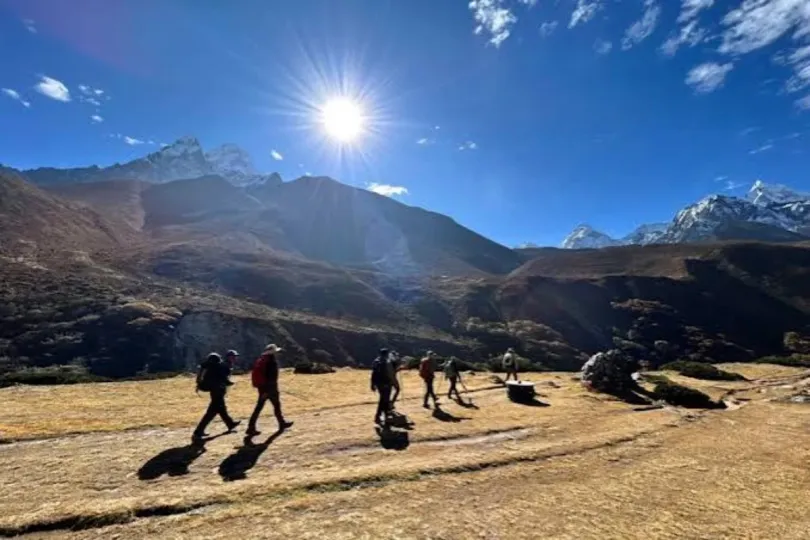

The Everest Base Camp trek in April is widely considered one of the best times of year to attempt this iconic Himalayan journey. April falls squarely within Nepal’s spring trekking season sitting between winter’s harsh cold and the onset of the summer monsoon and it ranks alongside October as one of the two busiest months on the trail. The route follows a well-established path from Lukla through Namche Bazaar, Tengboche, Dingboche, Lobuche and Gorakshep culminating at Everest Base Camp - situated at 5,364 meters (18,598 feet) within Sagarmatha National Park. April brings generally stable, dry weather, blooming rhododendron forests below 4,000 meters and the lively build-up of Everest expedition teams at Base Camp - though this comes with peak-season crowds, higher demand for flights and accommodation and freezing nights at higher elevation. This guide covers weather, pros and cons, itinerary packing permits, cost and how April compares with May and October.
Is April a Good Time to Trek to Everest Base Camp?
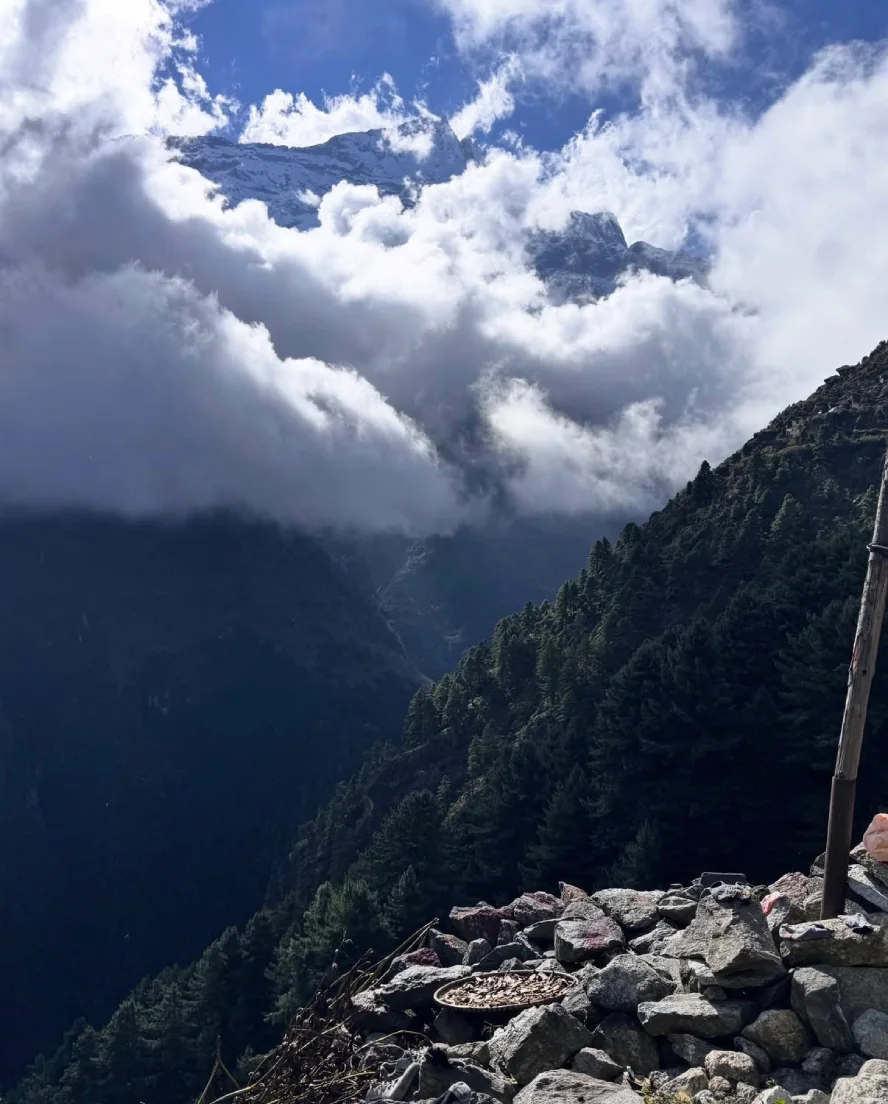
April is one of the two best months to trek to Everest Base Camp offering stable weather with mostly clear skies, low rainfall and more dependable Lukla flight than the unpredictable conditions of winter or the cloud-heavy monsoon months. That said, favorable spring weather doesn't erase the reality of high-altitude cold: daytime temperatures on the lower trail typically reach a comfortable 10–15°C, but nights at upper elevations still drop to -10 to -15°C, demanding serious cold-weather gear regardless of the season’s reputation.
April shares peak-season status with October so trails and teahouses are at their busiest from roughly the second week of April through early May - expect company on the trail and book accommodation ahead where possible. In exchange trekkers are rewarded with blooming rhododendron forest below 4000 meters and the added atmosphere of Everest expedition teams arriving and setting up camp, a dimension of the trek that autumn simply doesn't offer.
This combination makes April especially well-suited to first-time high-altitude trekkers, photographers and travelers curious about expedition-season energy - though those prioritizing solitude or the lower prices may find the crowds and premium rates less appealing.
What Is the Weather Like on the Everest Base Camp Trek in April?

Weather on the Everest Base Camp trek in April is generally dry and stable with elevation. In the lower villages of Lukla and Phakding daytime highs typically sit around 10–15°C, comfortable enough for trekking in light layers. Climb higher through and that comfort fades: by the time you reach Gorak Shep and Base Camp daytime temperatures drop to much colder 2–8°C, even under clear skies.
Nights follow the same pattern only more dramatically. Lukla nights hover around 2–5°C, mild by Himalayan standards while nights at Gorak Shep, Base Camp and Kala Patthar plunge to -10 to -15°C, cold enough to demand a properly rated sleeping bag and serious insulation.
Rainfall stays low throughout the month, one of April's key appeals, though occasional snowfall is still possible above roughly 4,500 meters, particularly in early April before the season fully stabilizes. On clear days, sunshine hours exceed seven hours, which is a real asset for mountain visibility and photography - but that same high-altitude sun brings strong UV exposure, making sunscreen and eye protection essential rather than optional. Late April also tends to bring more afternoon cloud build-up, so mornings are generally the best window for views.
One factor trekkers often underestimate is wind chill, which makes the cold feel considerably harsher than the thermometer suggests, especially at exposed points above Dingboche. This is why layering - rather than relying on a single heavily insulated jacket - matters more than raw temperature numbers might imply.
What Is the Everest Base Camp Temperature in April by Elevation?
Location | Elevation | Day Temp | Night Temp | Notes |
Lukla | 2860 m | 10–15°C | 2–5°C | |
Namche Bazaar | 3440 m | 10–13°C | -8 to -1°C | |
Tengboche | 3956 m | 5–12°C | -8 to -3°C | |
Dingboche | 4380 m | 3–10°C | -12 to -5°C | |
Lobuche | 4938 m | 3–7°C | -12 to -5°C | |
Gorakshep | 5180 m | 3–8°C | -14 to -6°C | Moderate snow possible |
Everest Base Camp | 5364 m | 3–8°C | -10 to -5°C | |
Kala Patthar | 5545 m | 3–5°C | -15 to -10°C |
How Does Weather Differ Between Early, Mid and Late April?
Early, mid and late April feel different on the Everest Base Camp trail and choosing your window can shape the whole experience.
- Early April(1-10): Colder mornings and occasional snowfall above roughly 4500 meters make this the chilliest stretch of the month but it rewards trekkers with very clear skies and noticeably fewer crowds before the peak rush arrives.
- Mid April(11-20): Widely considered the most balanced window with warmer afternoons rhododendron forests in full bloom and expedition teams settling into Base Camp - a good mix of comfort and atmosphere.
- Late April (21-30): Days grow warmer but afternoon haze becomes more frequent obscuring some mountain views. This period also sees peak crowds and the first early hints of pre-monsoon humidity creeping in.
How Cold Does It Get at Everest Base Camp at Night in April?
Everest Base Camp nights in April fall to roughly -10 to -5°C cold enough to require serious insulation even in spring. Since trekkers actually sleep at nearby Gorak Shep rather than Base Camp the practical nighttime cold is often more severe - dropping to roughly -14 to -6°C. Kala Patthar - the highest point most trekkers reach, sees the coldest nights of the entire trek at roughly -15 to -10°C. Wind chill can make these temperatures feel noticeably harsher so a sleeping bag rated to at least -15°C is strongly recommended.
What Are the Pros and Cons of Trekking Everest Base Camp in April?
Pros | Cons |
Stable, mostly clear weather with low rainfall | Crowded trails and teahouses from roughly the second week of April onward |
Rhododendron and wildflower blooms below 4,000 m | Higher accommodation and flight prices due to peak demand |
Everest expedition teams active at Base Camp, adding atmosphere | Limited room choice in bottleneck villages like Dingboche, Tengboche, and Gorak Shep |
More reliable Lukla flights than during winter or monsoon | Strong high-altitude UV exposure, with real risk of snow-blindness |
Roughly 12.5 hours of daylight for trekking | Shared trail space with yak and mule trains, especially in narrow sections |
Every teahouse and menu along the route fully open |
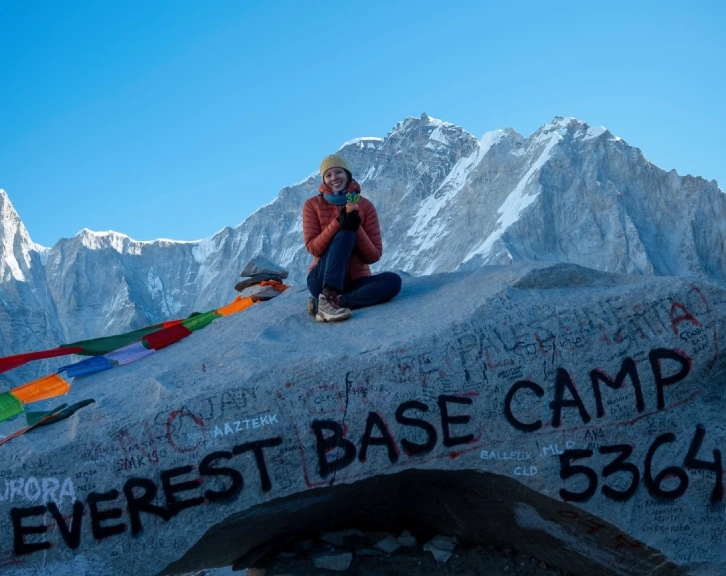

How Crowded Is the Everest Base Camp Trail in April?
The Everest Base Camp trail is one of its busiest of the year in April, ranking alongside October as the route’s peak season. Congestion builds gradually through the first ten days of the month before increasing noticeably from roughly the 10th onward as the bulk of spring trekkers arrive.
Crowding isn’t spread evenly along the rough - it concentrates most heavily on stretches between Lukla and Namche, and at well-known bottleneck villages such as Dingboche, Tengboche and Gorak Shep. In these high demand spots, teahouses commonly convert twin-share rooms into shared dorm-style accommodation once occupancy climbs a practical workaround for limited lodging capacity at altitude.
The squeeze extends beyond the trail: Lukla flight seats typically book out 6-8 weeks in advance during peak season and experienced, reputable guides are often reserved months ahead of departure.
To reduce the impact of April’s crowds practical strategies include starting each day’s walk early to beat the rush into overnight stops booking accommodation in advance rather than arriving and hoping and building in 2-3 months of lead time before departure of secure flights and guides before they sell out.
What Are the Scenic Highlights of the EBC Trek in April?
The Everest Base Camp trek in April combines mountain, forest and cultural scenery unique to spring, making it a rewarding month for anyone drawn to the visual side of the journey.
- Rhododendron and magnolia forests bloom below roughly 4,000 meters between Lukla and Tengboche with Nepal's national flower painting the trail in vivid red, pink, and white against a backdrop of snow-capped peaks.
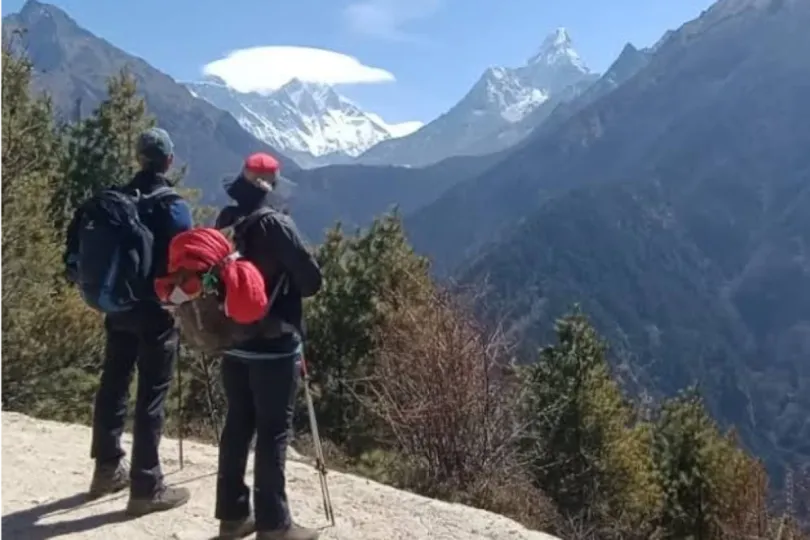
- Panoramic mountain views open up on clear April days from Namche Bazaar, Tengboche, Dingboche and Kala Patthar taking in Everest, Nuptse, Lhotse, Ama Dablam, and Cho Oyu in a single sweep.
- Wildlife within Sagarmatha National Park adds another dimension with sightings of the Himalayan tahr, musk deer, and various pheasant species, along with increased seasonal bird activity throughout the Khumbu region.
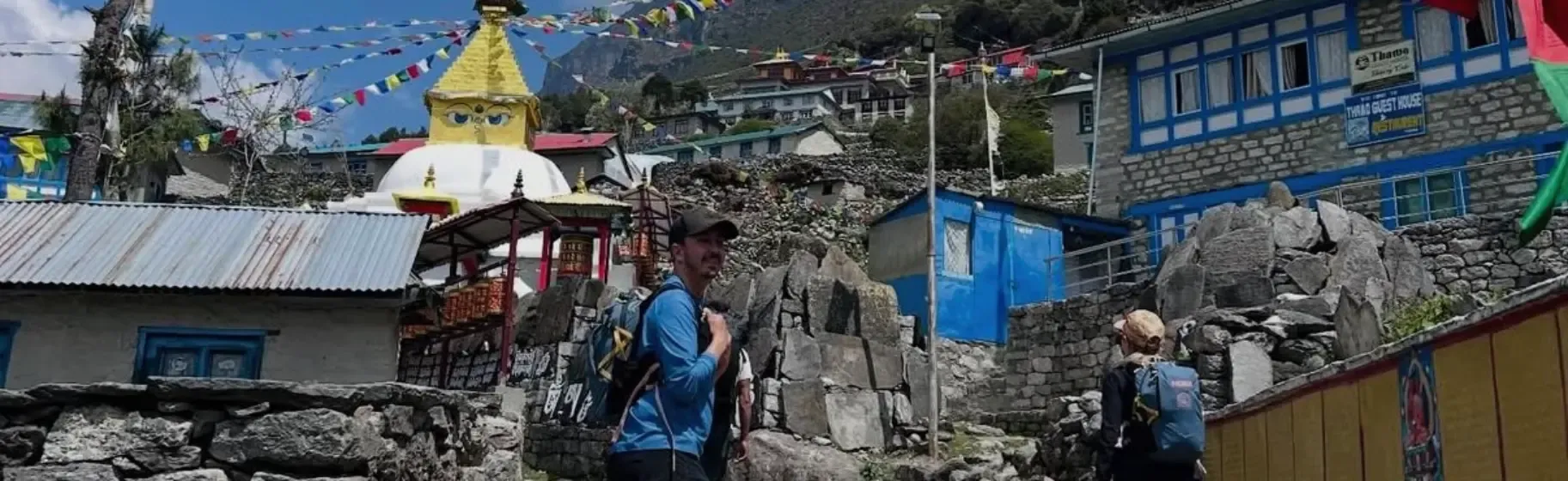
- Cultural and religious landmarks punctuate the route including Tengboche Monastery, colorful prayer flags, sacred mani walls and dramatic suspension bridges such as the Hillary Bridge, all adding context and texture beyond the natural scenery.
- Kala Patthar (5,545 m) stands out as the trek's premier close-up viewpoint of Everest itself - a distinction worth noting since Everest Base Camp, despite being the trek's namesake destination, doesn't actually offer a clear view of the summit due to the angle and surrounding terrain.
Can You See Everest Expedition Teams at Base Camp in April?
Everest expedition teams begin arriving at Base Camp in April as the spring climbing season starts transforming the area into a busting tent city. Mountaineering teams set up rows of domes to prepare oxygen equipment and supplies and icefall doctors begin the meticulous work of fixing ropes and ladders through the notoriously unstable Khumbu Icefall.
Trekkers visiting in April typically view this expedition camp area from a distance rather than walking through it since active climbing teams occupy designated zones reserved for their preparations. Summit attempts themselves generally come later in May, once weather windows open - so April visitors witness the build-up and preparation phase rather than any actual summit pushes.
This expedition atmosphere is one of April's most distinctive features, setting it apart from the autumn peak season in October, when Base Camp sees trekkers but no active climbing season underway.
What Is the Recommended Everest Base Camp Itinerary for April?
Day | Itinerary | Elevation |
Day 1 | Kathmandu Arrival | 1400 m |
Day 2 | Fly to Lukla & Trek to Phakding | 2860 m → 2610 m |
Day 3 | Trek from Phakding to Namche Bazar (5–6 hour trek); overnight at teahouse in Namche Bazar | 3440 m |
Day 4 | Acclimatization day at Namche Bazar | 3440 m |
Day 5 | Trek from Namche Bazar to Tengboche | 3860 m |
Day 6 | Trek from Tengboche to Dingboche | 4410 m |
Day 7 | Acclimatization day at Dingboche | 4410 m |
Day 8 | Trek from Dingboche to Lobuche | 4940 m |
Day 9 | Trek from Lobuche to Gorakshep & hike to Everest Base Camp | 5164 m → 5364 m |
Day 10 | Climb Kala Patthar & trek back to Pheriche | 5545 m |
Day 11 | Trek from Pheriche to Namche Bazar | 3440 m |
Day 12 | Trek from Namche Bazar to Lukla | 2860 m |
Day 13 | Flight from Lukla to Kathmandu (25–30 minutes); overnight at 3-star hotel in Kathmandu | 1400 m |
Day 14 | Departure from Kathmandu | 1400 m |
The hardest day of Everest Base Camp trek is widely considered the Gorak Shep to Everest Base Camp day, combining an early start roughly 8-9 hours of walking, uneven glacial moraine terrain and the trek’s highest cumulative altitude exposure before descending back down to Pheriche. The climb to Kala Patthar often done the previous or same day is commonly cited as the steepest short climb - a roughly 400 m gain that feels far harder above 5000m than it would at lower elevation. Both days are tough by degree of exertion at altitude rather than technical difficulty, since the standard EBC route requires no climbing skills.
What Food and Accommodation Are Available on the EBC Trek in April?

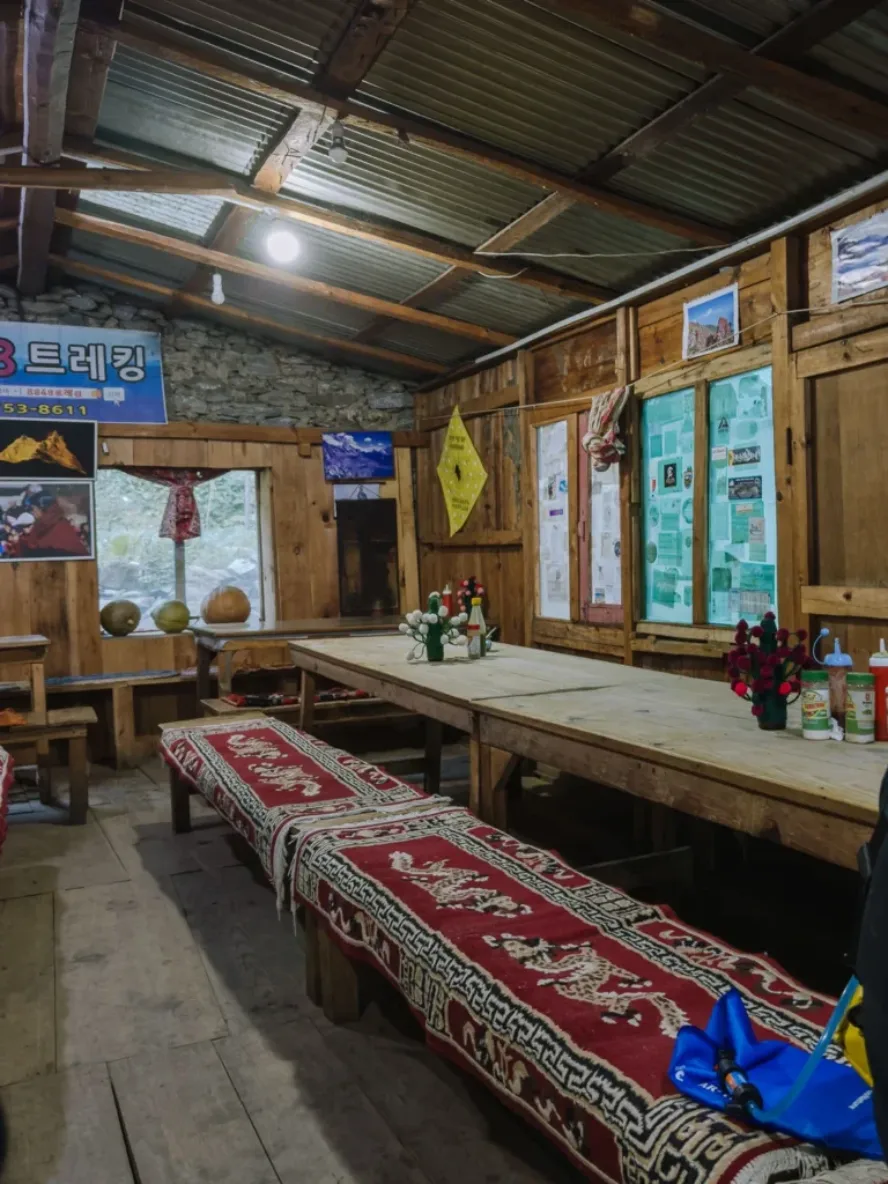
Teahouse provides the main food and accommodation on the Everest Base Camp trek in April, forming the backbone of trail infrastructure from Lukla all the way to Gorak Shep. At lower elevations rooms are simple twin-bed setup with shared bathrooms and conditions grow progressively more basic and colder as altitude increases.
Meals follow a fairly consistent trekking trail menu: dal bhat (Nepal’s staple lentil, rice and vegetable dish), noodles, momos, fried rice, soup and porridge are all widely available with vegetarian options easy to find throughout. Meat is generally discouraged at higher elevations due to the limitations of transport and cold storage along the trail where freshness can’t be guaranteed.
Prices for both rooms and meals climb steadily with altitude since all supplies are carried up by porters and yaks rather than trucked in and April’s peak-season demand adds further upward pressure on both cost and availability at every stop.
Hot showers, Wi-Fi, and device charging are typically available for a fee that increases the higher you go and reliability drops off noticeably above Dingboche where infrastructure becomes more limited. Given these constraints, advance booking matters more in April than in quieter shoulder-season months since peak demand can force teahouses in bottleneck villages to convert private twin rooms into shared dorm-style accommodation once occupancy fills up.
What Should You Pack for the Everest Base Camp Trek in April?

Packing for the Everest Base Camp trek in April means layering for a wide day-to-night temperature range since conditions can shift from mild spring afternoons to sub-zero nights within hours.
- Base and mid layers - Pack 2 sets of wool or thermal base layers, a fleece, and a light insulated jacket to layer through changing daytime conditions.
- Insulation and outer shell - A heavy down jacket rated for sub-zero nights is essential, paired with a waterproof, windproof outer shell to handle sudden weather shifts and wind exposure.
- Footwear - Broken-in, waterproof hiking boots are non-negotiable, along with 4 pairs of wool socks and a pair of camp shoes to give your feet a break each evening.
- Sleep system - A sleeping bag rated to at least -15°C is important, since teahouse rooms above Dingboche are unheated and nighttime temperatures drop well below freezing.
- Sun protection - Category 4 glacier sunglasses, SPF 50+ sunscreen and lip balm, and a wide-brim sun hat are essential, as UV exposure and snow glare intensify significantly with altitude.
- Health and hydration - Carry a 3-liter water capacity, purification tablets or a filter, a basic first-aid kit, and any altitude medication discussed with a doctor beforehand.
- Documents - Bring your passport, all required permits, and travel insurance that specifically covers high-altitude trekking and helicopter evacuation up to at least 6,000 meters.
- Optional traction - Microspikes are worth packing for early-April trekkers, since ice can still linger on the trail above Lobuche before fully melting away later in the month.
Do You Need Crampons or Microspikes for the EBC Trek in April?
Standard crampons are not usually required for the classic Everest Base Camp trek in April since the route follows well-trodden trails rather than technical glacier terrain. Microspike, however, can be genuinely useful after fresh snowfall or an icy section above Lobuche particularly in early April before higher-elevation ice has fully melted. Full mountaineering crampons are more associated with technical routes like the Three Passes trek, not the standard EBC trail. Rather than assuming a fixed traction requirement for the whole month, it’s more reliable to check current trail conditions with a guide shortly before departure.
How Should You Prepare Physically for the EBC Trek in April?
Physical preparation for the Everest Base Camp trek in April should start 8 to 12 weeks before departure giving your body enough time to build meaningful endurance and strength. Cardiovascular training 3-4 times a week - running, cycling or swimming - builds the stamina needed for 5-7 hours of daily walking over consecutive days. Weekly hill or stair training with a loaded 6-8 kg backpack is equally important, conditioning the legs and core for sustained ascents and descents on uneven terrain.
Breaking in hiking boots at least 4 weeks before departure is a small but critical step since new or poorly fitted boots are one of the most common causes of blisters and foot pain on the trail.
It’s worth being clear-eyed about one thing: physical fitness does not prevent altitude sickness. Even well-conditioned trekkers can develop AMS, HAPE or HACE if they ascend too quickly so acclimatization days, gradual ascent pacing and proper hydration remain necessary regardless of how fit you are.
Alongside physical training, a pre-trek medical check is commonly recommended and many trekkers discuss a Diamox prescription with their doctor in advance as a preventive measure to support acclimatization once on the trail.
What Permits and Documents Are Required for the EBC Trek in April?
Permit | Cost | Where Obtained |
Sagarmatha National Park Entry Permit | NPR 3000 (USD 22-28) for foreign nationals | Kathmandu or at Monjo |
Khumbu Pasang Lhamu Rural Municipality Permit | NPR 2000–3000 (USD 15-23) | Lukla |
Combined total (most foreign trekkers) | Roughly NPR 5000–6000 (USD 40-50) | - |
How Much Does the Everest Base Camp Trek Cost in April?
Package Type | Cost Range | What's Included |
Budget independent trek | USD 1000-1400 | Permits, flights, basic teahouses and food, without a guide |
Standard guided package | USD 1400-2500 | Guide, porter, meals, permits, and Lukla flights |
Premium guided package | USD 2500-4000 | Smaller groups, upgraded lodges, senior guides |
Luxury package with helicopter return | USD 3500-5500 | Helicopter transfer from Gorak Shep to Lukla or Kathmandu |
How Reliable Are Lukla Flights in April?
Lukla flights in April are more reliable than in winter or monsoon but are not guaranteed and it’s worth planning around some uncertainty regardless of the season’s overall favorability. April benefits from generally stable morning weather with most delays caused by cloud cover or wind rather than the heavier. More prolonged disruption typical of the monsoon season.
Booking the earliest possible morning flight is one of the most effective ways to improve reliability since himalayan weather patterns typically deteriorate as the day goes on - early flights have the best odds of departing and landing on schedule.
During peak-season weeks, flights sometimes shift to operating from Manthali (Ramechhap) instead of Kathmandu to manage congestion which adds a roughly 4 horse road transfer usually done overnight to make the early flight window the next morning.
Given these variables building at least 2 buffer days into the overall itinerary is a smart hedge against flight delays providing flexibility without disrupting downstream teahouse bookings or forcing a rushed itinerary later in the trek.
If a flight is cancelled and time is short a shared helicopter between Lukla and Kathmandu is a common and relatively accessible backup option though it comes at a higher cost than the standard fixed-wing flight.
How Far in Advance Should You Book an April EBC Trek?
April treks should generally be booked at least 2 to 3 months ahead of departure, though the exact timing depends on which week of the month you're targeting.
Departure Window | Recommended Booking Deadline |
Early April (1–10) | By late January to early February |
Mid-April (11–20) | By early to mid-January |
Late April (21–30) | By December to early January |
Is Altitude Sickness a Concern During the EBC Trek in April?
Altitude sickness is a concern on the Everest Base Camp trek in April regardless of favorable seasonal weather since the risk stems from elevation gain itself rather than seasonal conditions. Three recognized forms of altitude illness exist distinguished by increasing severity: Acute Mountain Sickness (AMS), the mildest and most common causing headache, dizziness and fatigue High Altitude Cerebral Edema (HACE), involving brain swelling and symptoms like confusion and loss of coordination and High Altitude Pulmonary Edema (HAPE), a dangerous buildup of fluid in the lungs causing severe breathlessness.
The scheduled acclimatization days build into the itinerary at Namche Bazaar and Dingboche combined with a gradual ascent rate that avoids gaining elevation too quickly are the main preventive measures against all three conditions - and it’s worth emphasizing that physical fitness level offers no real protection against altitude illness since the risk is physiological rather than related to conditioning.
Dimox is sometimes used preventively to support acclimatization but it should only be taken following a doctor’s advice not relied upon as a substitute for proper acclimatization days and sensible pacing.
If symptoms worsen at any point, descent is the appropriate response rather than resting at the same altitude and hoping for improvement. Given the trek's maximum altitude above 5,000 meters, travel insurance covering helicopter evacuation is treated as essential rather than optional.
Do You Need a Guide or Porter for the EBC Trek in April?
A guide and porter are not always legally required for the Everest Base Camp trek but most trekkers use one or both given the practical and safety benefits they offer. A guide provides route navigation, ongoing altitude monitoring to help catch early signs of altitude illness and cultural interpretation that adds real depth to the journey through Sherpa villages and monasteries. A porter meanwhile carries the trekker’s main load typically up to a set weight limit freeing trekkers to walk with just a light daypack.
Guide and porter regulations for foreign trekkers in the Everest region can change over time so current requirements should always be verified with a licensed Nepali agency shortly before departure rather than assumed from older information.
April’s peak-season demand means experienced, English-speaking guides are typically booked months in advance so travelers hoping to arrange one locally after arriving in Nepal during April face a much narrower choice than those who book ahead.
Beyond the practical benefits, hiring a guide and porter also supports the local Khumbu economy directly and observing fair porter weight limits along with reasonable tipping practices are considered part of responsible ethical trekking in the region.
What Festivals and Cultural Events Happen in the Khumbu in April?
Several Nepali cultural events can fall in or near April, adding a cultural layer to the trek beyond its natural scenery.
- Nepali New Year is a national celebration that typically falls in mid-April marking the start of the Bikram Sambat calendar year - it can noticeably affect transport and accommodation demand across the trekking region during that period.
- Buddha Jayanti commemorates the birth, enlightenment, and death of Buddha through prayer ceremonies, monastery visits, and music, offering a meaningful cultural experience for trekkers passing through Sherpa villages. Its exact date varies by lunar calendar year, so it should be verified for the specific year of travel.
- Sagarmatha Day, commemorating the first successful ascent of Everest by Edmund Hillary and Tenzing Norgay, is sometimes marked with ceremonies at Tengboche Monastery, adding a poignant historical dimension near the trail's most significant religious site.
April vs May: Which Is Better for the Everest Base Camp Trek?
Factor | April | May |
Daytime temperature at Base Camp | Roughly 3–8°C | Roughly 5–15°C |
Rhododendron bloom | Peaks in mid-April | Largely finished by mid-May |
Expedition activity | Teams arriving and setting up camp | Actual summit attempts, typically May 15–25 |
Crowd level | Peaks mid-to-late April | Starts busy, thins out later as monsoon approaches |
April vs October: Which Is Better for the Everest Base Camp Trek?
Factor | April | October |
Signature scenery | Rhododendron blooms below 4000 m | Post-monsoon clarity, greener hillsides at lower elevations |
Expedition atmosphere | Everest expedition teams arriving and setting up camp | No active climbing season underway |
Cultural events | Nepali New Year, Buddha Jayanti (variable dates) | Overlaps with Dashain and Tihar festivals |
Crowd level | High, peaking mid-to-late April | High, similarly busy throughout the month |
High-elevation nights | Colder, following on from winter | Generally milder, following on from summer warmth |
Is Annapurna Base Camp or Everest Base Camp Harder?
Everest Base Camp is generally considered more physically demanding than Annapurna Base Camp reaching a higher maximum altitude of 5364 m versus roughly 4130 m which raises altitude-sickness risk and demands more acclimatization days. The EBC route also runs longer, typically 12-14 days versus ABC’s 7-10. Annapurna Base Camp meanwhile involves less flight dependency, reachable by road and trail without relying on a Lukla flight.
Is April a Good Month to Visit Nepal Overall?
April is a good month to visit Nepal beyond the Everest region as well with spring weather across most of the country generally dry and warm at lower elevations. This supports comfortable travel not just to the Khumbu but also to Kathmandu, Pokhara and the Annapurna region. April overlaps with Nepali year, a national celebration that brings cultural events and festivities to cities including Kathmandu and Bhaktapur. Nepal’s major trekking regions, including both Everest and Annapurna share April as one of their two peak seasons alongside October so advance booking applies October so advance booking applies nationwide rather than only to EBC trail specifically.
Is April the Only Time You Can Trek Everest Base Camp?
April is one of several months trekkers choose for Everest Base Camp, not the only option - the trek is possible in most months of the year with conditions, crowds, and cost varying significantly by season. April and October form the two peak windows, spring and autumn respectively while the remaining months trade some combination of colder temperatures, monsoon rain, or quieter trails for a genuinely different trekking experience. The sections below cover how each other month compares to April, helping travelers weighing a different departure date find the right seasonal fit for their trip.
Is There a Single Best Time to Trek Everest Base Camp?
There is no single best time to trek Everest Base Camp since the right month depends on priorities such as weather, crowds, cost and scenery. April and October are generally considered the two best overall windows for stable weather and mountain visibility. Trekkers prioritizing quieter trails, lower cost or specific scenery like snow or monsoon greenery may prefer a different month entirely.
Can You Trek Everest Base Camp in January?
Everest Base Camp can be trekked in January though it is one of the coldest and quietest months on the trail. January brings very dry conditions, empty trails and clear skies between storms alongside severe cold and some lodge closures at higher elevations. Trekkers considering January should expect a markedly different experience from April with far fewer crowds but noticeably harsher overnight temperatures.
Can You Trek Everest Base Camp in February?
Everest Base Camp in February can be done when winter begins transitioning toward spring. The Everest Base Camp trek in February retains much of January’s cold and low precipitation although daytime temperatures become slightly milder as the month progresses. Trail and teahouse conditions fall between January’s deep-winter quiet and the gradual build-up toward the March-April spring trekking season.
How Different Is Trekking Everest Base Camp in June?
Trekking Everest Base Camp in June differs from April mainly through the onset of the monsoon. The Everest Base Camp trek in June brings increasing humidity - cloud cover and rainfall at lower elevations reducing mountain visibility compared with April clearer skies. Trails are also quieter - offering greener valleys and fewer trekkers instead of April crowds and blooming landscapes.
How Different Is Trekking Everest Base Camp in July?
Trekking to Everest Base Camp in July differs from trekking in April due to full monsoon conditions. July brings the year’s heaviest rainfall and cloud cover reducing Everest visibility and increasing landslide risk on lower trail sections compared with April’s dry spring weather. The Everest Base Camp Trek in July appeals mainly to trekkers seeking solitude and lush scenery rather than mountain views or April’s expedition-season atmosphere.
How Is Trekking Everest Base Camp in August Different From April?
Everest Base Camp in August differs from April through continued monsoon rainfall. August remains humid with limited mountain visibility continuing from July - unlike April’s generally clear spring skies. The Everest Base Camp trek in August also has lower trail traffic than April’s peak-season crowds making it appealing for trekkers who value quiet trails over consistent mountain views.
Can You Trek Everest Base Camp in December?
Everest Base Camp Trek in December, can be done at the start of winter conditions. The month brings very low precipitation and generally clear skies but nighttime temperatures fall sharply and daylight hours are shorter than in April whereas trekkers trade Aprils warmer daytime comfort and expedition-season atmosphere for quieter trails and a more solitary winter experience